Tag: ESA

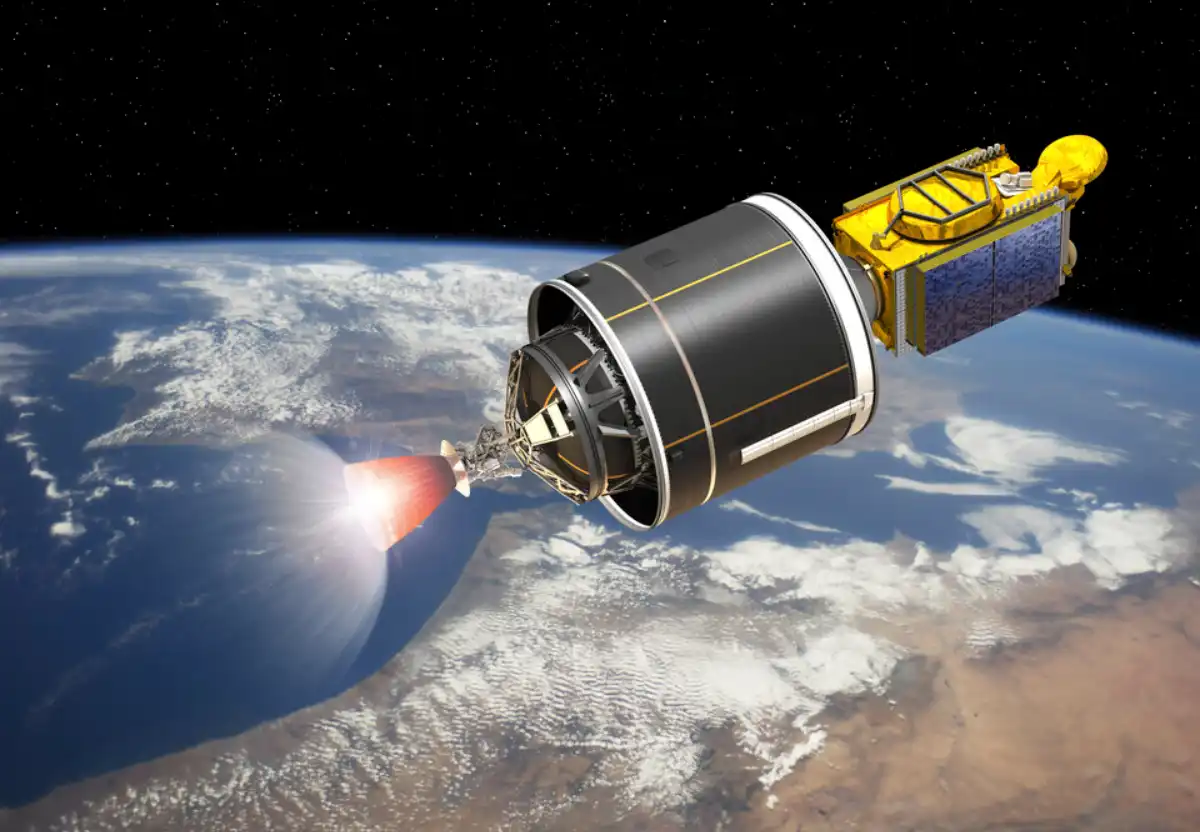
  • ESA tests carbon-fiber tanks for Ariane 6 to lift heavier payloads into orbit

    ESA tests carbon-fiber tanks for Ariane 6 to lift heavier payloads into orbit

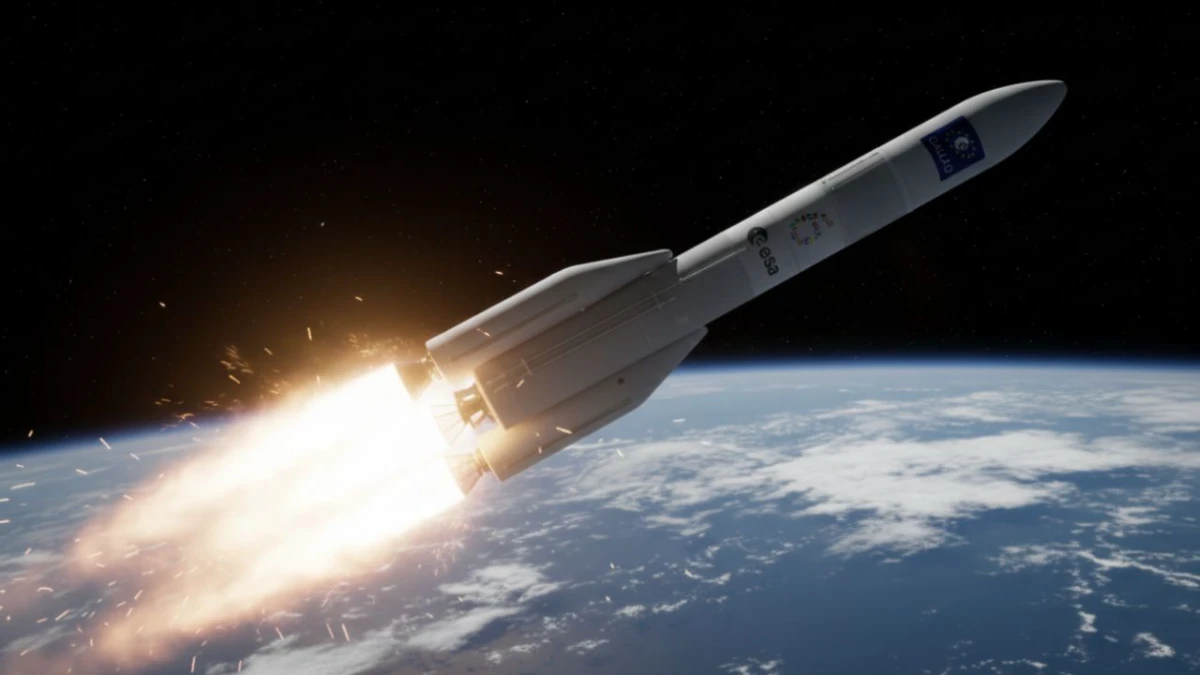
    The European Space Agency (ESA) is testing a new way to make the Ariane 6 rocket carry more weight into orbit by replacing traditional metal fuel tanks with lighter carbon-fiber ones, a move that could increase payload capacity by up to two tonnes if the ongoing trials in Germany and France succeed.

    The work is part of the Phoebus project, led by European space companies and research groups. The goal is to reduce the mass of the rocket’s upper stage so more room and weight can be used for satellites and space probes.

    Most rockets today use metal tanks made from aluminum-based alloys. These tanks are strong but heavy. Carbon fiber weighs far less, which is why engineers are trying to apply it to tanks that hold super-cold liquids used as fuel. The challenge is that no one has ever flown a fully carbon-fiber tank for these liquids before. Liquid oxygen and liquid hydrogen must be stored at extreme cold. At those levels, even small material changes can cause cracks or leaks.

    One of the main problem areas is the join between the carbon tank walls and the metal covers on each end. Metal shrinks more than carbon in deep cold. When they pull apart even slightly, gaps can form, and leaking oxygen can become very dangerous.

    Engineers have spent years testing different seal materials and bonding methods to make sure the joint stays tight. In July 2025, the German company MT Aerospace started building the full-size end covers for the new oxygen tank.

    The plan is to attach these covers before the end of the year and then fill the tank with liquid oxygen. Sensors will watch for any movement, cracking, or leaks during the deep-freeze tests. The Phoebus team is also changing the structure that carries the force of the engine. In a normal upper stage, a metal frame sits between the tanks and the engine, and separate pipes carry fuel.

    In the new design, those pipes are part of the frame itself. They now help support the engine’s force while also moving fuel. Engineers create the centerpiece using 3D printing and then wrap carbon fiber around the pipe system. Assembly of this new structure is scheduled to begin in Bremen next year. If all goes to plan, it will be joined with the oxygen tank in 2026 for full ground testing.

    Ariane 6 currently carries around 11.5 tonnes to a high Earth transfer orbit. By cutting the upper stage mass, engineers estimate they could add close to two tonnes of extra payload. That extra capacity could mean one more satellite on each launch or the ability to send heavier science missions into deep space.

    Other rocket builders are watching the Phoebus project closely. Some already use carbon layers around metal tanks, but none have switched fully to carbon fiber for the main cryogenic tank structure.

    The project began in 2019 as a research concept. Six years later, large parts are now being made in factories across Germany. If the upcoming cryogenic tests are successful, a full upper-stage model could be built and tested by 2028. If that phase also works, carbon-fiber tanks could become a standard design choice for future European launch vehicles, helping reduce costs and increase the amount of cargo each rocket can carry.

    Source: Phoebus: framing carbon-fibre fuel tanks for maximum thrust

  • The Europe-China SMILE mission has been approved to launch in Spring 2026

    The Europe-China SMILE mission has been approved to launch in Spring 2026

    SMILE (Solar Wind Magnetosphere Ionosphere Link Explorer), a joint mission by the European Space Agency and the Chinese Academy of Sciences, will study how the Sun’s charged particles interact with Earth’s magnetic field. The spacecraft is set to launch from French Guiana on a Vega-C rocket between April 8 and May 7, 2026. It will capture wide images and direct measurements to improve space weather forecasts that affect satellites, GPS, power systems, and radio signals.

    SMILE will orbit Earth in a long, tilted path that reaches more than 120,000 kilometers into space. From that distance, it will look back at Earth and record how the solar wind presses against the planet’s protective magnetic layer and how energy moves into the upper atmosphere.

    Solar wind is a fast flow of charged particles released by the Sun. Earth’s magnetic field blocks much of it, but strong solar outbursts can disturb this shield. When that happens, bright auroras appear near the poles, and technology on Earth and in orbit can be affected.

    SMILE is designed to fill gaps left by earlier missions that only studied small regions. The now-complete Cluster mission, run by ESA, tracked conditions close to Earth for more than two decades. SMILE will take a wider, global view and link what happens in space to changes seen in the sky above the poles.

    The spacecraft carries four main instruments. One camera will map the outer edge of Earth’s magnetic field using faint X-ray signals created when solar particles strike atoms in space. Another camera will photograph the full northern aurora to show where energy enters the atmosphere. Two additional sensors will measure charged particles and magnetic fields along the spacecraft’s path.

    During each 51-hour orbit, SMILE will spend up to 40 hours above Earth’s polar regions. From this position, it can continuously observe the areas where solar particles enter the system and where auroras form and change over time.

    Scientists first proposed the mission in 2015. ESA built the section that carries the imaging instruments, while China built the spacecraft body and the sensors that take direct measurements. Engineers joined the two sections at ESA’s testing center in the Netherlands in January 2025.

    After the final assembly, teams ran a long series of tests to check how the spacecraft handles strong vibration, extreme heat, and deep cold. In September 2025, SMILE passed its final reviews and was approved for launch.

    The spacecraft will travel by ship to French Guiana in February 2026. From there, it will be sent into space on a Vega-C rocket, which has returned to regular service after earlier problems.

    Once in orbit, SMILE will operate for at least three years. Data from the mission will be shared with research centers in Europe, China, and other countries. Scientists will also compare its results with data from NASA missions such as MMS and THEMIS to build a clearer picture of Sun-Earth interactions.

    With the Sun currently in a more active phase, solar storms are expected to occur more often. SMILE will allow scientists to record these events in detail and improve early warning systems that protect modern technology on Earth and in space.

  • Europe Prepares Ariane 6 for Galileo Satellite Launch in December 2025

    Europe Prepares Ariane 6 for Galileo Satellite Launch in December 2025

    Europe will launch two new Galileo navigation satellites on the Ariane 6 rocket from French Guiana on December 17, 2025. The launch window opens at 05:01 GMT. The mission marks the first time Galileo satellites fly on Ariane 6 and the rocket’s fifth flight.

    The satellites, called SAT 33 and SAT 34, will head to orbit about 23,000 kilometers above Earth to strengthen Europe’s navigation network and protect it from service gaps.

    The launch will take place from the Guiana Space Centre in Kourou. Once separated from the rocket, the satellites will move into their final positions in medium Earth orbit. They will join 31 other Galileo satellites already in space, with 27 currently in active service across the globe.

    Mission teams are adding more satellites to keep backups available in orbit. If a satellite fails or must be taken offline, another can take its place. This keeps the system stable and helps maintain location accuracy for phones, cars, aircraft, ships, and emergency services.

    Most modern smartphones already use Galileo signals along with GPS. The mix of systems improves location accuracy in crowded cities and remote regions. Farmers use Galileo to guide equipment in straight lines. The system also supports a search and rescue channel that sends a distress location to emergency teams and confirms to the sender that help is on the way.

    Europe created Galileo to keep navigation services under civilian control. This reduces reliance on foreign systems such as the American GPS or the Russian GLONASS network. The design also includes tools that help block false signals and protect against attempts to confuse receivers.

    Each Galileo satellite carries very precise atomic clocks. These clocks send time signals to Earth. A receiver measures how long the signal takes to arrive. When at least four satellites are in view, the receiver can calculate its position, height, and time with high precision. The more satellites it can see, the faster and more accurate the result.

    The satellites move in three orbital paths around the planet, tilted to give strong coverage at high and mid latitudes. This setup helps users in northern and southern regions receive steady signals.

    Ariane 6 replaces earlier launch options. Previous Galileo satellites flew on Ariane 5 and Russian Soyuz rockets. Ariane 5 has retired, and Soyuz is no longer available to Europe. With Ariane 6, Europe now has its own launcher ready for regular Galileo missions.

    This launch will use the Ariane 62 version, which has two strap-on boosters. Its upper stage will restart its engine more than once to place the satellites in the correct path. After releasing the payload, the upper stage will move to a safe disposal orbit.

    The two satellites on this mission are first-generation models built by the German company OHB. Four more of the same type are ready for future flights.

    From around 2027, Europe plans to introduce second-generation Galileo satellites. These will use digital systems, electric thrust for easier movement in orbit, and links that allow satellites to pass data to each other without constant ground support. Improved clocks, stronger signals, and better protection against jamming are also planned.

    With billions of devices already using Galileo signals, each new satellite adds capacity and stability. The latest launch will strengthen the system as Europe prepares for the next phase of its navigation program.

  • ESA maps path of interstellar comet 3I ATLAS using rare images captured from Mars

    ESA maps path of interstellar comet 3I ATLAS using rare images captured from Mars

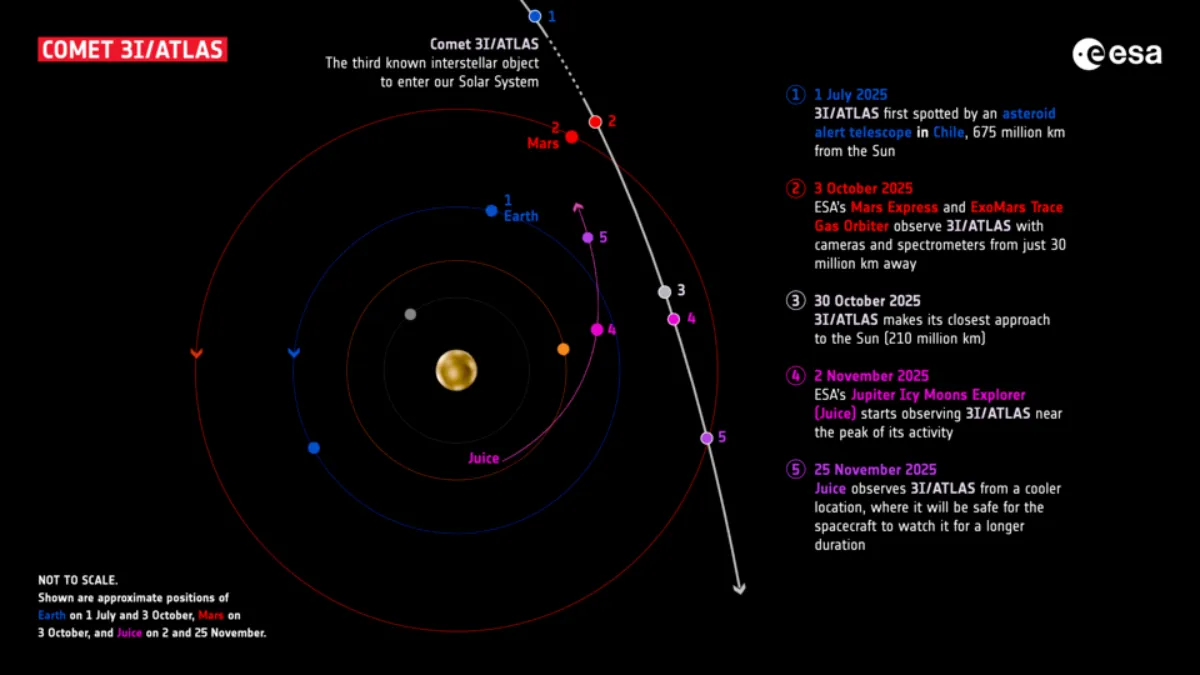
    Scientists at ESA (European Space Agency) have produced the clearest tracking yet of comet 3I ATLAS, an interstellar visitor first detected in July 2025 as it entered the Solar System at high speed. The agency combined telescope data from Earth with images taken by spacecraft orbiting Mars, which improved the comet’s predicted course by ten times. The comet is the third confirmed object from outside the solar system and will leave the region later this year.

    Astronomers first identified 3I ATLAS with the ATLAS telescope in Chile on July 1, 2025. Its speed and curved path showed that it was not bound to the Sun. Instead, it was passing through once before heading back into interstellar space. Only two similar objects have been confirmed before. One was 1I/Oumuamua in 2017, and the other was 2I/Borisov in 2019.

    Unlike Oumuamua, which behaved more like a rocky body, this comet produces a cloud of gas and dust around its nucleus. Observations from Hubble and the James Webb Space Telescope confirmed water, carbon monoxide, and traces of nickel coming from its surface. Early findings suggest the comet may be several billion years old, possibly older than the Sun.

    IInterstellar comet 3I ATLAS captured by ESAs ExoMars trace gas orbiter.
    Interstellar comet 3I ATLAS captured by ESA’s ExoMars trace gas orbiter. Image credit: ESA

    The comet passed about 29 million kilometers from Mars on October 3, 2025. The distance was close enough for ESA’s ExoMars Trace Gas Orbiter to capture a set of images that showed the comet moving across a field of stars. Mars Express also observed it during the same period.

    These views from a different angle helped reduce the uncertainty in the comet’s position and improved predictions for its path. ESA said this was the first time measurements from a spacecraft orbiting another planet were added to the official Minor Planet Center database.

    The comet does not pose any danger to Earth. Its closest approach is far beyond the orbit of Mars. Even so, the event served as a practical test for teams that monitor objects that could one day threaten the planet. If a hazardous asteroid ever appears, data from spacecraft around other planets could help confirm its trajectory.

    The comet remained active as it passed the Sun on October 30, 2025. Telescopes have recorded long tails and narrow jets coming from its surface. Most researchers say the features match what they expect from an icy body heating up near the Sun. A few unusual details have drawn attention but do not change the overall picture.

    More images will arrive in 2026 from ESA’s Juice spacecraft, which observed the comet soon after its closest approach to the Sun. ESA also plans to use its upcoming NeoMIR mission to detect objects hidden in sunlight and its Comet Interceptor mission to target future visitors from deep space.

    Comet 3I ATLAS is already moving back toward the outer solar system, but the brief chance to track it from both Earth and Mars has given scientists a clearer look at material from another star system. The data shows how rare encounters like this can help identify and study objects that travel between the stars.

    Source: ESA pinpoints 3I/ATLAS’s path with data from Mars

  • ESA Releases New Space Rider Blueprint. Europeโ€™s First Reusable Spaceplane Is Closer Than You Think!

    ESA Releases New Space Rider Blueprint. Europeโ€™s First Reusable Spaceplane Is Closer Than You Think!

    The European Space Agency is moving closer to the first flight of Space Rider, a reusable orbital spaceplane designed to carry research equipment into low Earth orbit and return to a runway.

    On November 5, ESA released a new set of design drawings that show updated wings, simplified outer panels, and easier access points for loading science packages. Work on the reentry module is in its final stages before teams connect it with the service module for full system tests.

    Blueprint of ESA's Space Rider.
    Space Rider blueprint poster showing the craft’s dimensions and major components. The uncrewed vehicle is roughly the size of two minivans and rides to orbit on Vega C.

    The uncrewed craft will launch from French Guiana on a Vega-C rocket and aims for a mid-2026 debut after schedule adjustments. ESA says the program will give Europe a reliable and lower-cost way to place experiments in orbit for weeks or months before bringing them back for study.

    The agency began developing Space Rider in 2015, building on experience from the Automated Transfer Vehicle that once carried cargo to the International Space Station (ISS). ESA partnered with Thales Alenia Space and Avio to produce a compact vehicle that can fly as many as five missions.

    Engineers strengthened the structure to withstand repeated heating during reentry and designed a service module that supplies power, navigation, and maneuvering during the mission. By 2023 the project entered full production, and major hardware deliveries signaled the start of the final testing phase.

    The spacecraft is about 11 meters long with a payload bay able to hold medium-sized scientific packages. It will operate around 400 kilometers above Earth, where weightlessness allows experiments that cannot be carried out on the ground.

    Researchers plan to use the platform for material testing, small biology samples, combustion studies, and technology trials. Space Rider will run on solar power and hydrazine thrusters that help it maintain its position or turn toward new targets.

    The return to Earth is one of the most demanding parts of the mission. A carbon-fiber heat shield will protect the craft as it reenters at orbital speed, and once temperatures drop, the vehicle unfolds a winged section and deploys parachutes to guide it toward a runway.

    In June 2025, a full-scale test model completed autonomous drop tests over Sardinia, showing that the guidance system can handle changing wind and uneven air. ESA plans a complete drop test by the end of 2025 to rehearse the full descent sequence.

    ESA previously aimed for a spring 2026 launch but now expects the first mission in the middle of the year to ensure enough margin for safety reviews.

    Space Rider is expected to support a wide range of research. Compact telescopes could operate above the distortion of Earth’s atmosphere, while sensors could track solar activity or test new satellite hardware.

    Past studies on the International Space Station showed how microgravity changes crystal growth and protein behavior, and the new vehicle offers a faster way to repeat and expand those experiments without waiting for crewed missions.

    The program also reflects a broader shift toward reusable systems in Europe. Vega-C produces fewer emissions than older boosters, and a reusable craft reduces waste across multiple missions. Universities and small companies are expected to benefit from simpler access to orbit. ESA has also lined up potential landing sites in the Azores, including Santa Maria Island, to give the program more flexibility.

    With final tests approaching, Space Rider has become one of ESA’s most closely watched projects. If the schedule holds, Europe will soon gain a reusable spacecraft capable of regular orbital missions and rapid turnaround for scientific research.

  • ESA Student Internship Programme

    ESA Student Internship Programme

    The ESA Student Internship Programme offers university-level students the chance to join Europeโ€™s space sector via a fully integrated placement at one of ESAโ€™s centers. For students nearing completion of a masterโ€™s (or sometimes in their final bachelor year), this is a way to gain substantial space-industry exposure.

    What is the ESA Student Internship Programme?

    The ESA Student Internship Programme enables students to work on real tasks in space science, engineering, operations, business, or non-technical domains. Interns spend three to six months at one of ESAโ€™s establishments, contributing to projects while remaining enrolled at university.

    Why Consider the ESA Student Internship Program?

    • Real-world assignment: Interns support actual activities at ESA and its centers.
    • International environment: Youโ€™ll work in a multicultural organization with peers and professionals from across Europe.
    • Thesis or project integration: The internship may be aligned with your masterโ€™s thesis or final project, subject to agreement with your university.
    • Networking and professional development: Youโ€™ll meet people in Europeโ€™s space field and gain experience valued by the space industry and research institutions.
    • Time-limited, focused structure: Designed for students to gain experience within a defined timeframe (3-6 months) and then return to studies.

    Eligibility Criteria

    CriteriaDetails
    Academic StatusMust be enrolled at a university, preferably in the final or penultimate year of a masterโ€™s program.
    NationalityMust be a citizen of one of the ESA Member States, Associate Member States, or Cooperating States.
    Student Status DurationYour student status must cover the entire duration of the internship.
    One Internship OnlyYou may undertake only one ESA student internship to allow broader opportunity for others.

    Internship Duration and Structure

    TypeDurationLocation
    Student Internship3 to 6 monthsESA establishment in Europe; start dates are flexible between February and October (subject to agreement).

    How to Apply: Step-by-Step Process

    1. Prepare your documents
    2. Update your CV or resume
    3. Write a motivation letter tailored to the specific internship and how your background matches it.
    4. Ensure you maintain student status through the internship period
    5. Submit your application
    6. Opportunities are published annually (typically in November) and remain open for about one month.
    7. Create a candidate profile on ESAโ€™s recruitment website, upload your documents, and select one or two relevant internships (max two applications per candidate).
    8. Await selection. Shortlisting and selection occur from December to February in many years.

    If selected, the start date is agreed upon between you, your tutor/university, and ESA, anywhere between February and October.

    What Will You Learn as an Intern?

    At ESA, interns may engage in

    • Engineering, software or system design tasks
    • Earth observation, astrophysics, planetary science or data analysis
    • Business, law, procurement, finance or communications jobs in a space-agency context
    • Working in international teams, applying academic skills to real-life operational or research tasks

    This helps you gain practical work experience in the space domain, understand the workflows and culture of a major organization, and build connections for your future career or research direction.

    Contact Information

    Contact MethodDetails
    Websitehttps://www.esa.int/About_Us/Careers_at_ESA/Student_Internships2
    Emailcontact.human.resources@esa.int
    AddressEuropean Space Agency, Career & Recruitment Division, via one of its European establishments (see website)
  • ESA Study Tracks Over 1,000 Dust Devils on Mars, Revealing Surprising Wind Speeds and Patterns

    ESA Study Tracks Over 1,000 Dust Devils on Mars, Revealing Surprising Wind Speeds and Patterns

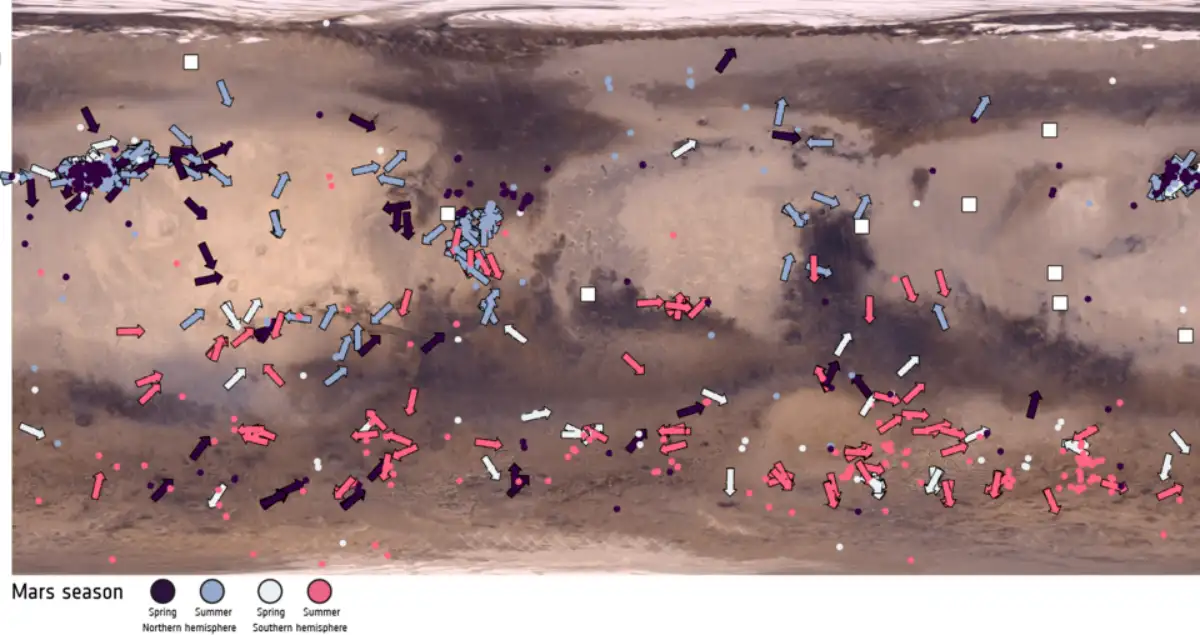
    Scientists using ESA’s Mars Express and ExoMars Trace Gas Orbiter have tracked more than a thousand dust devils across the Martian surface, revealing winds far stronger than expected. The study, published in Science Advances, shows that these spinning columns of dust can reach speeds up to 158 kilometers per hour. The findings help researchers understand how Martian weather works and how it could affect future missions.

    Dust devils form when warm air rises through cooler air, creating rotating vortices that lift dust from the ground. On Mars, they leave visible streaks behind as they clear fine material from the surface. Unlike on Earth, they thrive in an atmosphere just one percent as dense, yet they are strong enough to move dust high into the sky.

    The new survey catalogued 1,039 dust devils, the first time scientists have been able to map them on a global scale. Many were found in dusty plains such as Amazonis Planitia. The study shows that some whirlwinds wobble as they move, changing direction unexpectedly. Seasonal patterns also emerged, with activity peaking in the Martian spring and summer, between late morning and early afternoon.

    To measure wind speed, researchers used a neural network to identify dust devils in two decades of images from the orbiters. The spacecraft’s cameras, designed to photograph the surface, occasionally recorded the same scene several seconds apart.

    Dust devils shifted between these exposures, and scientists used that displacement to calculate speed and direction. Mars Express provided delays of up to 19 seconds, while ExoMars’ CaSSIS camera offered longer delays of up to 46 seconds, making movement easier to track.

    A Dust Devil on Mars.
    A dust devil on Mars captured by ESA’s ExoMars TGO. Image credit: ESA

    Some dust devils were clocked at 44 meters per second, faster than anything previously measured by rovers on the surface. These high speeds mean that dust storms on Mars may carry more material than current models predict, affecting the climate and shaping how the thin atmosphere evolves over time.

    Dust plays an important role in Mars’ environment. It cools the surface during the day, warms the air at night, and can seed clouds. On a larger scale, storms can lift water vapor into the upper atmosphere, where it may escape into space. The dust also impacts robotic missions. Accumulation on solar panels reduces power, as seen with NASA’s InSight lander, which shut down in 2022 after losing too much energy.

    Understanding when and where dust devils occur could help engineers select safer landing sites and design more resilient equipment. The new catalog shows where activity is most common and provides data for improving climate models.

    The researchers also highlighted how these dust devils are not evenly spread across the planet. While Amazonis Planitia produced many of them, areas such as Hellas Basin recorded fewer, likely because of less loose material. Some whirlwinds were also observed on the slopes of giant Martian volcanoes, showing that elevation does not prevent them from forming.

    Future work will focus on combining observations from both orbiters taken at the same time, which could confirm speed calculations. As the catalog grows, scientists expect to refine models of Martian weather, helping prepare for both robotic and eventual human missions.

    Mars Express and ExoMars continue to send back images, adding new examples of dust devils to the record every week. Researchers say these findings are a step toward understanding how winds shape the planet’s surface and atmosphere.

    Sources: Dancing dust devils trace raging winds on Mars; Dust devil migration patterns reveal strong near-surface winds across Mars

  • ESA Mars Orbiters Capture Rare Images of Interstellar Comet 3I/ATLAS Passing Near the Red Planet

    ESA Mars Orbiters Capture Rare Images of Interstellar Comet 3I/ATLAS Passing Near the Red Planet

    Two European spacecraft orbiting Mars have captured rare images of an interstellar comet passing nearby. On October 3, ESA’s ExoMars Trace Gas Orbiter and Mars Express turned their cameras toward comet 3I/ATLAS as it came within about 30 million kilometers of the red planet. The close approach gave scientists an unusual chance to study material from beyond our solar system.

    Comet 3I/ATLAS was first spotted in July 2025 by the ATLAS telescope in Chile. It is only the third interstellar comet ever confirmed, following ‘Oumuamua in 2017 and Borisov in 2019. These comets travel on hyperbolic paths, meaning they are not bound to the sun and will not return once they pass through.

    Astronomers believe 3I/ATLAS may be far older than our solar system. Models suggest it formed about 7.6 billion years ago, roughly three billion years before the sun and planets. Its orbit shows that it likely escaped from a distant star system long ago and has been drifting through space ever since, carrying frozen material from another corner of the galaxy.

    The ExoMars orbiter used its CaSSIS camera to take a series of long exposures, capturing the comet as a faint white spot moving across the sky. That blur represents the nucleus and its coma, the cloud of dust and gas released as sunlight warms the surface.

    The nucleus itself is estimated to be only about a kilometer wide, too small to be resolved directly from such a distance. By comparison, scientists described it as like trying to see a phone from the surface of the moon.

    The coma already measures thousands of kilometers across, though its edges are hard to see against the background. No tail has yet been detected, but astronomers expect one to form as the comet moves closer to the sun in the coming weeks.

    Mars Express also attempted to record the event, but its shorter exposures made the comet more difficult to pick out. Teams are combining and processing multiple images to improve visibility. Both orbiters also tried to collect spectral data to identify gases escaping from the comet.

    Capturing these images was a technical challenge. The orbiters are built to photograph the Martian surface, which is only hundreds of kilometers away. The comet, by contrast, was tens of millions of kilometers distant and tens of thousands of times dimmer. According to CaSSIS team leader Nick Thomas, the task pushed the limits of the spacecraft’s instruments.

    Studying interstellar comets is important because they are made of material that formed around other stars. Small differences in their chemistry, such as isotope ratios or unusual ice content, help researchers compare how planetary systems form across the galaxy.

    When astronomers studied 2I/Borisov, for example, they found unusually high levels of carbon monoxide, suggesting it came from a colder environment than our solar system.

    Analysis of the Mars images will continue for several weeks, as scientists measure the coma’s size and look for chemical signatures. The comet will also be observed by ESA’s Juice spacecraft, which is currently on its way to Jupiter. Juice is expected to capture new data after 3I/ATLAS makes its closest approach to the sun. Because of the spacecraft’s distance, that information will not reach Earth until February 2026.

    Looking ahead, ESA plans to launch the Comet Interceptor mission in 2029. The spacecraft will wait in space for a target, which could be an untouched comet from the Oort Cloud or even another interstellar visitor. Unlike current observations from afar, a direct encounter would allow scientists to study the surface and structure of such an object up close.

    Source: ESA’s ExoMars and Mars Express observe comet 3I/ATLAS

  • EU Scientists Develop Gecko-Inspired Satellites to Capture and Remove Dangerous Space Debris

    EU Scientists Develop Gecko-Inspired Satellites to Capture and Remove Dangerous Space Debris

    An international team of scientists is developing satellites that use a gecko-inspired grip to capture and remove dangerous space junk from Earth’s orbit. The project, called gEICko, began this year with support from the European Union and brings together experts from Germany, Italy, Portugal, and Spain.

    The effort is led by researchers at Julius Maximilian University of Würzburg in Germany, under Professor Mohamed Khalil Ben-Larbi, alongside partners such as the Technical University of Berlin. Their inspiration comes from geckos, which can walk on walls by using tiny molecular forces known as van der Waals forces.

    Since the launch of Sputnik 1 in 1957, more than 22,000 satellites have been sent into orbit. Many no longer work and now float as debris. The European Space Agency (ESA) tracks about 42,000 objects, with estimates suggesting there are more than 54,000 pieces larger than 10 centimeters.

    These include dead satellites, rocket parts, and fragments from collisions or explosions. With around 12,300 active satellites in use, the rest pose real threats to missions. Even the International Space Station (ISS) has had to dodge debris multiple times.

    The problem is getting worse as companies like SpaceX add thousands of satellites to orbit. Even if launches stopped today, chain reactions of collisions known as Kessler syndrome could create more junk. In 2024 alone, satellite breakups added at least 3,000 new tracked objects. On average, more than three pieces of debris fall back into Earth’s atmosphere every day, but new fragments appear faster than old ones burn up.

    An illustration of the underside of a Gecko's feet.
    An illustration of the underside of a Gecko’s feet. Image credit: Nihal Sayyad/Wonders in Space

    Past attempts to clean space, including nets, harpoons, and robotic arms, have struggled to latch onto spinning or unstable debris. The gEICko team hopes their nature-inspired method will succeed where others failed. Their satellites will use silicone pads with microscopic structures that mimic gecko feet. These pads can stick to smooth surfaces, such as solar panels, without glue.

    The Würzburg group is also developing precise navigation systems that allow the satellites to approach targets at the right speed and angle. “We need precision to avoid making more debris,” Ben-Larbi explained. If direct docking is not possible, the system could deploy a tether coated with the sticky material, whipping out to grab debris like a gecko’s tongue.

    Once a piece of junk is captured, the cleaning satellite can guide it to safely burn up in Earth’s atmosphere or move it into a “graveyard orbit.” The technology is designed for multiple captures and can even draw power from the solar panels of old satellites to extend missions.

    The EU has granted about 4 million euros to the project through its Horizon program, with Würzburg University receiving nearly 700,000 euros. The Technical University of Berlin is coordinating the effort, and other partners include the University of Padua, the University of Lisbon, the Fraunhofer Institute, and DHV Technology. The goal is to produce a working prototype within three years, with full deployment expected in about a decade.

    The design favors small, low-cost satellites that are cheaper to build and launch. It also builds on earlier experiments, such as NASA’s 2017 gecko gripper tests, while focusing on Europe’s space goals.

    New rules now require satellites to de-orbit within 25 years of their mission, or just five years under ESA’s 2023 update. Still, millions of older fragments remain in orbit. ESA’s Zero Debris initiative, supported by 19 countries, calls for near-total cleanup by 2030.

    If successful, the gEICko technology could also help extend the life of working satellites or recycle old ones. For now, it offers a hopeful path to dealing with one of the biggest challenges in keeping space safe for future exploration.

    Source: Cleaning up space with gecko technology

  • Researchers use Samsung Galaxy Watch Ultra in 8-day Space Health Experiment
    Researchers use Samsung Galaxy Watch Ultra in 8-day Space Health Experiment
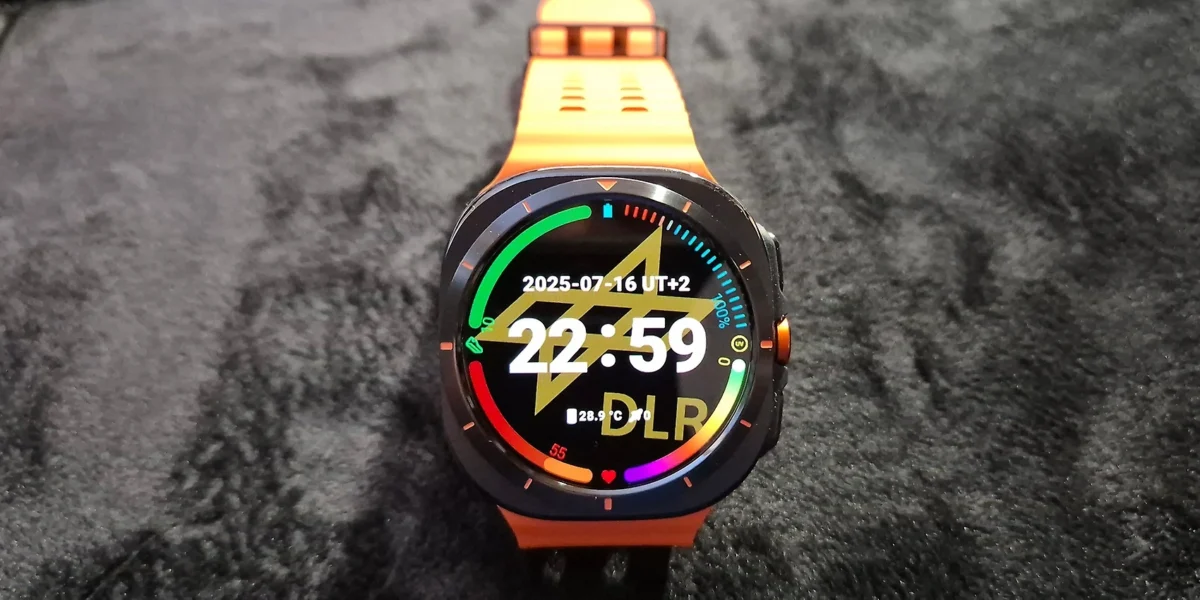
    In a recent study, researchers from the German Aerospace Center (DLR), Samsung Germany, and IT service provider adesso tested smartwatches for health monitoring during an eight-day isolation experiment. The SOLIS8 study, funded by the European Space Agency, simulated a space mission at DLR’s :envihab facility in Cologne.

    Six volunteers (three men and three women) lived in a sealed module, cut off from the outside world. The goal was to see if smartwatches could reliably collect and process health data without smartphones or cloud connections.

    Health monitoring in remote environments, like space missions or remote research stations, poses unique challenges. There’s often limited access to direct medical care, and many traditional medical devices are bulky, wired, and require professional expertise to operate. In contrast, smartwatches are compact, wireless, and easy to use, making them a practical option for non-medical personnel.

    During SOLIS8, participants wore Samsung Galaxy Watch Ultra devices, which recorded vital signs like heart rate and step count. These watches connected directly to a local Wi-Fi network, bypassing the need for smartphones or cloud storage. Adesso developed software to collect and encrypt the data locally, ensuring privacy and security. This setup proved that smartwatches can function independently in extreme conditions.

    SOLIS8 participants wearing Samsung Galaxy Watch Ultra.
    The SOLIS8 participants can be seen wearing the Samsung Galaxy Watch Ultra during the isolation study. Image credit: DLR

    The study’s success hinged on ease of use. Participants received training from DLR and adesso before the experiment, allowing them to operate the devices intuitively. They wore the watches continuously, except during charging, and reported high satisfaction. “The high level of user acceptance combined with secure encryption opens up new prospects for us,” said Dr. Jens Hauslage of DLR’s Institute of Aerospace Medicine in the study.

    Smartwatches offer a practical solution for monitoring health in isolation. They track key metrics like heart rate variability, which can indicate stress or cardiovascular issues, and sleep patterns, which affect mental and physical health. Unlike traditional devices, they don’t require precise electrode placement or extensive wiring. This simplicity is vital in environments where crew members aren’t medical experts.

    Data security was a priority in SOLIS8. Christian Kahlo, adesso’s Chief Security Architect, noted that the system used advanced encryption to protect health data. This is especially important in isolated settings, where breaches could compromise mission safety. The ability to process data locally also reduces reliance on external networks, which may be unavailable in space or remote areas.

    The findings have implications beyond space travel. In telemedicine, smartwatches could enable remote monitoring of patients in rural areas, where access to doctors is limited. In nursing homes, they could track residents’ health without invasive equipment. These applications could improve care while maintaining patient privacy.

    SOLIS8 is a step toward DLR’s planned 100-day isolation study in 2026, called SOLIS100. The longer study will further test smartwatch technology and its effects on crew health in confined settings. Researchers aim to refine software for the “DLR Biobase,” a facility focused on life support and health monitoring for future missions.

    Isolation studies like SOLIS8 mimic the challenges of long-duration space missions, such as trips to Mars or lunar bases. Crews face psychological stress from confinement and physical risks from reduced gravity. Continuous health monitoring helps detect issues early, ensuring mission success. The use of smartwatches could make this process more efficient and accessible.

    Participants in SOLIS8 followed a strict schedule, mirroring astronaut routines. They performed tasks like docking a virtual spacecraft and simulating microgravity conditions. Daily exercise was mandatory to maintain muscle and bone health, a key concern in space. The smartwatches tracked these activities, providing real-time data to researchers.

    The study also highlighted the importance of crew resilience. “While the environment was tightly controlled, the crew spirit remained high throughout,” shared Charlotte Pouwels, a participant on Instagram. “This experience reminded me how much science depends on human adaptability, teamwork, and the willingness to go beyond comfort zones.”

    The results of SOLIS8 show how familiar consumer technology could support astronauts, offering a simple but effective way to monitor health in isolated or extreme environments.