

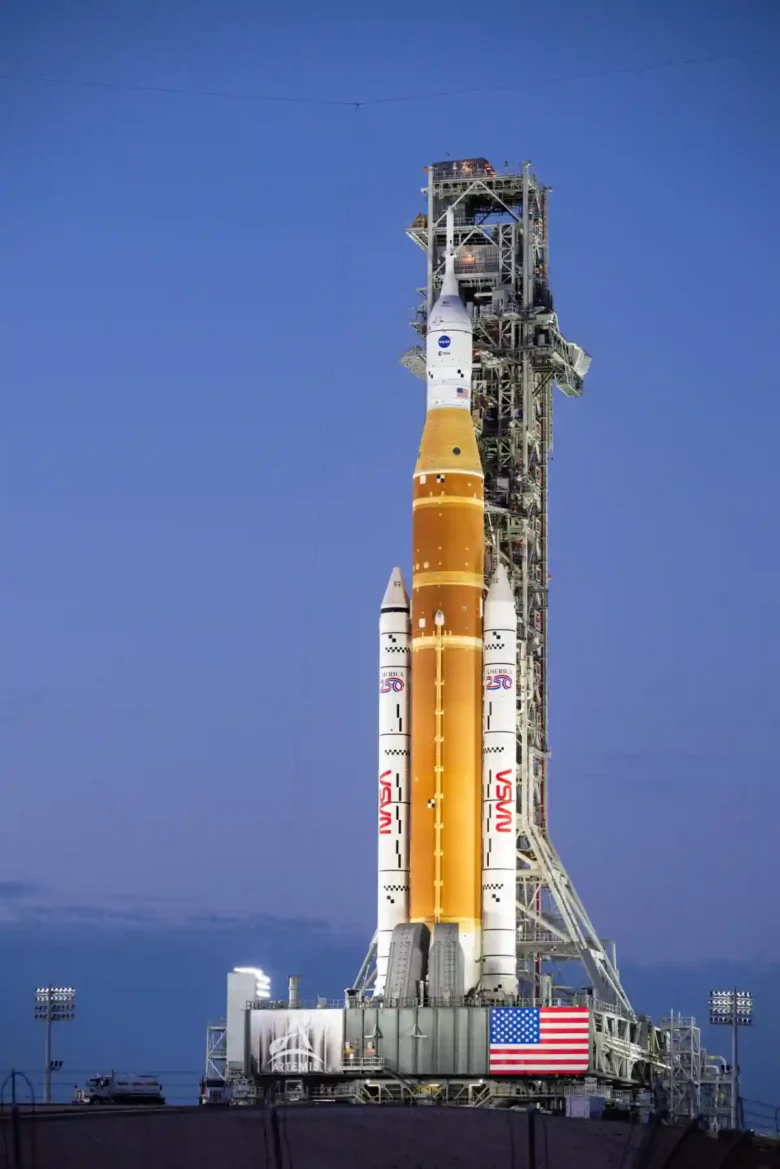
NASA has moved the Artemis II rocket and Orion spacecraft to Launch Pad 39B, marking a major step toward the first crewed flight to lunar space in more than five decades. The rollout finished at 6:42pm ET on January 17, 2026, at Kennedy Space Center in Florida, placing the vehicle where final ground testing will determine launch readiness.
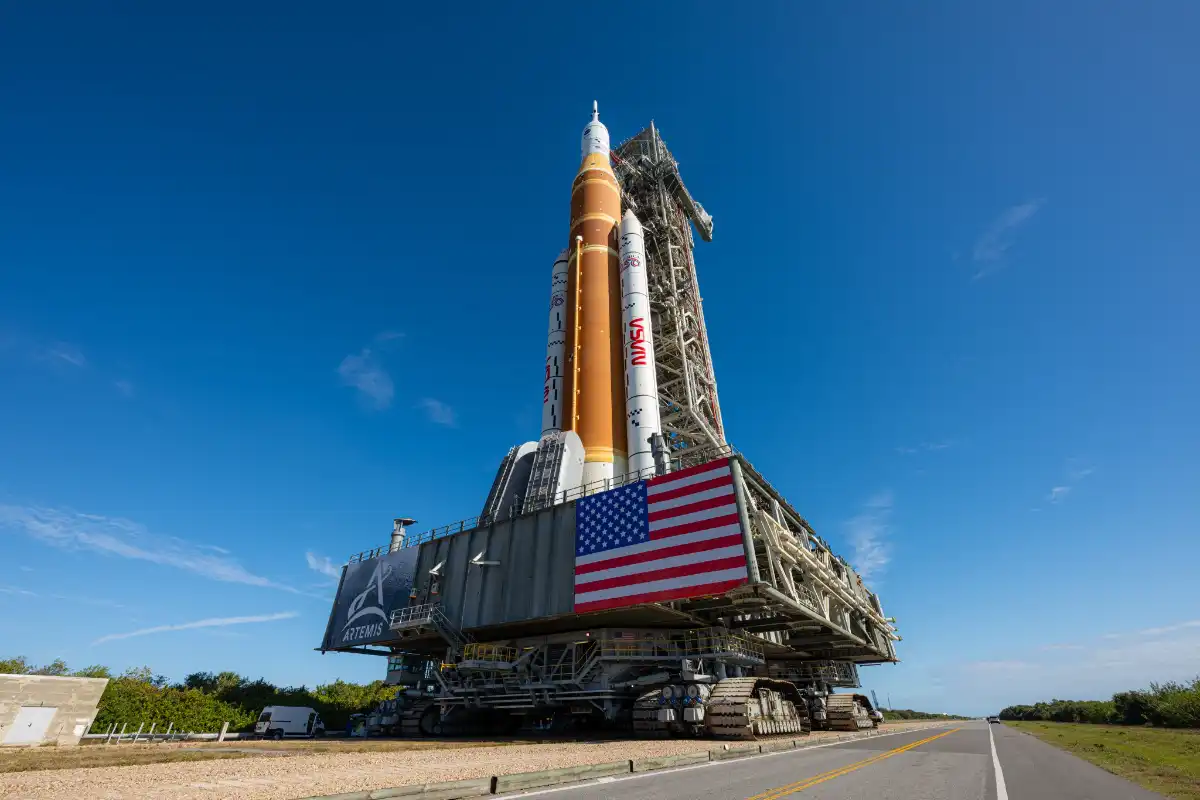
The Space Launch System (SLS) rocket traveled about four miles from the Vehicle Assembly Building to the pad. The trip took nearly 12 hours and used NASA’s crawler-transporter, a tracked vehicle first built for the Apollo program and later upgraded. The crawler carried the 11-million-pound rocket stack at under one mile per hour. Teams paused during the move to adjust the crew access arm, which astronauts will use to enter the Orion capsule before launch.
With the rocket now secured at the pad, engineers have begun pad integration work. Crews will connect power, communications, cooling, and fueling systems. These steps confirm that the rocket and spacecraft operate correctly outside the assembly building and under real launch conditions.
The next major milestone is the wet dress rehearsal, planned no later than February 2. During this test, teams will load more than 700,000 gallons of liquid hydrogen and liquid oxygen into the rocket’s tanks. They will run through a full launch countdown and stop just before engine ignition. Afterward, they will drain the propellants. If teams identify leaks, valve issues, or timing problems, NASA may repeat the test or roll the rocket back for repairs. Officials have said safety decisions will override schedule targets.
Artemis II will carry four astronauts. Reid Wiseman will serve as mission commander, with Victor Glover as pilot and Christina Koch as mission specialist. Canadian Space Agency astronaut Jeremy Hansen completes the crew. The mission will last about 10 days and send the astronauts on a loop around the Moon, reaching nearly 280,000 miles from Earth. Glover will become the first Black astronaut to travel beyond Earth orbit, and Hansen will be the first Canadian to do so.
The mission will not include a lunar landing. Instead, it will test Orion’s life support, navigation, and heat shield systems with a crew onboard. Orion will reenter Earth’s atmosphere at about 25,000 miles per hour, placing heavy demands on the spacecraft’s thermal protection.
Artemis II follows the uncrewed Artemis I mission in 2022 and supports NASA’s plan to return astronauts to the Moon later this decade. Data from this flight will guide future missions aimed at long-term human activity near the Moon’s south pole and beyond.