
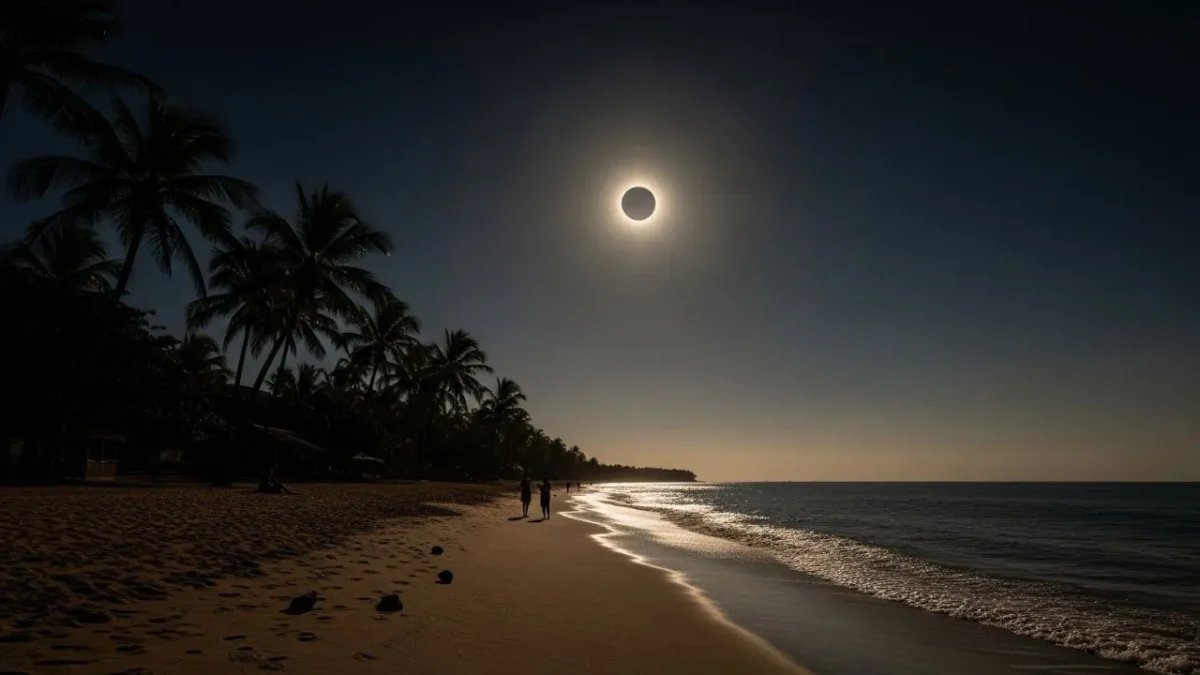
Viral social media posts claim that the world will go dark on August 2, 2025. That’s false. There will be no eclipse or global blackout on that date. But there is something worth getting excited about: a total solar eclipse on August 2, 2027. According to Time & Date, it will be the longest total solar eclipse of this century and hence it’s named as the ‘Eclipse of the Century.’
Solar eclipses happen when the Moon passes between Earth and the Sun, casting a shadow that briefly blocks sunlight. On August 2, 2027, the Moon will completely cover the Sun for up to 6 minutes and 22 seconds. That’s nearly two full minutes longer than the April 8, 2024, eclipse that passed over North America.
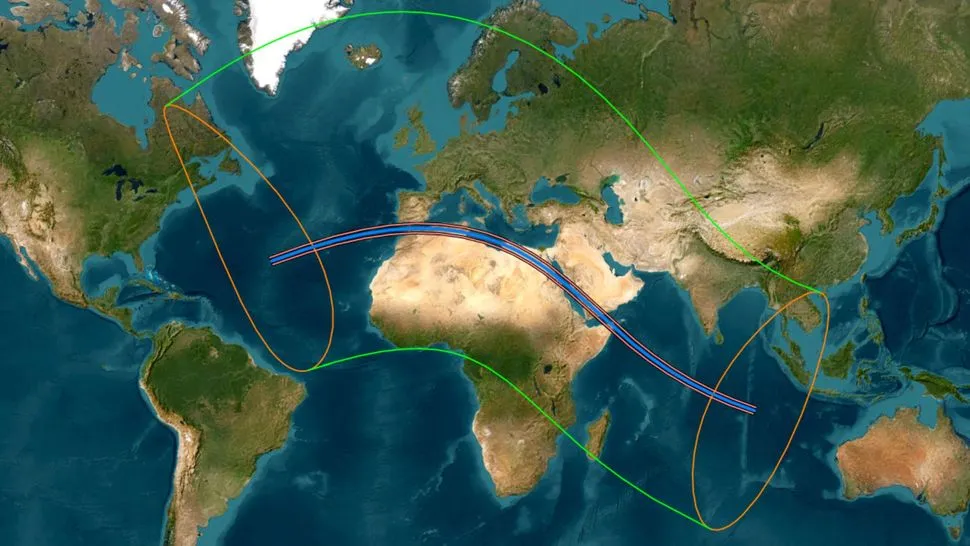
The path of totality will stretch over 9,462 miles and pass through 11 countries: Spain, Gibraltar, Morocco, Algeria, Tunisia, Libya, Egypt, Sudan, Saudi Arabia, Yemen, and Somalia. The Moon will appear slightly larger in the sky because it will be closer to Earth, making the shadow wider, but it will still only cover a small portion of the planet.
In India, the eclipse will be partial. Cities like Mumbai and Bengaluru will see 32% to 39% of the sun covered in the late afternoon, between 3:34 PM and 5:53 PM IST. Cloud cover may block the view in many places, so clear skies will be key.
The 2025 rumor likely comes from confusion around a real, but unrelated, partial eclipse happening on September 21, 2025. That one will only be visible in parts of the Pacific and Antarctica
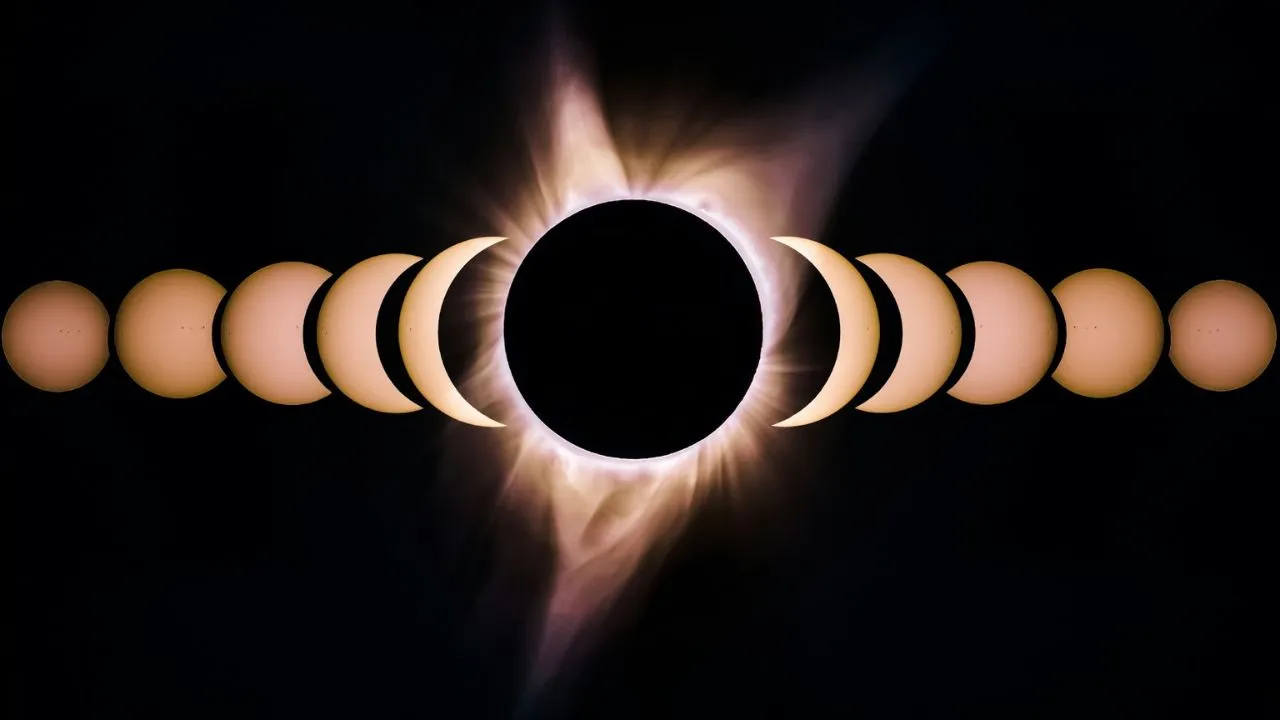
During a total solar eclipse, daylight fades, temperatures drop, and the Sun’s glowing outer atmosphere, called the corona, becomes visible. It’s an eerie and unforgettable experience.
For 2027, some of the best places to see it include Tarifa, Spain; Tunisia’s Mediterranean coast; and Luxor, Egypt. If you’re outside the path of totality, you’ll still be able to see a partial eclipse from much of Africa, Europe, and southern Asia. But again, the view depends on the weather.
Other upcoming eclipses include a partial one on September 21, 2025, and a total eclipse on August 12, 2026. For Indian skywatchers, the 2027 event is the most notable one in the coming years.
This total eclipse will be the longest visible on land until July 2114, offering a rare chance that most people alive today will see only once. Keep visiting our website and follow us on Instagram for future updates!

Leave a Reply