

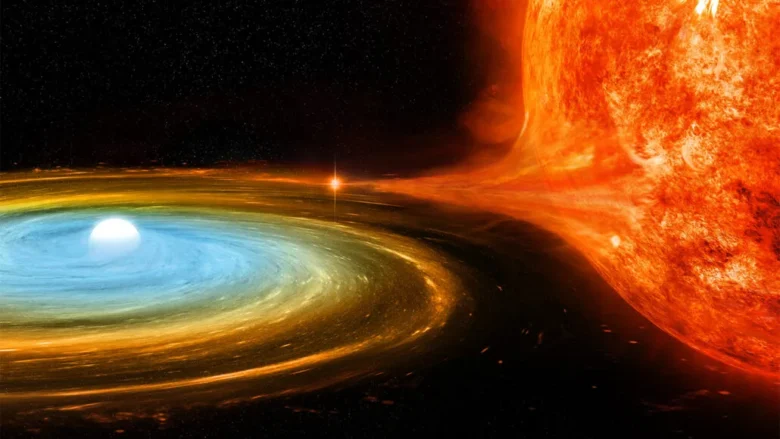
Astronomers have discovered a new star in the night sky. This new star is not a normal star but a nova. On June 12, 2025, the All-Sky Automated Survey for Supernovae detected a sudden bright spot in the constellation Lupus. Over the coming days, that spot brightened enough to become visible without a telescope. This supernova is named V462 Lupi.
As of June 18, it had reached an apparent magnitude of +5.7, just inside the range our eyes can see under dark skies. The explosion made the star 4 million times brighter than it was before, thanks to a thermonuclear burst on the surface of a white dwarf in a binary system.
Where is the Nova V462 Lupi visible?
The nova is visible in the constellation Lupus, low in the southern sky after sunset. It’s best seen from the Southern Hemisphere, but people in North America can also catch a glimpse. Sightings have been reported as far north as Lake Superior, as well as in California and Arizona, particularly just after sunset near the southern horizon. The nova can be viewed with the naked eye in dark sky areas; however, using a telescope or binoculars can increase your chances of spotting it.
What is a nova?

A nova is a transient astronomical event that causes the sudden appearance of a bright, apparently new star that slowly fades over weeks or months.
What Makes This Event Rare?
Novae like this one do happen, but they rarely reach a brightness level we can see without tools. On average, just one or two novae a year become visible to the naked eye worldwide—and often, they appear in hard-to-see parts of the sky or go unnoticed due to moonlight, clouds, or city lights.
What makes V462 Lupi stand out is that it was unexpected; it got bright enough for backyard stargazers to notice. It’s in a southern constellation but still visible from parts of the Northern Hemisphere.
Don’t miss this incredible opportunity to witness a nova explosion. Use a sky-watching app like Stellarium to find the constellation and the nova, and enjoy the experience!