

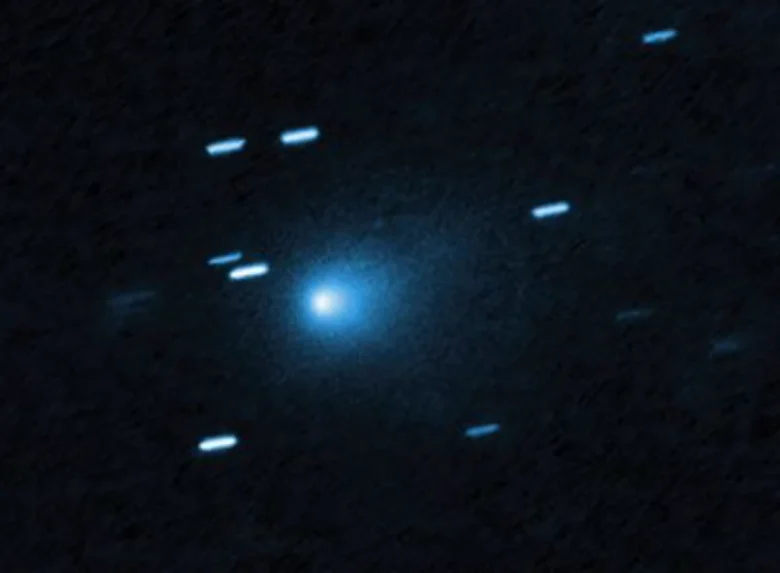
NASA has released a new set of images showing the interstellar comet 3I/ATLAS as it crossed the inner solar system in October 2025. Spacecraft orbiting the Sun, traveling through deep space, and working around Mars all turned their cameras toward the object after its close pass. The goal was to capture its shape, motion, and makeup before it fades from view and leaves the solar system for good.
The images were published on November 19, weeks after the comet passed near Mars in early October. NASA confirmed that missions including MAVEN, Psyche, Lucy, and SOHO collected data from different positions in space. Together, they created a rare, multi-angle record of an object that formed around another star.
In most of the images, the comet appears as a faint, blurred ball surrounded by a cloud of gas and dust. A short tail can also be seen in some views. Despite coming from another star system, it behaves much like comets that formed in our own.
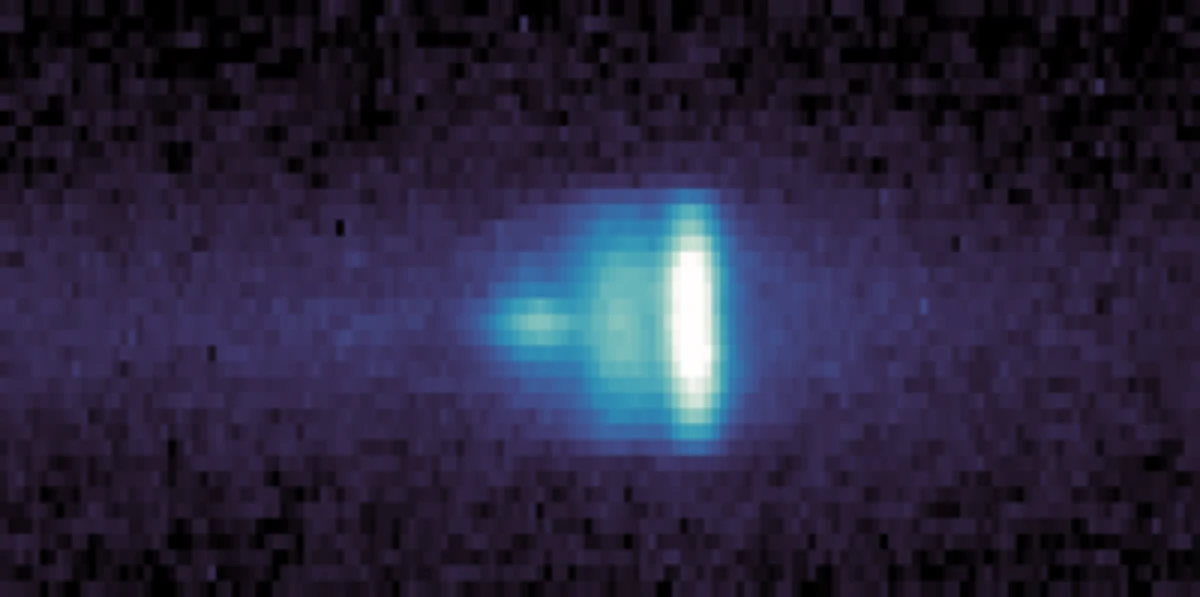
MAVEN, which orbits Mars, used its ultraviolet camera to detect a wide cloud of hydrogen around the comet. This cloud formed as sunlight broke down gases released from the surface. The solar wind then pushed this material away, stretching it through space.
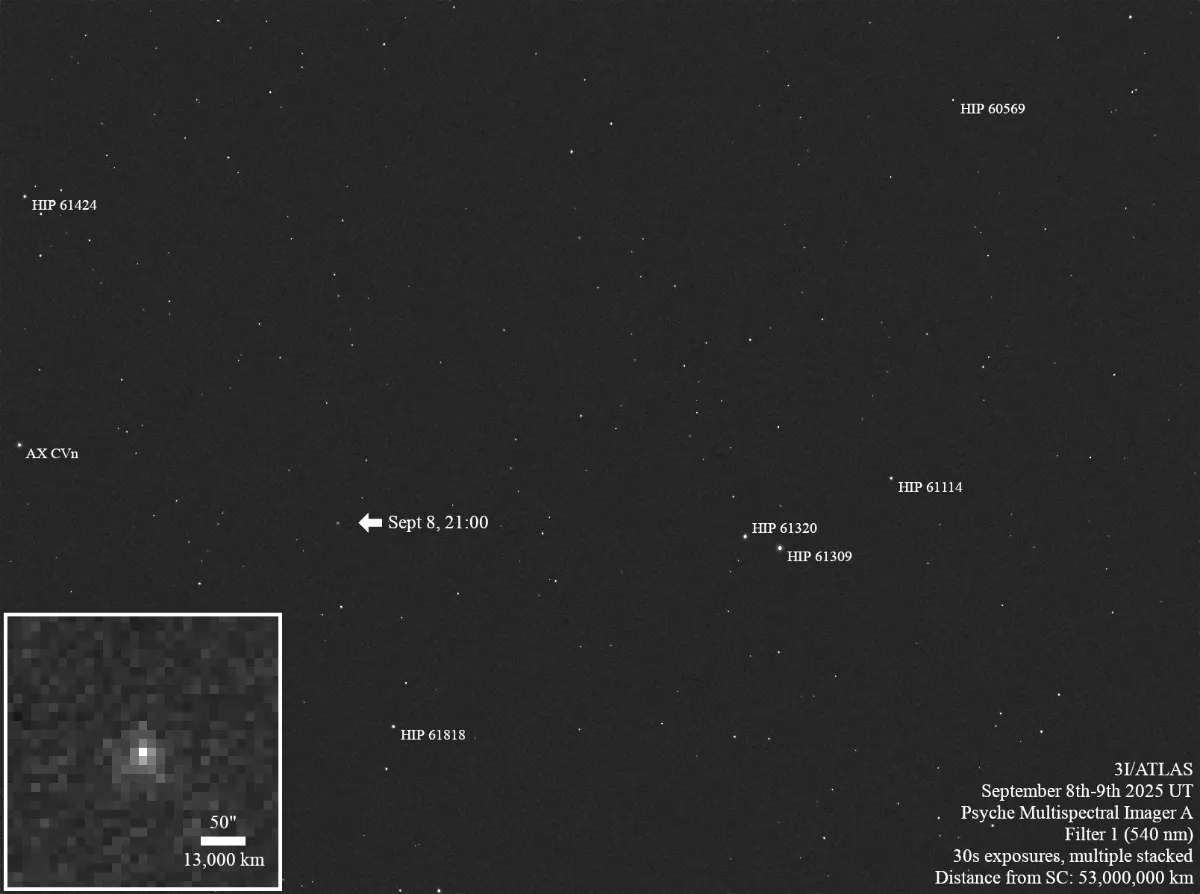
The Psyche spacecraft observed the comet for nearly eight hours as it passed about 33 million miles away. These long observations helped scientists calculate its exact path and speed with better accuracy.
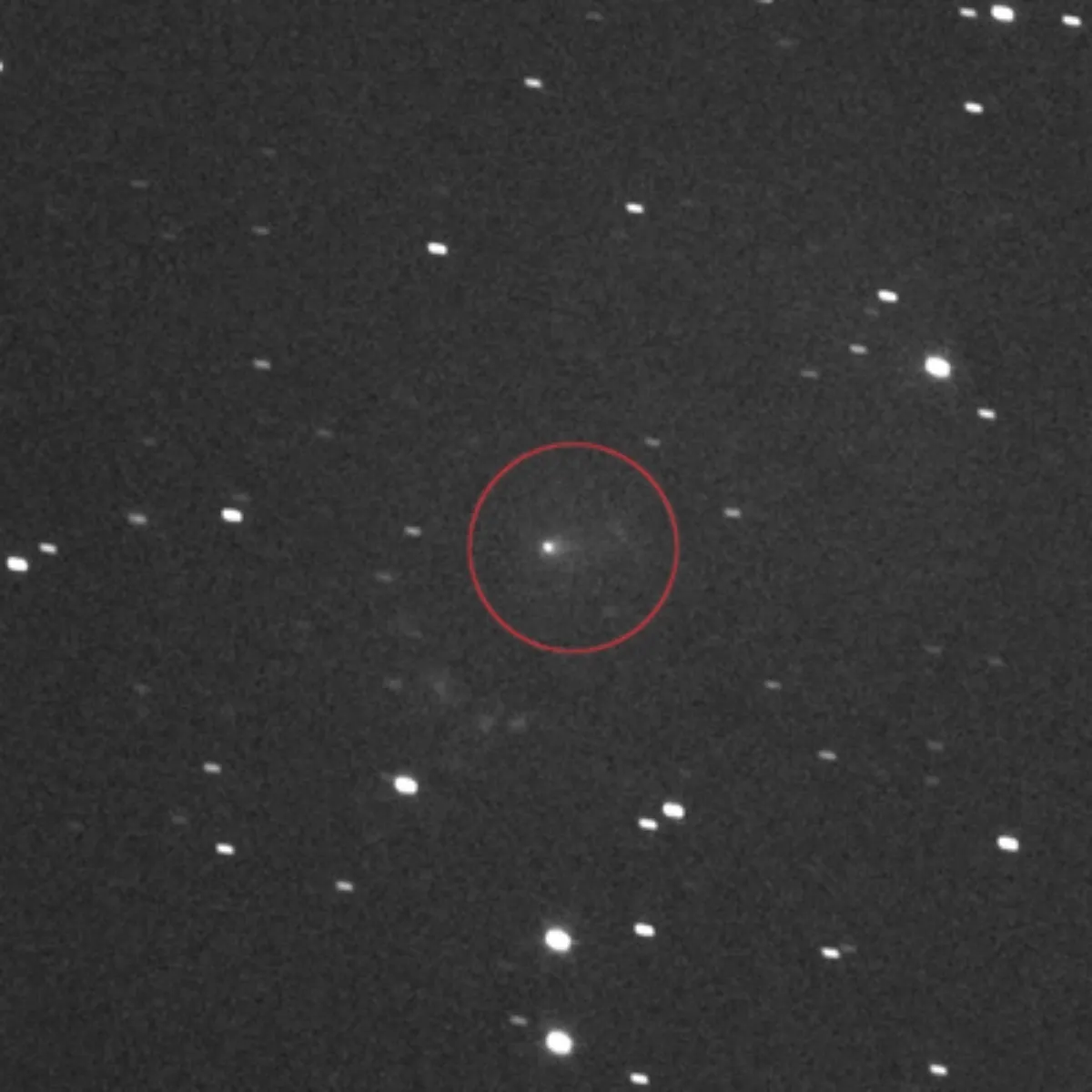
Farther out, the Lucy spacecraft captured faint images from roughly 240 million miles away. Scientists combined several of these pictures to reveal the dusty cloud and a short tail against the background of stars.
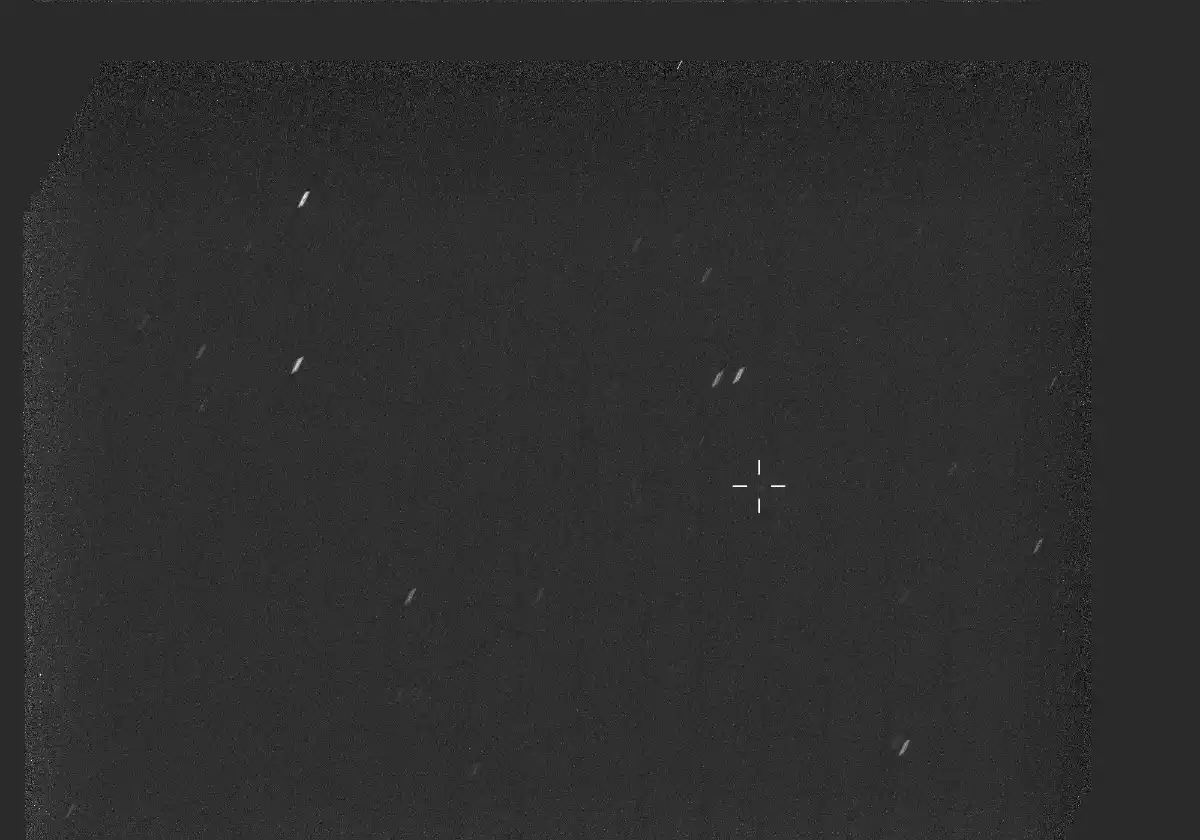
Even on the Martian surface, the Perseverance rover managed to spot a weak trace of the comet in the sky. From Earth’s orbit, the Hubble Space Telescope collected clearer data on the gases surrounding the object. Ground-based telescopes added more detail about its size and activity.
Chemical readings show large amounts of carbon monoxide and cyanide in the gas cloud around 3I/ATLAS. These substances are also common in comets within our own solar system. This suggests similar conditions may exist in many star systems when comets form.
The comet is only the third confirmed visitor from outside our solar system, following ‘Oumuamua in 2017 and Borisov in 2019. It is moving at nearly 150,000 miles per hour on a path that will send it back into deep space, never to return.
The ATLAS survey first discovered the object on July 1, 2025. It made its closest pass to the Sun on October 30 at a distance of about 1.4 times the gap between Earth and the Sun, close to the orbit of Mars. Scientists estimate the solid center of the comet may be between one and five kilometers wide. It appears to be covered in reddish dust, similar to objects found on the edge of our own solar system.
Large telescopes will continue tracking 3I/ATLAS into early 2026 as it fades. The James Webb Space Telescope has already observed it, and more data is being processed. Each set of images adds to a small but growing record of objects that travel between stars. For now, 3I/ATLAS is offering one of the clearest chances yet to study material formed around another sun.