Category: Space

Explore the vastness beyond our planet. This section covers missions, discoveries, and events that expand our reach into the cosmos. From new rocket launches to deep-space observations, “Space” keeps you updated on humanity’s steps into the unknown.

  • NASA Decommissions Asteroid-Hunting NEOWISE Spacecraft After 15-Year Missio

    NASA Decommissions Asteroid-Hunting NEOWISE Spacecraft After 15-Year Missio

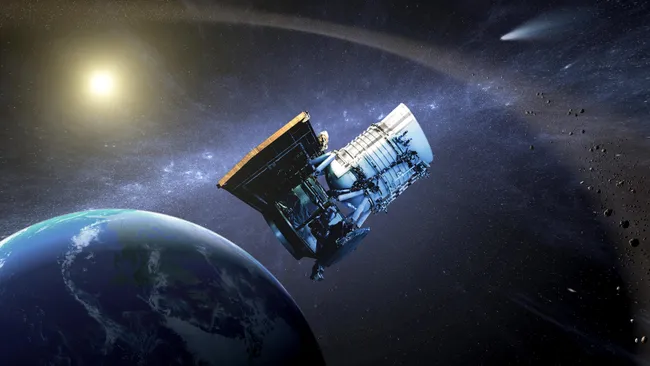
    After more than a decade and a half of service, NASA’s NEOWISE spacecraft, a crucial part of its planetary defense program, has officially ended its mission. The asteroid-hunting telescope, which had been operating on borrowed time, was decommissioned on August 8. It will now continue a slow descent toward Earth, where it is expected to safely burn up in the atmosphere later this year.

    The mission’s end comes as the spacecraft, lacking the fuel to boost its orbit, has been gradually pulled closer to Earth’s atmosphere by a period of peak solar activity. The sun’s increased heat has caused our atmosphere to expand, creating drag on the satellite and accelerating its fall.

    The NEOWISE mission had a long and unexpected career. It was launched in 2009 as the Wide-field Infrared Survey Explorer, or WISE, with a primary mission of just seven months to map the entire sky in infrared light. It was initially designed to look for faint light from the early universe, but scientists soon discovered it was far more sensitive than anticipated.

    Following this discovery, NASA extended the mission and repurposed the telescope. In 2011, it was renamed NEOWISE and tasked with surveying the main asteroid belt between Mars and Jupiter. It was put into hibernation in 2011 when its coolant ran out, making its infrared sensors less sensitive.

    However, the mission was not over. In 2013, NASA brought the spacecraft out of hibernation after realizing it could still detect near-Earth objects by observing the sunlight they reflected. For over a decade, NEOWISE has served as a valuable planetary defender. During its extended career, NEOWISE detected over 200 new near-Earth objects, including 25 new comets, and cataloged 44,000 other objects that passed through our solar system.

    Its legacy will continue with NASA’s next-generation mission, the NEO Surveyor, which is already under development and scheduled to launch no earlier than September 2027. This new infrared space telescope will be even more advanced, with an innovative solar shade that will allow it to spot asteroids near the sun’s glare, a known blind spot for planetary defense.

    Until the NEO Surveyor is in orbit, ground-based telescopes like the Catalina Sky Survey in Arizona and Pan-STARRS in Hawaii will carry on the crucial work of tracking and detecting near-Earth objects to protect our planet.
  • SpaceX Launches Starlink Satellites After Scrapping Previous Attempt, Falcon 9 Lands Safely

    SpaceX Launches Starlink Satellites After Scrapping Previous Attempt, Falcon 9 Lands Safely

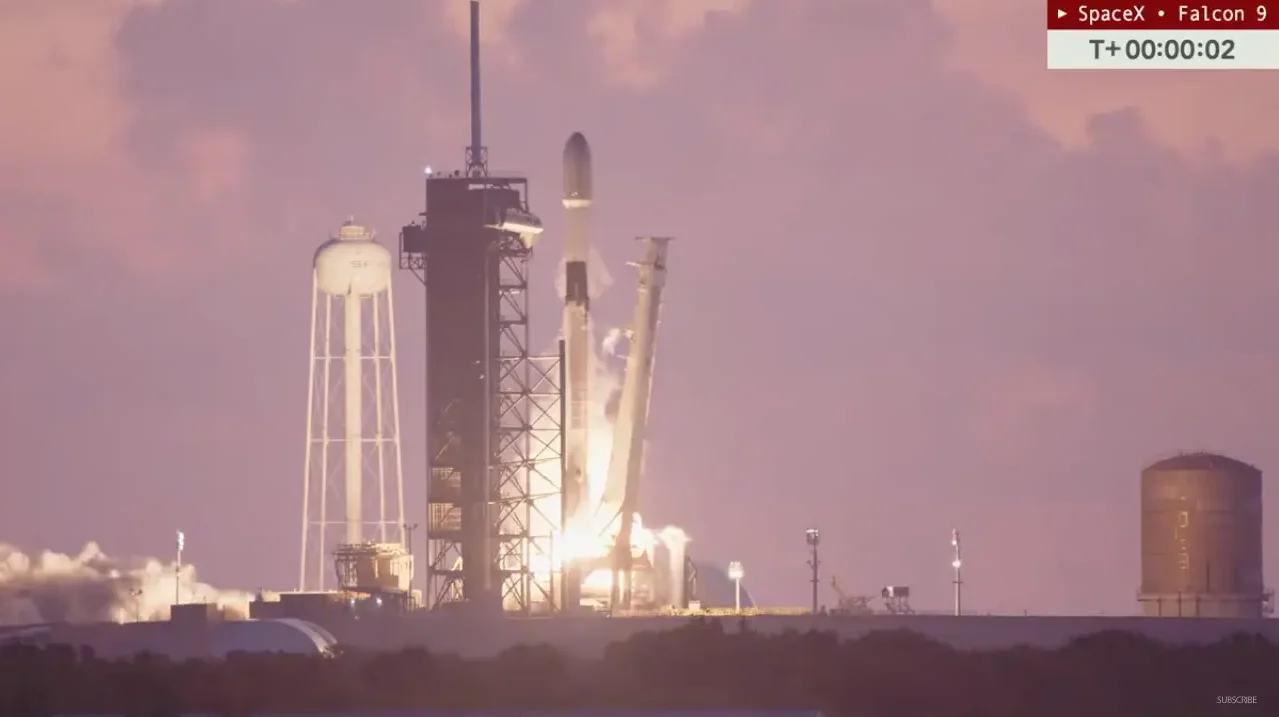
    SpaceX successfully launched a batch of 24 Starlink satellites into low Earth orbit on Monday, August 12, following an aborted attempt the previous day. The Falcon 9 rocket lifted off at 6:37 a.m. EDT from Launch Complex 39A at NASA’s Kennedy Space Center. The successful mission, which delivered the satellites into orbit, was followed by a perfect landing of the rocket’s first stage on a droneship in the Atlantic Ocean.

    The initial launch attempt on Sunday, August 11, was automatically halted just 46 seconds before liftoff. SpaceX did not immediately provide a reason for the scrub but stated on X that the “vehicle and payload are in good health, and teams are resetting for a launch attempt on Monday, August 12.” The company later clarified that the scrub was due to poor weather conditions in the booster recovery zone, where the Falcon 9 was meant to land.

    The successful launch marked another milestone in SpaceX’s ambitious reusability program. About eight minutes after liftoff, the Falcon 9’s first-stage booster made a controlled descent and landed on the droneship “A Shortfall of Gravitas” in the Atlantic.

    This was the booster’s tenth flight, demonstrating the durability of the company’s rockets. Reusing rockets is a cornerstone of SpaceX’s strategy to lower the cost of spaceflight. The Falcon 9 has flown more than 500 times, with a first-stage booster successfully landing in over 97% of attempts.

    This Starlink mission adds to the growing constellation of satellites that provide high-speed internet to users across the globe. The company’s focus on rapid and reliable launches from its various launchpads on both the East and West coasts has been key to expanding the Starlink network.

  • SpaceX Tests New Raptor 3 Engine for Starship, Sparks Debate Over Design and Powe

    SpaceX Tests New Raptor 3 Engine for Starship, Sparks Debate Over Design and Powe

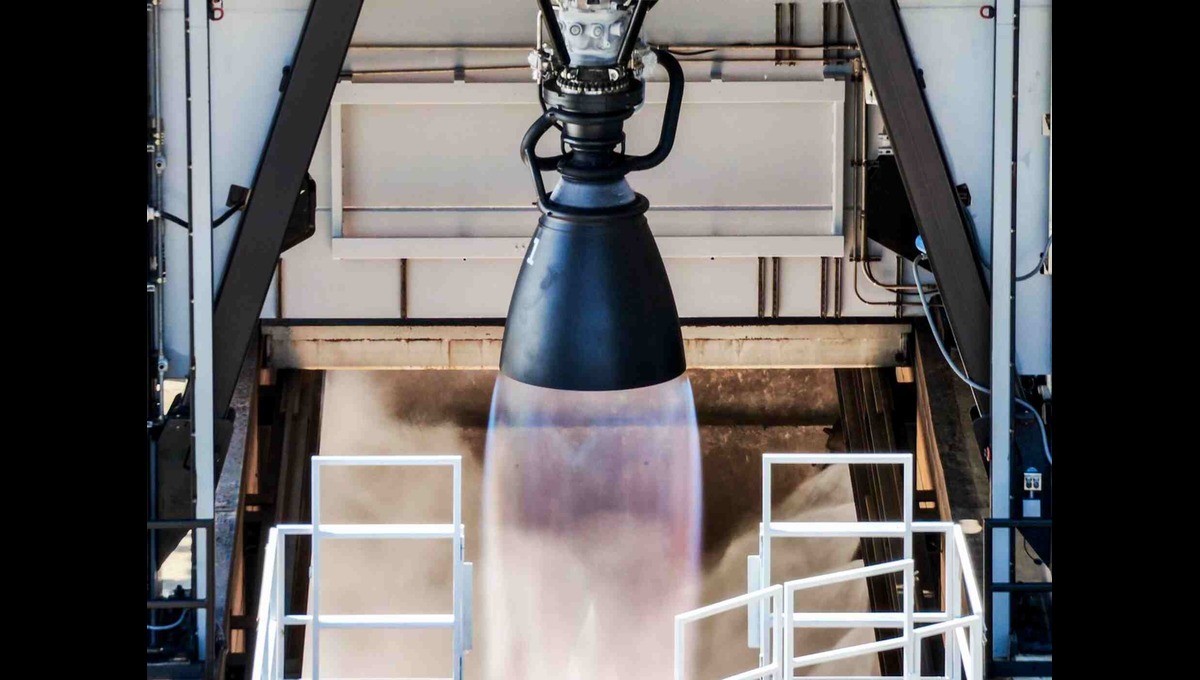
    SpaceX has successfully fired its new Raptor 3 engine, a critical step for its Starship/Super Heavy rocket program. The static fire test, conducted on August 9 at the company’s McGregor, Texas facility, not only showcased the engine’s raw power but also ignited a heated debate online over its minimalist design and performance improvements.

    The new engine’s sleek, almost bare-bones appearance quickly drew praise from some on social media. An X user named Luke Leisher shared a picture, nominating the Raptor 3 for the “best looking engine ever.”

    However, the design also attracted criticism from within the space industry. The CEO of United Launch Alliance (ULA) reportedly questioned the engine’s appearance, calling it “partially assembled” in response to an image shared by Elon Musk.

    SpaceX President and COO Gwynne Shotwell later posted a photo of the engine firing, saying, “It works pretty well for a partially assembled engine,” effectively ending the online dispute and confirming its performance.

    The Raptor 3 is a major leap forward from its predecessors. SpaceX has dramatically increased the engine’s thrust while also reducing its weight. This reduction in “induced mass” is a key achievement.

    The Raptor 3 now generates 280 tons of force, a significant increase from the Raptor 2’s 230 tons and the Raptor 1’s 190 tons. The weight has been cut down to just 195 kg, a massive reduction from the Raptor 1’s 1,548 kg and the Raptor 2’s 1,245 kg. This makes the new engine lighter and far more powerful, a crucial combination for the Starship, which aims to carry humans to Mars.

    An X user highlighted this breakthrough in a reply to Elon Musk:

    The success of the Raptor 3 test shows how SpaceX continues to refine its technology, simplifying complex engineering to improve efficiency and power. This ongoing development is essential as the company works to make its ambitious Starship missions a reality.

  • NASA: Butch Wilmore and Sunita Williams to be brought back on SpaceX Dragon Spacecraft

    NASA: Butch Wilmore and Sunita Williams to be brought back on SpaceX Dragon Spacecraft

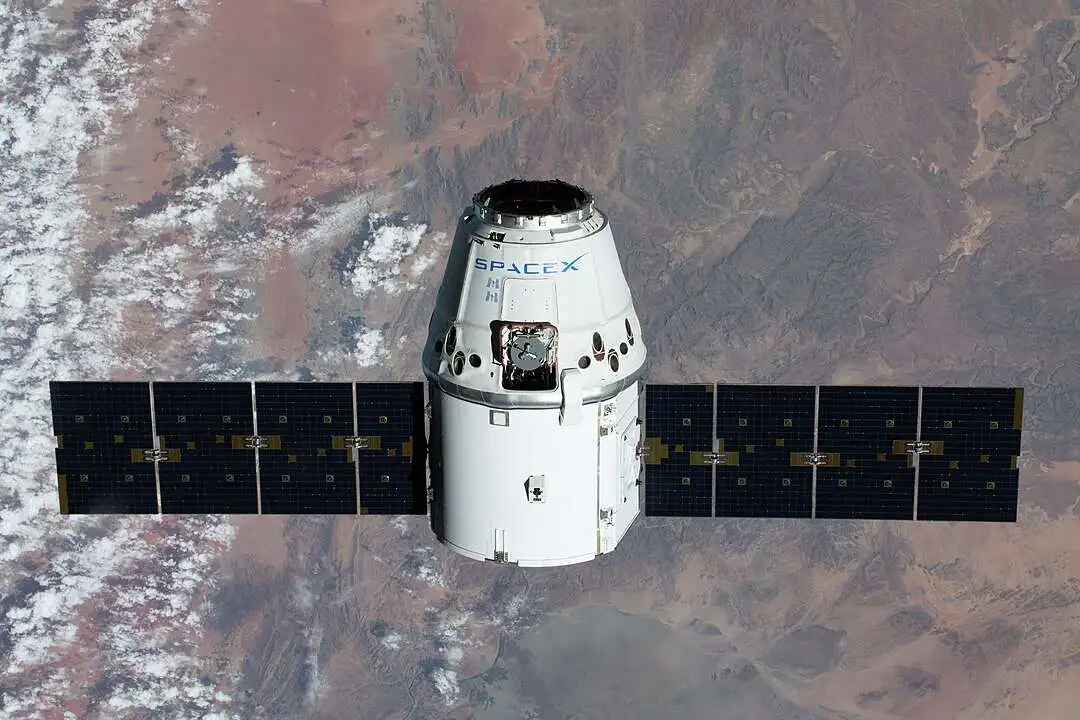
    NASA and SpaceX have finalized plans for astronauts Butch Wilmore and Sunita “Suni” Williams to return from the International Space Station aboard a SpaceX Dragon spacecraft in March 2025, after their Boeing Starliner mission was grounded by persistent technical failures. Their return comes as Boeing engineers continue ground tests in New Mexico to fix helium leaks and thruster issues on the Starliner vehicle.

    The two reached the ISS in June 2024 aboard Starliner, but multiple helium leaks and thruster malfunctions rendered the spacecraft unsafe for a crewed return. NASA ordered the capsule to return uncrewed, while Wilmore and Williams stayed aboard the ISS. Boeing and NASA have run continuous diagnostics and testing at White Sands, New Mexico, to resolve the faults.

    NASA delayed the launch of the SpaceX Crew-9 mission, which was initially scheduled for August 18. The mission launched with just two astronauts aboard, leaving two seats open for Wilmore and Williams to come home via Dragon.

    The SpaceX Crew-9 flight carried NASA astronaut Nick Hague and Roscosmos cosmonaut Alexander Gorbunov to the ISS in late September 2024 and splashed back down on March 18, 2025, with Hague plus Wilmore and Williams on board.

    The switch to Dragon ensured the astronauts’ safe return despite Starliner’s delays. Boeing’s spacecraft remains under study, with more testing ahead before any future crewed flight can happen.

  • World Astronomers to gather in South Africa for World’s largest Astronomy Meeting

    World Astronomers to gather in South Africa for World’s largest Astronomy Meeting

    South Africa has made history as the first African nation to host the International Astronomy Union’s General Assembly, the largest global meeting of astronomers.

    The two-week event began on 6 August 2024 in Cape Town, bringing together thousands of scientists, educators, and space industry leaders both in person and online. Organizers say the gathering will spotlight Africa’s growing role in astronomy and strengthen international scientific partnerships.

    The assembly was officially opened by Science, Technology, and Innovation Minister Professor Blade Nzimande, who addressed delegates from around the world. Keynote speakers include trailblazing astronauts Dr. Mae Jemison, the first African-American woman in space, and Dr. Sian Proctor, who became the first Black woman to pilot a spacecraft. Both will share insights on diversity, innovation, and humanity’s future in space.

    The International Astronomy Union (IAU) General Assembly is held every three years and is coordinated for 2024 by the African Astronomical Society. This year’s program features over 2,000 presentations across more than 300 sessions, with topics ranging from planetary science to radio astronomy.

    Six symposia, 12 multi-session focus meetings, poster presentations, and award lectures will showcase the latest discoveries and advancements in the field.

    According to the Department of Science and Innovation (DSI), one of the most anticipated moments will allow attendees to speak live with astronauts aboard the International Space Station using amateur radio. This collaboration is part of the Amateur Radio on the International Space Station (ARISS) program, which promotes direct public engagement with space missions.

    The event is expected to boost public interest in astronomy across Africa, with organizers highlighting the continent’s heritage in stargazing and its rapidly advancing space science infrastructure.

    The exhibition hall includes participation from the South African Radio Astronomy Observatory (SARAO), the South African Astronomical Observatory, NASA, the European Space Agency, the National Astronomical Observatory of Japan, the US National Radio Astronomy Observatory, and several South African agencies.

    The 2024 assembly aims to strengthen collaborations between African and international institutions, paving the way for future research projects and technology development. Officials say hosting the world’s largest astronomy gathering is not only a milestone for South Africa but also a step forward for the global scientific community.

    According to recent reports from SA News, the 32nd General Assembly will also highlight public engagement initiatives and outreach programs designed to inspire the next generation of scientists across Africa.

  • Indian astronomers uncover 34 colossal radio sources using the GMRT near Pune

    Indian astronomers uncover 34 colossal radio sources using the GMRT near Pune

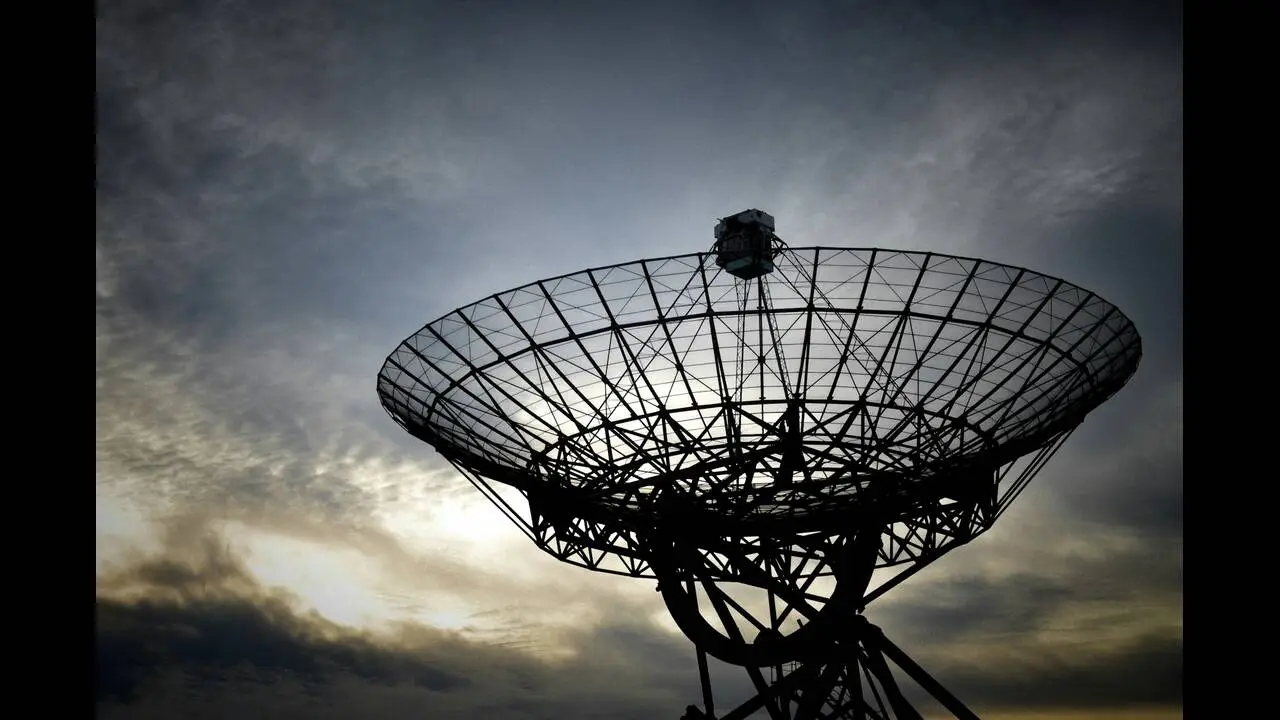
    Researchers near Pune, India, have revealed 34 enormous cosmic structures powered by supermassive black holes. In a recent study, a team of astronomers based in India used data from the Giant Metrewave Radio Telescope (GMRT), located near Khodad village about 90 km north of Pune, to identify 34 new giant radio sources (GRSs).

    These structures span millions of light-years, far larger than our Milky Way Galaxy, which is roughly 100,000 light-years across.

    The discovery builds on observations taken between 2010 and 2012 during the TIFR GMRT Sky Survey (TGSS), which mapped nearly 90 percent of the sky at low radio frequencies. The findings help researchers better understand the late stages in the evolution of radio galaxies from supermassive black holes with masses between ten million and a billion times that of the Sun.

    The team analyzed archived TGSS data taken by the GMRT at 150 MHz (not 150 Hz) from 2010 to 2012. By examining such low-frequency radio waves across about 90 percent of the sky, they could pick out the faint, extended emission of GRSs that might otherwise get missed. The telescope’s high sensitivity played a key role in detecting these rare and enormous sources.

    The discovery came from a collaborative effort by two PhD students, Netai Bhukta from SKBU, India, and Souvik Manik from MCC, India, working alongside astronomers Sabyasachi Pal (MCC, India) and Sushanta K. Mondal (SKBU, India). Their work demonstrates how careful reanalysis of existing survey data can yield major new insights.

    These giant radio sources represent one of the final known stages in the life cycle of radio galaxies. At their core lie supermassive black holes that launch powerful jets of particles and magnetic fields, producing vast lobes of radio emission. That these GRSs stretch up to millions of light-years makes them among the largest individual structures ever observed in the universe.

    Some of the 34 GRSs also stand out because of their distance, being among the most remote ever recorded, raising questions about how such massive, extended structures could grow in the earlier universe. Two of the detected sources appear to challenge previous ideas about how GRSs interact with and are limited by their surrounding environment. Further study could reshape our understanding of how these rare objects form and evolve.

    The team’s findings show that large-scale features hidden in older survey data can still surface when looked at with fresh eyes and better tools. As radio telescopes like GMRT continue to improve and new instruments such as the Square Kilometre Array (SKA) come online, researchers expect to find even more giant radio sources and learn how they fit into the cosmic story.

  • ISRO Partners with NASA and Axiom Space to Send Indian Astronaut Shubhanshu Shukla to ISS

    ISRO Partners with NASA and Axiom Space to Send Indian Astronaut Shubhanshu Shukla to ISS

    The Indian Space Research Organisation (ISRO) is partnering with NASA and US company Axiom Space to send an Indian astronaut, known as the “Gaganyaatri,” to the International Space Station (ISS) as part of the AXIOM 4 mission.

    The announcement came from Union Minister Dr. Jitendra Singh in a written reply to the Lok Sabha. The mission is planned to advance India’s human spaceflight program and strengthen international cooperation in space research.

    The astronaut selected for the mission is Group Captain Shubhanshu Shukla, who is currently undergoing training alongside three international astronauts. He will join them aboard the ISS to conduct scientific experiments and participate in space outreach programs.

    Shukla was chosen as the prime candidate by ISRO’s Astronaut Selection Board, which also named Group Captain Prasanth Balakrishnan Nair as the backup astronaut. The selection process involved oversight by the Multilateral Crew Operations Panel (MCOP).

    The AXIOM 4 mission represents a major step for India’s human spaceflight ambitions. It follows the agreement between ISRO’s Human Space Flight Centre (HSFC) and Axiom Space Inc., a NASA-identified service provider.

    This partnership allows ISRO access to the ISS via NASA and supports the ongoing development of India’s Gaganyaan mission, the country’s first independent crewed spaceflight project expected to launch by 2025.

    Dr. Singh emphasized that this collaboration will enhance India’s capabilities in human spaceflight and deepen its cooperation with NASA. The mission will provide valuable experience for India’s future space missions and help build stronger ties in international space exploration.

    This mission is a key milestone in India’s expanding role in space, reflecting its growing presence on the global stage and ambitions to contribute to international space research efforts.

  • NASA Plus: A Streaming Service for Space Enthusiasts

    NASA Plus: A Streaming Service for Space Enthusiasts

    NASA Plus was released on November 8, 2023. It is a streaming service that directly brings space and astronomy-related content to any device. NASA+ makes it easier for space enthusiasts to browse through NASA’s vast library of videos, documentaries, and live events.

    What is NASA Plus?

    NASA Plus is a streaming platform created by NASA that allows us to watch spacewalks, live broadcasts of rocket launches, and other significant events. It will also feature documentaries, educational videos, and original series. It is designed to make people of all ages learn about space and science.

    What can you watch on NASA Plus?

    NASA+ provides a wide variety of content. Here’s what you can experience on NASA Plus:

    1. Live events: Watch rocket launches, spacewalks, and other significant events happen in real time.
    2. Documentaries: The documentaries cover various other topics, such as the history of space exploration, current missions, and future plans.
    3. Educational Videos: The videos section created for students and teachers features various topics to learn about in depth, such as black holes, the solar system, and the science behind space missions.
    4. Original series: The NASA Plus original series will tell us the stories of NASA’s work and the people behind it.

    How do I access NASA Plus?

    NASA Plus is available on various devices. You can watch it on a smartphone, tablet, computer, or smart TV. NASA Plus is free to all users; there’s no subscription or paywall.

    To access NASA Plus, download the NASA Plus app from the Play Store or visit the NASA website.

    What’s next for NASA Plus?

    NASA plans to continue expanding the content available on NASA Plus. As NASA carries out more missions, all the content will be added to the platform, making it wholesome for space lovers. NASA Plus will also likely see more partnerships with other organizations in the future. This could lead to even more exciting content for viewers.

  • Axiom Space develops spacesuit that recycles astronauts’ urine into drinkable water

    Axiom Space develops spacesuit that recycles astronauts’ urine into drinkable water

    Scientists at Axiom Space are developing a new spacesuit that can convert astronauts’ urine into drinkable water, inspired by the stillsuits featured in the sci-fi movie Dune. This innovation aims to improve astronaut comfort and hydration during spacewalks by recycling bodily fluids, potentially transforming long-duration missions.

    Currently, astronauts rely on a multi-layered adult diaper known as the Maximum Absorbency Garment (MAG) to manage waste. While effective at holding up to two liters, the MAG often causes discomfort, skin rashes, and urinary tract infections (UTIs) and is susceptible to leaks, which can create hygiene problems during missions.

    The new spacesuit design addresses these issues by incorporating an undergarment made from flexible fabric fitted with a silicone cup tailored to different anatomies for better comfort. A vacuum pump transfers urine from the cup to a filtration system attached to the back of the suit. This system filters out salts and impurities, converting up to 500 ml of urine into clean drinking water within five minutes with an 87% efficiency rate.

    The filtration unit weighs approximately 8 kg and measures 38 cm by 23 cm by 23 cm, making it compact enough to be carried on an astronaut’s back without adding significant bulk. The suit will provide astronauts with nearly instant access to water during spacewalks, which typically last around six hours and currently allow only one liter of water storage.

    This technology could be a major advancement for future missions, including NASA’s Artemis program, which aims to return humans to the Moon and eventually send crewed missions to Mars. While promising, the spacesuit still requires further research and human testing before it can be deployed on actual space missions.

  • ISRO partners with NASA and Axiom Space to send Indian astronaut on Axiom Mission 4 to ISS

    ISRO partners with NASA and Axiom Space to send Indian astronaut on Axiom Mission 4 to ISS

    The Indian Space Research Organization (ISRO) has joined forces with NASA and the US private aerospace company Axiom Space to send an Indian astronaut to the International Space Station (ISS) as part of the Axiom Mission 4 (AX-4). Scheduled for launch no earlier than August 2024 from NASA’s Kennedy Space Center in Florida, this mission will mark a key milestone for India’s space program.

    The selected astronaut, called a “Gaganyaatri,” will be one of four candidates currently training under the Gaganyaan Mission, India’s first manned spaceflight program expected to launch by 2025.

    Union Minister Dr. Jitendra Singh, Minister of State for Science and Technology, confirmed the collaboration in a written response to the Lok Sabha. He explained that the astronaut will be chosen by ISRO’s Astronaut Selection Board from the four Gaganyaan trainees, all of whom are Indian Air Force test pilots undergoing intensive training at the astronaut facility in Bangalore.

    The AX-4 mission will carry the Indian astronaut alongside three international crew members to the ISS. This partnership represents not only a significant step in India’s human spaceflight ambitions but also a broader push for international cooperation in space research. The collaboration with Axiom Space provides ISRO with access to new technologies and expands opportunities for scientific research and resource sharing.

    ISRO’s engagement with NASA and Axiom Space also signals a growing trend of public-private partnerships in space exploration. The Gaganyaan program aims to build on this momentum, preparing India for future independent human space missions while fostering international ties. This mission is expected to enhance India’s capabilities in human spaceflight and contribute valuable experience for upcoming projects.