Category: Space

Explore the vastness beyond our planet. This section covers missions, discoveries, and events that expand our reach into the cosmos. From new rocket launches to deep-space observations, “Space” keeps you updated on humanity’s steps into the unknown.

  • NASA delays Rocket Lab’s first Mars mission as Blue Origin’s New Glenn faces technical hurdles

    NASA delays Rocket Lab’s first Mars mission as Blue Origin’s New Glenn faces technical hurdles

    Rocket Lab’s long-awaited first mission to Mars has been pushed back again, with NASA now aiming for a launch no earlier than September 29, 2025, for the two small spacecraft that were originally set to blast off in October 2024.

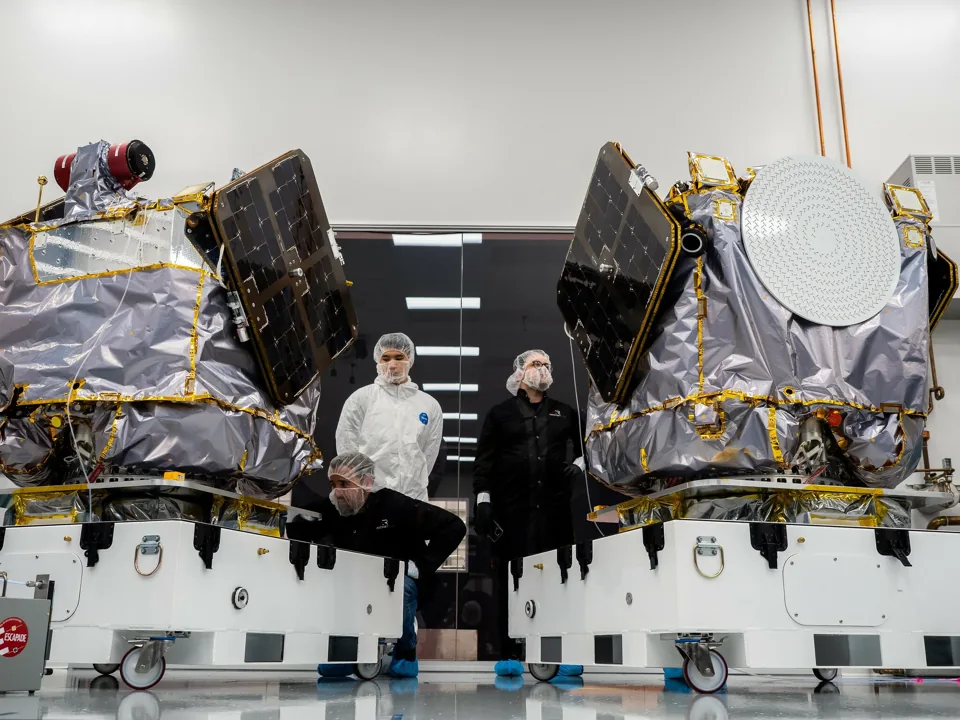
    The ESCAPADE mission, meant to study how Mars lost its atmosphere, got delayed because of technical issues with Blue Origin’s New Glenn rocket. That vehicle made its successful debut flight in January 2025, but NASA chose to shift ESCAPADE to New Glenn’s second outing to allow more time for preparations and cut down on risks.

    The mission uses two identical spacecraft, named Blue and Gold, that will orbit Mars and watch how solar particles from the sun interact with the planet’s weak magnetic field. Researchers think this interaction slowly stripped away the thick atmosphere Mars had long ago, turning it into the cold, dry place we see now.

    NASA explained the delay by pointing to concerns that rushing preparations might lead to expensive steps like removing and replacing fuel in the spacecraft. “Interplanetary launches require precision and reliability,” the agency noted. “Taking extra time now reduces risk later.”

    The spacecraft came from Rocket Lab, the company started in New Zealand that’s gained attention for its compact Electron rockets. In 2020, NASA gave Rocket Lab a $57 million deal to build the probes, and they finished the job in about three and a half years, quicker and less expensive than most missions to other planets.

    Rocket Lab’s CEO, Peter Beck, described ESCAPADE as a big move for them. “We set out to prove that smaller teams can build reliable interplanetary spacecraft at a fraction of the cost,” he said earlier this year.

    Rocket Lab has put more than 190 satellites into space since 2018 and posted quarterly revenues near $100 million not long ago. They’re also working on a bigger rocket called Neutron, set to fly for the first time later in 2025, when it could go up against SpaceX’s Falcon 9.

    Once Blue and Gold reach Mars’s orbit, they’ll track how the solar wind—a constant flow of charged particles from the sun—impacts the atmosphere there. Mars lacks a strong magnetic field like Earth’s, so it can’t protect its air from being worn away by solar radiation.

    The probes should grab the first visible-light pictures of auroras on Mars, those subtle glows in the thin air triggered by solar particles. The data might help figure out if intense solar storms billions of years back removed the elements that could have supported life.

    NASA funds this through its Small Innovative Missions for Planetary Exploration program, which backs focused science on a tighter budget. ESCAPADE comes in at $80 million total.

    Launches to Mars need exact timing, with the best windows every 26 months or so when the planets line up. This latest shift means NASA has to plot different paths, which might stretch the trip or use more fuel.

    With a September 2025 launch, the spacecraft would need roughly 11 months to get to Mars, arriving around August 2026. They’d spend a few months settling into their orbits before starting data collection later that year. The whole operation is planned for 11 months, divided into two main phases.

    Even with the holdup, NASA says the mission’s aims haven’t changed. “ESCAPADE is designed to help us understand how Mars became the planet it is today,” the agency said.

    If it works, the results could broaden what we know about planets losing their air and aid planning for human trips to Mars down the line. For Rocket Lab, this marks their entry into missions beyond Earth and a shot at taking on bigger players in space exploration.
  • Chennai Startup Launches India’s First Reusable Mobile Hybrid Rocket Rhumi-1

    Chennai Startup Launches India’s First Reusable Mobile Hybrid Rocket Rhumi-1

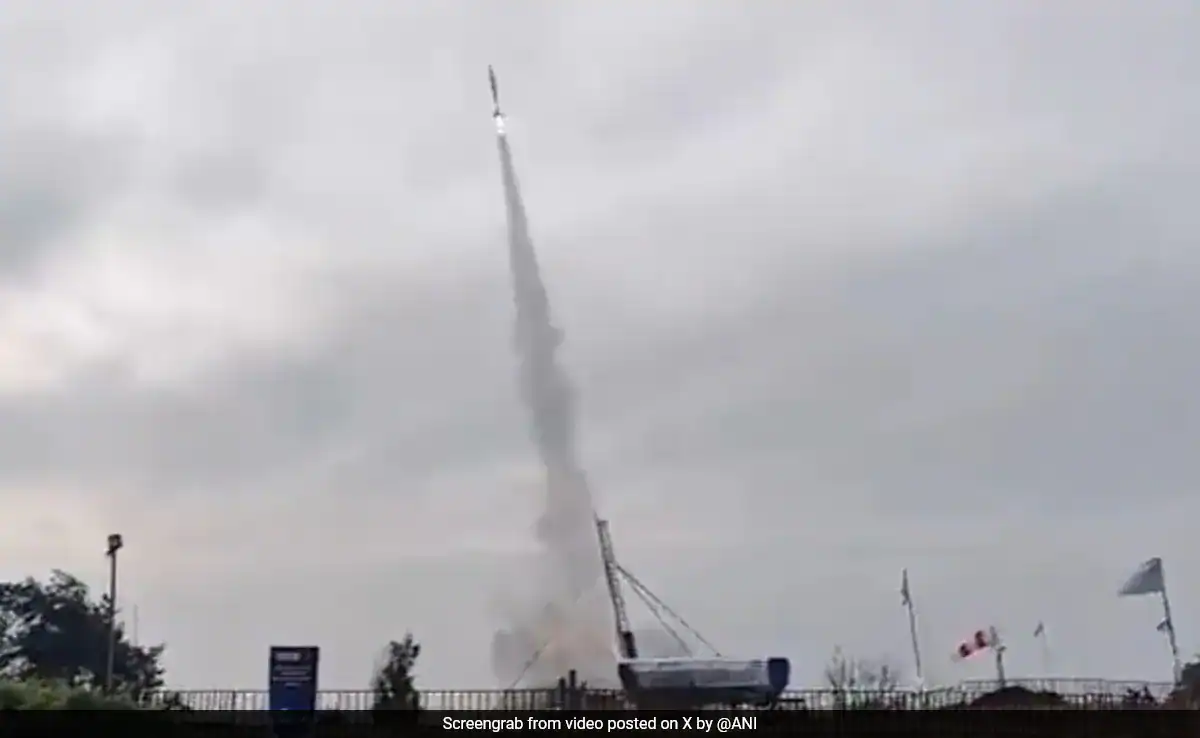
    India has taken another step in private space innovation with the successful launch of Rhumi-1, the country’s first reusable mobile hybrid rocket. Developed by Chennai-based Space Zone India in collaboration with Martin Group, the rocket lifted off from a mobile launcher at Thiruvidandhai, a coastal village near Chennai, on August 24, 2024. The achievement positions India among the few nations advancing reusable space technology.

    Weighing about 80 kilograms and standing 3.5 meters tall, Rhumi-1 is a sounding rocket designed to carry out suborbital experiments. On its maiden flight, it reached an altitude of 35 kilometers before returning safely to Earth within seconds. The mission deployed three CubeSats and 50 picosatellites, which will collect data on climate change and global warming.

    Rhumi-1 runs on a hybrid propulsion system that combines a liquid oxidizer with solid fuel, a design that reduces costs while supporting reusability. Its mobile launch system also makes it unique, enabling flexible launches without fixed infrastructure. By comparison, SpaceX’s Starship uses liquid oxygen and methane, but Rhumi-1’s scale makes it better suited for educational and experimental purposes.

    Space Zone India, founded by Anand Megalingam and led by Chairman K. Megalingam, aims to cut the financial burden of space exploration by creating environmentally friendly reusable rockets. The startup also focuses on engaging students and spreading awareness of rocket science.

    Globally, Space Zone India becomes only the second company after SpaceX to demonstrate reusable rocket technology. While Rhumi-1 is far smaller than SpaceX’s Falcon 9 or Starship, its success marks the beginning of reusable rocket development in India and highlights the growing role of private startups in the country’s space sector.

  • ISRO Pushes First Gaganyaan Test Flight to Late 2025; Crewed Launch Now Aimed for 2027

    ISRO Pushes First Gaganyaan Test Flight to Late 2025; Crewed Launch Now Aimed for 2027

    Mission NameGaganyaan
    Initiated ByISRO (Indian Space Research Organisation)
    Launch DateTBD (2024 expected)
    ObjectiveFirst crewed spaceflight mission of India
    Primary VehicleGaganyaan Crew Module
    Mission DurationApproximately 5-7 days (planned)
    Official WebsiteClick

    India’s human spaceflight mission, Gaganyaan’s test flight, will not lift off in December 2024 as once planned. The Indian Space Research Organisation (ISRO) now expects its first uncrewed test flight, carrying the humanoid robot Vyommitra, to launch by late 2025.

    The crewed mission, originally scheduled for a 2025 launch and later delayed to 2026, is now scheduled for early 2027, ex-ISRO chairman Dr. S. Somanath confirmed. The delay reflects the agency’s cautious approach to astronaut safety as it prepares India to become the fourth country to send humans into space independently.

    The uncrewed flight, known as G1, will be powered by ISRO’s Launch Vehicle Mark-3 (LVM3), the same rocket that carried Chandrayaan-3 to the Moon in 2023. G1 will test critical systems: rocket performance, crew and service modules, life-support functions, reentry procedures, parachute deployment, and splashdown in the Bay of Bengal.

    Vyommitra, a half-humanoid robot designed to mimic astronaut activity, will monitor controls and collect data in microgravity.

    Rocket hardware for G1 has already reached the Satish Dhawan Space Centre in Sriharikota. The service and crew modules are being assembled at the UR Rao Satellite Centre in Bengaluru and the Vikram Sarabhai Space Centre in Thiruvananthapuram.

    ISRO has also received a full set of parachutes from the Defence Research and Development Organisation (DRDO) in Agra. These include drogue, pilot, and main parachutes designed to ensure a safe landing.

    After G1, ISRO will conduct two more uncrewed tests (G2 and G3) in 2026, both carrying Vyommitra to validate further systems. Only after their success will the first crewed flight, H1, take place. Four Indian Air Force astronauts, currently training in Bengaluru, are expected to fly into low Earth orbit in early 2027.

    Dr. Somanath also outlined other milestones in India’s space program. ISRO has finished design work for the Chandrayaan-4 and Chandrayaan-5 lunar missions and is awaiting government approval to proceed. Plans for a five-module Indian space station, with the first module scheduled for launch in 2028, were also confirmed.

    The Gaganyaan program is seen as a major step in boosting India’s space technology sector. Success will not only advance India’s capabilities in crewed spaceflight but also cement its position among the world’s leading space powers.

  • SpaceX Launches Historic Polaris Dawn Mission, First Private Spacewalk Planned in Orbit

    SpaceX Launches Historic Polaris Dawn Mission, First Private Spacewalk Planned in Orbit

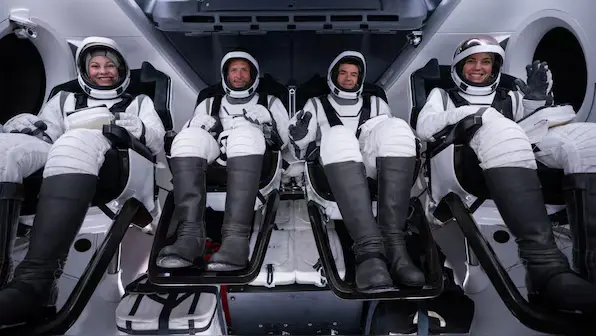
    SpaceX launched the Polaris Dawn mission aboard the SpaceX Falcon 9 rocket early Saturday, September 10, 2024, sending a crew of four into orbit on a groundbreaking private flight that achieved the first commercial spacewalk before returning safely to Earth.

    The Falcon 9 rocket lifted off at 5:23 a.m. EDT (0923 GMT) from Launch Complex 39A at NASA’s Kennedy Space Center in Florida, following multiple delays caused by technical checks and weather concerns.

    The mission is funded by billionaire entrepreneur Jared Isaacman, founder and CEO of Shift4 Payments, who commanded the flight. His crewmates were SpaceX engineers Sarah Gillis and Anna Menon, along with former U.S. Air Force pilot Scott Poteet. Together, they flew aboard the Crew Dragon spacecraft into a highly elliptical orbit designed to push the limits of commercial human spaceflight.

    Polaris Dawn reached a peak altitude of 1,408 kilometers (870 miles), the highest Earth orbit for astronauts since the Apollo era. The crew passed through the Van Allen radiation belts, marking the first human trip through that region in more than 50 years. Gillis and Menon also became the first women to travel this far from Earth.

    The launch, originally scheduled for August 26, 2024, was repeatedly postponed. Engineers discovered helium leaks in equipment meant to separate from the rocket, and poor weather forecasts in potential splashdown zones forced further delays on August 28 and 29. The successful liftoff finally came on September 10, 2024.

    On the third day of the mission, Isaacman and Gillis performed the first-ever commercial Extravehicular Activity (EVA) wearing new spacesuits developed by SpaceX in just two and a half years.

    Isaacman spent nearly eight minutes outside Dragon, followed by Gillis for just over seven minutes. The entire crew was briefly exposed to space vacuum during the operation, setting another record for private human spaceflight.

    Beyond the EVA, the crew conducted medical and scientific experiments, including research on spaceflight-associated neuro-ocular syndrome (SANS), radiation monitoring, and other health effects. They also tested Starlink’s laser-based communications system in orbit.

    In a symbolic moment, Gillis played a violin solo from space to support St. Jude Children’s Research Hospital, continuing Isaacman’s long-standing fundraising efforts.

    After five days in orbit, Polaris Dawn splashed down safely in the Gulf of Mexico on September 15, 2024. Menon was the first to exit the capsule, followed by Gillis, Poteet, and Isaacman.

    The mission’s success earned the Polaris Dawn team the 2025 John L. “Jack” Swigert Jr. Award for Space Exploration, honoring achievements such as record-breaking altitude, the first commercial spacewalk, and pioneering communications tests.

    Polaris Dawn is only the beginning of the broader Polaris Program, a series of private missions designed to advance human spaceflight. Future flights may include a study of options for servicing the Hubble Space Telescope and the first crewed launch aboard SpaceX’s Starship, pending its readiness.

  • NASA Tracks Asteroid 2020 RL and Four other Asteroids Set to Pass Earth Between August 27 and September 1

    NASA Tracks Asteroid 2020 RL and Four other Asteroids Set to Pass Earth Between August 27 and September 1

    NASA has confirmed that five asteroids will make close approaches to Earth between August 27 and September 1, just days after asteroid 2024 PQ5 passed safely by on August 20. None of the incoming space rocks pose a danger, but scientists are monitoring them closely as part of ongoing efforts to track near-Earth objects that could threaten the planet.

    The first of the group, asteroid 2020 RL, is expected to pass Earth on August 27 at a distance of 2.91 million miles. Measuring about 110 feet, roughly the size of a passenger aircraft, it will be the first of several flybys.

    Two days later, on August 29, asteroid 2021 RA10 will make its closest approach at 1.62 million miles. At 92 feet across, it is large enough to cause significant local damage if it were ever to impact, though no collision risk exists this time.

    Asteroid 2012 SX49, measuring 64 feet, will pass much farther away at 26.65 million miles. Despite being smaller, NASA continues to track such objects to build accurate models of their orbits.

    The largest of the group, 2016 RJ20, is estimated at 210 feet wide and will approach on August 31, passing within 4.34 million miles of Earth. NASA classifies it as the most notable of this series of flybys because of its size.

    Finally, asteroid 2012 JT, measuring 30 feet, will pass at 3.95 million miles on September 1. Though the smallest of the group, it still falls under NASA’s near-Earth object watch list.

    NASA’s Jet Propulsion Laboratory uses telescopes and radar systems such as NEOWISE to track thousands of asteroids and refine predictions of their future paths. Even small changes in trajectory could increase risks, which is why the agency monitors all flybys.

    Scientists stress that while flybys like these are routine, tracking them provides valuable data. Studying near-Earth asteroids helps researchers better understand the solar system’s formation and develop planetary defense strategies. NASA has already tested one such defense with its DART mission, which successfully redirected a small asteroid in 2022.

    Most Earth impacts, if they ever occurred, would likely happen in the oceans, since water covers 70 percent of the planet. Still, NASA considers precise tracking and long-term planning essential to protecting both people and infrastructure from potential future threats.

  • IAU Backs Creation of Lunar Time Zone as NASA Targets 2026 for Moon Standard Time

    IAU Backs Creation of Lunar Time Zone as NASA Targets 2026 for Moon Standard Time

    The International Astronomical Union (IAU) has joined efforts to establish a dedicated time zone for the Moon, supporting a plan led by NASA to create a new standard by 2026. The decision, discussed at the IAU’s General Assembly in Cape Town, South Africa, follows an April directive from the White House instructing NASA to design a lunar time system.

    At present, space missions rely on the time zone of the country that launched them, but as more international partners prepare to operate on the Moon, experts say a unified system is necessary. A standardized lunar time, known as Lunar Coordinated Time (LTC), would improve communication, navigation, and scientific coordination between crews and spacecraft.

    On Earth, global time is regulated through Coordinated Universal Time (UTC), which is calculated using 450 atomic clocks located in 85 laboratories worldwide. The Moon presents different challenges. Its weaker gravity and orbital dynamics cause time to run slightly faster by about 58.7 microseconds per Earth day compared to UTC.

    Although the difference is tiny, researchers stress that even microsecond-level errors can affect navigation, spacecraft tracking, and synchronization of systems. The National Institute of Standards and Technology (NIST) recently highlighted how Earth-based UTC clocks would drift if used directly on the lunar surface.

    A lunar time system would be set using atomic clocks adapted to the Moon’s gravity. These would allow astronauts and robotic missions to operate on a consistent schedule, avoiding discrepancies between countries and ensuring safety during complex missions such as NASA’s Artemis program, which aims to return astronauts to the Moon later this decade.

    The IAU’s support reflects a growing international consensus that the Moon, as a shared space environment, will require its own infrastructure, including timekeeping. Establishing Lunar Coordinated Time is now seen as a critical step toward building long-term human presence beyond Earth.

  • NASA Picks SpaceX Dragon to Deorbit Ageing International Space Station by 2030

    NASA Picks SpaceX Dragon to Deorbit Ageing International Space Station by 2030

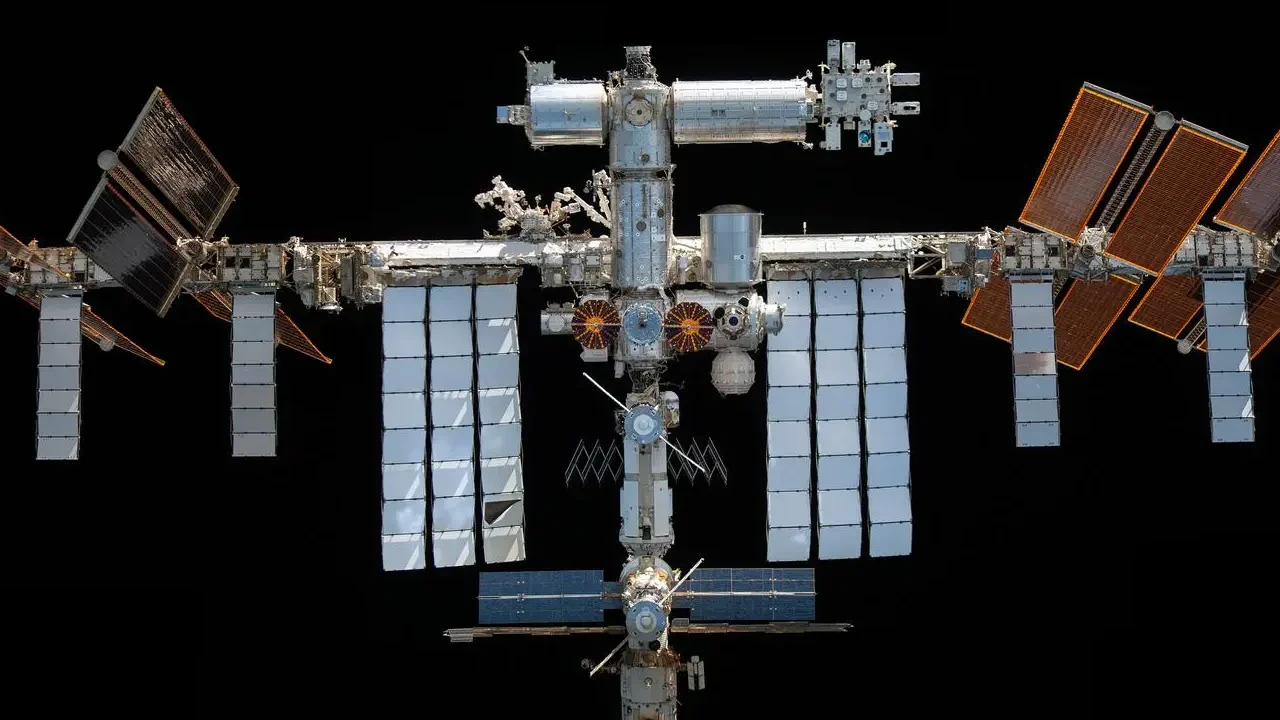
    NASA has confirmed plans to spend around $1 billion to safely deorbit the International Space Station (ISS) by the end of the decade, selecting SpaceX’s Dragon spacecraft to carry out the mission. The 24-year-old outpost, which has hosted astronauts from around the world since 2000, is showing signs of aging and will be guided into a controlled reentry to avoid risks from falling debris.

    The plan calls for a specially modified SpaceX Dragon capsule to act as a “space tug,” attaching to the ISS in its final months and gradually lowering its orbit. Once the last astronaut crew departs, the capsule will steer the station from its current 250-mile orbit down to about 175 miles. From there, Dragon will perform a final deorbit burn to send the ISS into Earth’s atmosphere at roughly 17,000 miles per hour.

    Most of the 450-ton structure will burn up and disintegrate during reentry. The remaining fragments, estimated between 40 and 100 tons, will fall into a remote area of the South Pacific Ocean known as Point Nemo, the farthest location on Earth from human settlement. This site has long been used as a “spacecraft cemetery” for satellites and cargo vehicles to minimize risk to people and property.

    NASA officials emphasized that the operation will be carried out only after all vital equipment and modules are removed. The timeline projects the ISS’s gradual orbital lowering to begin in 2029, with final reentry planned for 2030.

    The ISS has been central to international cooperation and space research for nearly a quarter of a century. More than 270 astronauts from 20 countries have visited the orbiting laboratory, conducting thousands of experiments in medicine, physics, and Earth science. But the structure has faced increasing technical challenges, including air leaks, hardware wear, and rising costs of upkeep.

    NASA and its partners, including Roscosmos, the European Space Agency (ESA), and JAXA, agreed that retiring the station is necessary before failures create safety risks. The agency is now shifting focus to supporting commercial space stations, with private companies expected to build and operate the next generation of orbital labs in the 2030s.

    By choosing SpaceX for the deorbit mission, NASA is relying on a partner with a proven track record in cargo and crew transport to the ISS. The decision underscores both the end of an era in spaceflight and the beginning of a new phase where private companies will take on a larger role in low-Earth orbit.

  • NASA Astronaut Sunita Williams Faces Health Issues as Boeing Starliner Mission Stalls at ISS

    NASA Astronaut Sunita Williams Faces Health Issues as Boeing Starliner Mission Stalls at ISS

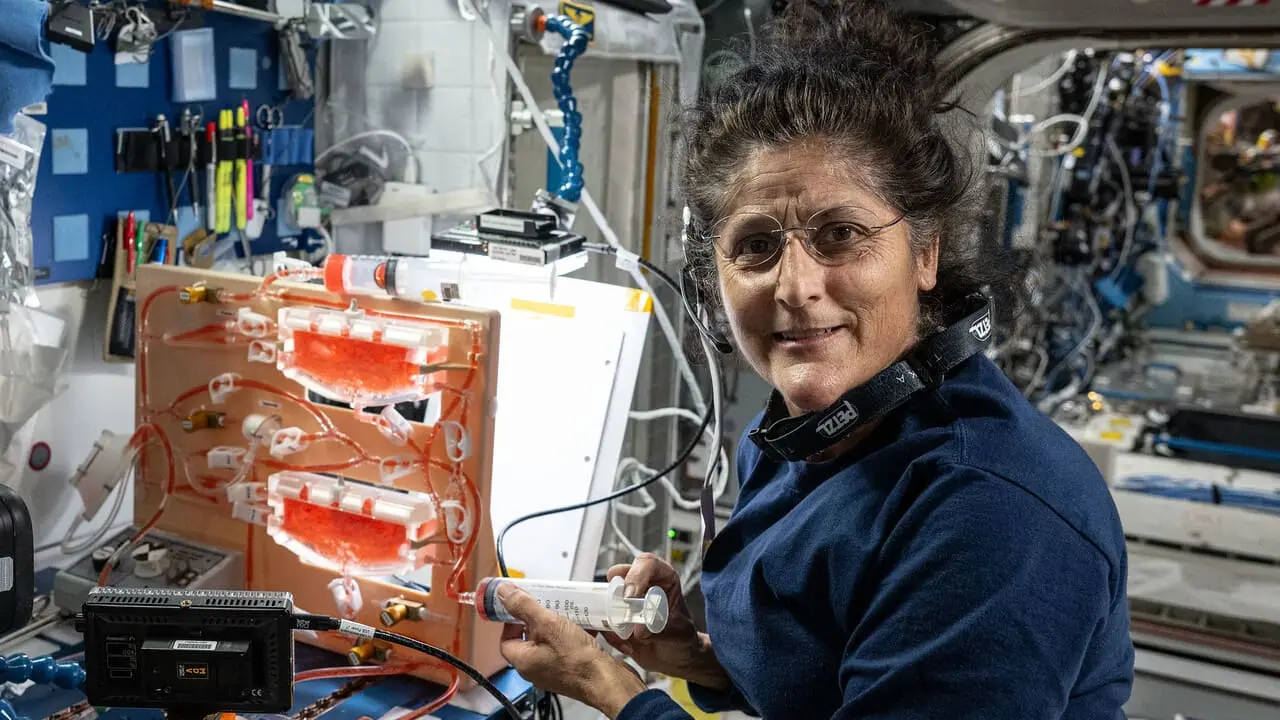
    NASA astronaut Sunita Williams is facing health problems aboard the International Space Station after being stranded for months due to ongoing issues with Boeing’s Starliner spacecraft. Williams, along with fellow astronaut Butch Wilmore, has been stuck in orbit since June, when what was meant to be an eight-day test flight turned into an open-ended mission.

    The Starliner capsule, which docked to the ISS on June 6, was supposed to complete Boeing’s first crewed flight test. But helium leaks and thruster failures forced NASA and Boeing to halt plans for a quick return. The unexpected extension has raised new concerns for astronaut health and safety, as long stays in microgravity environments can cause medical complications.

    Williams is reportedly showing symptoms linked to Spaceflight-Associated Neuro-Ocular Syndrome (SANS), a condition that alters fluid distribution in the body and affects eyesight. NASA doctors aboard the station are carrying out tests and scans to assess the extent of the problem. Other health risks, including bone loss, also increase the longer astronauts remain in space.

    The mission delay has created an urgent question: how to bring the astronauts home safely. NASA is now weighing a backup plan that would involve returning Williams and Wilmore aboard SpaceX’s Crew Dragon, which is scheduled to launch to the ISS at the end of September. That capsule is due to return to Earth in February 2025, turning what was originally an eight-day flight into an eight-month stay.

    The plan faces complications. Starliner is currently occupying the docking port needed for the Crew Dragon capsule, meaning Boeing must reconfigure the spacecraft for an uncrewed return. In addition, the spacesuits designed for Starliner are not compatible with SpaceX’s capsule. NASA is considering sending proper suits on the upcoming Crew Dragon flight to reduce risks during reentry.

    The drawn-out mission has already cost millions of dollars and intensified criticism of Boeing’s troubled Starliner program, which has faced repeated delays and technical failures. For Williams and Wilmore, the wait continues as NASA and Boeing engineers search for a solution that will get them safely back to Earth.

  • Rare nova explosion; T Coronae Borealis Star System to Go Nova

    Rare nova explosion; T Coronae Borealis Star System to Go Nova

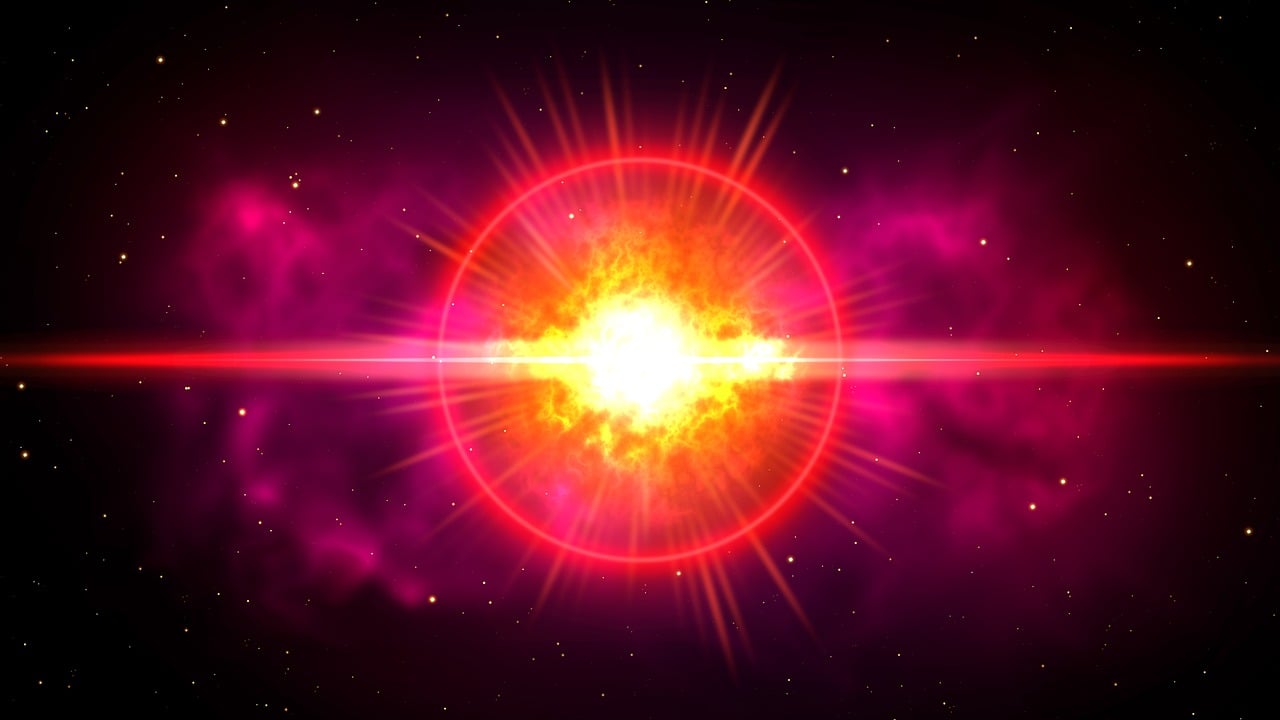
    Stargazers are waiting for a once-in-a-lifetime show. The binary star system T Coronae Borealis, or TCrB, is expected to go nova, or explode, anytime between now and September. This event will cause the star system, which is normally too faint to see, to brighten dramatically to a magnitude of +2—about the same brightness as the North Star, Polaris. When it brightens, it will be visible to the naked eye.

    The TCrB system is located 3,000 light-years from Earth in the Northern Crown constellation. Its last explosion happened in 1946, and these events occur roughly every 80 years. This rare opportunity gives scientists and the public a chance to witness a nova explosion without a telescope.

    What is a Nova Explosion?

    A nova is not the complete death of a star. It happens in a binary system, where a large, unstable red giant star transfers its outer layers of material to a much smaller, denser white dwarf star. As the white dwarf collects this material, the pressure and heat on its surface build up until a massive thermonuclear reaction occurs. This causes a sudden, bright explosion.

    Unlike a supernova, which marks the total destruction of a star, a nova only involves about 5% of the star’s material. The stars in the TCrB system will survive the blast and begin the cycle again, leading to another nova in about 80 years.

    Ten such events are expected to happen in the Milky Way galaxy, and the TCrB explosion is one of them.

    How to Spot the Nova

    When it occurs, the “new star” will be visible in the semicircular constellation Corona Borealis, which is situated between the Hercules and Boötes constellations. The nova is expected to be visible for about five days at this location, offering a viewing window for observers around the world.

    Image of the constellation Coronae Borealis where the Nova explosion will be visible in 2024.
    The constellation Corona Borealis, where the nova will appear. Image credit: IAU and Sky & Telescope magazine (Roger Sinnott & Rick Fienberg). Source: Wikimedia Commons
    • Timing and Location: Since the exact date is unknown, keep an eye on NASA’s updates. When the nova happens, find a spot with a clear view of the sky and away from city lights.
    • Equipment: The nova will be bright enough to see with your eyes, but binoculars or a telescope will provide a better view.
    • Photography: If you’re a photographer, use a DSLR camera with manual settings and a stable tripod to capture the moment.

    Will Our Sun Go Nova or Supernova?

    Some people wonder if our own Sun could experience a similar fate. The answer is no. A nova requires a binary star system, a condition our Sun does not meet. A supernova, which is the complete explosion of a star, only happens to stars that are at least eight times more massive than our Sun.

    Our Sun will follow a different, quieter path. It will expand into a red giant and then shed its outer layers, becoming a planetary nebula before finally settling into a white dwarf.

    The TCrB nova is a special event that gives scientists valuable insights into the dynamics of binary star systems and the processes that power these explosions. Don’t miss this opportunity to see a cosmic event that has been building for 80 years.

  • Roscosmos Resupply Mission Delivers 3 Tons of Cargo to ISS, Including Supplies for Stranded Starliner Crew

    Roscosmos Resupply Mission Delivers 3 Tons of Cargo to ISS, Including Supplies for Stranded Starliner Crew

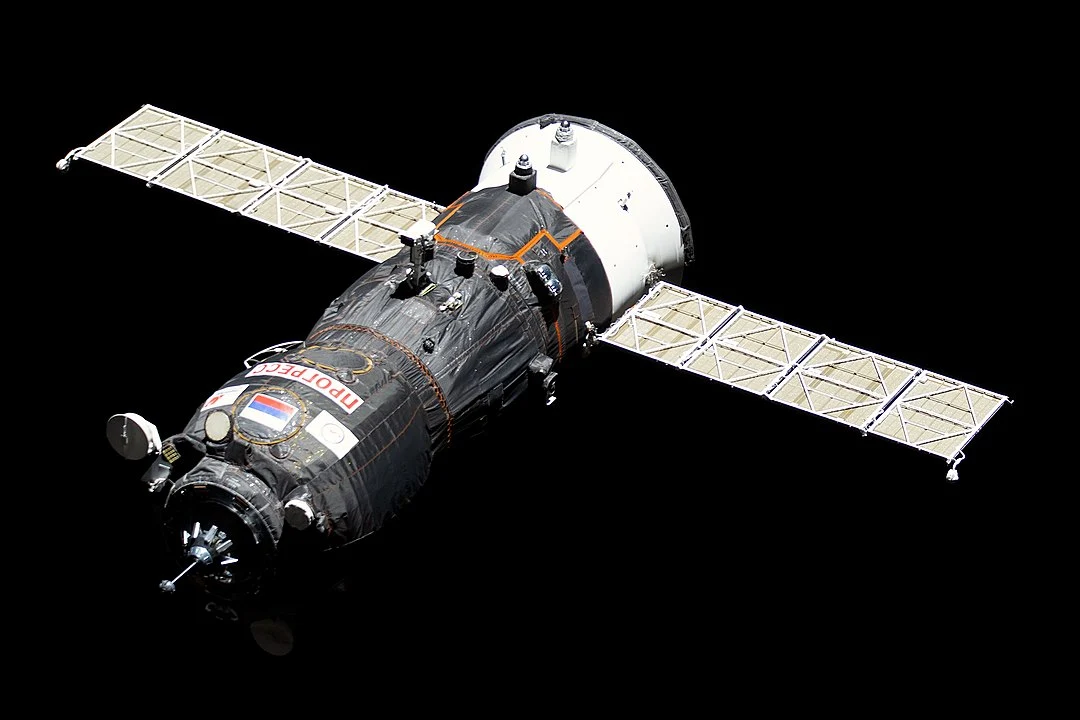
    Russia’s Progress MS-28 cargo spacecraft has successfully delivered three tons of supplies to the International Space Station (ISS), providing essential food, fuel, and equipment for the astronauts on board. Launched on August 15 from the Baikonur Cosmodrome in Kazakhstan, the uncrewed freighter completed a two-day journey before autonomously docking with the station on Saturday, August 17.

    The supplies are crucial for the current crew, which includes two NASA astronauts who were part of the ill-fated Boeing Starliner mission and have been waiting for a ride back to Earth.

    Roscosmos launched the Progress MS-28 atop a Soyuz 2.1a rocket. The spacecraft, also known as Progress 89, lifted off at 3:20 a.m. GMT. It carried a total of 2,621 kilograms (about 5,778 pounds) of cargo, which includes 950 kilograms of propellant, 420 kilograms of water, and 50 kilograms of nitrogen gas to replenish the station’s atmosphere. The rest of the payload consists of food, clothing, and materials for scientific experiments.

    The spacecraft docked at the aft port of the Zvezda service module at 1:53 a.m. EDT, where it will remain for about six months. After its service is complete, the Progress will undock and re-enter Earth’s atmosphere, where it will burn up, taking with it waste and other discarded items from the station.

    The arrival of the new supplies is especially timely for the two NASA astronauts, Butch Wilmore and Suni Williams, who have been stuck on the ISS for months. Originally on an eight-day mission, their return trip was postponed due to multiple issues with the Boeing Starliner spacecraft, including helium leaks and thruster malfunctions.

    After a thorough investigation, NASA determined that it was too risky to bring the crew back on the Starliner. The spacecraft returned to Earth uncrewed on September 7, 2024. Wilmore and Williams, whose stay was extended to more than nine months, are now scheduled to return to Earth aboard a SpaceX Crew Dragon spacecraft in early 2025.

    This mission highlights the continued international collaboration on the ISS, as Russia provides a reliable lifeline for cargo and supplies, a role that has become even more critical during the challenges faced by the American commercial crew program.