Category: Space

Explore the vastness beyond our planet. This section covers missions, discoveries, and events that expand our reach into the cosmos. From new rocket launches to deep-space observations, “Space” keeps you updated on humanity’s steps into the unknown.

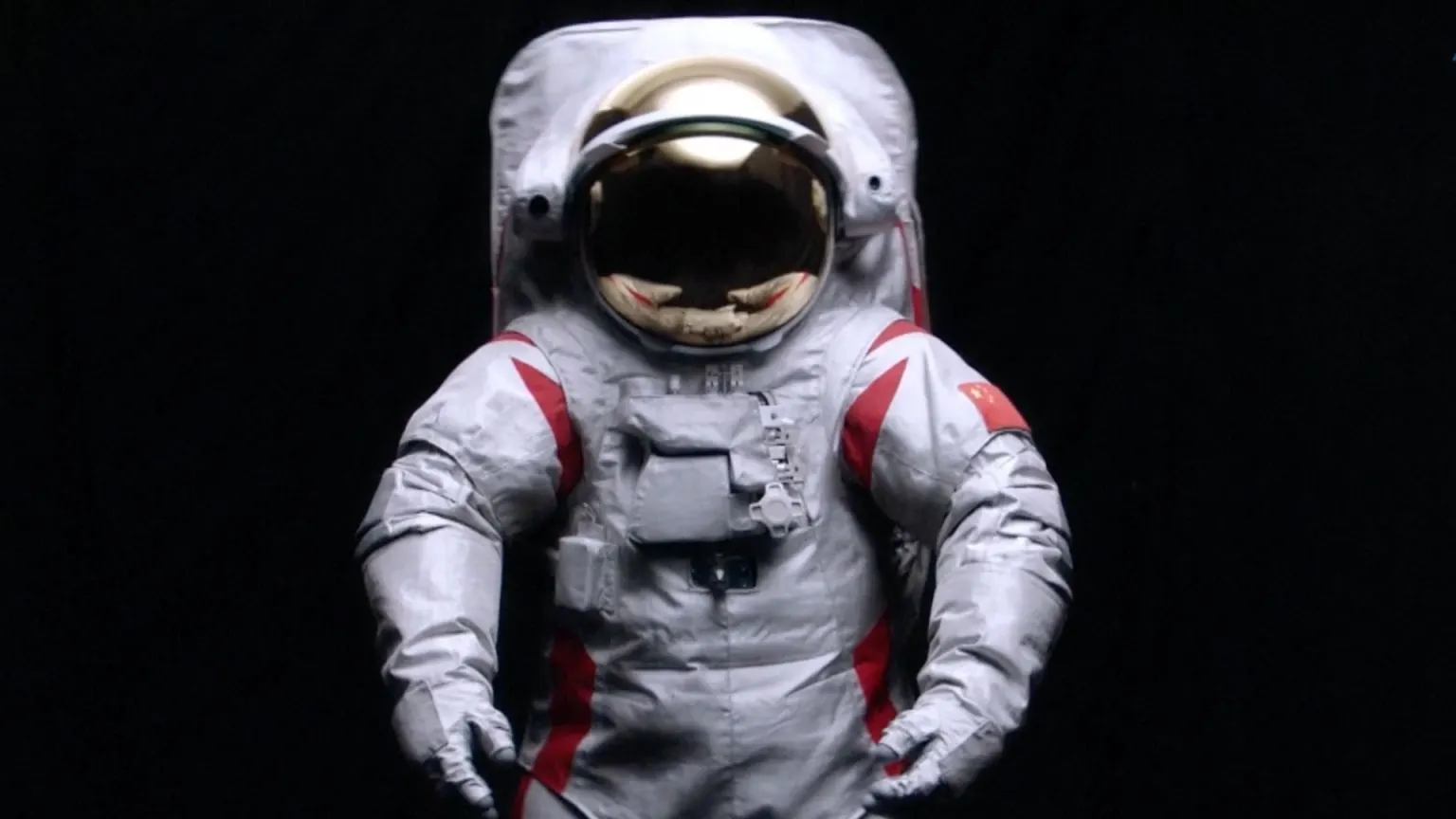
  • China Unveils Lunar Spacesuit Design Ahead of Planned Moon Landing by 2030

    China Unveils Lunar Spacesuit Design Ahead of Planned Moon Landing by 2030

    China has revealed the design of the spacesuit its astronauts will wear during the country’s first crewed lunar mission, targeted for 2030. The China Manned Space Agency (CMSA) presented the suit on September 28 in Chongqing, southwest China, and launched a public campaign to name it.

    A video released by the agency showed a technician wearing the suit and demonstrating its mobility and functionality.

    The suit features red stripes inspired by the “flying apsaras” ribbons in Dunhuang art, marking a distinctive design element. It is described as an upgraded version of China’s Feitian Extra Vehicular Activity (EVA) spacesuit but lighter and more flexible. This design enables astronauts to maneuver effectively in the moon’s low-gravity environment.

    In the video, the technician performed tasks such as climbing stairs, bending, and squatting, highlighting the suit’s ability to accommodate a wide range of human movements.

    According to Spacenews, the suit is engineered to handle the moon’s extreme conditions, including vacuum, low gravity, regolith and lunar dust, steep terrain, and temperature extremes. It also includes a helmet-mounted camera for a first-person view and protective layers against high radiation levels.

    China’s broader goal is to put astronauts on the lunar surface by 2030, which would make it the second nation after the United States to achieve a crewed moon landing. NASA, through its Artemis program, aims to send astronauts back to the moon as early as 2026.

    Meanwhile, NASA’s spacesuit contractor, Axiom Space, is facing challenges. The company, which was tasked with designing advanced spacesuits capable of recycling water from astronauts’ urine, is reportedly struggling with a cash flow crisis. Forbes reported that Axiom has laid off more than 100 employees and cut salaries for others, raising questions about its ability to deliver the new suits on schedule.

  • SpaceX Crew-9 Docking Complete as Dragon Freedom Joins International Space Station

    SpaceX Crew-9 Docking Complete as Dragon Freedom Joins International Space Station

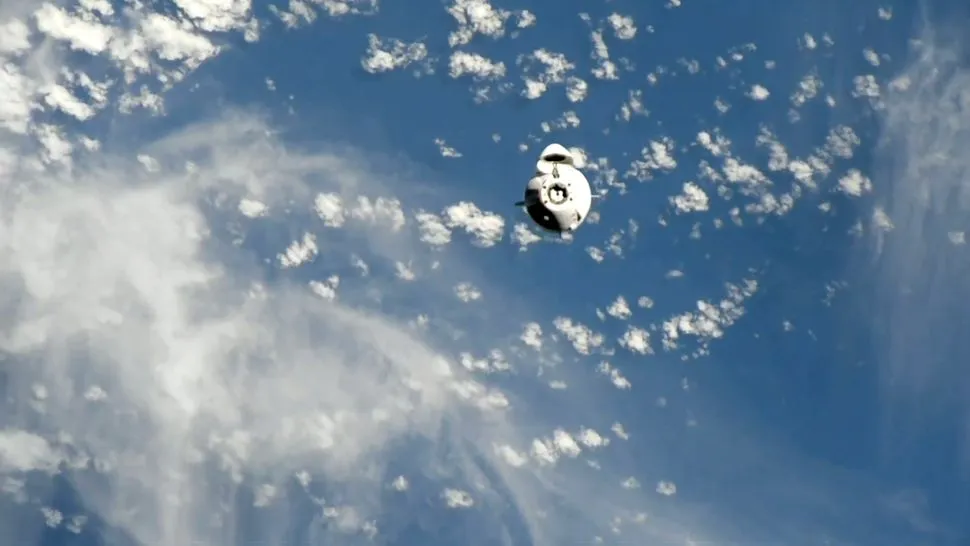
    NASA and SpaceX’s Crew-9 mission has successfully arrived at the International Space Station (ISS). The Dragon Freedom spacecraft docked with the station’s forward-facing Harmony module port on Sunday, September 29, at 5:30 p.m. EDT (2130 GMT), according to Space.com.

    The hatches between the two spacecraft were opened at about 7:15 p.m. EDT (2315 GMT), followed by welcoming remarks from astronauts aboard the ISS. NASA streamed the docking live on YouTube.

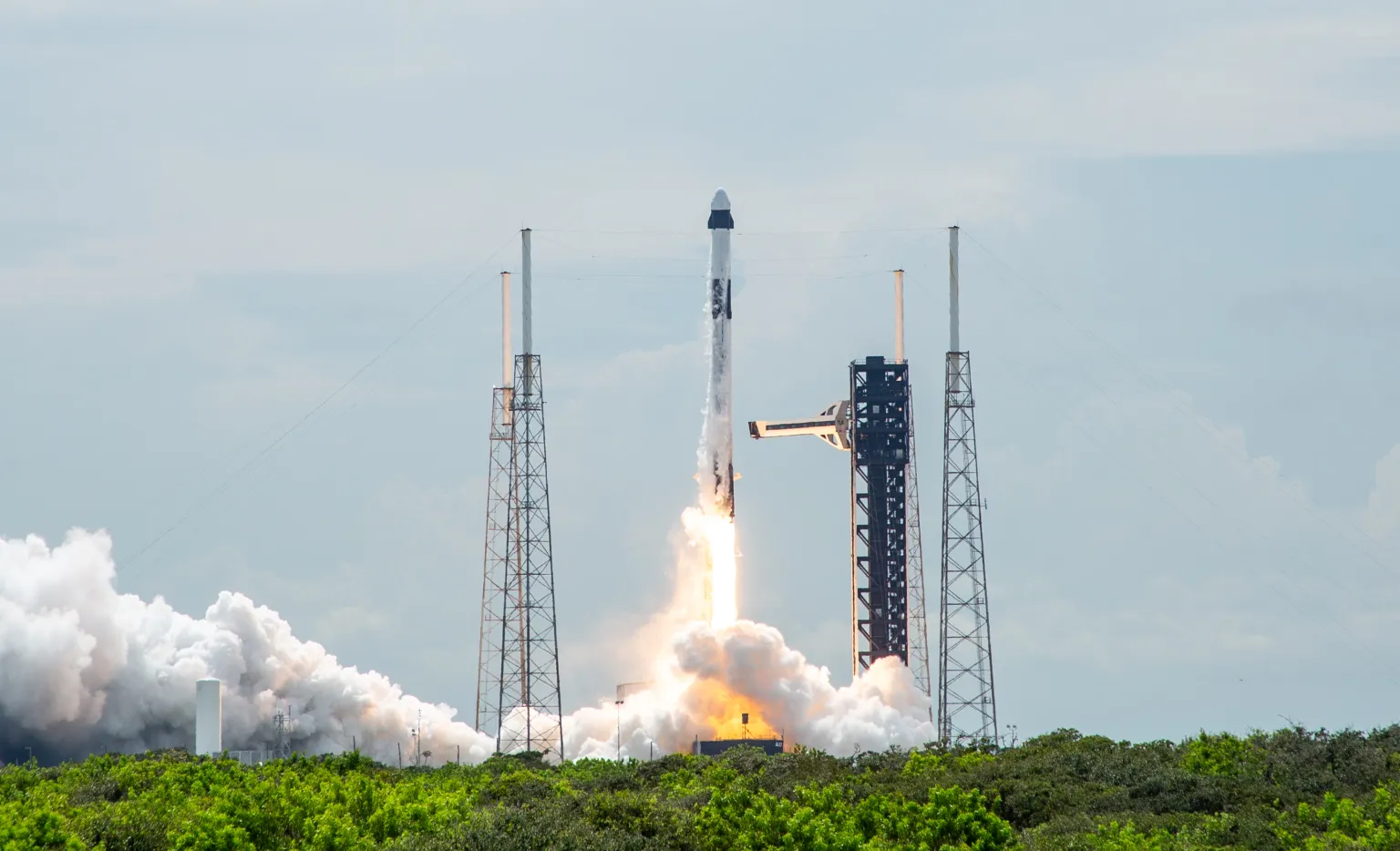
    The Crew-9 mission launched a day earlier, on Saturday, September 28, at 1:17 p.m. EDT, from Space Launch Complex-40 at Cape Canaveral Space Force Station in Florida. The mission marks one of the first crewed launches from this newly prepared pad.

    Crew-9’s main objective is to support the safe return of NASA astronauts Sunita Williams and Butch Wilmore, who have been on the ISS since June after technical problems left Boeing’s Starliner spacecraft unable to bring them back. Their originally scheduled 8-day mission has now stretched to months, with their return planned for early 2025.

    Alongside this priority task, the Crew-9 astronauts will also support hundreds of ongoing scientific experiments aboard the ISS, contributing to long-duration human spaceflight research.

  • SpaceX Crew-9 Launches with Two Astronauts to the ISS, Mission to Bring Back Stranded Crew

    SpaceX Crew-9 Launches with Two Astronauts to the ISS, Mission to Bring Back Stranded Crew

    SpaceX’s Crew-9 mission successfully launched two astronauts to the International Space Station (ISS) on Saturday at 1:17 p.m. EDT. The launch took place from Space Launch Complex-40 (SLC-40) at Cape Canaveral Space Force Station in Florida, with the astronauts riding aboard SpaceX’s Dragon spacecraft Freedom atop a Falcon 9 rocket. The event was broadcast live on NASA’s YouTube channel and NASA+ streaming platform.

    The spacecraft is set to dock autonomously with the ISS’s forward-facing port of the Harmony module on Sunday, September 29, at around 5:30 p.m. The crew consists of NASA astronaut Nick Hague and Roscosmos astronaut Aleksandr Gorbunov.

    Originally planned as a four-crew mission, Crew-9 was reduced to two after NASA astronauts Zena Cardman and Stephanie Wilson were reassigned. Their seats were reserved for astronauts Sunita Williams and Butch Wilmore, who have been stranded aboard the ISS since June following failures with Boeing’s Starliner spacecraft. Their mission, initially expected to last 8 days, has now stretched to 8 months.

    The primary goal of Crew-9 is to ensure the safe return of Williams and Wilmore by February 2025. In addition to this, the mission will support around 200 scientific investigations aboard the ISS. Research topics include studying moisture effects on plants grown in space, understanding blood clotting in microgravity, and examining eyesight changes in astronauts during long-duration missions, NASA reported.

    The Crew-9 mission continues the ongoing partnership between NASA, SpaceX, and international partners to maintain operations aboard the ISS while resolving technical challenges that have delayed the Starliner program.

  • Indian Government Approves a budget of Rs. 2,104.06 crore for Chandrayaan-4 Mission

    Indian Government Approves a budget of Rs. 2,104.06 crore for Chandrayaan-4 Mission

    India is continuing to expand its space exploration capabilities with the approval of the Chandrayaan-4 mission. The Indian Space Research Organization (ISRO) has made significant progress, from Chandrayaan-3′s historic landing on the moon’s south pole to Gaganyaan, India’s first human spaceflight mission.

    Chandrayaan-4 is expected to further strengthen India’s economy, scientific research, and career opportunities in space technology.

    The mission also paves the way for international collaborations. ISRO recently partnered with NASA to send Indian astronaut Shubhanshu Shukla to the International Space Station and with the European Space Agency for the Proba 3 mission.

    According to the Press Information Bureau (PIB), the union cabinet, chaired by Prime Minister Narendra Modi, approved the Chandrayaan-4 mission on September 18. The mission has a budget of Rs. 2,104.06 crore, covering spacecraft development, two LVM3 launch missions, external deep space network support, and special testing.

    Chandrayaan-4 will serve as a foundational mission for India’s planned human moon landing by 2040. Objectives include testing docking and undocking procedures, landing, and safely returning to Earth with lunar samples.

    The Indian government has also outlined future goals, including an Indian space station by 2035 and sending an astronaut to the moon by 2040. These milestones highlight India’s rapidly growing technological and space exploration capabilities, setting the stage for further achievements in the global space arena.

  • Starlink Satellites’ Radio Waves Disrupt Astronomy, Threatening Observations of Deep-Sky Objects

    Starlink Satellites’ Radio Waves Disrupt Astronomy, Threatening Observations of Deep-Sky Objects

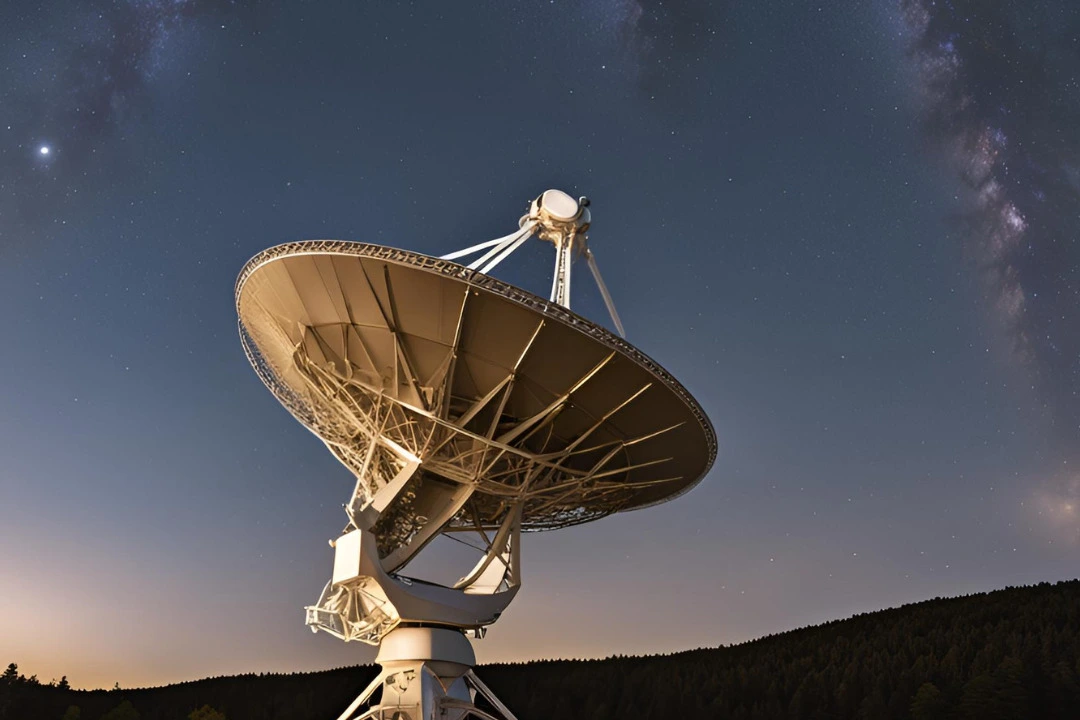
    Radio waves from SpaceX’s Starlink satellites are creating challenges for astronomers by interfering with radio telescopes, according to a BBC report. The new v2 Starlink satellites emit stronger radio signals than their predecessors, making it difficult to observe galaxies, nebulae, star clusters, and other deep-sky objects.

    This disruption affects researchers who rely on radio telescopes to capture electromagnetic emissions from these distant celestial bodies.

    The Netherlands Institute for Radio Astronomy (ASTRON) highlighted the problem during recent observations. Deep-sky objects emit light across the electromagnetic spectrum, and radio telescopes are essential for studying parts of the universe invisible to optical telescopes. ASTRON noted that the stronger radiation from the V2 satellites is creating significant obstacles for radio astronomy.

    SpaceX, led by Elon Musk, has launched over 7,000 Starlink satellites, controlling around two-thirds of all active satellites in Earth’s orbit. These satellites are part of SpaceX’s mission to provide global internet services and reduce the digital divide. The company plans to continue launching about 40 satellites every week, which will further increase electromagnetic emissions in orbit.

    Astronomers warn that without action, artificial satellites could dominate the night sky. Professor Jessica Dempsey, director of ASTRON, told the BBC, “The only constellations we will see will be human-made.” She stressed the need for immediate measures to limit interference from satellite constellations and protect astronomical research.

    To address the issue, scientists suggest solutions such as adjusting satellite frequencies, shielding emissions, or limiting launches during critical observations. The growing number of satellites underscores the tension between advancing global internet services and preserving the ability to study the universe through radio astronomy.

    Source: Bright unintended electromagnetic radiation from second-generation Starlink satellites

  • Chinese Scientists Publish First Study on Lunar Soil from Chang’e 6, Revealing Unique Composition of Moon’s Far Side

    Chinese Scientists Publish First Study on Lunar Soil from Chang’e 6, Revealing Unique Composition of Moon’s Far Side

    China’s team of scientists has released the first research findings on lunar soil brought back by the Chang’e 6 mission, offering new information about the moon’s far side.

    The paper, published on September 17 in the National Science Review, details the unique characteristics of the 1.935 kilograms of lunar samples returned by the mission in June 2024. The research highlights differences between soil from the far side and previously studied samples from the near side.

    The Chang’e 6 mission launched from Hainan Island on May 3, 2024, and returned to Earth on June 25, landing in northern China. The samples were collected from the side of the moon that faces away from Earth. Teams from the National Astronomical Observatories of the Chinese Academy of Sciences, the Lunar Exploration and Space Engineering Center, and the Beijing Institute of Spacecraft System Engineering have analyzed the material since its return.

    The research shows that the far side soil is more porous and less dense than near side samples. It contains higher levels of plagioclase and lower amounts of olivine compared to the Chang’e 5 samples. Lithic fragments in the samples include basalt, breccia, agglutinate, glasses, and leucocrate.

    The concentration of trace elements such as thorium, uranium, and potassium also differs from earlier lunar samples collected by the Apollo missions and Chang’e 5.

    Scientists note that these findings could support future lunar missions, including crewed landings planned by China by 2030. Understanding the soil’s composition can guide the design of spacesuits and equipment for astronauts, making missions safer and more efficient. The study offers the first detailed look at material from the moon’s far side, a region previously unexplored through direct sample collection.

    Source: A journal on Chinese and global scientific achievement

  • Polaris Dawn Crew Returns to Earth After Historic Private Spacewalk Mission

    Polaris Dawn Crew Returns to Earth After Historic Private Spacewalk Mission

    SpaceX’s Polaris Dawn

    crew has safely returned to Earth after completing a groundbreaking five-day mission that included the first commercial spacewalk. The Dragon spacecraft carrying the four-member team splashed down in the Gulf of Mexico near Florida’s Dry Tortugas at 03:37 local time (07:37 GMT) on September 15, 2024, following a launch from NASA’s Kennedy Space Center on September 10.

    The mission, funded by billionaire entrepreneur Jared Isaacman, tested new technologies and set multiple records in human spaceflight.

    SpaceX confirmed the successful landing in a post on X, formerly known as Twitter, writing, “Welcome back to Earth.” The splashdown was broadcast live on YouTube, with viewers watching as recovery teams approached the capsule. The hatch was opened at about 4:20 a.m. local time after the spacecraft was lifted onto a recovery ship.

    The mission launched atop a Falcon 9 rocket from Launch Complex 39A at Kennedy Space Center at 5:23 a.m. EDT (0923 GMT) on September 10. The launch had been postponed several times due to helium leaks and poor weather.

    Once underway, the crew entered a high elliptical orbit, reaching more than 700 km above Earth, placing them inside the Van Allen radiation belts farther than any crewed mission since the Apollo program more than 50 years ago.

    Historic Spacewalk

    On September 12, Commander Jared Isaacman and SpaceX engineer Sarah Gillis carried out the first-ever private spacewalk. Unlike previous missions, Dragon does not have an airlock, meaning the entire crew cabin was depressurized. The activity lasted about an hour, with the astronauts wearing new SpaceX-designed extravehicular suits. These suits were adapted from the intravehicular models previously used during launches and reentries.

    “SpaceX, back at home we all have a lot of work to do, but from here, Earth sure looks like a perfect world.” Said Mission Commander Jared Isaacman during the spacewalk.

    The Polaris Dawn team consisted of Jared Isaacman, SpaceX engineers Sarah Gillis and Anna Menon, and retired U.S. Air Force pilot Scott Kidd. Isaacman financed the mission, which is part of the larger Polaris Program, a series of private missions intended to test technologies for future long-duration space travel.

    Records and Firsts

    • Jared Isaacman and Sarah Gillis became the first humans to complete a private spacewalk.
    • Sarah Gillis and Anna Menon became the first women to travel to such a high orbital altitude.
    • Sarah Gillis became the first person to play a violin in space.
    • The crew tested Starlink laser-based communications in orbit, marking the first time the technology was used during human spaceflight.

    The mission traveled farther from Earth than any crewed mission since Apollo, reaching beyond 700 km. Polaris Dawn is the first of three planned missions under the Polaris Program. Future flights are expected to continue testing new EVA suits and medical research in microgravity and eventually fly aboard SpaceX’s Starship once the vehicle is ready for crewed missions.

    With its safe return, Polaris Dawn has demonstrated the potential for privately funded missions to push human spaceflight beyond the International Space Station and lay the groundwork for deeper exploration.

  • Boxabl’s $60,000 Foldable Homes Draw Global Attention Amid Housing Crisis

    Boxabl’s $60,000 Foldable Homes Draw Global Attention Amid Housing Crisis

    Boxabl

    , a Las Vegas-based housing startup founded in 2017 by mechanical engineer and industrial designer Paolo Tiramani, is making headlines with its foldable modular home called the Casita. Priced at $60,000, the 375-square-foot unit is designed to be built in just a few hours, offering what the company says is a faster, cheaper, and more sustainable alternative to traditional housing.

    The idea has attracted nearly 70,000 preorders worldwide, raising questions about whether this innovation could help solve affordability problems in U.S. cities and beyond.

    Launched with $2 million in seed funding from its cofounders, Boxabl has since raised more than $150 million, mostly through crowdfunding campaigns.

    The company’s factory in North Las Vegas now produces these prefabricated foldable homes at scale, with the goal of making housing more accessible. According to Boxabl, demand has surged not only from individual buyers but also from governments and organizations looking for emergency housing solutions.

    The company gained widespread attention in 2020 after reports suggested that Elon Musk had purchased a unit. Musk confirmed in September 2021 that he was indeed living in a Boxabl Casita near SpaceX’s Starbase facility in Texas, boosting the company’s visibility worldwide.

    Inside the $60,000 Casita

    The Casita is designed as a compact but fully equipped home. According to Boxabl, the unit includes a kitchen fitted with an oven, stove, microwave, sink, refrigerator, HVAC system, and storage cabinets. The living area is large enough for a king-size bed, couch, and optional designer closet. Multiple power outlets and 8-foot-tall, 3-foot-wide windows and doors add to the sense of space and light.

    Boxabl says the entire home can be shipped on a standard truck and unfolded on-site within hours, significantly reducing the costs and environmental impact compared to traditional construction.

    Mixed Reactions Over Price and Value

    Reactions to the Casita’s $60,000 price tag have been divided. Some see it as a breakthrough for people who want affordable, fast housing solutions, while critics argue it is still too expensive for many working families.

    As of 2023, the average U.S. single-family home cost $381,287, according to Zillow, while condos in cities like New York ranged from $785,333 for a studio to over $10 million for larger units, according to Castle Avenue. By comparison, the Casita offers an entry point at a fraction of urban real estate prices, though land, permits, and utility connections remain additional costs.

    Wider Applications and Future Potential

    Beyond personal housing, Boxabl’s foldable homes are being considered for disaster relief, military housing, and humanitarian efforts in regions facing displacement. The company has hinted at future collaborations with governments to supply rapid-deployment housing during natural disasters.

    The homes have also sparked discussion about their potential role in space exploration. Advocates argue that lightweight, prefabricated modules like the Casita could support long-term missions on Mars, where shipping building materials would cost billions of dollars, even with rockets like SpaceX’s Starship. While this application remains speculative, it highlights the flexibility of Boxabl’s technology.

    What’s Next for Boxabl?

    With demand outpacing supply, Boxabl is expanding its production facilities and exploring automation to meet orders faster. The company has stated that delivering its backlog of preorders could take years, but it remains focused on scaling up.

    As cities face rising housing costs and growing homelessness, Boxabl positions itself as a company aiming to disrupt the way homes are built and owned. Whether it becomes a mainstream housing solution or remains a niche product, the Casita has already reshaped the conversation about affordable housing.

  • Starship will land uncrewed on Mars by 2026, says Elon Musk, CEO of SpaceX

    Starship will land uncrewed on Mars by 2026, says Elon Musk, CEO of SpaceX

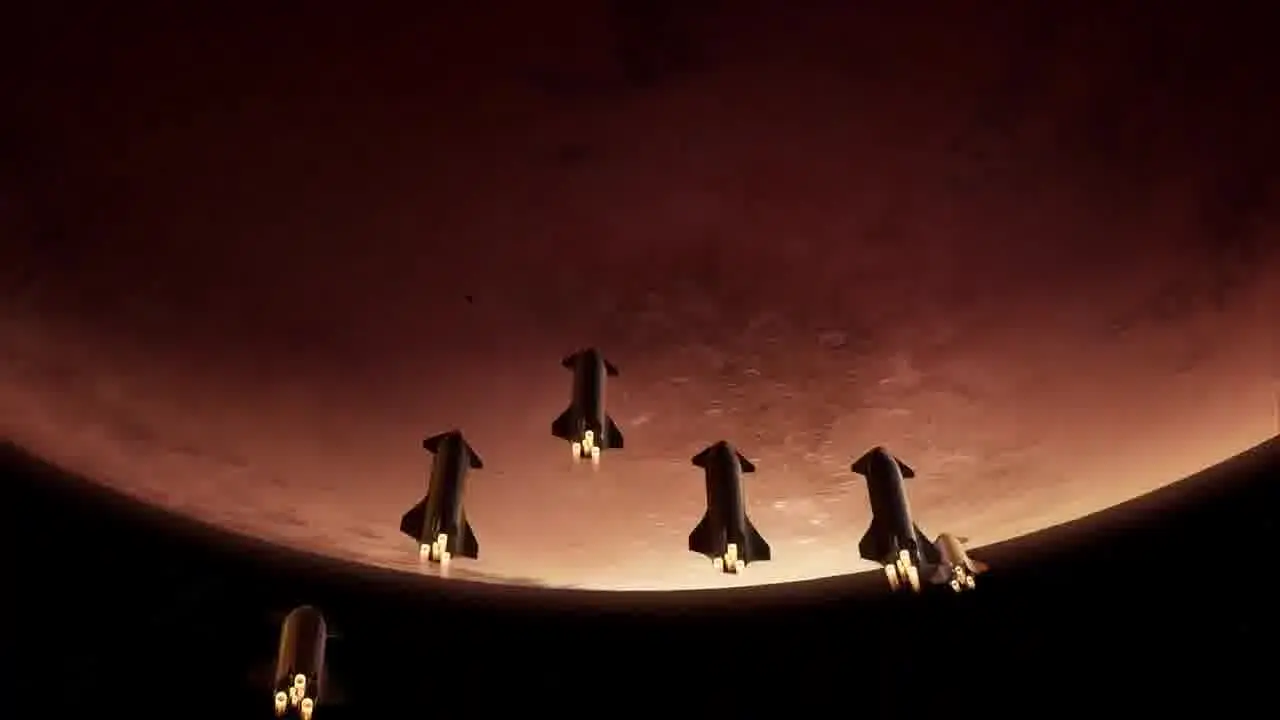
    Elon Musk has announced a new schedule for his Mars ambitions, saying the first uncrewed SpaceX Starship missions could launch in 2026, followed by the first crewed flights as early as 2028. Musk shared the timeline on September 6 in a post on X (formerly Twitter).

    According to Musk, the first flights in two years will aim to prove that Starship can land safely on Mars. If those succeed, the company will attempt to send astronauts on the next launch window four years from now. Looking further ahead, Musk said he envisions a city on Mars within 20 years, part of his long-term goal to make humanity a “multi-planetary species.”

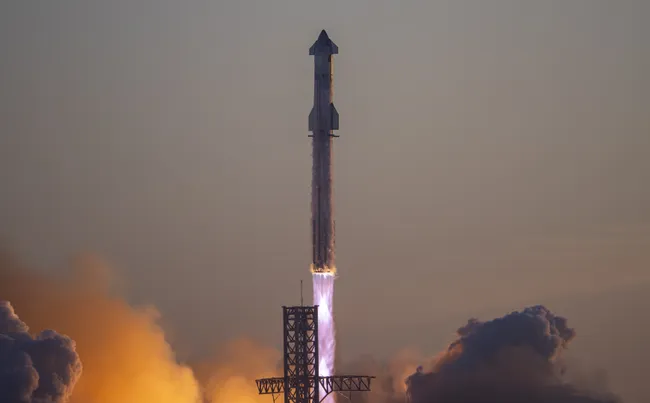
    Starships second test flight carried in November 2023.
    Starship’s second test flight in November 2023. Image credit: SpaceX

    Starship is the world’s largest and most powerful rocket, designed to carry both astronauts and cargo. The vehicle is fully reusable and made of stainless steel alloy to reduce weight and improve efficiency. It consists of two stages: the Super Heavy booster and the Starship upper stage, both powered by SpaceX’s Raptor engines.

    So far, SpaceX has carried out four Starship test flights: two in 2023 and two in 2024. The company is preparing for its fifth flight, though no date has been confirmed. None of the test flights have yet reached orbit, but Musk says progress is being made quickly.

    SpaceX argues that reusability is the only way to make Mars travel affordable. Musk noted that today it costs around $1 billion per ton to deliver cargo to Mars. To build a city, he said, that figure must fall to $100,000 per ton. “Making life multiplanetary is fundamentally a cost per ton to Mars problem,” Musk wrote on X, calling the challenge “extremely difficult but not impossible.”

    Musk’s plan spans two decades:

    • 2026: An uncrewed Starship launches to Mars to test landing systems.
    • 2028: First crewed missions, if early landings succeed.
    • 2040s: A permanent city on Mars, supplied regularly by fleets of Starships.

    Musk also suggested that increasing the flight rate of Starship will be central to lowering costs. Each Starship is designed to fly multiple times, allowing SpaceX to scale launches in a way no other rocket has achieved.

    Founded in 2002, SpaceX has become the leading private space company, known for its Falcon 9 and Falcon Heavy rockets, as well as the Dragon spacecraft that regularly carries astronauts to the ISS. The company also operates Starlink, a satellite internet network that provides coverage around the world.

    Musk, who Forbes lists as the world’s richest person with a net worth of over $407 billion as of August 2025, has repeatedly said Mars settlement is his ultimate goal.

    Despite the bold timeline, experts note that SpaceX still faces technical and financial hurdles before Starship is ready for interplanetary missions. For now, the focus remains on proving the rocket can reach orbit, return safely, and fly again. These are the steps that will determine whether Musk’s Mars vision is achievable.

  • Boeing Starliner uncrewed spacecraft returns to the Earth

    Boeing Starliner uncrewed spacecraft returns to the Earth

    Boeing’s Starliner spacecraft

    landed safely in the New Mexico desert early Saturday, September 7, following a three-month stay at the International Space Station (ISS). The uncrewed capsule, which carried astronauts Sunita Williams and Butch Wilmore to the station in June, touched down at White Sands Space Harbor at 12:01 a.m. EDT (0401 GMT).

    The return marks the end of the capsule’s first crewed test flight, one that faced repeated technical problems, long delays, and growing criticism of Boeing’s troubled commercial crew program.

    Starliner launched on June 5 after years of delays caused by helium leaks, faulty valves, and thruster issues. It docked with the ISS a day later, but not without difficulty. Five of the spacecraft’s 28 thrusters failed during approach, forcing Williams and Wilmore to take manual control.

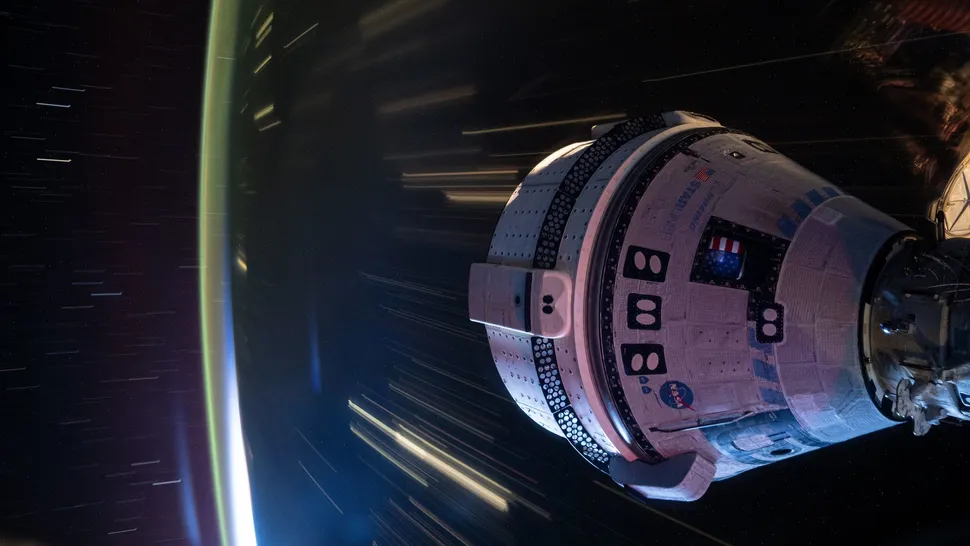
    Boeing Starliner docked to the ISS
    The Starliner spacecraft docked at the International Space Station. Image credit: NASA Johnson/Flickr

    The astronauts were originally due to return to Earth after about eight days. Instead, engineers kept the spacecraft at the station for three months as they worked to address helium leaks and propulsion failures. The extended stay left the crew’s safe return on Starliner increasingly in doubt.

    On August 24, NASA announced that Wilmore and Williams would not return on Starliner as planned. Instead, they are scheduled to come home aboard a SpaceX Crew Dragon spacecraft in early 2025. The decision highlighted NASA’s concerns over the reliability of Boeing’s capsule, which has cost the agency nearly $5 billion to develop.

    During their stay aboard Starliner, the astronauts reported hearing unusual noises coming from the spacecraft, adding to concerns about its condition. Despite repeated troubleshooting efforts, NASA and Boeing engineers could not fully resolve the thruster and leak problems.

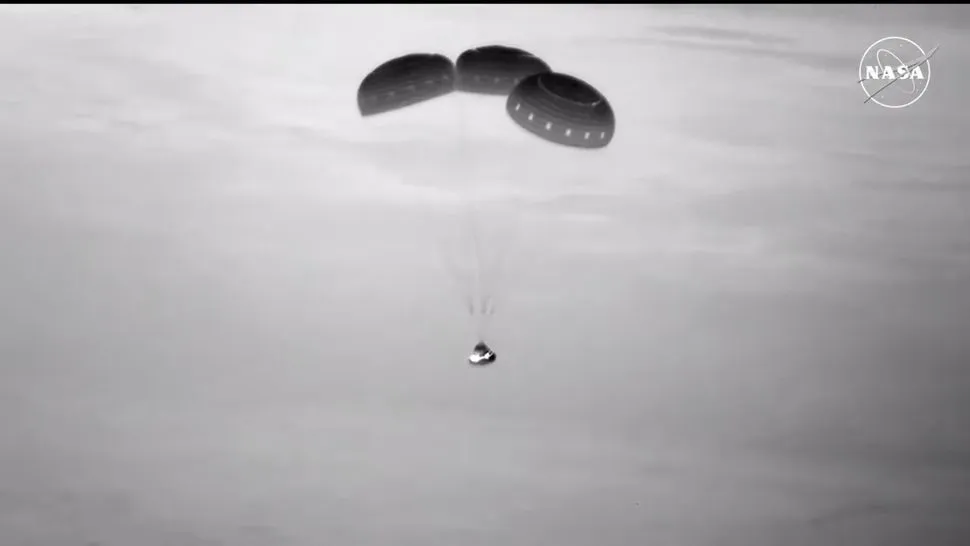
    With no astronauts aboard, Starliner undocked from the ISS at 5:45 p.m. EDT (2145 GMT) on September 6. Hours later, the capsule parachuted into White Sands, where it landed on schedule.

    “She’s on her way home. Congratulations to the undocking team,” Williams told mission control shortly before separation. After the landing, she radioed, “Great landing of Calypso; I don’t think that could have gone better.”

    NASA officials praised the landing at a press conference that began shortly after touchdown.

    “It’s great to have the Starliner home. A safe and successful landing was exactly what we wanted,” said Joel Montalbano, deputy associate administrator of NASA’s Space Operations Mission Directorate.

    Steve Stich, manager of the Commercial Crew Program, called the test flight “very personal to our team,” saying it was “an honor to bring the vehicle back.”

    Dana Weigel, ISS program manager, thanked engineers who had worked “nights and weekends” throughout the summer to keep the mission going. “The proof is in getting the vehicle safely back home,” she said.

    NASA is now preparing for upcoming flights, including the Soyuz MS-25 mission on September 11, which will carry astronaut Don Pettit to the ISS, and SpaceX Crew-9, scheduled to launch later in September.

    Starliner’s future remains uncertain. While Boeing achieved a safe landing, NASA has made clear that astronauts will not fly on the capsule again until its propulsion and leak issues are resolved.