Category: Space

Explore the vastness beyond our planet. This section covers missions, discoveries, and events that expand our reach into the cosmos. From new rocket launches to deep-space observations, “Space” keeps you updated on humanity’s steps into the unknown.

  • Elon Musk vs. Mukesh Ambani: Billionaires battle for satellite spectrum control in India

    Elon Musk vs. Mukesh Ambani: Billionaires battle for satellite spectrum control in India

    Elon Musk and Mukesh Ambani are two giants in the tech and business worlds, and their rivalry is increasingly shaping the future of internet access in India. As Musk’s Starlink aims to provide global satellite internet coverage, Ambani’s Jio focuses on expanding affordable broadband services nationwide.

    This competition is not just about market share; it represents a battle for influence over India’s digital landscape. The competition between Musk’s Starlink and India’s telecom giants, Reliance Jio and Airtel, is heating up as the Indian government has allocated satellite spectrum administratively rather than through auctions.

    This shift could ease Starlink’s entry into the market, which has faced regulatory challenges since its initial pre-orders in 2021. Musk has expressed optimism about this development, emphasizing that it aligns with international practices.

    In a recent decision, Indian Telecom Minister Jyotiraditya Scindia chose to allocate the satellite spectrum administratively rather than auctioning it. Later, tech billionaire Elon Musk expressed gratitude to the Telecom Minister for not siding with the Indian tycoons. However, following this decision from the TRAI, Reliance Jio also made a strategic move to maintain its market share.

    Reliance Jio has officially filed a request to the Telecom Regulatory Authority of India (TRAI) to update its satellite communication guidelines. In a letter to TRAI, Jio’s Chairman, AK Lahoti, also pointed out the need for a level playing field for satellite and terrestrial services, as reported by DNA India.

    This corresponds with Musk’s position on making spectrum resources available to all. The pricing model set by TRAI will be crucial in determining how competitively Starlink can operate in India. Starlink could revolutionize internet access in underserved regions of India, potentially bridging the digital divide.

    However, its success will depend on navigating regulatory hurdles, competitive pricing strategies, and addressing security concerns effectively.

    The comparison table below shows that the Starlink satellites are much superior considering the global coverage and the internet speed. However, this superior internet coverage comes with a far superior price. The price difference is considerable.

    Service ProviderStarlinkJio
    Type of ServiceSatellite InternetFiber/4G/5G Internet
    Launch Year20192016
    Coverage AreaGlobal (especially rural areas)India (urban and rural areas)
    Average Speed100-200 Mbps30-50 Mbps (4G), up to 1 Gbps (5G, Fiber)
    Pricing$99/month (approximately ₹7,400)₹399-₹1,499/month

    The Starlink internet connection can cost anywhere from $50 to $100, which is from Rs 4200 to Rs 7400, whereas Reliance JioFiber starts at Rs 399 (excluding taxes) per month, according to an article by Business Today. This price gap will be a challenge for Starlink to get customers in rural Indian areas.

    However, according to Wikipedia, as of September 2024, there are over 7,000 active Starlink satellites in the Lower Earth Orbit (LEO). Due to this established satellite network, Starlink can reduce internet costs. Only time will tell the future of Starlink and Jio in India.

  • ESA and NASA’s Euclid Telescope Reveals 208-Gigapixel Sky Mosaic at Milan Congress

    ESA and NASA’s Euclid Telescope Reveals 208-Gigapixel Sky Mosaic at Milan Congress

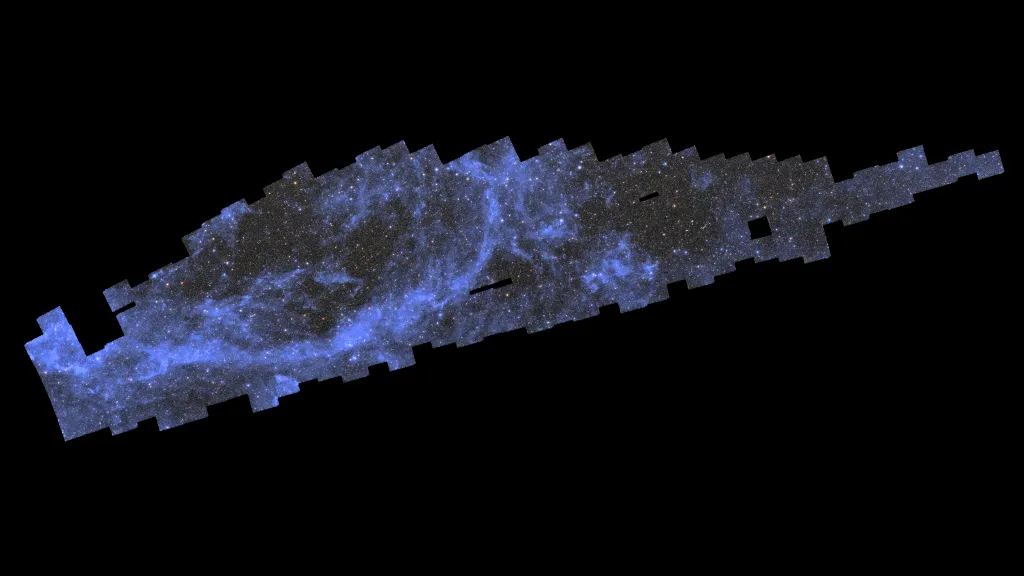
    On October 15, the European Space Agency (ESA) and NASA presented the first large-scale mosaic image captured by the Euclid space telescope during the International Astronautical Congress in Milan. The mosaic represents just 1% of the telescope’s planned sky survey, yet it already reveals a breathtaking view of the universe.

    Between March 25 and April 8, Euclid conducted 260 observations, covering 132 square degrees of the southern sky (an area 500 times larger than the full moon). The result is a 208-gigapixel image containing about 100 million stars and galaxies. ESA has made the mosaic interactive, allowing viewers to zoom in and explore detailed cosmic structures.

    Euclid Space Telescopes mosaic zoomed in 150 times
    The mosaic image is zoomed in 150 times, revealing two interacting galaxies 470 million light-years away. Image credit: ESA / Euclid / Euclid Consortium / NASA / CEA Paris-Saclay / J.-C. Cuillandre / E. Bertin / G. Anselmi

    One zoomed-in section, magnified 150 times, reveals two galaxies interacting 470 million light-years away. The image also highlights faint Galactic Cirrus (clouds of dust and gas), showing the telescope’s ability to capture subtle features of the cosmos through its highly sensitive visible light camera.

    Euclid was launched on July 1, 2023, as a collaboration between ESA and NASA. The six-year mission aims to study dark matter and dark energy, the forces driving the accelerating expansion of the universe. Using its Visible Imager (VIS) and Near-Infrared Spectrometer (NISP), Euclid will measure the shapes, distances, and motions of billions of galaxies up to 10 billion light-years away, creating the largest 3D map of the cosmos ever attempted.

    The first mosaic marks only the beginning of Euclid’s work, but it already demonstrates the telescope’s promise in reshaping our understanding of the universe’s hidden structure.

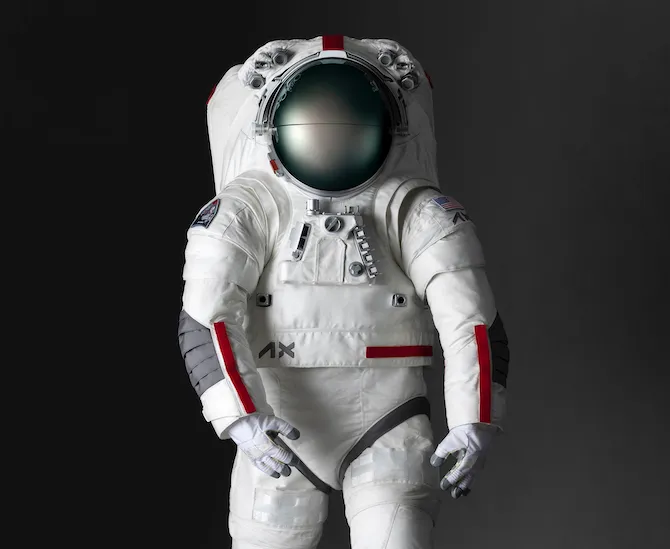
  • Prada and Axiom Space Unveil New Lunar Spacesuit for NASA’s Artemis III Astronauts in Milan

    Prada and Axiom Space Unveil New Lunar Spacesuit for NASA’s Artemis III Astronauts in Milan

    Italian fashion house Prada and Houston-based startup Axiom Space have revealed the design of NASA’s next-generation lunar spacesuit. The announcement was made at the International Astronautical Congress in Milan, where the companies showcased the suit that will be worn by the first woman and the first person of color to land on the Moon during the Artemis III mission, planned for late 2026.

    The new suit, built for both durability and mobility, has been engineered for long-duration spacewalks on the lunar surface. While designed in partnership with Prada, the suit does not feature any logos or fashion embellishments.

    Instead, its white material reflects heat and shields astronauts from extreme temperatures and sharp lunar dust. The design includes a cropped torso for mobility and specially made boots to support astronauts working outside for up to eight hours.

    Although most of the suit is white, it features red stripes linked to Prada’s Linea Rossa technical line. The brand originally developed the line for its Luna Rossa sailing team in the America’s Cup. In Italian, “Luna Rossa” translates to “Red Moon,” a reference that carries over to the lunar project.

    Axiom Space executives described the suit as a mix of engineering, functionality, and design. “We’re blending engineering, science, and art,” said Russell Ralston, the company’s executive vice president, at the press event.

    The upgrade comes as human spaceflight enters a new phase. Private missions have already begun testing new capabilities, including tech billionaire Jared Isaacman’s recent spacewalk, the first carried out by a private citizen. As access to space grows, NASA and its partners have stressed the need for equipment that is lighter, more flexible, and safer than the older suits used during previous missions.

    The Artemis mission, which will return astronauts to the Moon for the first time in more than 50 years, is expected to rely on these new suits to allow diverse crews to live and work more effectively on the lunar surface.

  • ISRO Chief S. Somanath Receives IAF World Space Award for Chandrayaan-3 Success in Milan

    ISRO Chief S. Somanath Receives IAF World Space Award for Chandrayaan-3 Success in Milan

    ISRO Chairman Dr. S. Somanath has been honored with the International Astronautical Federation’s (IAF) World Space Award for the achievements of India’s Chandrayaan-3 mission. The award was presented during the 75th International Astronautical Congress in Milan, Italy, on October 14, 2024, recognizing India’s growing role in global space exploration.

    ISRO shared the news in a post on X, stating that the award “celebrates India’s contributions to space exploration” while noting that celebrations were underway in Milan following the announcement.

    Chandrayaan-3, launched on July 14, 2023, from the Satish Dhawan Space Centre in Sriharikota, achieved a historic soft landing on the Moon’s south pole on August 23, 2023. With that milestone, India became the first nation to reach the lunar south pole and the fourth country in the world to achieve a controlled landing on the Moon.

    The mission was developed after Chandrayaan-2’s lander lost contact and crashed in 2019. Learning from that setback, ISRO refined its approach and succeeded with Chandrayaan-3, marking one of the most celebrated achievements in India’s space history.

    The government has since cleared funding for Chandrayaan-4, approving a budget of ₹2,104.06 crore. The follow-up mission is expected to build on Chandrayaan-3’s success and continue India’s lunar exploration program.

    The recognition at Milan highlights ISRO’s growing presence in the international space community, as it strengthens partnerships with agencies including NASA and the European Space Agency. The award adds to India’s reputation as a rising space power and underlines its ambition to play a leading role in future global missions.

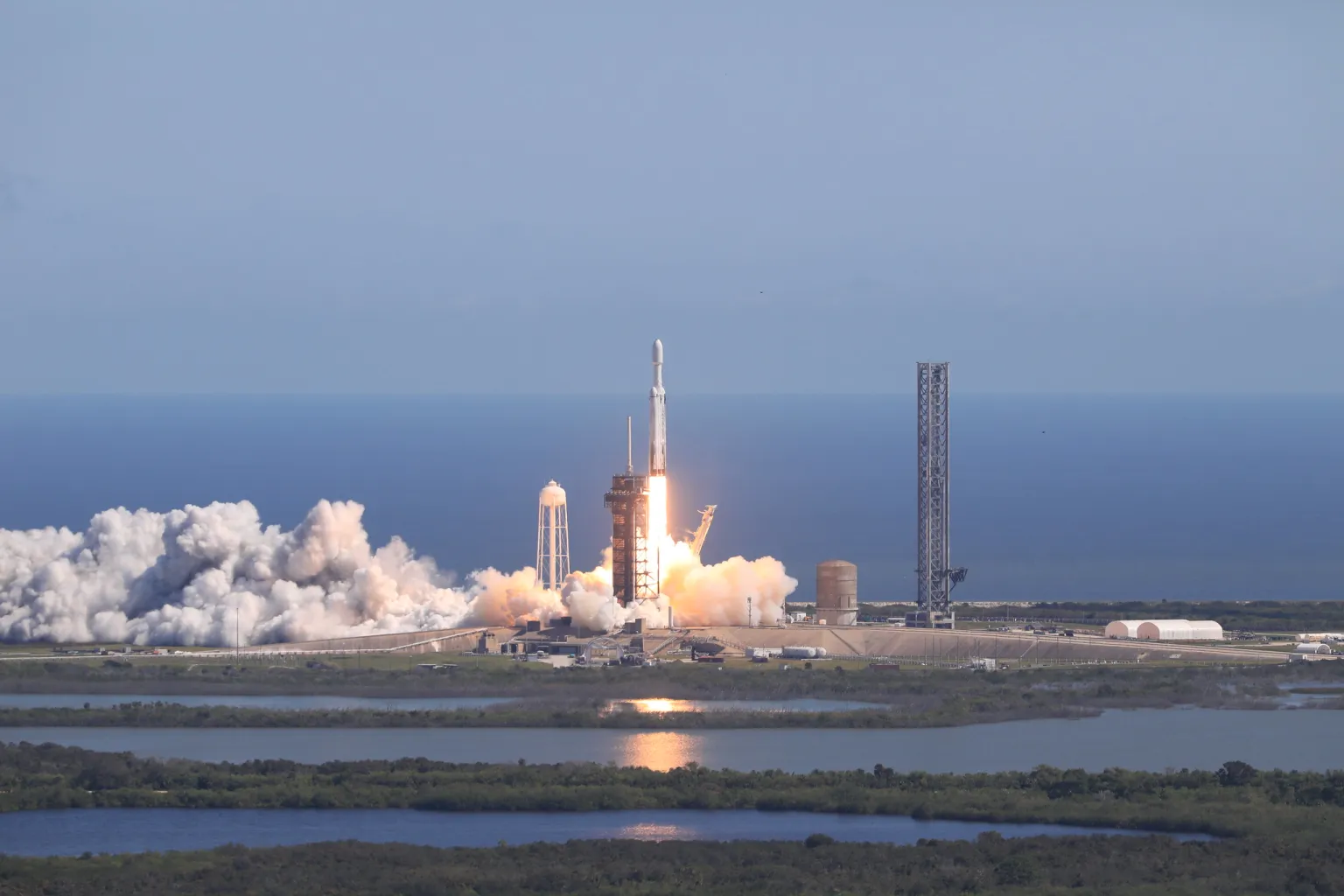
  • NASA’s Europa Clipper Launches on $5 Billion Mission to Hunt for Life on Jupiter’s Moon

    NASA’s Europa Clipper Launches on $5 Billion Mission to Hunt for Life on Jupiter’s Moon

    NASA’s Europa Clipper

    spacecraft has begun its journey to Jupiter after launching on a SpaceX Falcon Heavy rocket from Kennedy Space Center in Florida on October 14, 2024, at 12:06 p.m. local time (16:06 GMT). The $5 billion mission aims to investigate whether Europa, one of Jupiter’s largest moons, could host conditions suitable for life beneath its thick shell of ice.

    The launch had originally been scheduled for October 10 but was postponed when Hurricane Michael swept across Florida’s coast, delaying preparations at the Cape. Once conditions improved, the heavy-lift rocket carried the spacecraft into orbit before sending it on a trajectory toward the outer solar system.

    Europa Clipper is set to travel nearly 1.8 billion miles over the next six years, arriving at Jupiter in 2030. Instead of orbiting Europa directly, the spacecraft will circle Jupiter and conduct dozens of close flybys of the moon. This design reduces radiation exposure from Jupiter’s magnetic field while still allowing the probe to collect detailed data.

    Scientists are particularly interested in Europa because its subsurface ocean, hidden beneath a thick icy crust, is believed to contain more water than all of Earth’s oceans combined. This has made it one of the most promising locations in the search for extraterrestrial life within our solar system.

    The spacecraft carries a suite of advanced instruments designed to study Europa’s ice shell, surface features, and the composition of its saltwater ocean. Cameras and spectrometers will map the surface, while radar instruments will probe the layers of ice to determine its thickness.

    One of the mission’s key goals is to fly through possible plumes of water vapor venting from Europa’s surface, similar to those observed on Saturn’s moon Enceladus by the Cassini spacecraft in 2005. Sampling these plumes could reveal whether the hidden ocean contains chemical ingredients that support life.

    With Europa Clipper now on its way, NASA hopes the mission will provide the clearest evidence yet about whether one of Jupiter’s frozen moons is capable of sustaining living organisms.

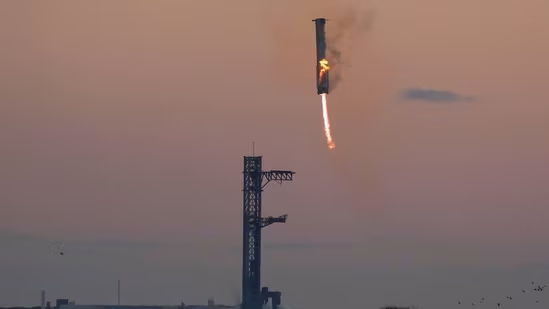
  • SpaceX’s Starship Booster Caught Mid-Air by ‘Mechazilla’ in Historic First

    SpaceX’s Starship Booster Caught Mid-Air by ‘Mechazilla’ in Historic First

    SpaceX has pulled off one of its boldest feats yet, catching the massive Super Heavy booster of its Starship rocket mid-air with a set of giant mechanical arms. The attempt, carried out on October 13, 2024, at the company’s Starbase launch site in Boca Chica, Texas, marked the first time a booster was successfully caught instead of landing in the ocean.

    The milestone came during the fifth uncrewed test flight of Starship, the most powerful rocket ever built. The two-stage vehicle consists of the 230-foot Super Heavy booster and the Starship spacecraft, both powered by SpaceX’s next-generation Raptor engines.

    In earlier tests, the booster splashed down at sea and had to be retrieved, a time-consuming and costly process. By using the launch tower’s mechanical arms, a system SpaceX calls “Mechazilla,” the company has taken a major step toward fully reusing its largest rocket.

    SpaceX shared a video of the catch on X, showing the giant arms clamping around the descending booster in real time. “Thousands of distinct vehicle and pad criteria had to be met prior to catching the Super Heavy booster. Thanks to the tireless work of SpaceX engineers, we succeeded with a catch on our first attempt,” the company said in its post.

    This success brings SpaceX closer to its long-term goal of rapid rocket reusability, a cornerstone of lowering launch costs. The achievement is particularly important for upcoming missions, including NASA’s Artemis program to return astronauts to the Moon, which will rely on versions of Starship for lunar landings.

    The Starship system is also central to SpaceX’s long-term ambitions of sending humans to Mars. By catching and quickly reusing boosters, the company aims to launch Starship more frequently, reducing turnaround times and costs.

    With four test flights already behind it, this fifth mission demonstrated the progress SpaceX has made in just over a year since Starship’s first launch attempt in April 2023. The company says further refinements are ahead, but the mid-air catch has set a new benchmark for rocket recovery.

  • ESA launched HERA mission to asteroid Dimorphos

    ESA launched HERA mission to asteroid Dimorphos

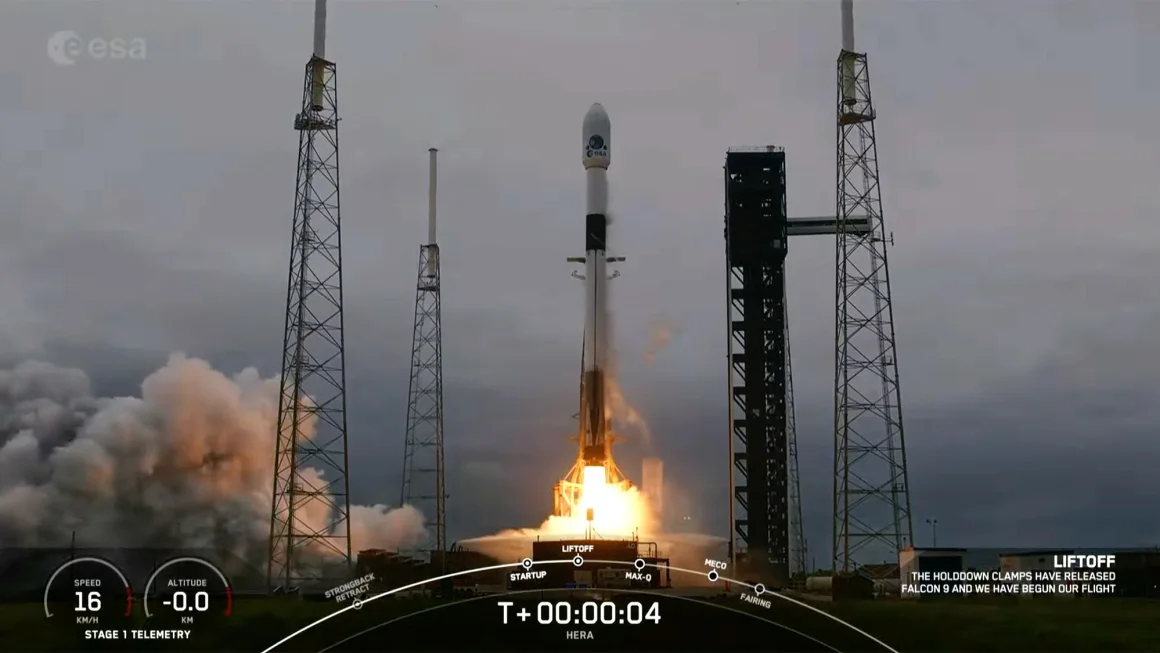
    The European Space Agency has launched the HERA mission to the asteroid Dimorphos, the orbiting moonlet of a binary asteroid system known as Didymos. The HERA probe was launched atop SpaceX’s Falcon 9 rocket from Cape Canaveral Space Force Station, Florida, on October 7 at 10:52 am EDT.

    The HERA mission is ESA’s contribution to the international planetary defense effort and a part of the Asteroid Impact and Deflection Assessment (AIDA) collaboration. ESA calls this mission “A crash site investigation,” i.e., the mission aims to study the aftermath of the impact of NASA’s DART mission on the asteroid that struck past Earth 2 years ago!

    HERA spacecraft launching atop SpaceX Falcon 9
    The HERA spacecraft lifting off atop the SpaceX Falcon 9. Image credit: ESA

    The DART spacecraft intentionally crashed into the small moonlet Dimorphos of the asteroid Didymos in 2022 to study the change in its trajectory after the collision. The HERA mission marks a significant step in the field of planetary defense, as it will play an important role in developing planetary defense systems to protect Earth in case of a possible asteroid collision.

    The DART mission, launched on Nov. 23, 2021, aboard a SpaceX Falcon 9 rocket from Vandenberg Space Force Base in California, was the first-ever mission that demonstrated one method of asteroid deflection by collision.

    The DART mission was successful when it impacted the asteroid Dimorphos on Sept. 26, 2022, at a little over 6 kilometers per second, reducing its velocity by 2.7 millimeters per second and thus, over time, changing its orbit around the Sun.

    How will the HERA probe study asteroid Dimorphos?

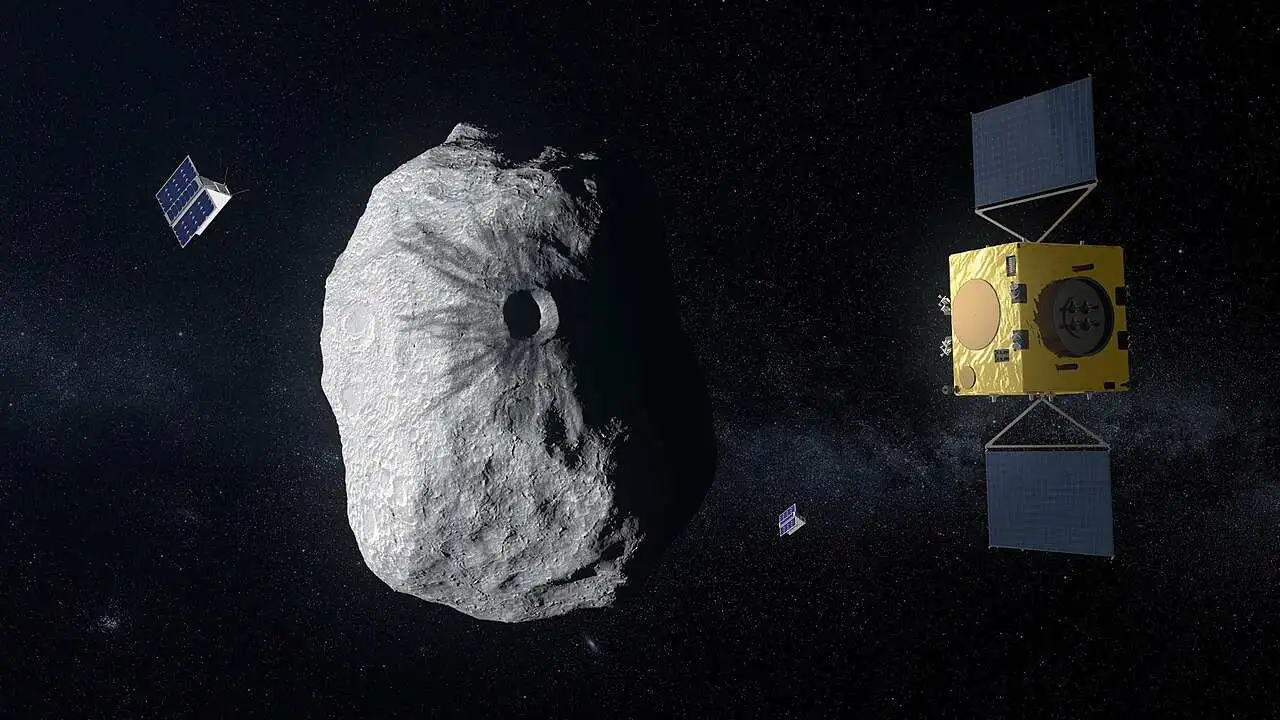
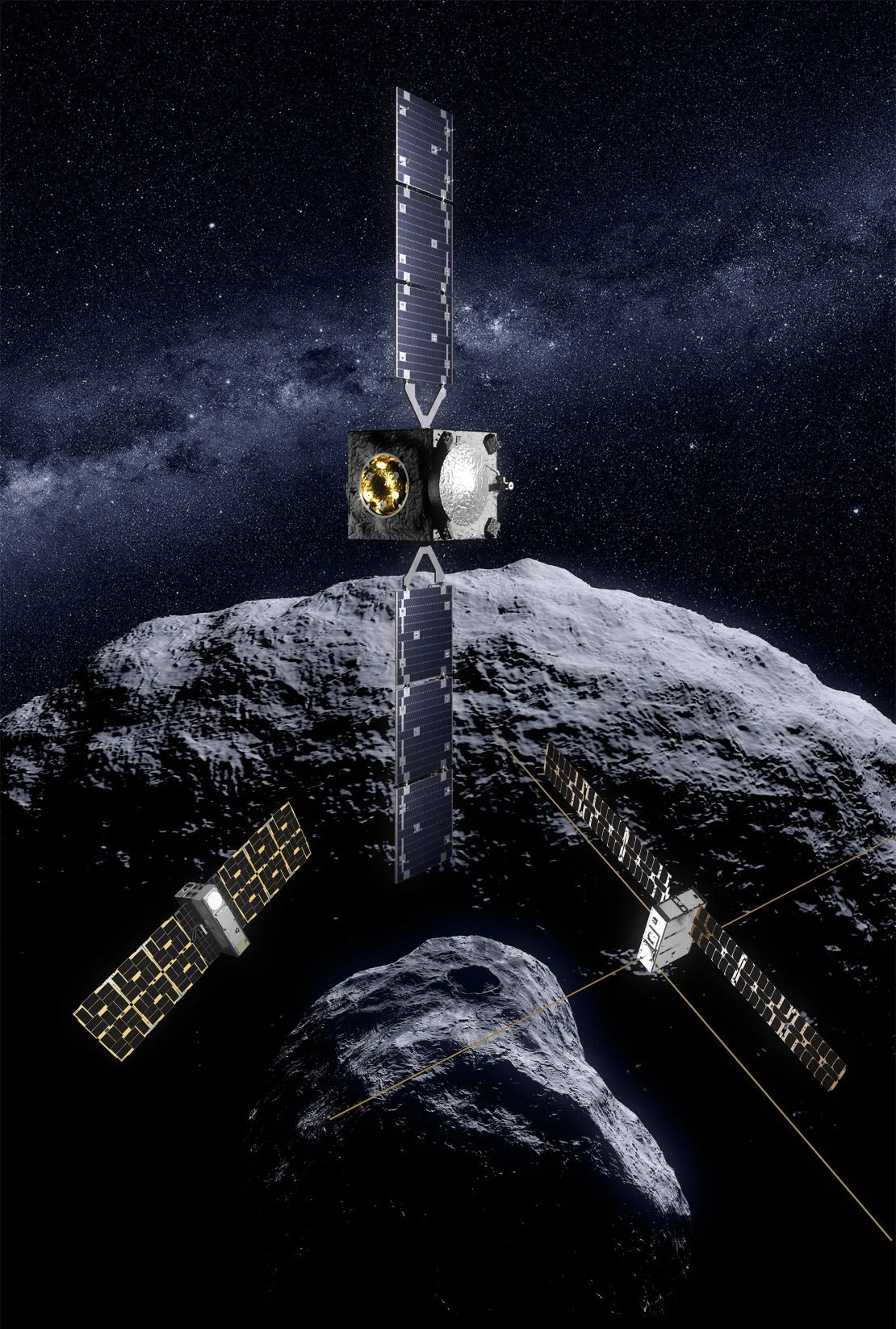
    HERA and it's CubeSats
    Illustration of the HERA spacecraft and its two CubeSats orbiting the asteroid Dimorphos. Image credit: ESA

    The HERA probe built by ESA, costing around €363 million (US $398 million), is an automobile-sized probe measuring around 1.6 m across and flanked by twin 5-m solar wings. It is equipped with high-tech technology that will conduct a detailed survey of the aftereffects of the DART mission impact on asteroid Dimorphos.

    The Probe carries 2 CubeSats named Milani and Juventas. The Milani CubeSat, developed by Italian industry led by Tyvak International, will survey the mineral makeup of Dimorphos and its surrounding dust, and the Juventas CubeSat, produced by a Luxembourg-led consortium under GOMspace, will perform the first subsurface radar probe of an asteroid.

    The HERA spacecraft will release these CubeSats after 6 weeks of the survey. After that, HERA will continue to observe by flying near the impact crater on Dimorphos, getting as close as 1 kilometer from the surface. Finally, it will try out an experimental landing on Dimorphos, which will end the mission.

    The CubeSats may also attempt similar landings. Although no spacecraft is made to land, they will slow down enough to use cameras and some instruments on the asteroid’s surface, as CNN reported.

    The spacecraft will also test its self-driving technology and navigate around the asteroid using visual tracking systems.

    Before reaching Dimorphos in 2026, the spacecraft will first swing by Mars in 2026 for extra momentum, which will help reach Dimorphos and Didymos by 2026. During this flyby, the probe will also observe Deimos, which is one of Mars’s two moons, from a distance of 1,000 kilometers.

    Mission timeline

    • The HERA mission was launched on October 7 from Cape Canaveral Space Force Station in Florida.
    • It will arrive at the binary asteroid system in 2026 after 2 years of cruise and will be 121 million miles (nearly 195 million kilometers) away from Earth.

    Why did scientists choose Dimorphos and Didymos?

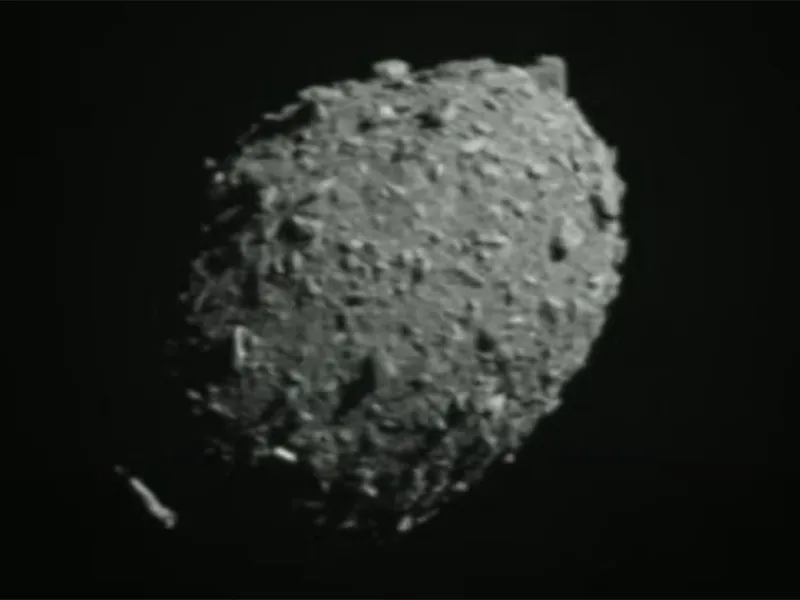
    Image of Asteroid Dimorphos captured by DART
    The last image of asteroid Dimorphos was captured by the DART spacecraft 2 seconds before impact. Image credit: NASA/Johns Hopkins APL

    Asteroid Dimorphos is a near-Earth asteroid that is not an immediate threat to the Earth. NASA and other global space agencies play a crucial role in planetary defense by tracking and studying such celestial bodies. Asteroid flybys are pretty frequent. One of the recent asteroid flybys was in August and September, when asteroid 2020 RL and four other asteroids flew past Earth.

    The asteroid Dimorphos is part of a binary asteroid system orbiting a larger asteroid, Didymos. This binary configuration makes it easier for scientists to study the impact of deflection techniques and observe any alteration in the Dimorphos orbit around the Didymos.

    Asteroid Dimorphos is roughly 160 meters wide. This size of an asteroid is a threat to Earth; thus, testing deflection techniques on such an asteroid can help develop realistic planetary defense strategies.

    After the successful impact of NASA’s DART mission on this asteroid in 2022, ESA’s HERA mission aims to follow up on this collision, studying the impact crater, measuring changes in the orbit, and gathering more data on the physical properties of Dimorphos.

  • NASA’s Europa Clipper to Hunt for Habitable Ocean World

    NASA’s Europa Clipper to Hunt for Habitable Ocean World

    NASA’s Europa Clipper spacecraft has begun its six-year journey to Jupiter’s icy moon Europa after lifting off aboard a SpaceX Falcon Heavy rocket on October 14, 2024, from Kennedy Space Center in Florida. The mission, which costs about $5 billion, will investigate whether the vast saltwater ocean beneath Europa’s frozen crust could support life.

    The launch was originally scheduled for October 10 but was delayed by Hurricane Milton, which struck Florida’s Space Coast. Engineers rolled the spacecraft back into SpaceX’s hangar until conditions cleared. NASA had a launch window lasting until November 6, giving teams time to safely prepare.

    Once it arrives in 2030, Europa Clipper will orbit Jupiter rather than Europa itself to avoid the intense radiation around the moon. From there, the spacecraft will perform nearly 50 close flybys of Europa, using an array of scientific instruments to map its surface, probe beneath its icy shell, and measure the composition of its thin atmosphere.

    Jupiters icy moon Europa
    One of the first detailed images of Europa’s surface captured by NASA in 2014. Image credit: NASA/JPL-Caltech/SETI Institute

    Scientists believe Europa is one of the most promising places in the solar system to search for alien life. Beneath its thick ice lies an ocean that may be twice the size of all Earth’s oceans combined. With water, chemistry, and energy sources, Europa could have the right conditions for life, making it a top target for exploration.

    The spacecraft, roughly the size of a basketball court due to its massive 100-foot solar arrays, is fitted with advanced instruments. These include high-resolution cameras, infrared and ultraviolet spectrometers, a powerful radar system to measure ice thickness, and mass spectrometers designed to analyze water vapor plumes that may erupt from Europa’s surface.

    Some of the key instruments are the Europa Imaging System, capable of capturing 90% of the surface; the REASON radar system, which will search for underground oceans; and MASPEX, which can sample gases from potential plumes as the spacecraft flies through them. Together, these instruments will determine whether Europa’s hidden ocean is truly habitable.

    Although Europa Clipper will not directly search for life, it will provide critical data to prepare for future missions that could land, drill through the ice, and access the ocean below. NASA scientists say that while this will remain a challenge for decades ahead, Europa Clipper is a necessary step toward answering one of humanity’s biggest questions: Are we alone in the universe?

  • James Webb Telescope Captures Rare Image of Super Star Cluster Westerlund-1 Inside Our Galaxy

    James Webb Telescope Captures Rare Image of Super Star Cluster Westerlund-1 Inside Our Galaxy

    NASA’s James Webb Space Telescope has captured a striking image of Westerlund-1, one of the most massive and compact star clusters in the Milky Way. Located about 12,000 light-years from Earth, the cluster contains more than 10,000 times the mass of the Sun packed into a relatively small region of space.

    Super Star clusters like Westerlund-1 are among the most extreme places in the universe for star and planet formation. While they are common in younger galaxies where stars are still being born rapidly, they are rare in the Milky Way, which is far older and past its most active period of star formation.

    NASA says Westerlund-1 has a remarkably diverse mix of massive stars. All of them are in advanced stages of their lives, including Wolf-Rayet stars, OB supergiants, yellow hypergiants, which can shine almost a million times brighter than the Sun, and luminous blue variables. This variety gives astronomers a unique chance to study how such stars evolve and interact in dense environments.

    The image was taken as part of the Westerlund 1 and 2 Open Clusters Survey, known as EWOCS, using Webb’s Near-Infrared Camera (NIRCam). The program is focused on studying how stars and planets form and how stars evolve in regions where many of them are born close together.

    Westerlund-1 is not only a rare example within our galaxy but also an important laboratory for astronomers. Observing it with Webb allows scientists to see details that were previously impossible with earlier telescopes. Because the cluster is still relatively close in cosmic terms, it provides a much clearer view of how extreme star-forming regions work.

    The James Webb Space Telescope itself was launched on December 25, 2021. Unlike the Hubble Space Telescope, which orbits Earth, Webb circles the Sun about 1.5 million kilometers away at a stable point known as L2. From this position, it has been able to send back some of the sharpest and deepest images ever seen of the universe, including galaxies in collision and the earliest stages of star birth.

    Astronomers say Westerlund-1 is another reminder of Webb’s power. By observing clusters like this, the telescope is helping scientists better understand how stars live and die and how galaxies like our own came to be.

  • NASA Shuts Down Voyager 2 Instrument to Conserve Power as Probe Ventures Deeper Into Space

    NASA Shuts Down Voyager 2 Instrument to Conserve Power as Probe Ventures Deeper Into Space

    NASA has switched off one of Voyager 2’s science instruments as the spacecraft struggles with dwindling power while continuing its decades-long mission in interstellar space. The decision was made on September 26, 2024, to preserve energy for the remaining instruments as the probe travels more than 12.8 billion miles (20.5 billion kilometers) from Earth.

    Voyager 2, launched on August 30, 1977, crossed into interstellar space in November 2018 after more than 41 years of exploration. It remains the only spacecraft besides Voyager 1 to pass beyond the heliosphere, the bubble of charged particles surrounding the Sun.

    NASA engineers turned off the plasma science instrument (PLS), which had played a critical role in confirming Voyager 2’s exit from the heliosphere. In a statement posted on X, the Voyager account said, “In 2018, the PLS was critical in determining that I had left the heliosphere, but power management is a major challenge when you’ve been exploring for 47 years. I will, however, still be monitoring plasma in the interstellar medium with my plasma wave subsystem (PWS).”

    The command to shut down the instrument was sent on September 26 and took 19 hours to reach the spacecraft, followed by another 19 hours for confirmation to return to Earth. With this change, only three of the probe’s original ten instruments remain active.

    The plasma science instrument was designed to measure the density and direction of plasma in space using four cups; three facing the Sun to analyze solar wind, and one pointed in the opposite direction to detect plasma from planetary magnetic fields and interstellar space.

    After Voyager 2 crossed into interstellar space, the readings from the Sun-facing cups dropped sharply, while the fourth cup provided limited data during occasional spacecraft rotations.

    NASA explained that with the limited return from the instrument and rising power demands, it was no longer sustainable to keep it active. Even so, Voyager 2 continues to provide rare and vital data about conditions beyond the solar system, where sunlight is too weak to provide meaningful energy.

    Mission managers say the spacecraft has enough power to operate at least one science instrument into the 2030s, continuing to extend humanity’s reach deeper into the galaxy.