Category: Space

Explore the vastness beyond our planet. This section covers missions, discoveries, and events that expand our reach into the cosmos. From new rocket launches to deep-space observations, “Space” keeps you updated on humanity’s steps into the unknown.

  • ISRO’s GSLV-F15 launches from Sriharikota marking historic 100th rocket launch

    ISRO’s GSLV-F15 launches from Sriharikota marking historic 100th rocket launch

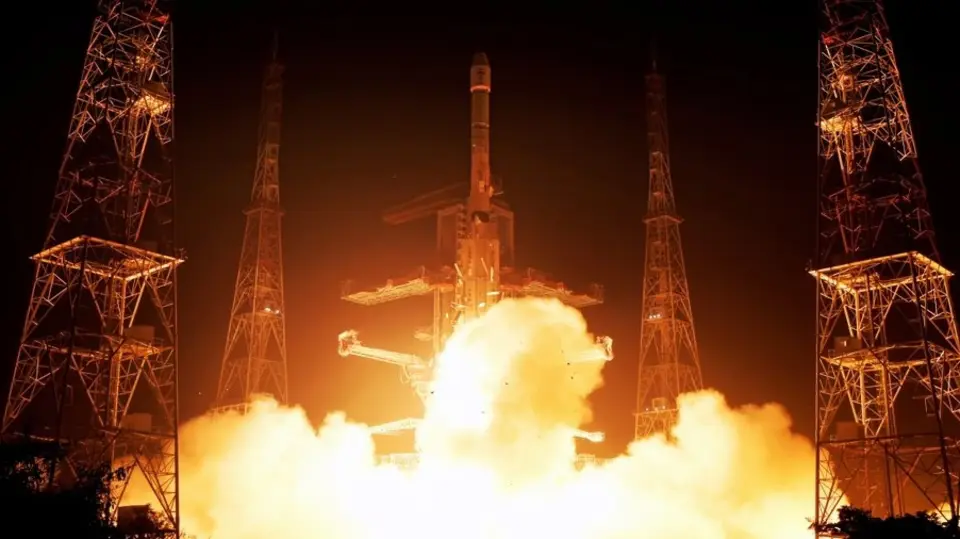
    The Indian Space Research Organisation (ISRO) achieved a significant milestone on January 29, 2025, with the successful launch of its 100th rocket mission from the Satish Dhawan Space Centre in Sriharikota. This historic event marked not only a century of launches from this spaceport but also the first mission under the leadership of ISRO’s new chairman, V. Narayanan.

    The GSLV-F15 rocket lifted off at 6:23 AM IST, carrying the NVS-02 satellite, part of India’s second-generation Navigation with Indian Constellation (NavIC) system.

    The NVS-02 was successfully deployed into a Geosynchronous Transfer Orbit (GTO) approximately 19 minutes post-launch. The organization later shared the onboard footage of the stage separation and satellite deployment on X (formerly Twitter).

    This satellite is designed to enhance navigation services across India and extends up to 1,500 kilometers beyond its borders.

    With a lift-off mass of 2,250 kilograms, NVS-02 incorporates advanced technology, including a Rubidium Atomic Frequency Standard for precise timekeeping and navigation payloads operating on multiple frequency bands (L1, L5, and S bands).

    This launch is particularly noteworthy as it showcases ISRO’s advancements in cryogenic technology. The GSLV-F15 is the 11th flight utilizing an indigenous cryogenic stage. The rocket’s payload fairing has a diameter of 3.4 meters and is crucial for increasing payload capacity during launches.

    This historic launch reflects nearly five decades of progress since its first major launch in 1979. ISRO continues to inspire with its ambitious goals and commitment, such as Gaganyaan and Chandrayaan 4, to advance India’s position in global space endeavors through future space missions.

  • Scientists uncover a ‘Troublesome’ Radio Galaxy nicknamed ‘Inkathazo’

    Scientists uncover a ‘Troublesome’ Radio Galaxy nicknamed ‘Inkathazo’

    Scientists have discovered a massive and unusual radio galaxy nicknamed “Inkathazo,” which means “trouble” in the Xhosa and Zulu languages. This extraordinary galaxy, located about 3.3 million light-years across, is 32 times the size of our Milky Way. It was identified using South Africa’s MeerKAT telescope, which has been instrumental in uncovering new cosmic structures.

    Inkathazo is notable for its gigantic plasma jets, streams of hot gas emitted from the supermassive black hole at the galaxy’s center. These jets glow at radio frequencies and extend across vast distances, making them some of the largest structures known in the universe. Researchers have found that one of Inkathazo’s jets has an unusually bent shape, differing from typical straight jets in other giant radio galaxies.

    The discovery of Inkathazo has raised questions about how such a large galaxy can exist within a cluster of galaxies, challenging existing theories about the formation and evolution of these cosmic giants.

    The research team created high-resolution maps using MeerKAT to study the age and behavior of the plasma jets in Inkathazo. They observed unexpected energy boosts in some electrons within the jets, likely caused by collisions with hot gas in the space between galaxies.

    This discovery is part of a broader trend; recent advancements in radio telescopes like MeerKAT have led to a surge in giant radio galaxy discoveries. Until recently, these massive structures were thought to be rare.

    Inkathazo is not alone; it is one of three giant radio galaxies in a small sky area known as COSMOS. The findings highlight the potential for uncovering many more giant radio galaxies in the southern sky, paving the way for further exploration and understanding of these fascinating cosmic phenomena.

    Recent advancements in telescopes like MeerKAT, Green Bank Telescope (GBT), and Giant Metrewave Radio Telescope (GMRT), have led to significant discoveries, including a recent finding by an Indian team of astronomers, who discovered 34 Giant Radio Sources by using the Giant Metrewave Radio Telescope (GMRT).

    Read more about this discovery on Oxford Academic.

  • SpaceX Starship Flight 7 Ends in Explosion: Debris Rains from the Sky

    SpaceX Starship Flight 7 Ends in Explosion: Debris Rains from the Sky

    The SpaceX Starship Flight 7 exploded on Thursday a few minutes after launch. The debris rained from the sky, leading to a change in flight courses above the area.

    X user @KingDomRedux shared a stunning video of the Starship debris falling from the sky:

    The Starship Flight 7 was launched from the Boca Chica, Texas, launch facility at 5:38 pm EST. The first stage of the flight test went smoothly, with the Super Heavy booster successfully caught by Mechazilla. However, communication was lost with the Starship a few minutes later, which ultimately resulted in an explosion.

    “Success is uncertain, but entertainment is guaranteed!” Elon Musk posted on X.


    What went wrong in Starship Flight 7?

    This next-gen starship was one of the most capable starships flown so far! Sadly, not everything went as planned. Communication with the upper stage was lost shortly after lift-off.

    SpaceX Communications Manager Dan Huot confirmed on a live stream that they had lost the starship, and a few minutes later, videos of the starship explosion were shared across social media by the witnesses confirming the Starship loss. Investigations are underway to determine the cause behind this loss of contact.


    What does a successful Starship Flight test look like?

    Below is the sequence of events that occur during a successful Starship Flight test:

    1. Lift off: The super heavy, powered by 33 Raptor engines, takes off from the launch pad. Taking the starship to the desired altitude
    2. Hotstage maneuver: This innovative technique ignites the upper stage engines while still attached to the booster, ensuring continuous acceleration.
    3. Mechzilla booster catch: the super heavy booster returns to the Starbase for a catch after the hot stage maneuver.
    4. Test satellite deployment: The starship continues to go into space, getting into its suborbital trajectory and deploying test satellites.
    5. Reentry of Starship: A raptor engine on the starship is reignited to put the starship into the reentry trajectory.
    6. Flip maneuver: As the starship reenters Earth’s atmosphere, the raptor engine will be reignited, and the spacecraft will perform a flip maneuver for a soft water landing in the Indian Ocean.


    Was Starship Flight 7 different from previous flight tests?

    Yes, the Starship Flight 7 was much different from the previous flight tests. Flight 7 aimed to test the next-gen starship with a number of structural and functional upgrades on the starship and the ground station.

    Here are some of the major upgrades that were done in the Starship Flight 7:

    • Redesigned forward flaps: The starship was redesigned to reduce reentry heating. The forward flaps of the spacecraft’s upper stage were reduced in size and shifted upwards away from the heat shield.
    • Tile removal: like the previous flight, multiple tiles were removed from the entire vehicle to stress test the vulnerable areas.
    • Propellant capacity upgrade: The starship spacecraft was made 2 meters taller, which allowed the starship to carry 25% more propellant.
    • Propulsion Upgrades: Enhancements such as vacuum jacketing on the feed lines and a new feed line system improve overall performance.
    • Payload Deployment: The mission aimed to deploy 10 simulated Starlink satellites that would enhance Starlink’s global internet reach and conduct several re-entry tests. Each satellite is designed to simulate the next generation of Starlink, testing payload capacity.
    • Multiple Re-entry Experiments: To improve re-entry survivability, various metallic tiles with active cooling systems will be tested.
    • Radar testing: Several new radar systems were fitted on the tower catch arms to measure the distance between the superheavy booster and the catch arms, enabling efficient booster catch.


    Achievements of the Starship Flight 7

    The starship exploded during Flight 7; however, not everything was negative about this flight test.

    Mechazilla successfully caught the Super Heavy Booster. The super heavy booster returned to the launch site for a catch attempt, which proved to be successful once again. Thousands of catch-commit criteria had to be fulfilled to make the catch successful.

    This booster catch technology will be crucial for future space missions, as it enables the company to refurbish and reuse the booster in significantly less time.

    Despite the catastrophic end of this mission, we should remember that every flight offers lessons; understanding this anomaly is crucial for future success.

  • SpaceX launches 21 Starlink satellites to strengthen text and data cellphone service

    SpaceX launches 21 Starlink satellites to strengthen text and data cellphone service

    SpaceX launched the Falcon 9 rocket with 21 Starlink satellites aboard on Wednesday at 10:27 am EST from the Launch Complex 39A (LC-39A) at NASA’s Kennedy Space Center, reported Spaceflight Now. Of these 21 satellites, 13 are equipped to provide text and data cellphone services.

    The first stage of the Falcon 9 rocket returned to Earth and landed on the droneship in the Atlantic Ocean around 8 minutes after the liftoff. The rocket’s 418 launch was the third launch of this particular booster. The Falcon 9 rocket successfully deployed the satellites into lower Earth orbit 65 minutes after the liftoff.

    These 21 satellites are now part of the world’s largest satellite constellation, Starlink, which had around 7000 active satellites in low Earth orbit (LEO) as of December 2024, according to the Starlink launch statistics website.

    You can watch the launch video below!

  • ISRO’s SpaDeX Mission Concludes Successfully, Paving the Way for India’s Advanced Space Operations

    ISRO’s SpaDeX Mission Concludes Successfully, Paving the Way for India’s Advanced Space Operations

    The Indian Space Research Organisation (ISRO) has successfully completed its Space Docking Experiment (SpaDeX) mission, marking a significant milestone in India’s space capabilities. This achievement positions India alongside the United States, Russia, and China in demonstrating autonomous space docking and de-docking technologies.

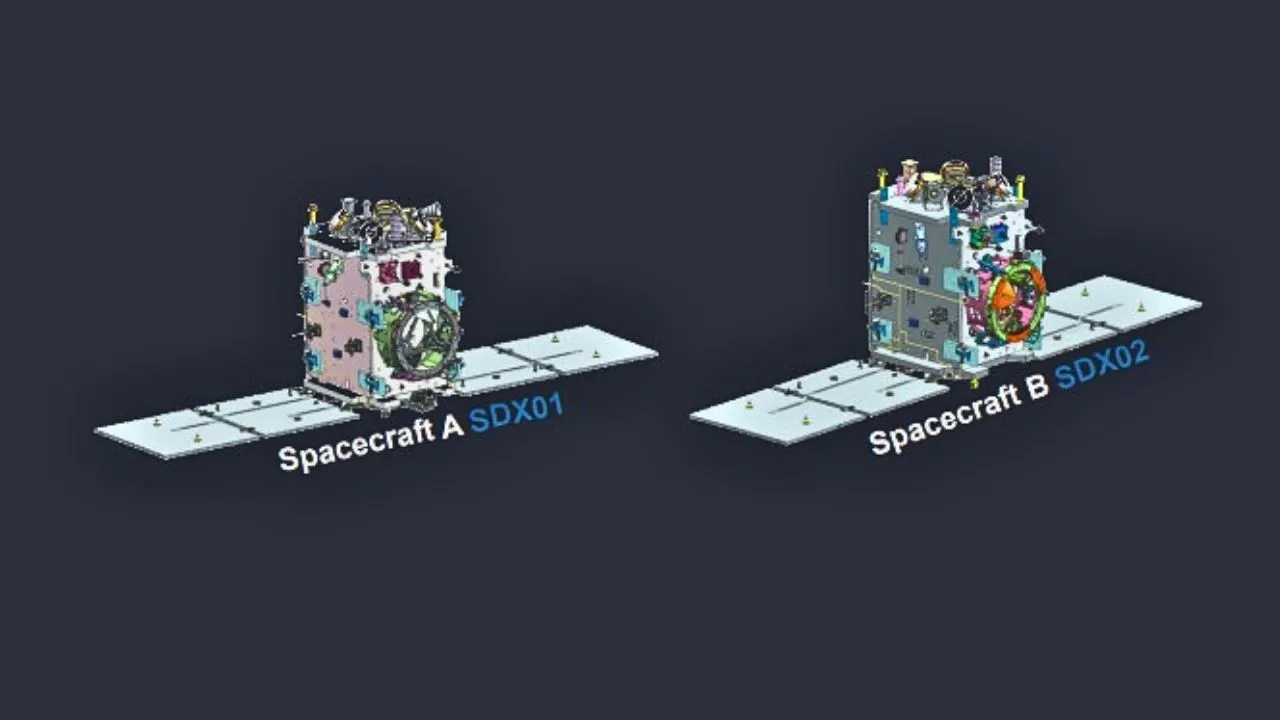
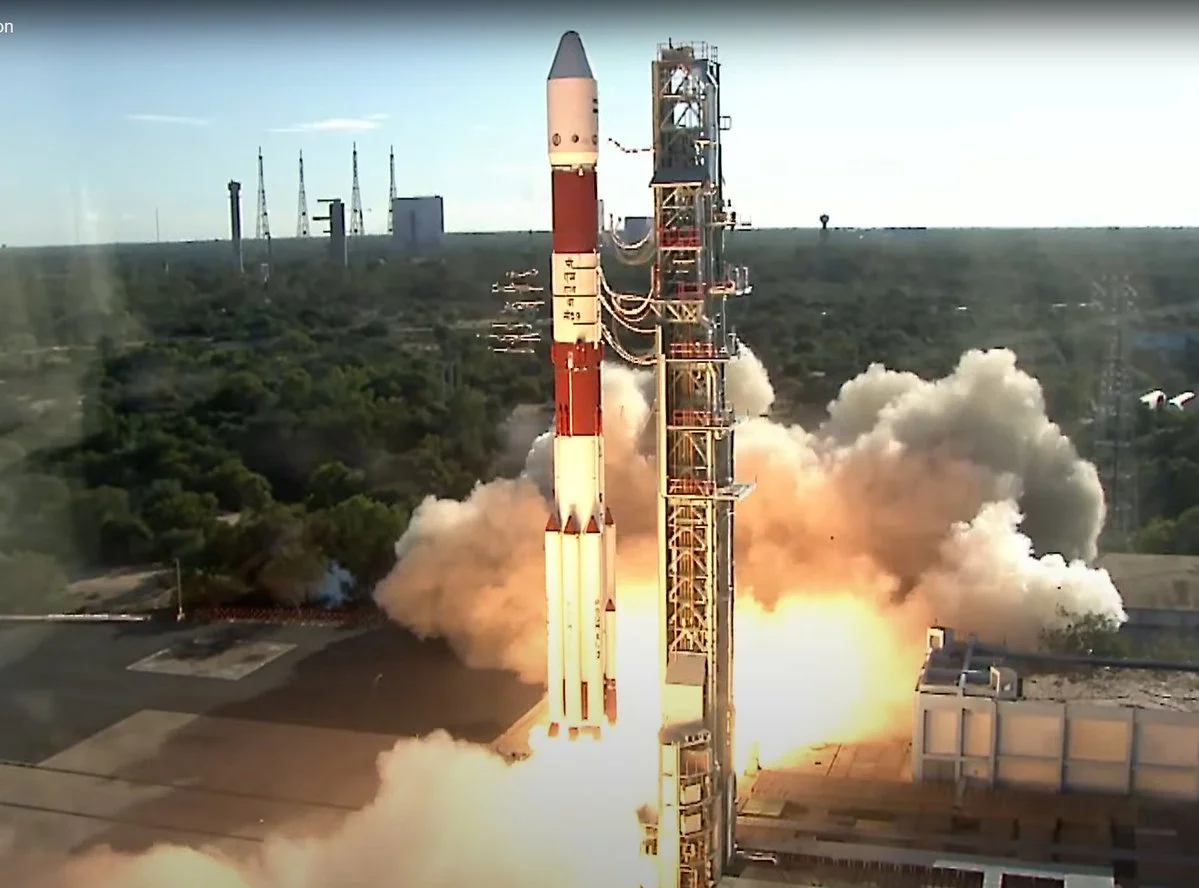
    Launched on December 30, 2024, aboard the PSLV-C60 rocket from the Satish Dhawan Space Centre, the SpaDeX mission deployed two small satellites: SDX-01 (Chaser) and SDX-02 (Target). Weighing 220 kg each, these satellites were placed in a 475 km circular orbit with a 3-second interval between deployments to maintain a safe distance of about 20 km.

    Key Milestones

    Docking (January 16, 2025): The two satellites successfully docked in low Earth orbit, validating ISRO’s docking technology for the first time.

    Undocking (March 13, 2025): The satellites performed a successful de-docking maneuver, captured from both SDX-1 and SDX-2, offering a rare view of in-orbit separation.

    Power Transfer Demonstration (April 21, 2025): A successful demonstration of power transfer between the docked satellites was accomplished, operating a heater element in one satellite via power from the other for approximately 4 minutes.

    Mission Status as of August 2025

    As of August 2025, the SpaDeX mission has concluded its primary objectives. The successful docking, undocking, and power transfer demonstrations have validated ISRO’s capabilities in autonomous space operations.

    Plans for a second phase, SpaDeX-2, are underway, aiming to further advance India’s space docking technologies. A proposal for SpaDeX-2 is expected to be submitted to the government soon, with a potential launch within the next three years, subject to approval.

    Significance for India’s Space Future

    The SpaDeX mission is a critical step toward realizing India’s ambitious space goals, including the establishment of the Bharatiya Antariksha Station (BAS) and crewed lunar missions. By demonstrating autonomous docking and related technologies, ISRO has positioned India as a key player in global space exploration.

    The success of SpaDeX underscores ISRO’s growing capabilities in complex space operations and its commitment to advancing India’s presence in space.

  • ISRO START Program 2025: Opportunity for UG and PG students to get a Certificate from ISRO

    ISRO START Program 2025: Opportunity for UG and PG students to get a Certificate from ISRO

    The Space Science and Technology Awareness Training (START) is a beginner-level certificate program offered by ISRO. It covers various aspects of space science, including astronomy and astrophysics, heliophysics and sun-Earth interaction, instrumentation, and aeronomy.

    Who can apply?

    • Indian students in their final year of undergraduate studies or any year of postgraduate studies.
    • Fields of study: Physical sciences (physics and chemistry) and technology (electronics, computer science, mechanical, applied physics, radiophysics, optics & optoelectronics, instrumentation, and related subjects).

    Requirements for Host Institutes

    1. Lecture hall or auditorium with internet connectivity and projection facilities.
    2. Ability to stream lectures through a videoconferencing platform.
    3. Coordinator to select eligible candidates based on aptitude, academic performance, and venue capacity

    Remember, only institutes, colleges, and universities in India can register for the full program, including the online merit examination. Individual students can participate in the program but won’t be eligible for the final exam.

    Important Dates

    • Institute registration deadline: January 30, 2025
    • Student registration deadline: January 7, 2025
    • Program duration: January 9 – 31, 2025

    Program Details

    • Daily 2-hour online classes from 9th January to 31st January 2025 on the ISRO E-CLASS platform (https://eclass.iirs.gov.in)
    • Online test at the end of the program.

    Program Certification

    To receive a merit/participation certificate from ISRO, students must:

    1. Attend at least 70% of the online sessions.
    2. Score a minimum of 50% marks in the online examination.

    (Note: The merit certification is to be received by the students who have registered under an ISRO-approved nodal center.)

    How to Register for the ISRO START Program?

    For Institutes/Colleges/Universities (Coordinators only)

    Below are the steps to register your institute:

    Step 1: Visit https://jigyasa.iirs.gov.in/registration

    Step 2: The coordinator should fill in the required details and click on ‘Register.’

    Step 3: Submit the institute’s details and wait for approval from ISRO/DOS.

    Step 4: ISRO will evaluate the submitted institute details and approve them. Once approved, all nodal centers will receive their login credentials for the ISRO E-CLASS Coordinator Management System (CMS).

    Step 5: After the institute is approved as an ISRO Nodal Centre, the students enrolled at the institute will be eligible to register for the program.

    Step 6: Once you receive the student registration link, students can register through this link. Applications will be reviewed by the coordinator based on the students’ merit and academic performance. Approved students will then receive their login credentials for the ISRO E-CLASS Learning Management System (LMS).

    For Individual Students

    Below are the steps for individual student registration:

    (Note: Individual registrants can attend live classes and receive a completion certificate but are not eligible for the merit examination.)

    Step 1: Visit https://elearning.iirs.gov.in/edusatregistration/student

    Step 2: Look for an account activation email in your inbox and click on ‘Activate your Account.

    Step 3: Click on ‘Already Registered,’ enter your login credentials and complete the CAPTCHA, then click on ‘Login.’

    Step 4: Choose the course you wish to enroll in, fill out the required details, and click on ‘Next.’

    Step 5: Fill in the personal details and click ‘Save and Continue.’

    Step 6: Fill in the educational details and click ‘Save and Continue.’

    Step 7: Fill in the professional details, such as employment status, attach your photo and identification document, and click ‘Save and Continue.’

    Step 8: Preview all your details thoroughly and click ‘Submit.’

    Step 9: Once submitted, you will now be eligible to attend the live classes and receive a course completion certificate at the end of the program.

    For more information, visit the Jigyasa Portal.

  • James Webb Telescope spots massive Milky Way–like galaxy just 600M years after Big Bang

    James Webb Telescope spots massive Milky Way–like galaxy just 600M years after Big Bang

    NASA’s James Webb Space Telescope (JWST) has uncovered a massive galaxy that existed just 600 million years after the Big Bang, weighing nearly as much as the Milky Way. The discovery was made in the galaxy cluster MACS J1423, and the object has been designated WEIC2429, nicknamed the “Firefly Sparkle Galaxy” for its glittering appearance.

    The finding was led by co-author Lamiya Mowla, assistant professor at Wellesley College, who identified the galaxy in JWST’s image. NASA described the discovery in a poetic post on X: “Someone struck a match against the night…” The dazzling image left viewers amazed, with users marveling at how Webb continues to reshape our view of the cosmos.

    The Firefly Sparkle Galaxy contains 10 distinct star clusters, emitting light in pink, purple, and blue hues. This color variety indicates that star formation occurred in staggered phases, not all at once. JWST’s detailed view was made possible by its advanced technology and gravitational lensing, which magnified the galaxy’s faint light through the massive cluster MACS J1423.

    In the image, the galaxy appears stretched into a long arc. Researchers later modeled its true form, suggesting an elongated raindrop shape—a sign that the stars have yet to settle into a bulge or disc. Its evolution remains uncertain, influenced by two companion galaxies located 6,500 and 42,000 light-years away.

    The study, published in Nature, marks the first identification of an actively forming galaxy with a mass comparable to a young Milky Way so early in cosmic history. It provides key insights into how galaxies like ours began assembling soon after the Big Bang.

  • Donald Trump Nominates Billionaire Jared Isaacman as New NASA Administrator

    Donald Trump Nominates Billionaire Jared Isaacman as New NASA Administrator

    U.S. President Donald J. Trump has nominated billionaire businessman and private astronaut Jared Isaacman to serve as the next administrator of NASA. The announcement came on December 4, 2024, with Isaacman set to replace Bill Nelson, who oversaw landmark missions including the James Webb Space Telescope, Artemis 1, and the DART asteroid impact test.

    In a post on X, Trump described Isaacman as a business leader, philanthropist, pilot, and astronaut, praising his ability to guide NASA’s mission of discovery and innovation. He said Isaacman would help drive progress in space exploration and technology while continuing America’s role as a leader in science and exploration.

    Isaacman, 41, accepted the nomination publicly, thanking Trump and expressing enthusiasm for the opportunity. “Having been fortunate to see our amazing planet from space, I am passionate about America leading the most incredible adventure in human history,” he wrote.

    Isaacman, with an estimated net worth of $1.7 billion, is the founder and CEO of Shift4, a payment processing company originally launched in 1999 under the name Union Bank Card. He left school at age 16 to pursue the venture, which later became a major financial technology firm.

    In addition to his business career, Isaacman has built a high-profile presence in the space industry. He commanded SpaceX’s Inspiration4 mission in 2021, the first all-civilian orbital flight, which also raised $100 million for St. Jude Children’s Research Hospital. More recently, in September 2024, he became the first private astronaut to conduct a spacewalk during the Polaris Dawn mission.

    If confirmed, Isaacman will lead NASA at a pivotal moment, as the agency prepares for future Artemis missions to the Moon, long-term Mars exploration goals, and expanded partnerships with commercial space companies.

  • ESA and ISRO Launch Proba-3 on PSLV-XL to Create First Artificial Solar Eclipse

    ESA and ISRO Launch Proba-3 on PSLV-XL to Create First Artificial Solar Eclipse

    The European Space Agency (ESA) and the Indian Space Research Organisation (ISRO) successfully launched the Proba-3 mission aboard a PSLV-XL rocket from the Satish Dhawan Space Center in Sriharikota, Andhra Pradesh, at 4:04 pm on Thursday, December 5. The spacecraft had been integrated with the rocket in November, and the launch was rescheduled from December 4 after a technical anomaly delayed liftoff.

    ISRO celebrated the launch on X, describing the mission as a reflection of the dedication of NSIL, ISRO, and ESA teams. The agency highlighted India’s role in advancing global space cooperation and emphasized the importance of international partnerships.

    Proba-3 is designed to study the solar corona by creating the first-ever artificial solar eclipse. The mission involves two spacecraft flying in precise formation to block the Sun’s light and allow instruments to capture detailed observations of the corona. Achieving this level of coordinated flight demonstrates both ESA and ISRO’s technical capabilities.

    Beyond its scientific goals, the mission is seen as a milestone in global collaboration. For India, it strengthens its role in joint space projects and builds momentum as ISRO prepares for upcoming missions including the human spaceflight program Gaganyaan, the Chandrayaan-4 lunar mission, and the planned Bharatiya Antariksh Station.

    The success of Proba-3 is expected to inspire scientists and engineers in India while opening the door to more international partnerships, reinforcing the country’s growing presence in space exploration.

  • China Launches First Commercial Long March-12 Rocket in Milestone for Space Industry

    China Launches First Commercial Long March-12 Rocket in Milestone for Space Industry

    China has achieved a major milestone in its space ambitions with the successful launch of its first commercial rocket, the Long March-12 Y1, on November 30, 2024. The mission lifted off from the new Wenchang Commercial Space Launch Site on Hainan Island, signaling China’s push to expand its role in the global space market.

    The Long March-12 Y1 was developed by the Shanghai Academy of Spaceflight Technology. Standing 62 meters tall and 3.8 meters in diameter, it is the first Chinese rocket of this width, allowing it to carry about 30% more fuel than earlier designs. The two-stage vehicle can deliver payloads of up to 12,000 kilograms into low Earth orbit and 6,000 kilograms into sun-synchronous orbit.

    The rocket carried two experimental payloads into orbit: the Satellite Internet Technology Test Satellite and the Technology Test Satellite-3. While details of the satellites remain undisclosed, their successful deployment confirmed the rocket’s capability.

    China’s commercial launch effort comes at a time when global competition in space is intensifying. The state-run China National Space Administration has already achieved milestones such as a lunar sample return and a landing on the far side of the Moon. However, the country’s private sector lags far behind rivals such as SpaceX, which completed about 100 launches in 2023 alone.

    China plans roughly 70 Long March launches and 30 additional missions from commercial providers in 2024. The country continues to face challenges including limited launch pad access and the absence of reusable rockets, which have helped SpaceX dominate the market. Still, the Long March-12 Y1’s successful debut highlights China’s determination to build a stronger commercial presence in orbit.

    Analysts say the expansion of commercial launch capabilities could play a key role in future space exploration, satellite internet projects, and international partnerships as China positions itself to compete in the rapidly growing space economy.