Category: Space

Explore the vastness beyond our planet. This section covers missions, discoveries, and events that expand our reach into the cosmos. From new rocket launches to deep-space observations, “Space” keeps you updated on humanity’s steps into the unknown.

  • Automobile giant Honda successfully conducts its first rocket test

    Automobile giant Honda successfully conducts its first rocket test

    The automobile company Honda has stepped into the space tech with its first rocket test. The company successfully launched and landed its first experimental reusable rocket on June 17, 2025, around 16:15 local time. This milestone marks the company’s formal entry into the space technology sector, signaling a new direction built on its core engineering strengths.

    The rocket, designed and developed by Honda R&D Co., Ltd., reached an altitude of 271.4 meters and returned safely, landing just 37 centimeters from the target. The entire flight lasted 56.6 seconds. This achievement is more than a technical demonstration. It represents Honda’s commitment to mastering the key systems required for reusable spaceflight.

    Through this test, the company aimed to validate core components, including ascent and descent stability and precise vertical landing. The rocket, measuring 6.3 meters in length and weighing 1,312 kilograms when fueled, performed within expected parameters.

    Technicians and Engineers readying the Honda rocket for launch
    Honda technicians conducting a test of its first experimental reusable rocket in Taiki Town in Hokkaido, Japan. Image captured in May 2025.

    Honda has been the biggest manufacturer of motorcycles since 2011, reaching a production of 500 million as of May 2025. It is also the world’s largest manufacturer of internal combustion engines. As of 2024, the company had a net revenue of 140,959 million dollars.

    The company has been testing and evolving spaceflight technologies since 2021. The move into space builds on Honda’s deep expertise in robotics, combustion engines, and automated control systems. As data consumption and the use of satellite services increase, the need for efficient, cost-effective launch solutions grows in parallel. Honda sees reusable rockets not just as a scientific challenge but as a foundation for future services that may connect back to its broader business.

    The rocket test was carried out in Taiki Town, located in southeastern Hokkaido, which has positioned itself as a key location for aerospace experiments. It is already home to activities by JAXA, academic institutions, and space startups. Honda’s entry adds momentum to the town’s vision of becoming Japan’s “space town.”

    The test was carried out under tight safety measures. The company enforced a one-kilometer safety zone, calculated using government-approved models to account for possible malfunctions.

    “We are pleased that Honda has made another step forward in our research on reusable rockets with this successful completion of a launch and landing test. We believe that rocket research is a meaningful endeavor that leverages Honda’s technological strengths,” said Honda’s Global CEO, Toshihiro Mibe, in a statement.

  • ESA Releases Pictures of Proba-3’s first artificial solar eclipse

    ESA Releases Pictures of Proba-3’s first artificial solar eclipse

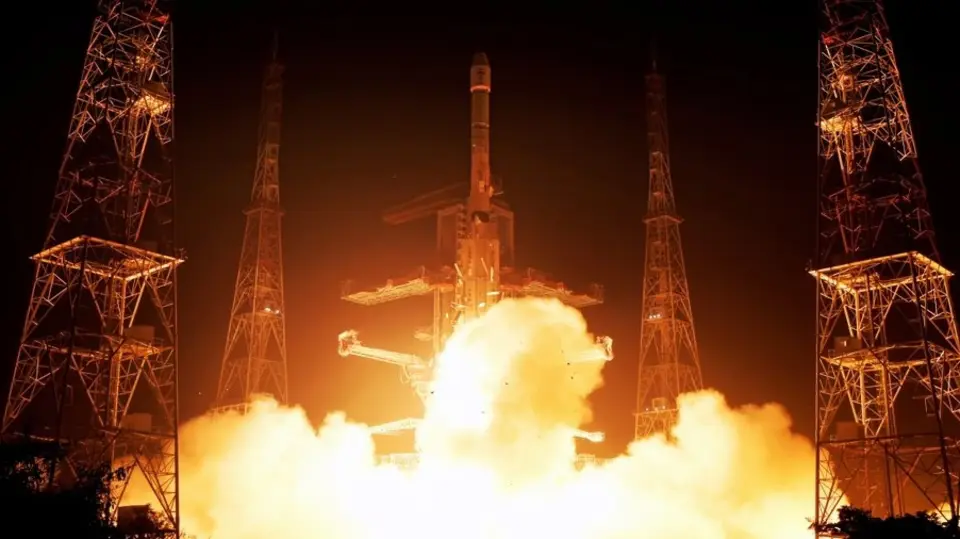
    The European Space Agency (ESA) has achieved yet another astonishing feat. The space agency has released the first images of the artificial solar eclipse created by the Proba-3 mission spacecraft. The Proba 3 spacecrafts were launched in December 2024 aboard the Indian Space Research Organization’s (ISRO’s) workhorse PSLV rocket.

    The Proba-3 mission is dedicated to studying the solar corona, “the outermost layer of the Sun,’ like never before. The mission consists of two spacecraft, namely the ‘Coronagraph’ and the ‘Occulter.’ These two spacecraft, equipped with sophisticated, ultra-precise networking technologies, fly in perfect formation, separated by just 150 meters. The spacecraft are aligned such that the occulter blocks the sun’s bright disc and casts a shadow onto the coronagraph, thus creating a man-made eclipse.

    Picture of Solar Corona Captured by ESA's Proba-3's ASPIICS
    Solar corona viewed by Proba-3’s ASPIICS. Image credit: ESA

    Creating this eclipse and blocking the sun’s bright central part enables the ‘coronagraph’ to study the corona, which is otherwise harder to study. These observations of the corona, typically only possible during rare natural solar eclipses, can now be conducted once every 19.6-hour orbit for up to 6 hours.

    The coronagraph spacecraft features advanced precision alignment and synchronization technologies, along with a sophisticated optical instrument. Developed by a Belgian-led industrial team, the ASPIICS instrument captures high-resolution images with minimal stray light, providing exceptional views of the solar corona. These images are essential for understanding solar wind, coronal mass ejections (CMEs), and the extreme heat of the Sun’s outer atmosphere.

    In addition to ASPIICS, Proba-3 houses two other instruments: the Digital Absolute Radiometer (DARA), which measures solar energy output, and the 3D Energetic Electron Spectrometer (3DEES), which studies energetic particles in Earth’s radiation belts.

    The Sun and its corona viewed by Proba-2, Proba-3 and SOHO.
    The sun and its corona viewed by Proba-2, Proba-3, and SOHO. Image Credit: ESA

    These detailed and state-of-the-art images captured by the Proba-3 not only validate ESA’s advanced formation flying technologies but also provide a critical data stream for refining solar simulations. Teams across Europe, including KU Leuven’s COCONUT modeling software, are already using the new images to enhance digital eclipse models and improve space weather forecasting.

    “Current coronagraphs are no match for Proba-3, which will observe the Sun’s corona down almost to the edge of the solar surface. So far, this was only possible during natural solar eclipses,” said Jorge Amaya, Space Weather Modelling Coordinator at ESA.

  • ISRO MCF Summer Internship: Check Eligibility, Application Process and More

    ISRO MCF Summer Internship: Check Eligibility, Application Process and More

    The Indian Space Research Organisation’s Master Control Facility (ISRO MCF) in Hassan, Karnataka, offers a coveted summer internship for students eager to explore the world of satellite management and space technology. Undergraduate, graduate, and doctoral students have a rare opportunity to become fully involved in the real-time operations that support India’s space missions through this program.

    What is the ISRO MCF Internship?

    The ISRO MCF Internship is designed for students who want to gain practical exposure in satellite control, space communications, and mission operations. MCF serves as the focal point for ISRO’s satellite operations, handling everything from mission planning and orbit management to satellite tracking.

    At MCF, interns have the opportunity to work alongside seasoned ISRO professionals, participate in meaningful projects, and even receive professional guidance while working on their final year projects or academic dissertations.

    Why Consider the ISRO MCF Internship?

    • Real-World Experience: Interns are involved in live satellite missions and ground station operations.
    • Mentorship: Direct interaction and guidance from ISRO’s expert scientists and engineers.
    • Academic Integration: Students can fulfill their academic project requirements under the supervision of ISRO professionals.
    • Professional Networking: Build connections with top experts in India’s space sector.
    • Official Certification: Receive a recognized certificate from ISRO-MCF after successful completion.
    • No Cost: The internship is free. There are no application or training fees.

    Eligibility Criteria

    CriteriaDetails
    NationalityMust be an Indian citizen
    Academic StatusCurrently enrolled in UG, PG, or PhD program (India or abroad), or completed UG/PG within the past 6 months
    Academic ProgressBE/BTech: At least 6 semesters completed; ME/MTech/MSc: At least 1 semester completed
    Minimum Marks60% aggregate or CGPA of 6.32/10
    Mode of StudyMust be a regular, on-campus student (distance learning not accepted)
    Age LimitNo age restriction; recent graduates (within 6 months) are eligible

    Internship Duration and Structure

    TypeDurationPurposeLocation
    Short-Term Internship15–45 daysIdeal for summer/winter breaks or short academic internshipsOffline at MCF, Hassan
    Project Work45–120 daysFor final-year projects, dissertations, or in-depth researchOffline at MCF, Hassan

    How to Apply: Step-by-Step Process

    Gather Required Documents

    • Updated resume or CV
    • Permission/request letter from your department head or institution
    • No Objection Certificate (NOC) from your college/university
    • Copies of all semester mark sheets
    • Valid ID proof (Aadhaar or college ID)
    • Recent passport-sized photo

    Submit Your Application

    • Visit the official MCF internship portal (see the ISRO MCF website).
    • Download and fill out the application form as instructed.
    • Attach all necessary documents.
    • Make sure to apply at least 15 days before your intended start date.

    Wait for Confirmation

    • Selected candidates will be notified via email or phone.
    • If you don’t hear back within 10–15 days, you can follow up with MCF.

    What Will You Learn as an Intern?

    Interns at MCF are exposed to a variety of critical operations, including:

    • Satellite monitoring and control
    • Telemetry and telecommand systems
    • Orbit management and mission planning
    • Ground station operations
    • Spacecraft health assessment
    • Real-time troubleshooting during mission operations

    This hands-on experience is especially valuable for those interested in careers in aerospace, electronics, communications, or computer science.

    Contact Information

    Contact MethodDetails
    Phone08172-273146
    Emailhead.bacs.ppe@mcf.gov.in
    AddressMaster Control Facility (MCF), ISRO, Dept. of Space, Salagame Road, Hassan – 573201

    End Note

    Students have a unique opportunity to obtain first-hand knowledge of satellite operations and space technology through the ISRO MCF Summer Internship. This program serves as a strong pillar for future space professionals and offers no fees, real project involvement, and direct mentoring. For those who wish to participate in India’s space journey, early application is advised due to limited slots.

  • ISRO Faces Setback: PSLV-C61/EOS-09 mission fails due to an Anomaly

    ISRO Faces Setback: PSLV-C61/EOS-09 mission fails due to an Anomaly

    The Indian Space Research Organisation (ISRO) faced a rare setback as its trusted workhorse, the Polar Satellite Launch Vehicle (PSLV C-61), failed for the first time in 8 years and for the third time in 32 years.

    The PSLV-C61 rocket launched from the Satish Dhawan Space Centre in Sriharikota (SDSC) SHAR on May 18, 2025, at 5:59 AM IST, marking ISRO’s 101st mission and PSLV’s 63rd flight. The PSLV-C61/EOS-09 mission aimed to deploy the Earth observation satellite (EOS-09) into a sun-synchronous polar orbit.

    The first and second stages of the Polar Satellite Launch Vehicle (PSLV) operated as expected. During the third stage, an anomaly caused a drop in chamber pressure within the motor case, resulting in mission failure and the loss of the EOS-09 satellite.

    ISRO chairman V. Narayanan announced, “The first two stages were completed successfully. However, an anomaly was observed in the third stage—a drop in chamber pressure in the motor case. Once we identified the issue, we (ISRO) realized the mission could not be accomplished.” “After analysis, we shall come back,” he added.

    The lost satellite, EOS-09, was designed to provide continuous and reliable remote sensing data for operational applications across various sectors. The satellite was intended to operate alongside its predecessor, EOS-04, to guarantee a smooth continuation of crucial microwave data in the C-band, thereby improving Earth observation capabilities.

    The radar payload was designed to monitor essential applications, including agriculture, forestry, and plantations, under all weather conditions. It was also intended to assess flooding across the nation and evaluate surface water spread. However, the PSLV failure has resulted in a significant setback for this mission. As of the time this article was published, there have been no other updates regarding the failure or any plans for replacement missions.

  • Breakthrough! James Webb Space Telescope confirms presence of crystalline water ice in a nearby Star System

    Breakthrough! James Webb Space Telescope confirms presence of crystalline water ice in a nearby Star System

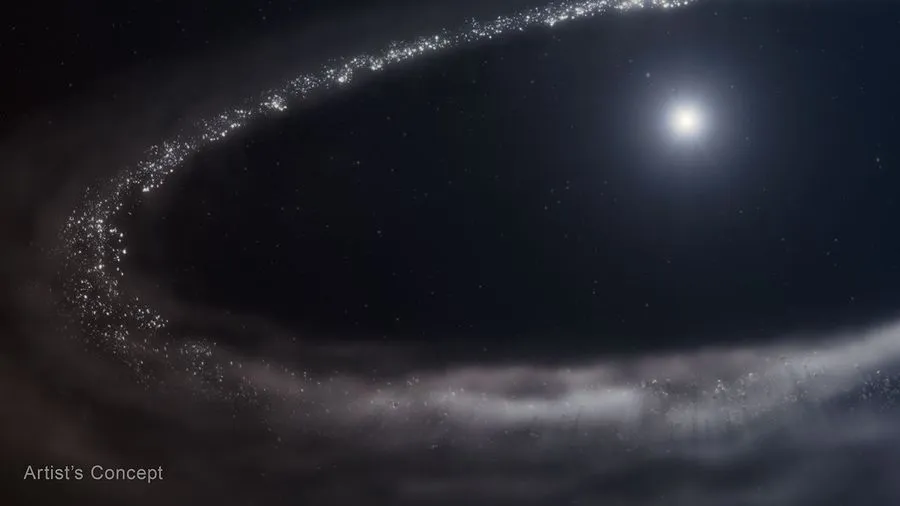
    Researchers have confirmed the presence of crystalline water in space for the first time in human history! The James Webb Space Telescope (JWST) has discovered crystalline water ice in a dusty debris disk orbiting the Sun-like star HD 181327, located 155 light-years away. Researchers used NIRSpec (Near-Infrared Spectrograph) (a super-sensitive instrument designed to detect faint dust particles from space) for this discovery.

    NASA’s retired Spitzer Space Telescope hinted at the possibility of frozen water in the same system back in 2008; however, it lacked the sensitivity to confirm the discovery. Now, Webb has not only confirmed the presence of water ice but also revealed that it is mixed with fine dust particles throughout the debris disk, forming what scientists describe as tiny “dirty snowballs.”

    The Webb Telescope revealed that water ice is most abundant in the cold outer regions of the disk, where over 20% of the material is ice. Webb detected about 8% water ice in the middle region of the disk. Almost no water ice was found in the inner region of the disk, likely due to ultraviolet radiation from the star vaporizing the ice or its entrapment within planetesimals.

    The star HD 181327 is relatively young at 23 million years old and is slightly more massive and hotter than our Sun, resulting in a larger surrounding system. The discovery of crystalline water ice around this young star can help scientists better understand how planets form and how water might be delivered to rocky worlds.

    Crystalline water ice has also been found in Saturn’s rings and the Kuiper Belt in our solar system and is considered a key ingredient in the formation of giant planets. Thus, the large gaps between the star HD 181327 and its debris disk suggest that the system may be shaped by an emerging planet or is still in the early stages of its evolution.

    These findings were originally published in a recent article by NASA.

  • Google’s AI-powered FireSat satellite to help manage wildfires more precisely

    Google’s AI-powered FireSat satellite to help manage wildfires more precisely

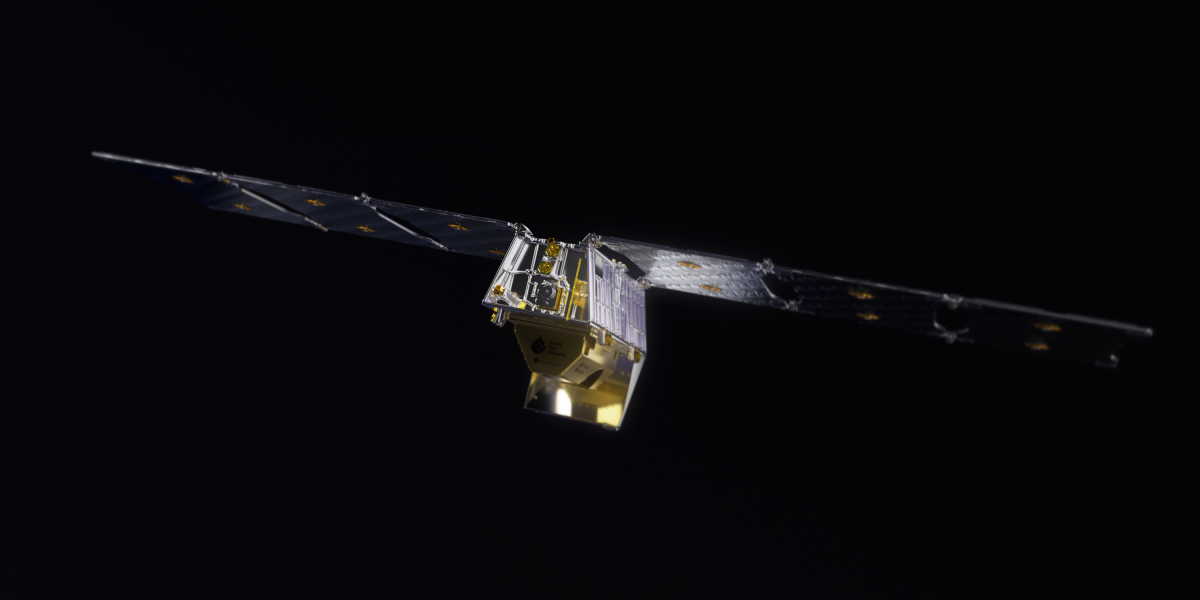
    Google’s FireSat initiative is a partnership between Google Research, Muon Space, the Earth Fire Alliance, and the Moore Foundation, for early wildfire detection and mitigation. The first FireSat was launched from Vandenberg Space Force Base in California aboard SpaceX’s Transporter-13 mission on March 15, 2025.

    It is the first satellite in this constellation designed to identify wildfires as small as 5×5 meters within 20 minutes. This capability is crucial, especially as wildfires become more frequent and devastating due to climate change.

    “FireSat represents the latest addition to Google Research’s efforts to improve wildfire tracking and understanding, ultimately benefiting communities around the globe,” said Google in an article.

    The FireSat constellation will eventually consist of over 50 satellites, significantly improving global coverage and monitoring capabilities. As these satellites become operational, they will transform how we detect and manage wildfires, providing critical information that can lead to quicker and more effective responses.

    The Technology Behind FireSat

    Google's FireSat Satellite
    AI-powered cameras and sensors on the FireSat satellite will help early wildfire detection and mitigation. Image credit: Screengrab from a YouTube video by Google.

    FireSat utilizes advanced artificial intelligence to analyze real-time images from its onboard sensors. By comparing these images with historical data, the satellite can quickly determine if a fire is present. This is a game-changer compared to traditional methods that often rely on low-resolution imagery and are updated infrequently, leading to delayed responses.

    Collaboration and Funding

    The project is a collaboration between Google Research, Muon Space, the Earth Fire Alliance, and the Moore Foundation. Google.org has invested $13 million to support this initiative, reflecting the company’s commitment to leveraging technology for environmental solutions.

    Impact on Wildfire Management

    With its ability to provide near real-time data, FireSat enhances the capacity of emergency responders to act swiftly against wildfires. This could potentially save lives and reduce damage to property and ecosystems. The satellite’s data will also contribute to a global record of fire behavior, aiding scientists in understanding and modeling wildfire dynamics better.

  • Saturn solidifies its ‘Moon King’ title as astronomers discovered 128 new moons orbiting the planet

    Saturn solidifies its ‘Moon King’ title as astronomers discovered 128 new moons orbiting the planet

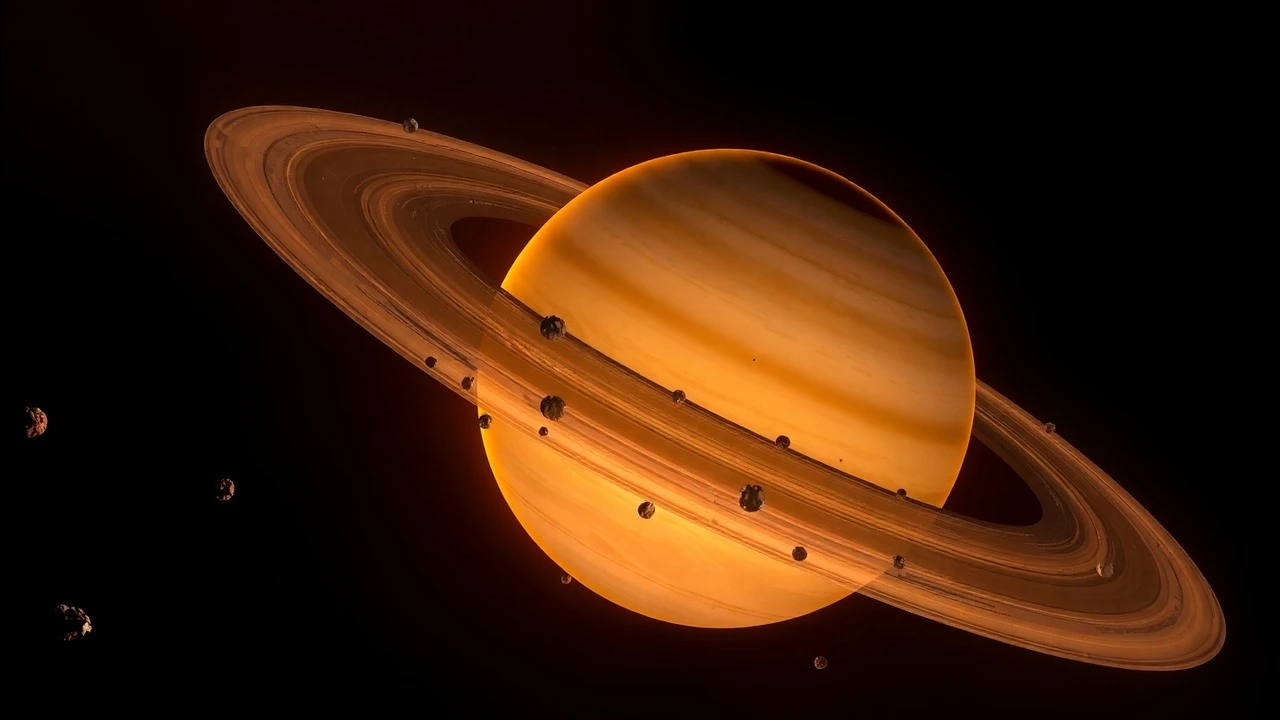
    A team of astronomers from Taiwan, Canada, the U.S., and France has confirmed the discovery of 128 new moons orbiting Saturn, cementing the gas giant’s status as the “Moon King” of our solar system. This breakthrough raises Saturn’s total moon count to an impressive 274, far surpassing Jupiter’s 95 moons.

    The discovery of the 128 new moons around Saturn was made in 2023 using the Canada-France-Hawaii Telescope. However, the International Astronomical Union officially recognized these moons on March 11, 2025.

    The team, led by Dr. Edward Ashton from Academia Sinica in Taiwan, revisited earlier observations in 2023 to confirm the presence of these additional moons. The newly discovered moons are all relatively small, with diameters ranging from 1 to 3 kilometers.

    “These aren’t large moons like Titan or Enceladus,” explains Dr. Elena Vasquez, lead astronomer on the project. “They’re more like small rocky bodies captured by Saturn’s gravity over time. But they still count as moons since they orbit the planet in stable patterns.”

    Most of the new moons follow irregular orbits, suggesting they were not formed alongside Saturn but were captured later. They orbit at significant distances from the planet, with some taking more than three Earth years to complete a single orbit around Saturn.

    This discovery highlights how technology continues to enhance our understanding of the solar system. “Twenty years ago, we could only detect the largest moons,” notes Dr. James Chen, planetary scientist at the Pacific Astronomy Institute. “Now our instruments can identify smaller and more distant objects, revealing just how complex Saturn’s system truly is.”

    The finding raises questions about how Saturn managed to capture so many objects. Researchers suggest its position in the solar system and strong gravitational field make it particularly effective at capturing passing objects.

    The research team has begun the process of naming these new moons, following the IAU convention of using names from various mythologies. The public may even be invited to participate in naming some of these newly discovered natural satellites in the coming months.

    FAQ’s

    How many moons does Saturn have?

    Saturn currently has 274 moons officially recognized by the International Astronomical Union (IAU). Previously, the planet had 146 known moons, but a recent discovery of 128 additional moons by a team led by Dr. Edward Ashton from Academia Sinica, Taiwan, has increased the total count. This makes Saturn the ‘Moon King’ of our solar system.

  • NASA’s SpaceX Crew-10 is now onboard the ISS: Sunita Williams and fellow astronauts perform welcoming ceremony

    NASA’s SpaceX Crew-10 is now onboard the ISS: Sunita Williams and fellow astronauts perform welcoming ceremony

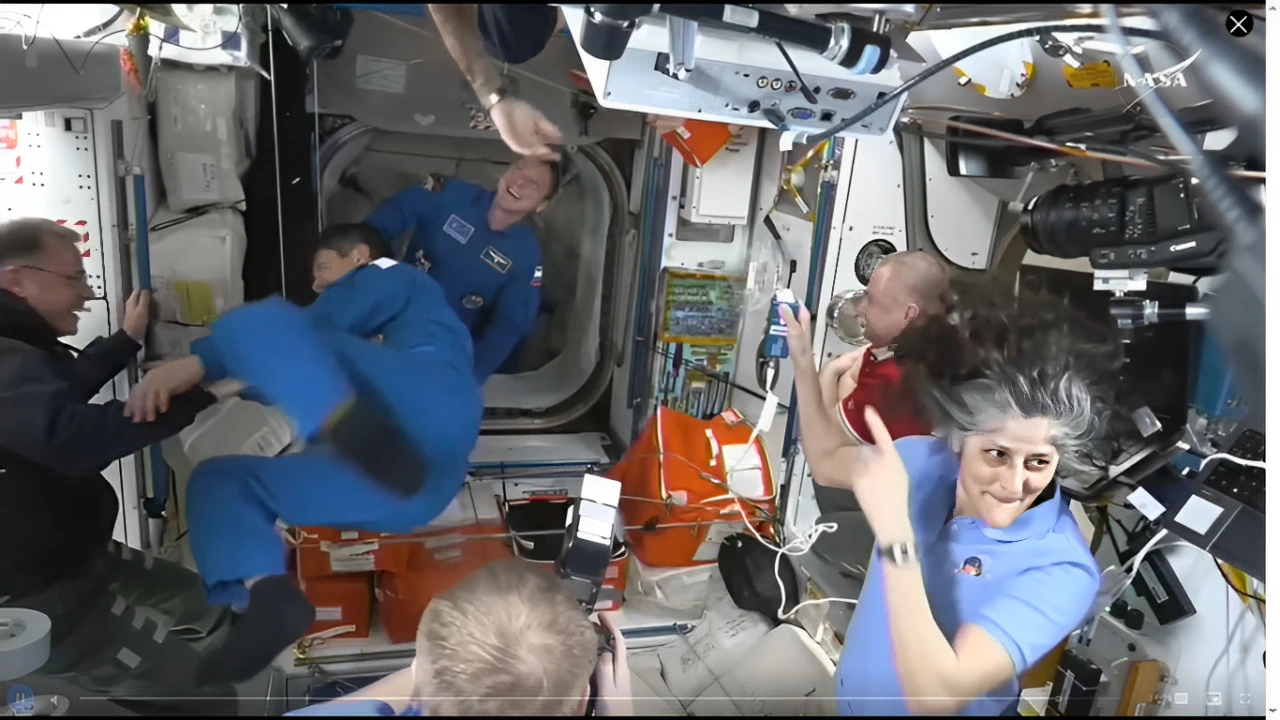
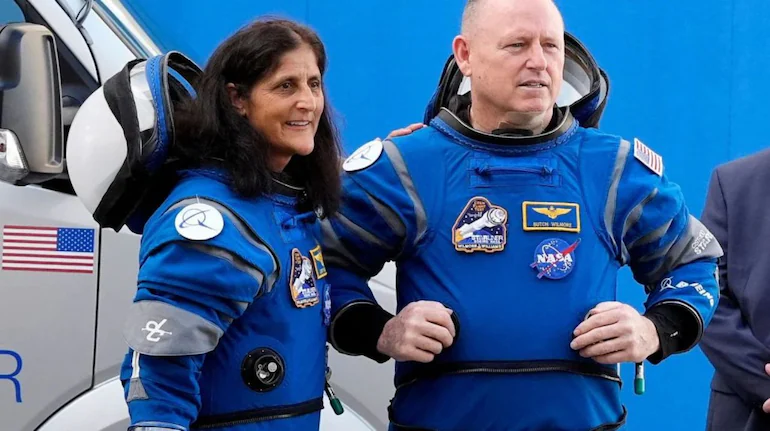
    NASA’s SpaceX Crew-10 has successfully arrived at the International Space Station (ISS), This enabled the return of NASA astronauts Sunita Williams and Barry “Butch” Wilmore who were stuck on the ISS for the past 10 months. The hatches of the crew-10 dragon capsule were opened at 12:35 a.m. EDT, and shortly after, the Crew-10 astronauts Anne McClain, Nichole Ayers, Takuya Onishi, and Kirill Peskoventered entered the ISS.

    They were greeted by the Expedition 72 crew, which includes NASA astronauts Nick Hague, Don Pettit, Sunita Williams, and Butch Wilmore, along with Russian cosmonauts Aleksandr Gorbunov, Alexey Ovchinin, and Ivan Vagner, during a welcoming ceremony.

    The Crew-10 Dragon capsule, named Endurance, docked with the ISS at 12:04 a.m. EDT (04:04 GMT) on Sunday, March 16, 2025, securing its position at the Harmony module of the orbiting laboratory. The Crew-10 mission was launched on Friday, March 14, 2025, aboard the SpaceX Falcon 9 rocket from NASA’s Kennedy Space Center in Florida.


    Return Journey of Sunita Williams and Butch Wilmore

    Sunita Williams and Butch Wilmore departed from the International Space Station (ISS) on March 18, aboard the SpaceX Crew Dragon capsule docked at the station. Their return marks the conclusion of an extraordinary journey that began with a short mission but evolved into an extended stay due to unforeseen challenges.

    The Crew-10 astronauts will spend several months on the ISS, conducting a variety of scientific experiments and maintaining the station’s operations. Their arrival also marks the beginning of a new phase for the ISS crew, as they integrate with the existing team and prepare for future missions.

    This article was last updated with the news of Crew-10 entering the ISS. Keep visiting this page for more updates.

  • American pop star Katy Perry is going to space in a historic all-female spaceflight

    American pop star Katy Perry is going to space in a historic all-female spaceflight

    Blue Origin officially announced that Pop singer Katy Perry is set to join Blue Origin’s first all-female spaceflight crew, scheduled for spring 2025. The crew includes journalist Lauren Sánchez, CBS anchor Gayle King, former NASA scientist Aisha Bowe, activist Amanda Nguyen, and film producer Kerianne Flynn.

    This mission will take them to the edge of space aboard the New Shepard rocket, offering a brief experience of weightlessness before returning to Earth.

    The New Shepard is a suborbital rocket designed for space tourism, featuring a fully automated capsule with large windows for panoramic Earth views. The flight will last about 11 minutes, reaching an altitude of over 100 km (Kármán line) before making a parachute-assisted landing.

    Lauren Sánchez, who is engaged to Amazon founder Jeff Bezos, expressed enthusiasm about leading this historic flight. The mission aims to inspire more women to explore careers in aerospace and science while promoting commercial space travel as an accessible experience.

    While the exact launch date has not been announced, the flight is anticipated to occur in the coming months. This initiative reflects Blue Origin’s commitment to making space travel more inclusive and advancing the future of space tourism.

  • NASA: Sunita Williams and Butch Wilmore will return in March

    NASA: Sunita Williams and Butch Wilmore will return in March

    NASA has officially announced that the American astronauts Sunita Williams and Butch Wilmore, along with Crew-9 astronauts, are scheduled to return to Earth, while Crew-10 will launch on March 12.

    Astronauts Sunita Williams and Butch Wilmore docked at the International Space Station (ISS) in June 2024 aboard the Boeing Starliner for an 8-day mission. However, they have been stuck on the ISS for over 9 months as of February 19.

    The Boeing Starliner mission aimed to test the Boeing Starliner spacecraft, which was developed over several years by Boeing engineers to transport astronauts to and from the ISS. Traditionally, astronauts have been sent to the ISS using either the Russian Soyuz spacecraft or the SpaceX Crew Dragon spacecraft.

    Unfortunately, the Boeing Starliner mission encountered multiple delays and malfunctions during both launch and docking. A few months after docking, NASA and Boeing engineers declared the spacecraft unsafe due to several thruster failures and malfunctions. The Boeing Starliner spacecraft returned to Earth uncrewed on September 6.

    Due to the issues with the Boeing Starliner, NASA enlisted SpaceX to facilitate the return of Sunita Williams and Butch Wilmore. To accommodate this, two seats were left empty on the SpaceX Crew-9 Dragon spacecraft mission. The Crew-9 Dragon spacecraft docked with the ISS on September 29.

    The SpaceX Dragon spacecraft will now return with Crew-9 astronauts Nick Hague, and Roscosmos astronaut Aleksandr Gorbunov, along with Boeing Starliner astronauts Sunita Williams and Butch Wilmore on March 12.