Category: Space

Explore the vastness beyond our planet. This section covers missions, discoveries, and events that expand our reach into the cosmos. From new rocket launches to deep-space observations, “Space” keeps you updated on humanity’s steps into the unknown.

  • Astronomers capture earliest stages of Planet formation around a baby star HOPS-315

    Astronomers capture earliest stages of Planet formation around a baby star HOPS-315

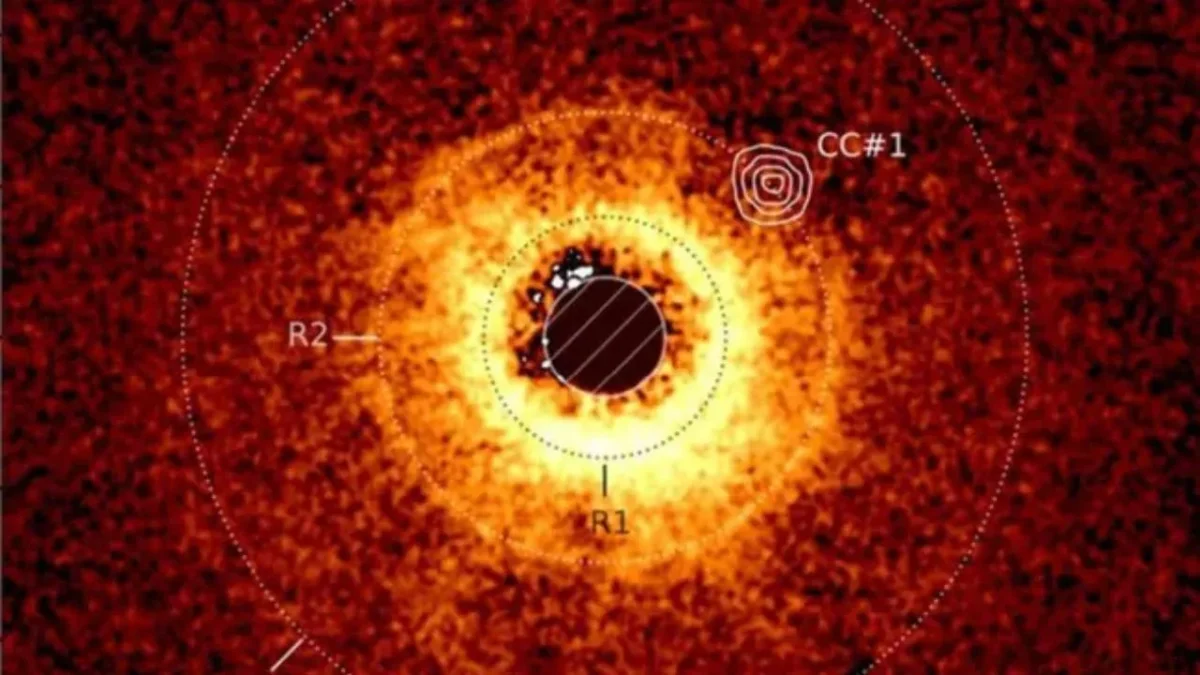
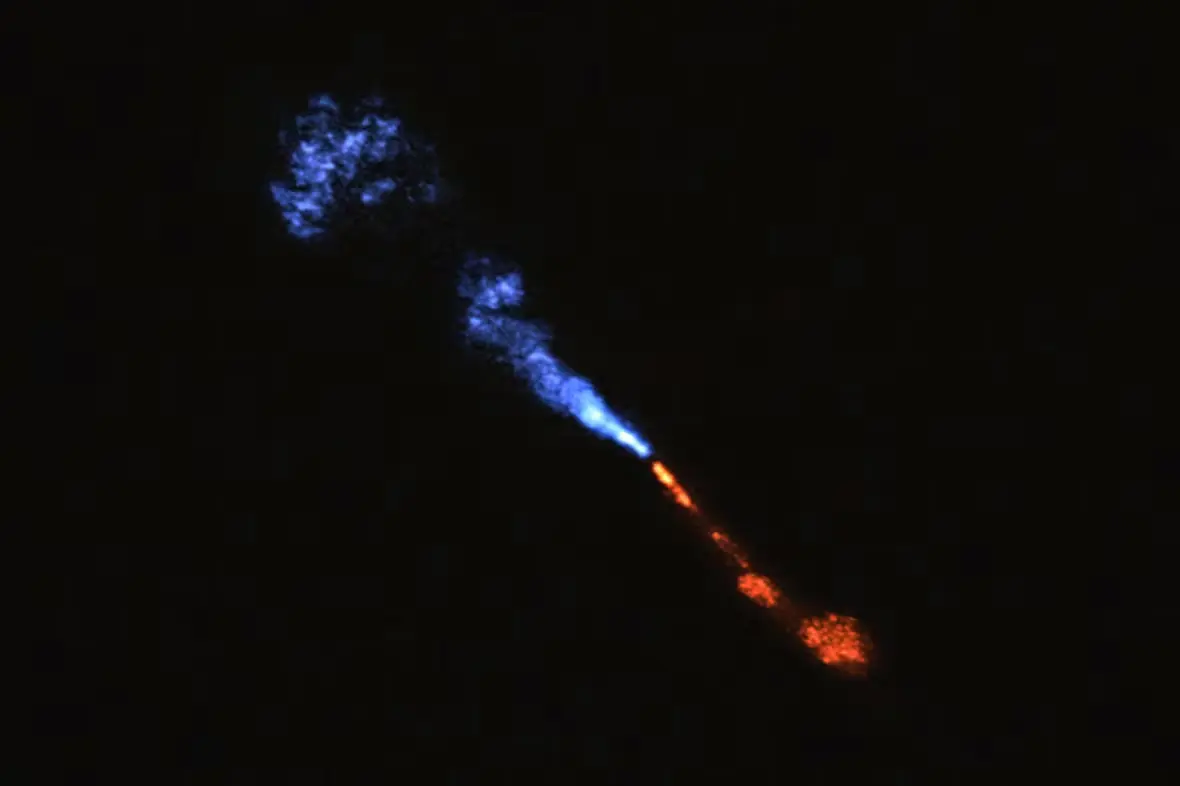
    Astronomers have detected the earliest stages of planet formation around a young star named HOPS-315, located 1,370 light-years away. Using NASA’s James Webb Space Telescope (JWST) and the European Southern Observatory’s ALMA telescopes in Chile, scientists observed solid particles forming in the gas disk surrounding this star, which is only 100,000 to 200,000 years old. The findings were published in Nature on July 16, 2025.

    “We’ve captured the moment when rocky planets like Earth start to take shape,” said Melissa McClure, who led the research team from Leiden Observatory in the Netherlands. The team identified silicon monoxide gas and crystalline silicate minerals (materials that were key to forming our own solar system over 4.5 billion years ago) in a region similar to the asteroid belt between Mars and Jupiter.

    A gap in the star’s gas disk, combined with its tilt toward Earth, allowed astronomers to study this process closely. Images from ALMA show the system glowing brightly against the dark backdrop of space. “This is a major step in understanding how planets form,” said Fred Ciesla, a University of Chicago scientist not involved in the study. “We’re seeing evidence of processes we’ve long theorized about.”

    The gas disk around HOPS-315 is massive, suggesting it could eventually form multiple planets, possibly as many as eight, over the next million years. McClure noted that this discovery indicates planet formation may be a common process around young stars. “We didn’t know if this was unique to our solar system or something that happens often,” she said.

    Researchers, including Purdue University’s Merel van ’t Hoff, plan to study more young stars to compare their findings. “We want to learn if this process is typical and what it means for the chances of finding Earth-like planets elsewhere,” van ’t Hoff said. This discovery offers a new perspective on the origins of planets and our place in the universe.
  • Astronomers discover a rare type of Radio Source using the CHIME telescope

    Astronomers discover a rare type of Radio Source using the CHIME telescope

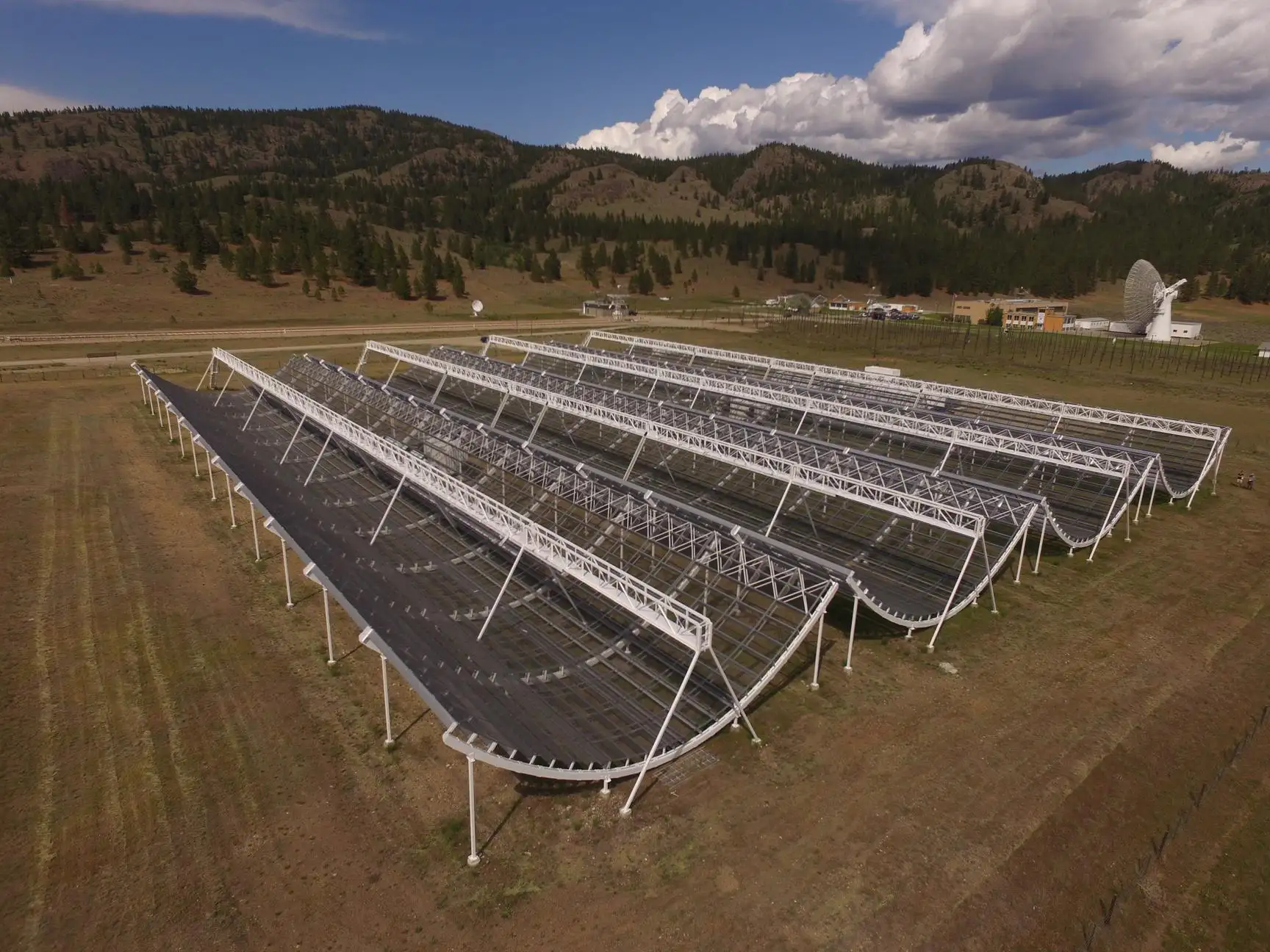
    Using the Canadian Hydrogen Intensity Mapping Experiment (CHIME) telescope, researchers have detected a rare type of long-period radio transient, dubbed CHIME J1634+44, that emits powerful, circularly polarized radio bursts every 84 hours.

    This discovery, detailed in a July 15, 2025, research paper on arxiv.org, hints at an unusual object, possibly a neutron star or a white dwarf binary behaving in ways that challenge current theories. Unlike typical pulsars, which pulse every few seconds, CHIME J1634+44 belongs to a class called Long Period Radio Transients (LPTs). These objects emit bursts over much longer timescales, from tens of seconds to hours.

    What makes this source stand out is its 100% circular polarization, a rare feature where the radio waves oscillate in a circular pattern, detected strongly in one polarization type by the Karl G. Jansky Very Large Array (VLA). This polarization suggests the bursts come from a highly magnetized environment, but the exact mechanism remains a puzzle.

    CHIME Radio Telescope/CHIME Experiment.
    CHIME Radio Telescope/CHIME Experiment. Image credit: CHIME

    The team, led by researchers from institutions like MIT and Caltech, first spotted the signal on October 31, 2022, with subsequent bursts observed occasionally over the next year. The source’s period is shortening, or “spinning up,” at a significant rate, which is unusual for such objects.

    Typically, rotating celestial bodies lose energy and slow down. The researchers propose that CHIME J1634+44 could be part of a binary system, possibly two white dwarfs or a white dwarf and a neutron star, where gravitational wave emission drives this acceleration. Their calculations suggest a merger might occur in about 1.1 million years, a blink in cosmic terms.

    Located within our Milky Way, as indicated by its low dispersion measure, CHIME J1634+44 emits bursts far more energetic than similar systems like AR Scorpii, ruling out some white dwarf models. Its quasi-periodic bursts, occurring roughly every 0.13 seconds within a single burst, don’t align with patterns seen in typical neutron stars.

    Observations from the Swift telescope found no X-ray or ultraviolet counterparts, suggesting the source’s emissions are primarily radio-based.

    As telescopes like CHIME and the VLA continue to scan the skies, scientists hope to uncover more clues about these strange radio signals that are reshaping our understanding and previous theories.

  • NASA’s Parker Solar Probe Captures Closest-Ever Images to Sun

    NASA’s Parker Solar Probe Captures Closest-Ever Images to Sun

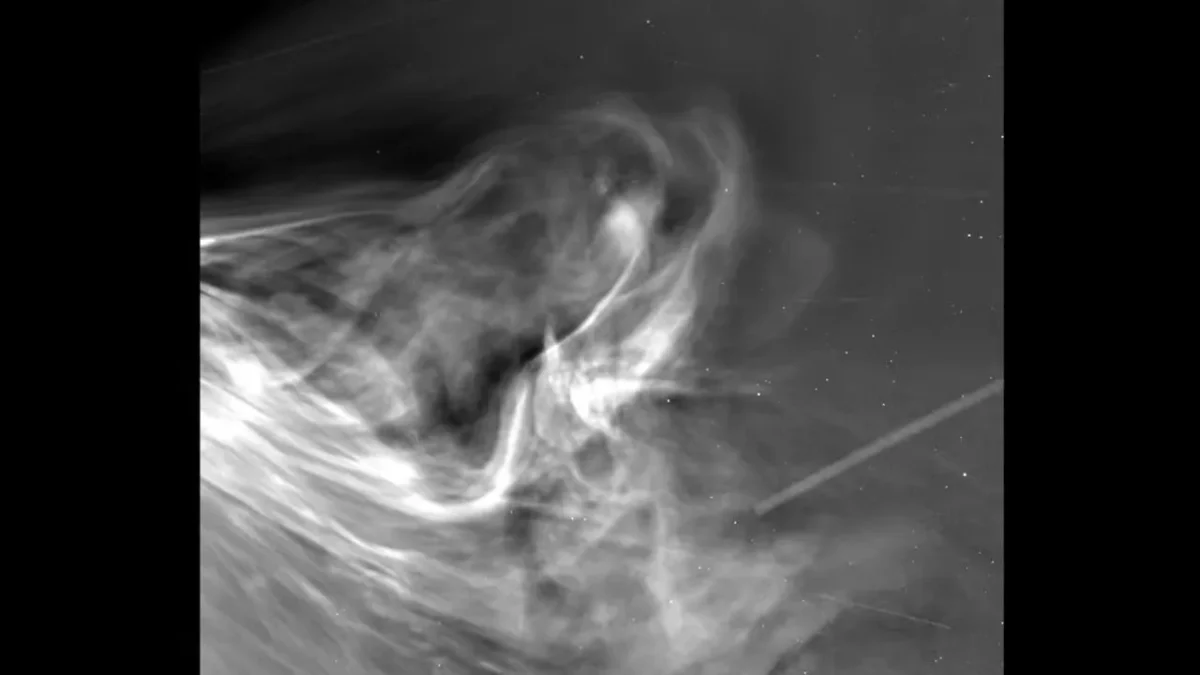
    NASA’s Parker Solar Probe has achieved a historical milestone! It has sent back the closest images ever taken of the sun, offering a detailed look into its outer atmosphere. The images were captured during a record-setting approach on December 24, 2024, when the spacecraft flew just 3.8 million miles from the solar surface.

    These high-resolution images are the closest humans have ever come to directly observing the environment where space weather begins.

    “Parker Solar Probe has once again transported us into the dynamic atmosphere of our closest star,” Nicky Fox, associate administrator, Science Mission Directorate at NASA Headquarters in Washington, told NASA (source).

    The probe used It’s the Wide-field Imager for Solar Probe (WISPR), revealing never-before-seen details of the solar corona and solar winds.

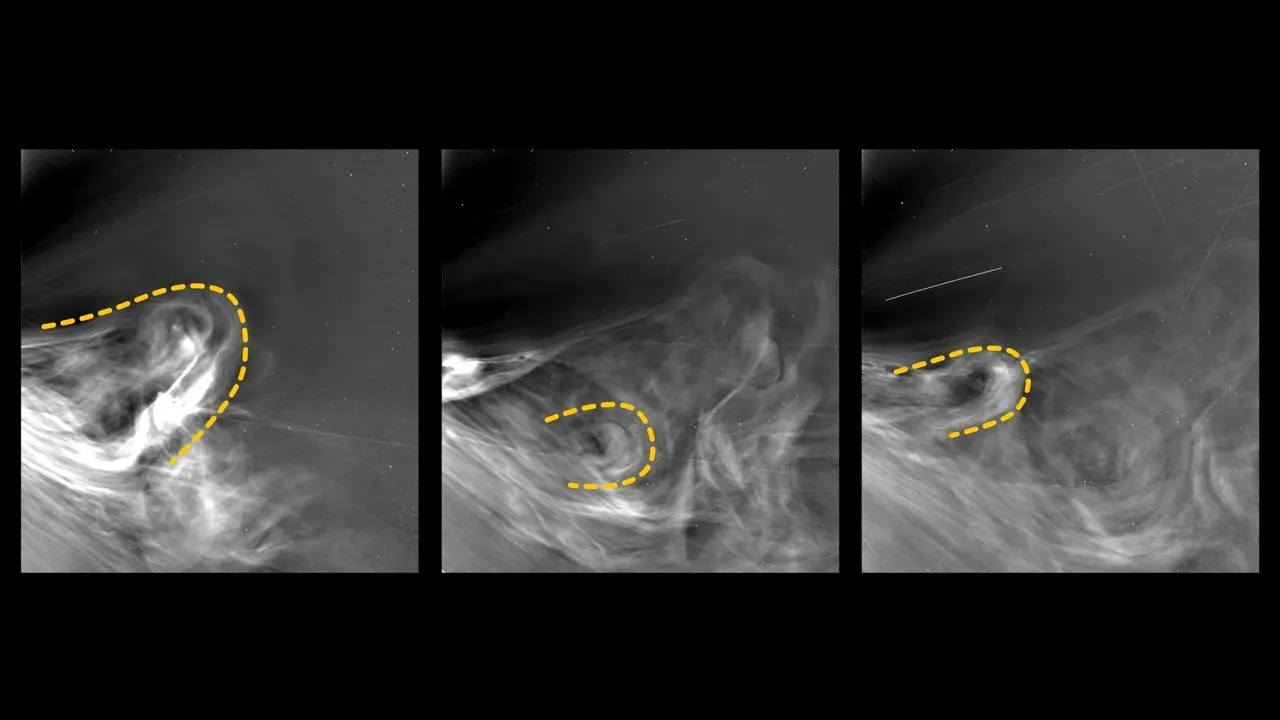
    breakdown of coronal mass ejection captured by nasas parker solar probe during its closest approach to the sun
    A sequential breakdown of a coronal mass ejection (CME) captured by NASA’s Parker Solar Probe during its closest-ever approach in December 2024, revealing it was not a single eruption but a powerful combination of three large outbursts. (ScreenGrab)

    One of the most remarkable discoveries is the first-ever recorded sequence of multiple coronal mass ejections (CMEs) colliding in space.

    The solar wind is a stream of charged particles released from the Sun’s surface. These particles travel along the space and often reach Earth, colliding with Earth’s atmosphere, causing auroras and radio blackouts occasionally.

    Launched in 2018, the Parker Solar Probe was named in honor of heliophysicist Eugene Parker. Since its launch in 2018, the probe has made some significant discoveries.

    It has revealed magnetic “switchbacks” and confirmed the existence of two types of slow solar wind: Alfvénic, tied to coronal holes, and non-Alfvénic, possibly from helmet streamers. These findings are key to predicting solar storms that could affect astronauts, satellites, and all the living organisms on Earth.

    One of the key goals of the mission is to understand the origins of the slow solar wind, which travels at about 220 miles per second. Unlike the fast wind, this slower version is denser and more variable. Parker’s latest observations confirmed there are two distinct types of slow solar wind, possibly arising from different solar regions, like coronal holes and helmet streamers.

    With its next close approach on September 15, 2025, the probe will continue gathering critical data to refine our understanding of the Sun and space weather.

  • Rubin Observatorys’ Early Data Release: Globular Star Cluster 47 Tucanae

    Rubin Observatorys’ Early Data Release: Globular Star Cluster 47 Tucanae

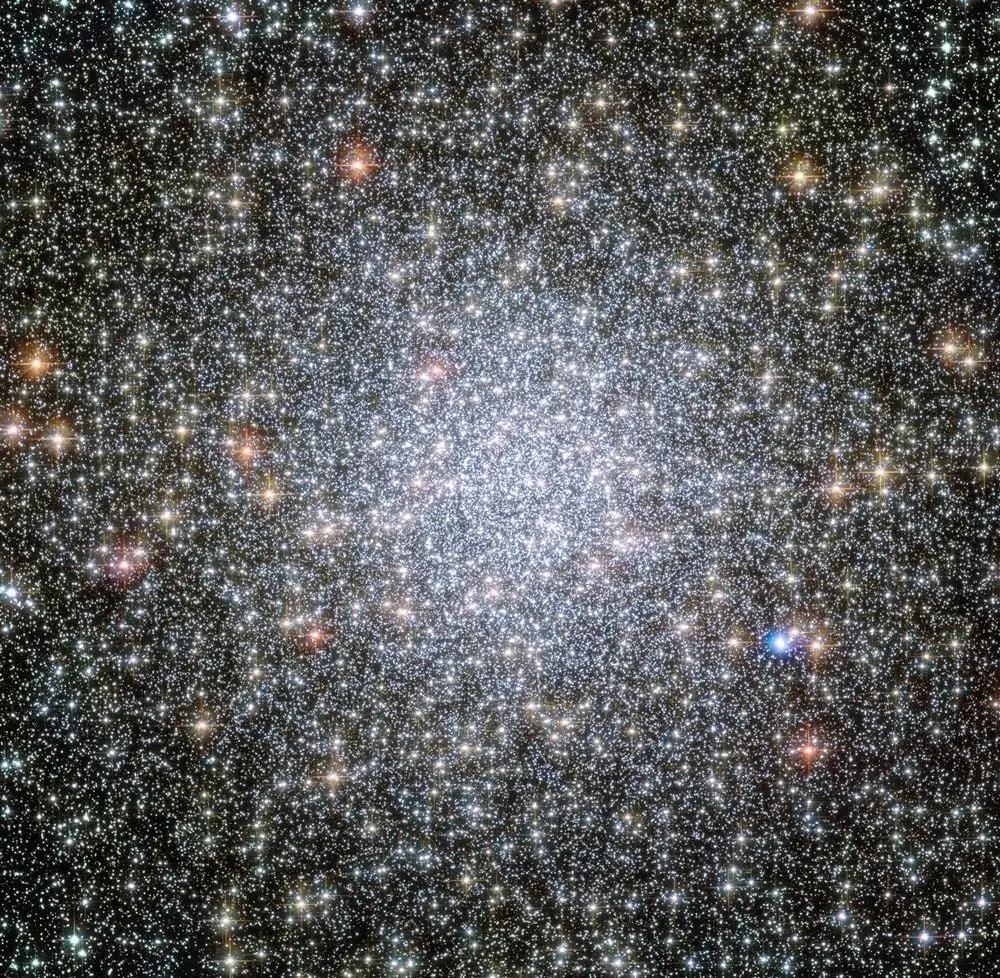
    Astronomers have revealed a remarkably detailed view of 47 Tucanae, one of the most intriguing globular clusters in the night sky. This insight comes from the Vera C. Rubin Observatory’s first public dataset from its Legacy Survey of Space and Time (LSST).

    Led by Yumi Choi of the University of Washington’s DIRAC Institute, this early study, published on July 3, 2025, on arXiv, uses the observatory’s Data Preview 1 (DP1).

    Located 14,700 light-years away in the constellation Tucana, 47 Tucanae, also known as NGC 104, is the second-brightest globular star cluster. This stellar metropolis, packed with hundreds of thousands of stars more than 12 billion years old, stands as a relic from the universe’s earliest days.

    On June 23, 2025, the observatory amazed the scientific community by releasing its first images and detecting 2,104 previously unknown asteroids, including seven near-Earth objects, in just 10 hours of test observations. This remarkable achievement, representing more than 10 percent of the annual global asteroid discoveries, demonstrates Rubin’s exceptional capabilities.

    The methodical process to pinpoint 47 Tuc 3576 member stars.
    The methodical process to pinpoint 47 Tuc 3576 member stars. Image credit: Choi et al. 2025

    The DP1 dataset, processed at the SLAC National Accelerator Laboratory, spans over 5 terabytes and catalogs 23 million celestial objects. Focusing on a field centered on 47 Tuc, the team used multi-band imaging (g, r, i, y) to study the cluster’s stellar composition.

    By combining color-magnitude diagrams, Gaia DR3 proper-motion data, and advanced color-color filtering, they identified 3,576 member stars. This careful analysis confirms the cluster’s distance at 4.5 kiloparsecs (14,700 light-years) and reveals an old, metal-rich stellar population. The team also identified variable stars, including three RR Lyrae and two eclipsing binaries, highlighting the observatory’s sensitivity to changes in stellar brightness despite limited observation time.

    The cluster’s dense core poses significant challenges. Saturation and overlapping starlight, along with contamination from the nearby Small Magellanic Cloud, led to gaps in the data. To address this, the team applied polynomial fitting in color-color diagrams to better separate stars from background galaxies compared to traditional methods.

    A map showing how crowding and SMC stars limit object detection near the 47 Tuc core.
    A map showing how crowding and SMC stars limit object detection near the 47 Tuc core. Image credit: Choi et al. 2025

    They also studied photometric scatter, or changes in star brightness, and linked it to crowding, uneven dust, and instrumental noise. By simulating the cluster’s stellar population, they quantified these effects, laying the groundwork for more accurate future studies.

    The Rubin Observatory’s early findings highlight its ability to observe dense stellar systems like 47 Tucanae, even amid crowding and saturation. As LSST moves toward its next data preview and first public release, astronomers look forward to even sharper views of this ancient cluster, offering new insights into stellar evolution and the early universe.

    Read the full research paper on astro-ph.SR

  • ISRO Transfers 10 Advanced Technologies to Indian Private Companies

    ISRO Transfers 10 Advanced Technologies to Indian Private Companies

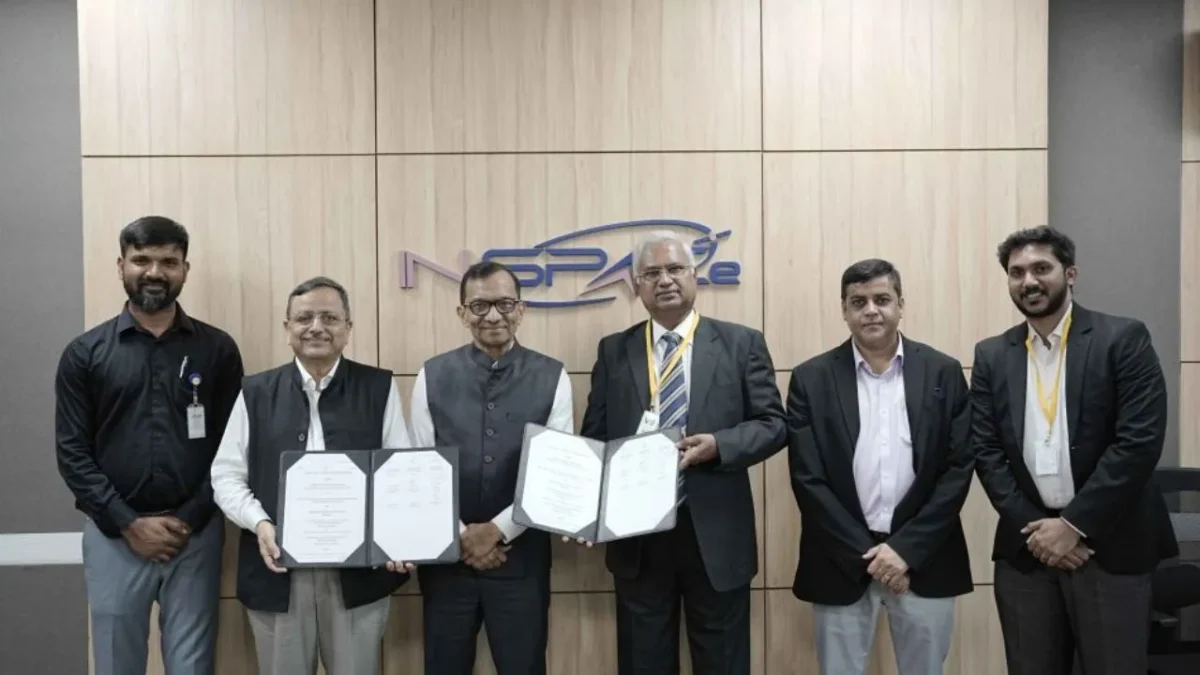
    The Indian Space Research Organisation (ISRO) has transferred 10 groundbreaking space technologies to six Indian companies, boosting the nation’s push for a self-sufficient space industry. Signed on July 3, 2025, in Ahmedabad, these agreements empower private firms to harness ISRO’s expertise, fueling innovation and cutting reliance on foreign tech.

    Coordinated by the Indian National Space Promotion and Authorisation Centre (IN-SPACe) and NewSpace India Limited (NSIL), the transfers cover a wide range of tools, from navigation systems to agricultural forecasting models. “This is a game-changer: Indian companies now have the keys to ISRO’s advanced tech, setting the stage for a thriving, homegrown space sector,” said Pawan Goenka, IN-SPACe chairman.

    In Hyderabad, Zetatek Technologies takes on two navigation marvels from ISRO’s Inertial Systems Unit: a laser gyroscope and a ceramic servo accelerometer. These precision instruments, which were previously imported, will now be manufactured in India for use in satellite launches, marking a significant milestone.

    Meanwhile, Hyderabad’s Avantel and Jisnu Communications gain three ground station systems—S/X/Ka tri-band dual circular polarized monopulse feed, tri-axis antenna control servo system, and Ku/C/L and S Band Cassegrain feed—to bolster communication networks for space and defense.

    Over in Ahmedabad, Amnex Info Technologies secures two ISRO-developed geospatial tools from the Space Applications Centre to predict crop yields and monitor pests, offering farmers smarter ways to plan. Jalkruti Water Solutions picks up a portable bathymetry system from the National Remote Sensing Centre, enabling drone-based water body surveys.

    Ramdev Chemicals, also in Ahmedabad, inherits a ceramic-based flame-resistant coating from the Vikram Sarabhai Space Centre, originally designed for launch vehicles but now ready for wider industrial use.

    This move builds on India’s recent space reforms, including the ₹511-crore transfer of Small Satellite Launch Vehicle (SSLV) technology to Hindustan Aeronautics Limited (HAL). “ISRO’s treasure trove of research is now fueling India’s private sector, creating a robust space ecosystem,” Goenka noted. The initiative aims to spark innovation, reduce import dependency, and position India as a global space tech leader.

    With these technologies in private hands, India’s space industry is set to soar. Over 250 startups have sprung up since 2014, and ISRO’s programs are delivering ₹2.54 for every rupee invested. As India eyes bold goals like Bharatiya Antariksh Station by 2030, these partnerships mark a new chapter of innovation and independence.

  • India to Launch 52 Defence Satellites to Boost Armed Forces amid Operation Sindoor

    India to Launch 52 Defence Satellites to Boost Armed Forces amid Operation Sindoor

    In the aftermath of Operation Sindoor, the Indian government plans to fast-track its ambitious plan to launch 52 defense surveillance satellites by 2029. With a budget of Rs 26,968 crore, the mission is designed to expand India’s space-based monitoring, especially along its borders with China and Pakistan and across the Indian Ocean Region.

    In October last year, the Prime Minister Narendra Modi-led Cabinet Committee approved this funding under the Space-Based Surveillance Programme Phase 3 (SBS-III), aiming to develop and deploy next-generation satellites over the next decade.

    The SBS-III project is led by the Defence Space Agency under the Integrated Defence Staff of the Ministry of Defence. In parallel, the Indian Air Force is acquiring high-altitude pseudo satellites (HAPS) to enhance its intelligence and surveillance capabilities even further.

    As part of Phase 3 of the SBS program, ISRO will be responsible for launching 21 satellites. The remaining 31 will be built and deployed by three private companies. The satellites will operate in both low Earth orbit and geostationary orbit, which will enable faster revisit times and higher resolution tracking. The first launch is scheduled for April 2026, and full deployment is expected by the end of 2029.

    This new satellite constellation will provide real-time imagery to India’s Army, Navy, and Air Force, giving them the ability to detect troop movements, monitor airfields, and track staging zones well before threats approach the border.

    Chief of Integrated Defence Staff, Air Marshal Ashutosh Dixit, emphasized the importance of early detection, saying, “We must detect, identify, and track potential threats when they are still in their staging areas, airfields, and bases, deep within an adversary’s territory.”

    A standout feature of this mission is the involvement of private industry. For the first time, ISRO will transfer its small satellite launch vehicle (SSLV) technology to private firms, enabling rapid launches during emergency situations.

    The initiative is a direct response to China’s expanding military presence in space, which now includes anti-satellite missiles, electronic warfare tools, and directed energy weapons. India, meanwhile, is refining its own space strategy to meet these emerging challenges, and the satellite network is a key part of that effort.

    Operation Sindoor highlighted the critical role of space-based intelligence. In May 2025, India relied on Cartosat, RISAT, and commercial satellites to track enemy movements. While useful, the operation revealed coverage gaps and slower revisit times. The new satellite constellation under SBS-III is meant to close those gaps and improve situational awareness across all fronts.

    This mission is not just about adding more satellites. It is a step toward building a protective shield in space that can neutralize evolving threats from adversaries. It gives India an edge by enabling faster decisions and preemptive actions.

    Launching the first satellite in April 2026 is an aggressive target, but necessary. In a future where timing can define outcomes, launching before a conflict begins could be the difference between a strong defense and a late response.

  • Skyroot Aerospace brings in Former ISRO chief Dr. Somanath as technical advisor

    Skyroot Aerospace brings in Former ISRO chief Dr. Somanath as technical advisor

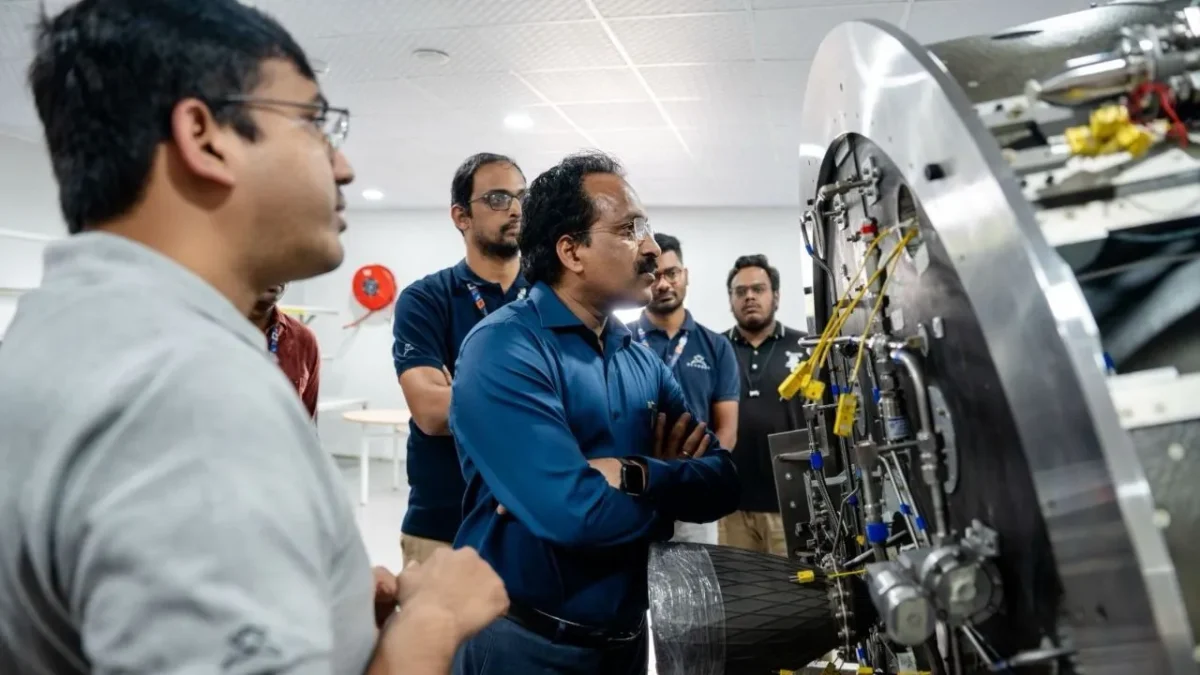
    In a bold move, a Hyderabad-based private space startup, Skyroot Aerospace, has appointed former ISRO chief Dr. S. Somanath as its honorary chief technical advisor ahead of its first orbital-class rocket launch, bringing decades of launch-vehicle expertise to the company.

    Dr. S. Somanath, known for directing ambitious projects like India’s Chandrayaan-3 lunar mission, has joined Skyroot Aerospace as its technical advisor ahead of its inaugural flight of its Vikram-1 satellite launch vehicle. The appointment, announced on 26 June 2025, is non-exclusive and unpaid, allowing him to pursue other engagements.

    About Skyroot Aerospace

    Skyroot Aerospace Private Limited is a private Indian aerospace manufacturer and commercial launch service provider headquartered in Hyderabad, Telangana. With launch vehicles like Vikram-1, a 23 m, carbon-composite, multi-stage orbital launcher featuring a liquid-engine Orbital Adjustment Module, the startup aims to enter the commercial satellite-launch business.

    Bringing in a veteran like Dr. S. Somanath, who led ISRO from January 2022 to January 2025 and oversaw major missions like Chandrayaan-3, Aditya-L1, SSLV, and RLV, gives Skyroot deep technical insight. His advisory support during this critical phase could prove decisive.

    The company quickly gained recognition following the re-entry tests of its Vikram-S rocket. Since then, it has raised approximately USD 95 million, including USD 27.5 million in late 2023, to develop a range of small satellite launch vehicles. These include the Vikram-I, II, and III, which are designed for flexible and rapid commercial launches.

    Additionally, the firm has recently secured a partnership with U.S.-based Axiom Space to explore opportunities for satellite deployment and low-Earth orbit missions, highlighting its global ambitions.

  • NASA’s JWST captures the first direct images of an Exoplanet

    NASA’s JWST captures the first direct images of an Exoplanet

    An international team of astronomers has captured the first-ever direct image of an exoplanet with a mass similar to Saturn, using NASA’s James Webb Space Telescope. The newly discovered planet, designated TWA 7 b, is orbiting a young red dwarf star called TWA 7, located about 34 light-years away in the TW Hydrae association.

    The team spotted a faint heat source inside the dusty disk that surrounds TWA 7. They used Webb’s Mid-Infrared Instrument (MIRI) data to block the star’s bright light and reveal hidden objects nearby. The source lies about 50 times farther from its star than Earth is from the Sun.

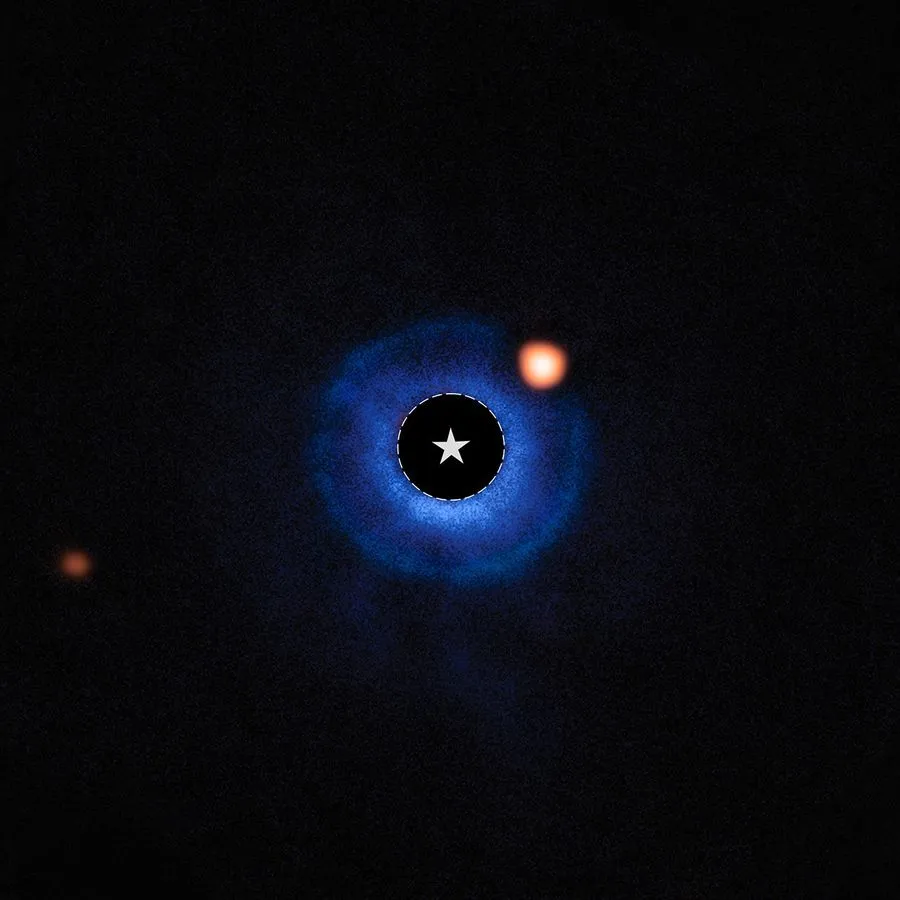
    The first-ever image of an Exoplanet captured by JWST MIRI instrument
    A composite image combining data from ESO’s SPHERE (blue) and JWST’s MIRI (orange) reveals the candidate exoplanet TWA 7 b as a bright orange spot near the top. The central star TWA 7, marked with a dotted circle and a star symbol, has been masked to highlight nearby features. Credit: Anne-Marie Lagrange (CNRS, UGA), Mahdi Zamani (ESA/Webb) / NASA, ESA, CSA

    TWA 7 b fits theoretical models for a young, cool planet with a mass similar to Saturn and a temperature around 47 degrees Celsius. Its position lines up with a gap in one of the three rings within the surrounding disk, suggesting it may be shaping the disk’s structure through gravitational influence.

    “Our observations reveal a strong candidate for a planet shaping the structure of the TWA 7 debris disk, and its position is exactly where we expected to find a planet of this mass,” lead author Anne-Marie Lagrange from CNRS and Université Grenoble Alpes in France told NASA.

    Astronomers have long been studying such rings and gaps in dusty disks as signs of hidden planets, but they have never imaged such a planet directly.

    These observations were part of JWST’s program 3662, which focuses on early-stage planetary systems. Using a coronagraph on JWST’s MIRI instrument, the team blocked the glare from the star, removed leftover starlight through image processing, and revealed a small heat source near the inner part of the disk.

    While there is a small chance the source is a distant galaxy, the object’s size and distance from its star match what scientists expect from a young Saturn-mass planet. Its place in the disk also raises the chance it may hold a “trojan disk” (a rare dust structure in the same orbit as the planet).

    Follow-up work will now focus on confirming that the object is a planet and studying its air and motion to better understand how planets grow in young star systems.

    The research was published on June 25 in the journal Nature.

  • Shubhanshu Shukla becomes first Indian astronaut on ISS; Historic moment for India

    Shubhanshu Shukla becomes first Indian astronaut on ISS; Historic moment for India

    On June 26, 2025, Indian Air Force test pilot Shubhanshu Shukla arrived at the International Space Station (ISS) as part of the Axiom-4 mission. This mission marks a historic moment for India, as Shukla becomes the first Indian astronaut to reach the ISS. He is also the first Indian in space since Rakesh Sharma’s 1984 mission, ending a 40-year gap in India’s human spaceflight history.

    “Congratulations to Group Captain Shubhanshu Shukla on becoming the first Indian to reach the International Space Station! A proud and historic moment for every Indian—a major milestone in our human spaceflight journey. His message from space echoes the spirit of a rising India and inspires generations ahead.” posted Mr. Om Birla, speaker of the 18th Indian Lok Sabha, on X (formerly Twitter).

    Launched atop SpaceX’s Falcon 9 rocket aboard the SpaceX Dragon spacecraft Grace from NASA’s Kennedy Space Center in Florida on June 25 at 2:31 a.m. EDT (12:01 p.m. IST), the mission carried four astronauts to the ISS, including Shubhanshu.

    He is joined by Polish astronaut Sławosz Uznański-Wiśniewski, Hungarian astronaut Tibor Kapu, and America’s most experienced astronaut, Peggy Whitson.

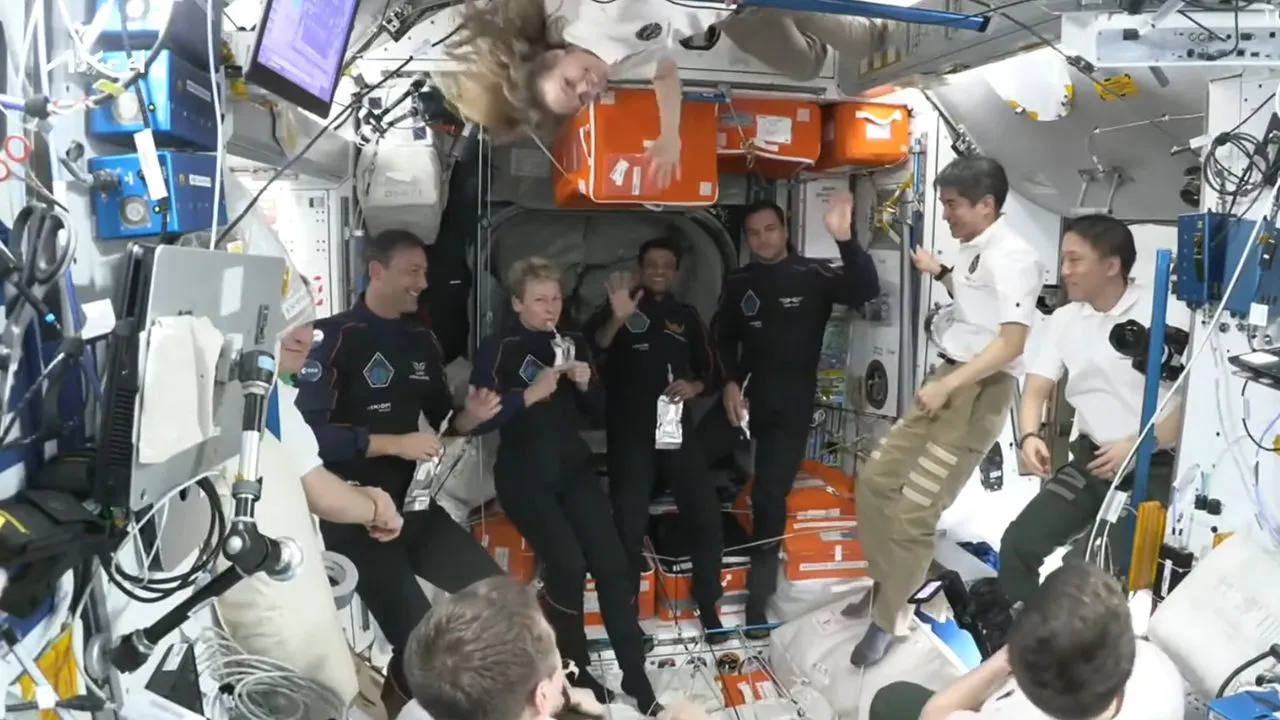
    The Axiom-4 mission crew is seen waving to the ground station from the ISS.
    The Axiom-4 mission crew (Blue Suits), from left to right: Mission Specialist Sławosz Uznański-Wiśniewski, Mission Commander Peggy Whitson, Pilot Shubhashu Shukla, and Mission Specialist Tibor Kapu, seen waving to the ground station. Credit: Screengrab from YouTube livestream / Axiom Space

    The Axiom-4 mission crew will spend approximately two weeks aboard the ISS, carrying out more than 60 experiments from 31 countries, including joint work by India and Europe on farming, muscle repair, tiny life forms, and health research. These activities will help future missions like India’s Gaganyaan.

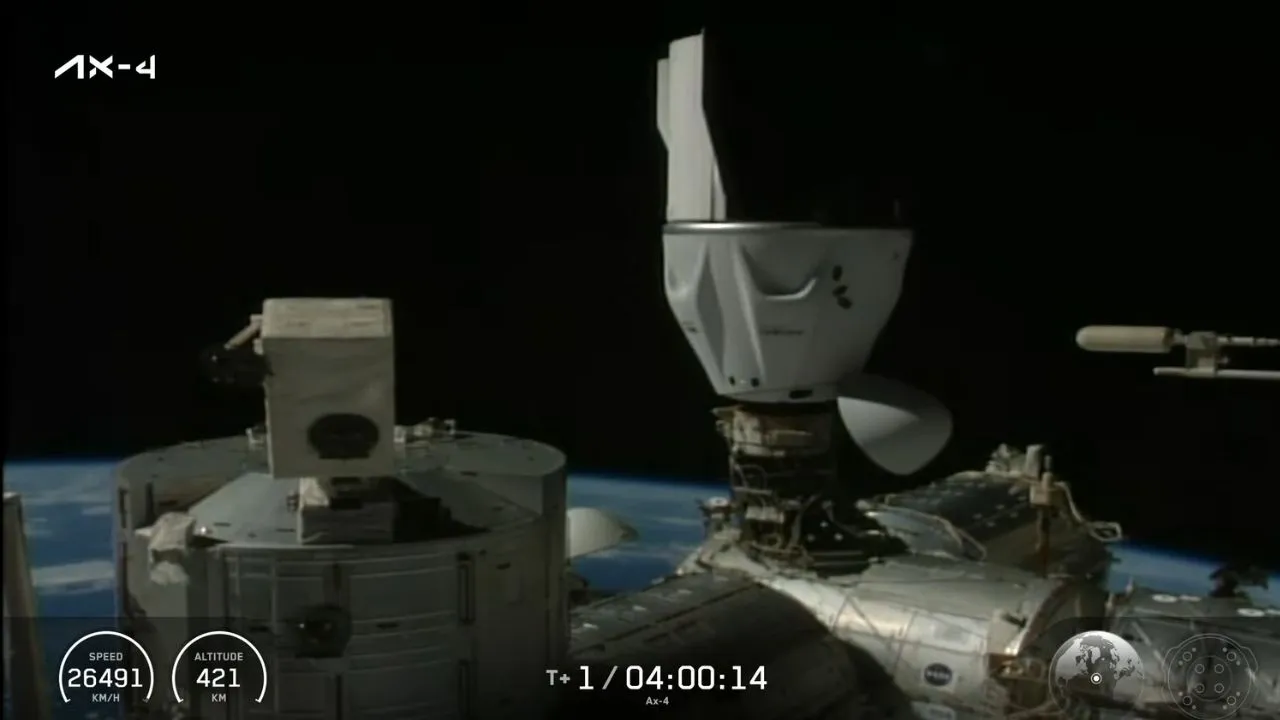
    SpaceX Dragon capsule Grace, carrying the Axiom-4 mission crew, docked to the ISS.
    SpaceX Dragon capsule Grace, carrying Axiom-4 mission astronauts, docked to the International Space Station (ISS) on Thursday, June 26. Credit: Screengrab from YouTube livestream / Axiom Space

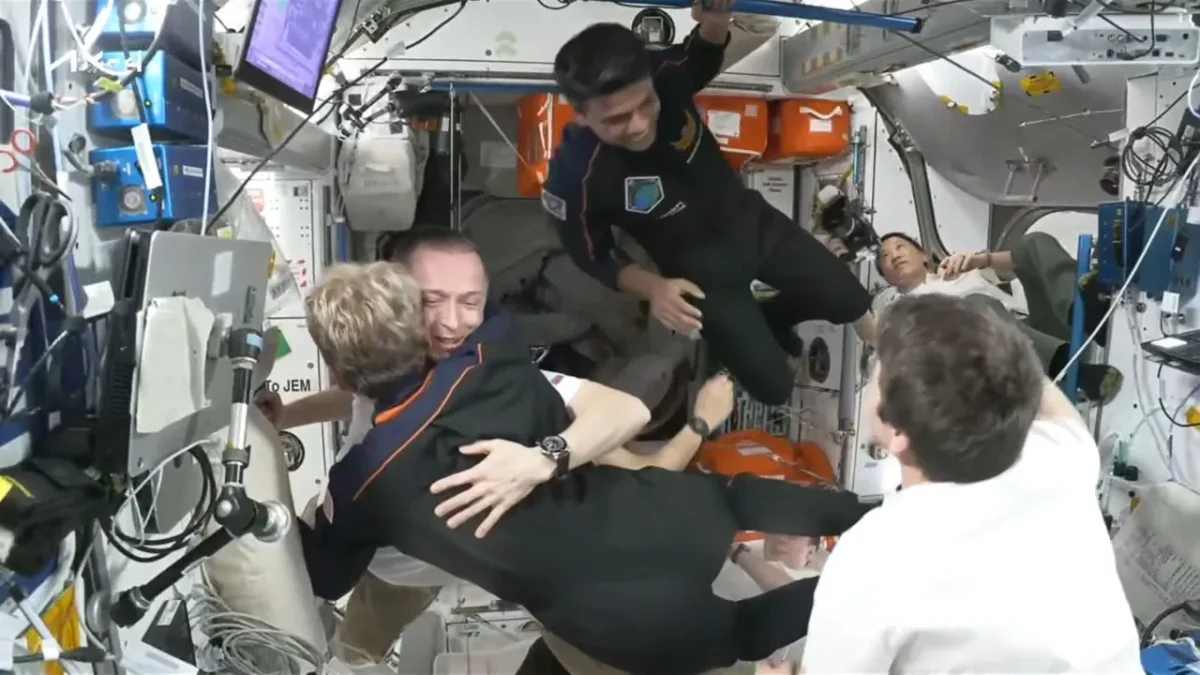
    The Dragon capsule Grace docked with the ISS at 7:15 a.m. EDT (4:45 p.m. IST) on June 26. The hatch was opened at 8:23 a.m. EDT (5:53 p.m. IST), where Expedition 73 crew members Alexey Ovchinin, Ivan Vagner, Don Pettit, Anne McClain, Nichole Ayers, Takuya Onishi, and Kirill Peskov welcomed the Axiom-4 crew aboard.

    The launch was delayed several times before due to bad weather, a Falcon 9 fuel leak, and a small air leak on the ISS. Engineers fixed the problems before clearing the mission for launch finally on June 25.

    Axiom Mission 4 (Ax-4) is the fourth privately operated crewed mission to the International Space Station (ISS). This launch marks a historic return to government-sponsored spaceflight for India, Poland, and Hungary—each nation’s first such mission in over 40 years.

    The Axiom missions are private spaceflights to the International Space Station (ISS) conducted by Axiom Space, Inc., in collaboration with SpaceX and NASA. Founded in 2016 by Michael T. Suffredini and Kam Ghaffarian, the company aims to build the world’s first commercial space station, known as Axiom Station.

    This modular station is designed to initially attach to the ISS and will eventually separate from the ISS to operate as an independent commercial station in space.

  • ISRO’s Bharatiya Antariksh Hackathon 2025 is here; Apply now!

    ISRO’s Bharatiya Antariksh Hackathon 2025 is here; Apply now!

    The registrations for the Bharatiya Antariksh Hackathon (BAH) 2025 have begun. This year’s hackathon was launched on June 18, 2025, by Dr. V. Narayanan, Secretary of the Department of Space and Chairman of ISRO.

    Organized by the Indian Space Research Organisation (ISRO), the BAH was launched in 2024 with the goal of inspiring young minds to engage in space research and technology and to develop innovative solutions to significant challenges in the field. The BAH offers a fantastic opportunity for young talent to showcase their skills, tackle real-world problems, and potentially secure an internship with ISRO.

    What’s New in the 2025 Edition?

    This year’s hackathon brings 14 problem statements across modern cutting-edge domains, including geospatial technology, space science, image processing, artificial intelligence, and machine learning.

    Who Can Participate?

    Students pursuing undergraduate, postgraduate, or PhD programs in India are eligible. This is your chance to work on problems that matter and create tech that could one day be used by ISRO scientists.

    Note: Working professionals and non-students are not eligible for the hackathon.

    Why should you participate?

    • Learn from the Best: You’ll be mentored by scientists and experts from ISRO who will guide you through the entire process.
    • Build a Strong Network: Connect with bright minds, researchers, and professionals from academia, industry, and the space sector.
    • Internship at ISRO: Top-performing participants stand a chance to bag internships at ISRO, working on real projects alongside top engineers and scientists.
    • National Recognition: Your work will be showcased on a national stage. It’s a major boost for your academic and career profile.

    How to Participate?

    • Registration: Head to the official ISRO hackathon portal and sign up before July 9.
    • Form a Team: Gather 3 to 4 like-minded individuals. Participants can belong to different institutions but must form a team within the allowed size limit.
    • Pick a Challenge: Choose one of the problem statements listed on the hackathon website.
    • Start Building: Develop your solution using your skills and mentor guidance.
    • Submit Your Idea: Once ready, submit it for review by ISRO’s expert panel.

    Challenges

    Here are the challenges you can choose from:

    • Forest Fire Spread Simulation using AI/ML.
    • Building an AI-based help bot for information retrieval out of a knowledge graph created based on static/dynamic content at a web portal.
    • Satellite-based air pollution monitoring using satellite observations, ground data, reanalysis datasets, and AI/ML.
    • Designing an LLM system for solving complex spatial analysis tasks through intelligent geoprocessing orchestration.
    • Using diffusion models for predicting cloud motion with INSAT-3DR/3DS imagery.
    • Using AI/ML to detect changes in glacial lakes, roadways, and drainage systems via multi-source satellite imagery.
    • Build an application providing granular, real-time, and predictive air quality insights for underserved regions.
    • Propose novel methods to handle imbalanced datasets in Earth observation for improving deep learning outcomes.
    • Developing an ML algorithm to detect and classify tropical cloud formations using half-hourly INSAT satellite data.
    • Using particle data from the SWIS-ASPEX payload aboard Aditya-L1 to identify coronal mass ejection (CME) events.
    • Creating a technique to detect landslides and boulders on the Moon using imagery from Chandrayaan missions.
    • Using dual-image super-resolution and blind evaluation methods to enhance optical satellite imagery resolution.
    • Generate high-resolution Digital Elevation Models (DEMs) of the lunar surface using shape-from-shading techniques.
    • Developing a robust multi-temporal analysis system using LISS-4 imagery for user-defined areas of interest (AOI).

    Hackathon Timeline

    The timeline of the hackathon is as follows:

    • June 18–July 9: Registrations and idea submissions
    • June 25: Problem Statement Explainer Session 1
    • June 26: Problem Statement Explainer Session 2
    • June 27–July 4: Mentor-mentee interactions
    • July 24: Announcement of shortlisted teams.
    • August 7-8: Grand Finale at NRSC, JD Metla Campus, Hyderabad

    Contact Information

    Contact MethodDetails
    Emailisrobah2025support@hack2skill.com
    DiscordJoin Discord Server

    Register now, and be sure to bookmark this page so you won’t miss any updates!