Category: Space

Explore the vastness beyond our planet. This section covers missions, discoveries, and events that expand our reach into the cosmos. From new rocket launches to deep-space observations, “Space” keeps you updated on humanity’s steps into the unknown.

  • Researchers use Samsung Galaxy Watch Ultra in 8-day Space Health Experiment

    Researchers use Samsung Galaxy Watch Ultra in 8-day Space Health Experiment

    In a recent study, researchers from the German Aerospace Center (DLR), Samsung Germany, and IT service provider adesso tested smartwatches for health monitoring during an eight-day isolation experiment. The SOLIS8 study, funded by the European Space Agency, simulated a space mission at DLR’s :envihab facility in Cologne.

    Six volunteers (three men and three women) lived in a sealed module, cut off from the outside world. The goal was to see if smartwatches could reliably collect and process health data without smartphones or cloud connections.

    Health monitoring in remote environments, like space missions or remote research stations, poses unique challenges. There’s often limited access to direct medical care, and many traditional medical devices are bulky, wired, and require professional expertise to operate. In contrast, smartwatches are compact, wireless, and easy to use, making them a practical option for non-medical personnel.

    During SOLIS8, participants wore Samsung Galaxy Watch Ultra devices, which recorded vital signs like heart rate and step count. These watches connected directly to a local Wi-Fi network, bypassing the need for smartphones or cloud storage. Adesso developed software to collect and encrypt the data locally, ensuring privacy and security. This setup proved that smartwatches can function independently in extreme conditions.

    SOLIS8 participants wearing Samsung Galaxy Watch Ultra.
    The SOLIS8 participants can be seen wearing the Samsung Galaxy Watch Ultra during the isolation study. Image credit: DLR

    The study’s success hinged on ease of use. Participants received training from DLR and adesso before the experiment, allowing them to operate the devices intuitively. They wore the watches continuously, except during charging, and reported high satisfaction. “The high level of user acceptance combined with secure encryption opens up new prospects for us,” said Dr. Jens Hauslage of DLR’s Institute of Aerospace Medicine in the study.

    Smartwatches offer a practical solution for monitoring health in isolation. They track key metrics like heart rate variability, which can indicate stress or cardiovascular issues, and sleep patterns, which affect mental and physical health. Unlike traditional devices, they don’t require precise electrode placement or extensive wiring. This simplicity is vital in environments where crew members aren’t medical experts.

    Data security was a priority in SOLIS8. Christian Kahlo, adesso’s Chief Security Architect, noted that the system used advanced encryption to protect health data. This is especially important in isolated settings, where breaches could compromise mission safety. The ability to process data locally also reduces reliance on external networks, which may be unavailable in space or remote areas.

    The findings have implications beyond space travel. In telemedicine, smartwatches could enable remote monitoring of patients in rural areas, where access to doctors is limited. In nursing homes, they could track residents’ health without invasive equipment. These applications could improve care while maintaining patient privacy.

    SOLIS8 is a step toward DLR’s planned 100-day isolation study in 2026, called SOLIS100. The longer study will further test smartwatch technology and its effects on crew health in confined settings. Researchers aim to refine software for the “DLR Biobase,” a facility focused on life support and health monitoring for future missions.

    Isolation studies like SOLIS8 mimic the challenges of long-duration space missions, such as trips to Mars or lunar bases. Crews face psychological stress from confinement and physical risks from reduced gravity. Continuous health monitoring helps detect issues early, ensuring mission success. The use of smartwatches could make this process more efficient and accessible.

    Participants in SOLIS8 followed a strict schedule, mirroring astronaut routines. They performed tasks like docking a virtual spacecraft and simulating microgravity conditions. Daily exercise was mandatory to maintain muscle and bone health, a key concern in space. The smartwatches tracked these activities, providing real-time data to researchers.

    The study also highlighted the importance of crew resilience. “While the environment was tightly controlled, the crew spirit remained high throughout,” shared Charlotte Pouwels, a participant on Instagram. “This experience reminded me how much science depends on human adaptability, teamwork, and the willingness to go beyond comfort zones.”

    The results of SOLIS8 show how familiar consumer technology could support astronauts, offering a simple but effective way to monitor health in isolated or extreme environments.

  • York and NASA launch BARD satellite to fix growing interference in satellite traffic

    York and NASA launch BARD satellite to fix growing interference in satellite traffic

    York Space Systems launched its BARD satellite on July 29, 2025, from Vandenberg Space Force Base. Developed with NASA’s Space Communications and Navigation (SCaN) Program and Johns Hopkins Applied Physics Laboratory, the mission tests the Polylingual Experimental Terminal (PExT). This technology links government and commercial satellite networks in real time. It could transform space communications.

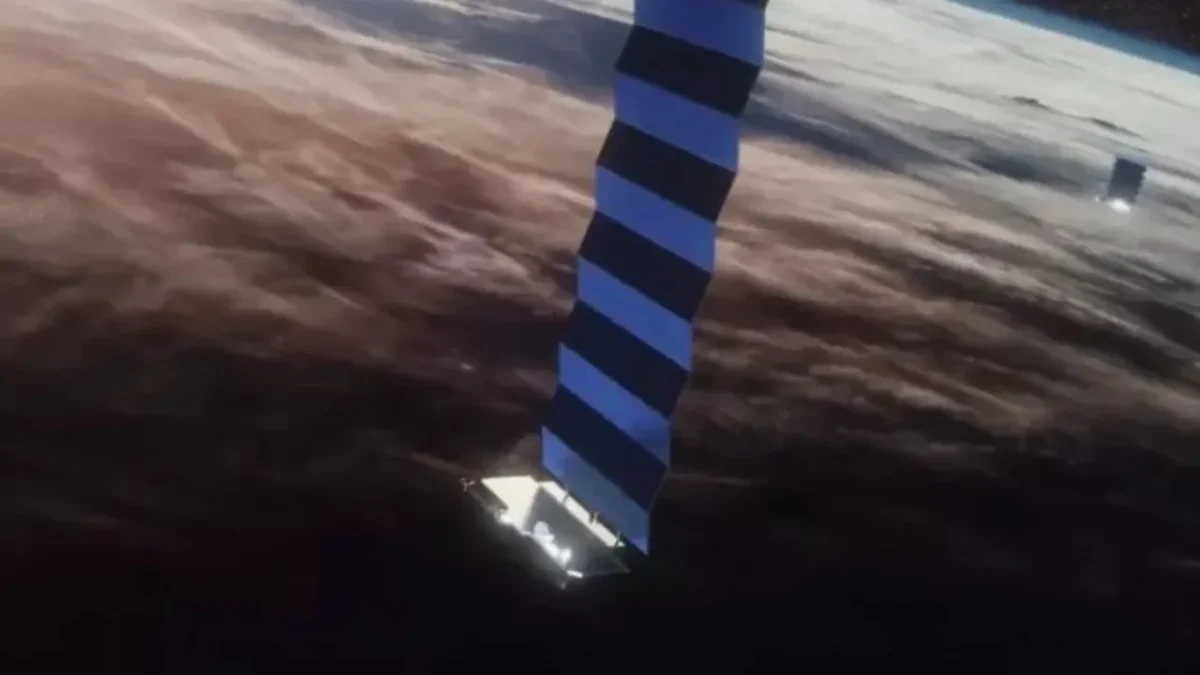
    BARD supports NASA’s move toward commercial space communications. PExT enables older government satellites to work with networks like SpaceX’s Starlink, with over 7,600 satellites as of May 2025. Reliable data relay is critical for missions. These range from climate monitoring to lunar exploration.

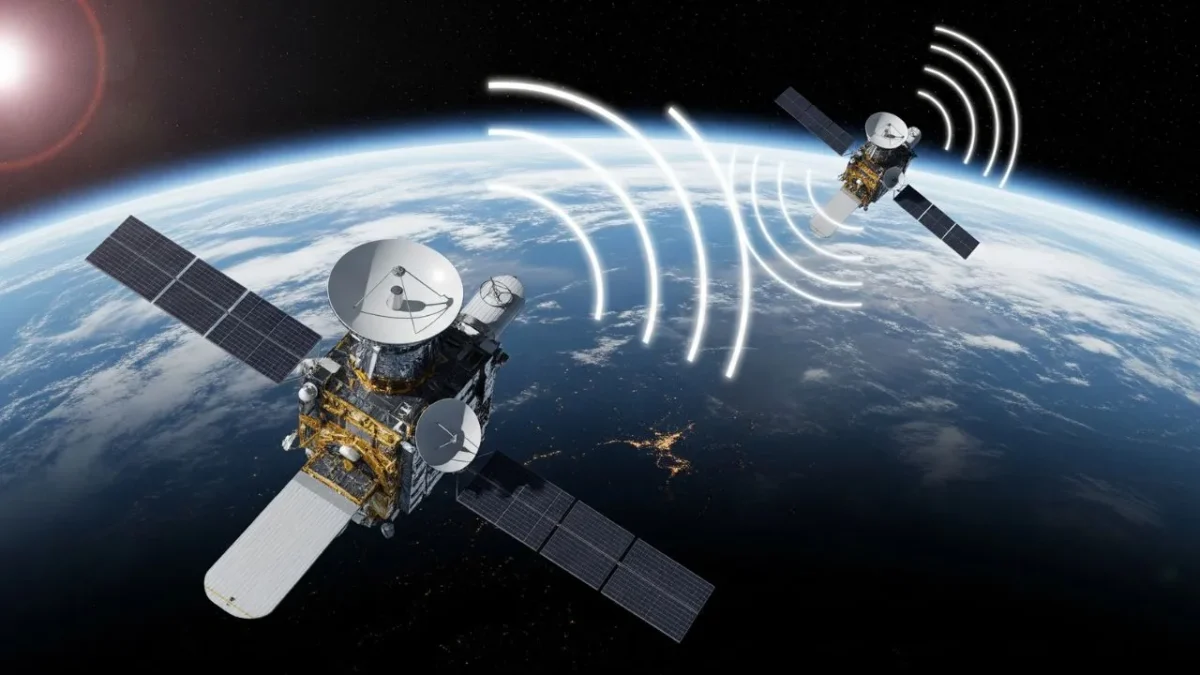
    Satellites use radio waves to transmit data, such as images or scientific measurements. Crowded orbits can lead to signal conflicts, especially with large commercial constellations. PExT acts like a universal translator for satellites. It aims to streamline communication and reduce interference.

    Initial contact with the BARD satellite confirmed all systems are functioning well. This marks a strong start for York’s second of five 2025 missions, following June’s Dragoon mission. The company is advancing space technology rapidly. Three more missions are planned this year.

    “We’re delivering missions that meet urgent needs with speed and reliability,” said Melanie Preisser, York’s general manager. BARD aligns with NASA’s Space Communications and Navigation program. It focuses on flexible systems for future missions, like Artemis lunar landings.

    York designs, builds, and operates satellites for defense, civil, and commercial clients. Its growing fleet supports global communication needs. BARD’s success could set standards for cross-network satellite protocols. This would improve data relay efficiency worldwide.

    Commercial constellations like Starlink highlight the need for BARD’s technology. With frequent satellite launches, clear communication channels are essential. PExT could prevent signal overlaps, especially for deep-space missions requiring precise data.

    NASA’s partnership with York shows a shift toward commercial space solutions. A 2024 NASA report noted that commercial networks could cut communication costs by 20% compared to traditional systems. BARD’s PExT testing strengthens these efforts.

  • NISAR Satellite Successfully Launched on July 30 Aboard ISRO’s GSLV-F16

    NISAR Satellite Successfully Launched on July 30 Aboard ISRO’s GSLV-F16

    India successfully launched the NASA-ISRO NISAR satellite on July 30, 2025, at 5:40 PM IST from the Satish Dhawan Space Centre in Sriharikota, Andhra Pradesh. The mission lifted off aboard the GSLV-F16 rocket.

    The NASA-ISRO Synthetic Aperture Radar (NISAR) mission is a joint project by the Indian Space Research Organisation (ISRO) and NASA.

    It’s built to change how we observe Earth by collecting detailed data on land, ice, and vegetation. Scientists will use this information to monitor natural disasters, track changes in climate, and study farming patterns.

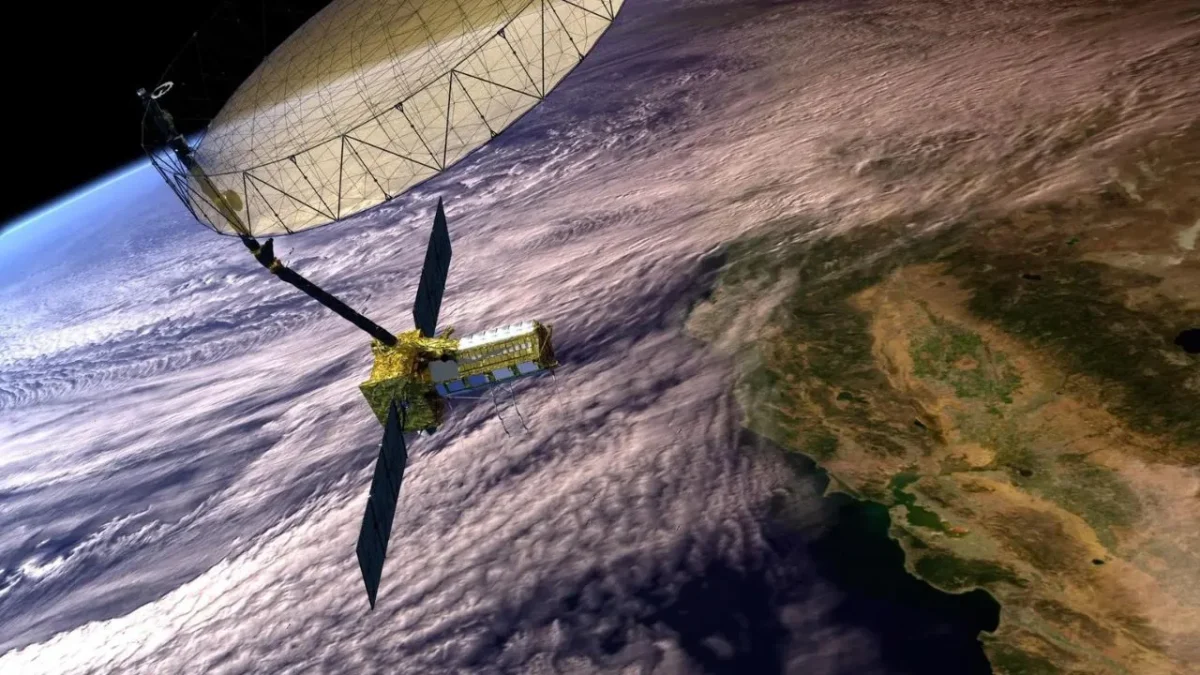
    The countdown began at 2:10 PM IST on July 29, with ISRO confirming that final preparations were underway. NISAR is one of the most advanced satellites ever made for studying Earth. It carries two Synthetic Aperture Radars (SARs) that work at different radio frequencies—L-band and S-band.

    This is the first time a satellite has used both together. These radars can see through clouds, rain, and darkness, capturing clear images of Earth’s surface every six days at each point and globally every 12 days.

    FeatureDetails
    Satellite nameNISAR (NASA-ISRO Synthetic Aperture Radar)
    Launch dateJuly 30, 2025
    Launch time5:40 PM IST
    Launch siteSriharikota, India
    Launch vehicleGSLV-F16
    Orbit altitude747 km
    Weight2,393 kg
    Data output~80 terabytes per day
    Mission cost$1.5 billion (NASA: $1.16B, ISRO: $90M)

    A Unique Dual-Radar System

    What sets NISAR apart is its use of two radar systems on the same satellite. Radar works by sending out microwave signals and collecting the echoes that bounce back. In space, SAR technology allows these systems to function like large ground-based radar antennas. NISAR’s 12-meter antenna, provided by NASA, can produce images as clear as those from a 20-km-wide ground system.

    The L-band radar can detect changes beneath tree cover, sand, or ice. This makes it useful for mapping forests and measuring the amount of carbon stored in them. The S-band radar focuses on wider features like fields and water bodies. It can monitor the growth of crops such as sugarcane or soybean, especially in India. These two systems work together, capturing the same area at the same time from different angles. This provides a level of detail not possible with a single radar.

    The satellite is expected to generate about 80 terabytes of data each day, three times more than any previous satellite in its category. Placing two different radar systems on one platform required careful planning to prevent interference between their signals. This is one of the reasons the satellite took more than 15 years to complete.

    A Milestone in India–US Collaboration

    The NISAR satellite being loaded atop ISRO's GSLV rocket.
    NISAR satellite being loaded atop ISRO’s GSLV rocket for launch. Image credit: X/ISRO

    NISAR is the first satellite developed jointly by ISRO and NASA. The idea began in 2007, when NASA proposed a mission to study how Earth’s surface is changing. ISRO officially joined the project in 2012, contributing its own research goals. NASA supplied the L-band radar, GPS systems, and the 12-meter antenna, spending around $1.16 billion. ISRO provided the S-band radar, the GSLV-F16 rocket, and launch support, contributing about $90 million.

    The mission builds on earlier collaborations between the two space agencies, such as NASA’s instrument on ISRO’s Chandrayaan-1 lunar mission. Today, NISAR reflects growing cooperation between India and the US in space research. Both agencies will manage and share satellite data from their ground stations.

    Applications and benefits

    NISAR will provide centimeter-level accuracy in observing changes across Earth’s surface. Its data will be useful for:

    • Mapping land shifts caused by earthquakes, landslides, or volcanic activity
    • Tracking ice sheet movements in Antarctica and Greenland
    • Measuring forest biomass and deforestation in the Amazon and other regions
    • Monitoring crop development and estimating yields in Indian agriculture
    • Supporting disaster response efforts with timely satellite imagery

    All collected data will be freely available to researchers and institutions around the world.

    The GSLV-F16 Rocket

    ISRO's GSLV rocket on the launchpad at night.
    ISRO’s GSLV rocket carrying the NISAR satellite standing on the launchpad. Image credit: ISRO

    The GSLV-F16 is a 51-meter-tall rocket that weighs about 420 tons. It’s designed to carry large satellites like NISAR. The rocket has three stages: a solid-fuel core, four liquid-fuel boosters, and an upper stage powered by cryogenic fuel. India’s cryogenic engine technology, once imported, is now developed locally and has shown strong performance with over 80% success in recent launches.

    At liftoff, the solid stage and boosters fire first, followed by the cryogenic stage, which places NISAR into a 747-km orbit. Once in space, the satellite’s antennas will unfold and begin operating.

    Development and Cost

    NISAR took more than 15 years to develop. The project faced several delays, especially during the COVID-19 pandemic. One of the biggest technical challenges was combining two different radar systems without causing signal problems. The mission cost about $1.5 billion, with the bulk of the funding from NASA. Despite the cost, the scale and quality of data NISAR will provide makes it one of the most capable Earth-observing satellites ever launched.

    NISAR’s launch marks a turning point for Earth observation and international space cooperation. It’s expected to become an important tool for researchers, governments, and emergency teams around the world. Whether it’s tracking glacier loss, mapping farmlands, or spotting floods, NISAR will help people understand and respond to changes on our planet.

    ISRO will stream the launch live starting at 5:10 PM IST on July 30. All eyes will be on Sriharikota as NISAR begins its mission to study Earth in new detail.

  • Astronomers detect Starlink signals leaking into protected Radio Astronomy bands

    Astronomers detect Starlink signals leaking into protected Radio Astronomy bands

    SpaceX’s Starlink network has revolutionized global internet access, but it’s also creating new challenges for radio astronomy. A recent study from Curtin University, which analyzed 76 million images from a prototype of the Square Kilometre Array (SKA) telescope, shows that Starlink satellites are interfering with radio observations.

    In some datasets, up to 30% of the images were affected by emissions from Starlink satellites. Using the Engineering Development Array 2 (EDA2) in Western Australia, researchers detected 112,534 emissions from 1,806 individual Starlink satellites. Many of these signals were unintentional, leaking from satellite electronics into frequency bands specifically reserved for astronomy.

    The study found that 703 satellites emitted signals at 150.78 MHz, a frequency protected by the International Telecommunication Union (ITU) for radio astronomy. Another 13 satellites were detected in the 73.00–74.60 MHz protected band.

    “Starlink is the most immediate and frequent source of potential interference for radio astronomy: it launched 477 satellites during this study’s four-month data collection period alone,” said Dylan Grigg, the study’s lead author and a Ph.D. candidate at Curtin University, in a statement. The interference doesn’t come from the satellites’ communication systems but from other components such as propulsion and avionics, which makes it more difficult to control.

    A SpaceX Starlink satellite trail captured in an image by a telescope.
    SpaceX Starlink satellites seen interrupting telescope observations. Image credit: Victoria Girgis/Lowell Observatory

    As of September 2024, Starlink has over 7,000 satellites in orbit, making it the largest satellite network around Earth. SpaceX adds about 40 new satellites each week. Newer models, like the v2-mini satellites, give off stronger radio signals than earlier ones. That’s a growing problem for astronomers who rely on quiet radio frequencies to detect faint signals from distant galaxies and nebulae.

    The Curtin University study also found that Starlink satellites reflect FM radio signals from the ground. At 99.70 MHz, four satellites were seen bouncing signals from a 10 kW transmitter in Geraldton, Australia, located 300 kilometers from the telescope. These reflections were strongest when the satellites were closest to the transmitter, and their position in orbit may be making this worse.

    Steven Tingay, executive director of the Curtin Institute of Radio Astronomy, pointed out that Starlink isn’t breaking any rules. “It is important to note that Starlink is not violating current regulations, so is doing nothing wrong. Discussions we have had with SpaceX on the topic have been constructive,” he said. The team released its data publicly in the hope that it will help shape future rules.

    The effect on astronomy is clear. Radio telescopes like SKA-Low are built to pick up signals as faint as 1 millijansky. But Starlink’s emissions averaged 93 jansky per beam in the study, easily drowning out the weaker signals researchers are trying to measure.

    An earlier study conducted by the Netherlands Institute for Radio Astronomy (ASTRON), using the LOFAR telescope in the Netherlands, found similar issues in 2023. That work covered the 10–188 MHz range. The Curtin team expanded on that, tracking emissions up to 235 MHz and finding changing signal patterns that may help trace the source of the noise, though the exact cause is still being looked into.

    Astronomers are now urging updates to existing rules to help limit these kinds of emissions. For now, the challenge is how to keep both global internet access and sky observations working side by side.

    The study was published in the Astronomy & Astrophysics journal.

  • NASA’s SDO captures a stunning Solar Eclipse from Space

    NASA’s SDO captures a stunning Solar Eclipse from Space

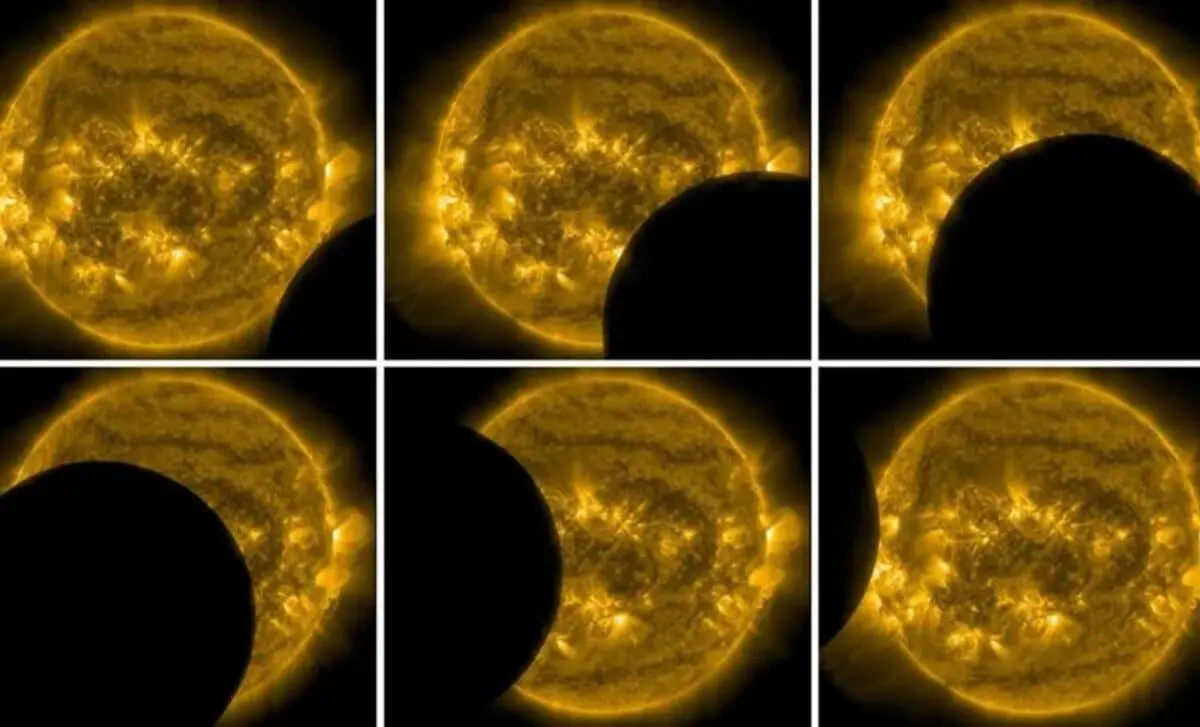
    On July 25, 2025, NASA’s Solar Dynamics Observatory (SDO) captured a rare solar eclipse from orbit, revealing 62% of the sun blocked by the moon for 35 minutes. This event, invisible from Earth because the moon’s shadow missed the planet’s surface, marked the second space-based eclipse of 2025, following the European Space Agency’s Proba-3 mission that used satellites to block the sun.

    Scientists at NASA aim to study solar activity and its effects on Earth’s technology through these observations. The SDO’s images, taken from its unique vantage point, provide clear data on the sun’s behavior.

    NASA launched the SDO on February 11, 2010, to orbit Earth at 19,000 miles per hour, matching the planet’s rotation. Its three tools, the Atmospheric Imaging Assembly, Helioseismic and Magnetic Imager, and Extreme Ultraviolet Variability Experiment, gather 1.5 terabytes of data daily. These instruments record the sun in multiple wavelengths, avoiding distortion from Earth’s atmosphere.

    The eclipse showed the sun’s outer layer, the corona, normally hidden by the star’s bright light. The sun’s magnetic fields sometimes break and reconnect, causing solar flares and bursts of charged particles. These events can harm satellites, power grids, and radio signals. “We saw glowing coronal loops and bright flares at the sun’s edge,” said NASA scientist Dr. Emily Mason.

    NASA charged the SDO’s batteries before the eclipse to keep it running during the dimming. The spacecraft’s solar panels lost sunlight briefly, but its design ensured steady operation. This planning allowed the SDO to capture clear images without interruption.

    The SDO sees lunar transits a few times yearly, but this eclipse stood out for its 62% coverage. Its images revealed jagged edges and glowing coronal patterns, offering a rare view of the sun’s atmosphere. Proba-3’s earlier eclipse, created by aligning satellites, supports these findings by mimicking a total eclipse.

    Solar activity affects Earth’s space environment, disrupting technology like GPS and communication systems. The SDO’s data helps NASA and agencies like NOAA predict when flares or particle bursts might occur. This information protects satellites and ground-based systems from damage.

    The public can view a partial solar eclipse on September 21, 2025, in New Zealand, Tasmania, parts of the Indian Ocean, and Antarctica. Up to 80% of the sun will be blocked, but viewers need solar eclipse glasses or filters for safe observation.

    A total solar eclipse on August 12, 2026, will cross Greenland, western Iceland, and northern Spain. For about 2 minutes and 18 seconds in Iceland, the sun’s corona will be visible. This event draws crowds for its rare beauty.

    The SDO’s work helps scientists understand the sun’s impact on Earth. Its July 25 images, showing vivid coronal loops and surface flares, will fuel research for months. Proba-3’s data adds to this effort, improving space weather predictions. Eclipse fans on Earth can prepare for the next solar spectacle.

  • Chinese scientists use Sunlight to extract Water from Lunar Soil

    Chinese scientists use Sunlight to extract Water from Lunar Soil

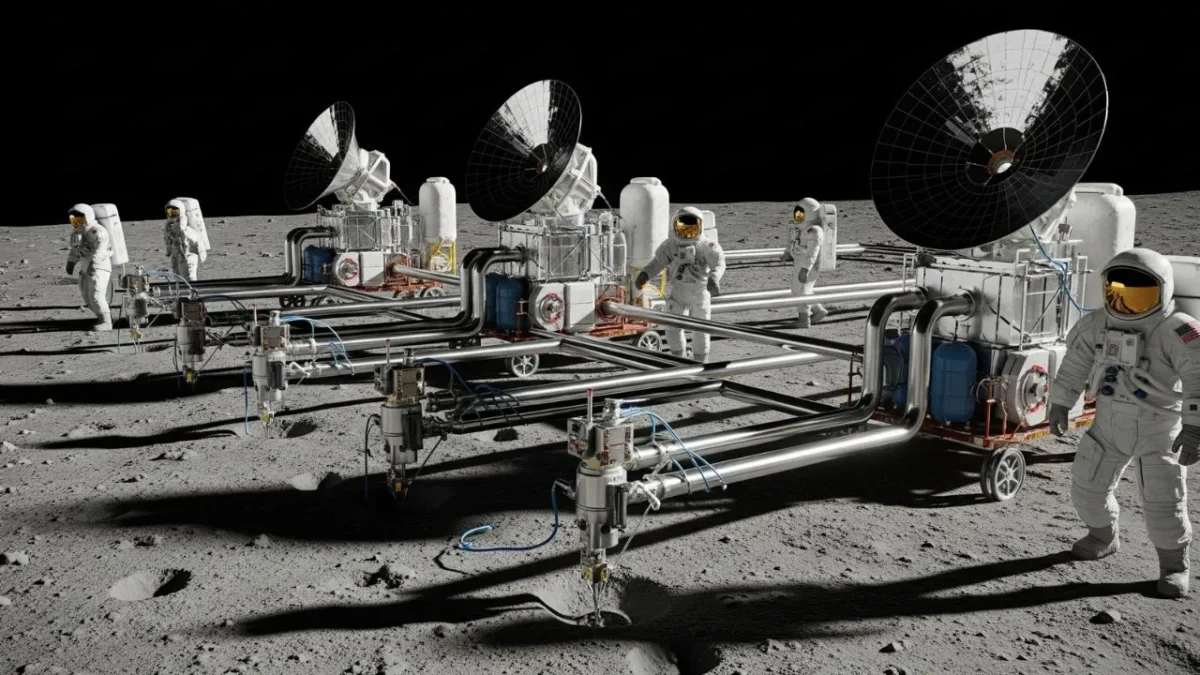
    A team of Chinese researchers has found a way to turn lunar soil into water, oxygen, and even rocket fuel. That might sound like science fiction, but it’s a real step toward building self-sufficient Moon bases, and it could save future space missions a lot of money.

    The trick lies in the lunar regolith, the dusty surface layer covering the Moon. It contains minerals like ilmenite that hold small amounts of water. The team developed a solar-powered method to heat the soil and extract useful materials. The water can be used for drinking or broken down to make oxygen. And when combined with gases from astronauts’ exhaled breath, it could even create fuel.

    It matters because space is expensive. Really expensive. A USDA ARS report from 2023 estimated that sending just one gallon of water to space costs about $83,000. That’s why scientists are so focused on using what’s already out there. NASA estimates the Moon’s poles could hold around 270 billion tons of water ice, which is enough to support missions for decades.

    The same method could also recycle carbon dioxide from astronauts and turn it into hydrogen and carbon monoxide, both of which can be used as fuel. It’s a compact process that could help future Moon bases run more independently.

    Lunar soil from resting at the base of a photothermal reactor.
    Lunar soil from the Chang’e-5 mission resting at the base of a photothermal reactor. Image credit: Sun et al.

    Lu Wang and his team at the Chinese University of Hong Kong, Shenzhen, tested the technique using samples from China’s Chang’e-5 mission. Their study, published July 16, 2025, in Joule, showed promising results. Wang even described the soil’s efficiency as “magic” because of its unexpected chemical potential.

    Of course, there are still hurdles. Lunar soil isn’t the same everywhere, and extreme temperatures that can swing from 260°F to -280°F make it hard to design reliable equipment. Plus, this system can’t yet produce enough to fully support a mission. It’s more of a starting point than a finished solution.

    Still, it’s a promising one. China is aiming for a permanent Moon base by 2035, and NASA’s Artemis program is working on similar tech. Whoever gets there first could shape how we explore the rest of the solar system.

    We’re not ready to fuel rockets or support full missions with moon dust just yet, but we’re getting closer. Continued improvements will determine whether this method can sustain a human presence on the Moon.

  • NASA tests Americium-241 heat source fuel for future deep space missions

    NASA tests Americium-241 heat source fuel for future deep space missions

    For more than 60 years, NASA has used radioisotope power systems, which are often called nuclear batteries, to turn the heat from radioactive decay into electricity. These batteries have powered missions like Voyager, Cassini, and Mars rovers such as Perseverance. Now, NASA is looking at a new fuel: Americium-241.

    In January 2025, NASA’s Glenn Research Center teamed up with the University of Leicester in the UK to test a Stirling generator powered by americium-241 simulators. Stirling engines don’t burn fuel like traditional engines. Instead, they use sealed pistons to convert heat into motion and electricity. Because there’s no contact between the moving parts, the system can run for decades with little wear. That makes it ideal for long missions, like sending a probe to the outer planets or exploring the dark, frozen craters on the Moon.

    Americium-241 dioxide (241AmO₂).
    A small button from an ionization-type smoke detector contains approximately 1 microcurie, which equals about 141 nanograms, of americium-241 dioxide (²⁴¹AmO₂), enclosed in an aluminum casing. Image credit: Andrew Magill/Wikipedia

    So why americium? NASA has long used plutonium-238, which produces a lot of heat for its weight. But plutonium is scarce and expensive to produce. Americium-241 is more available. It can be recovered from nuclear waste and has a much longer half-life (432 years) as compared to plutonium’s half-life (88 years). It doesn’t generate as much power per gram, but it lasts longer and is easier to source.

    During the test, electric heaters mimicked americium’s heat to drive the Stirling generator. The generator kept running even when one converter failed. That kind of redundancy is important for missions where repairs aren’t possible.

    Hannah Sargeant, a researcher at Leicester, pointed out how valuable this kind of reliability could be for missions that can’t afford to lose power. “One of the standout features of this design is its ability to maintain electrical power even if a Stirling converter fails,” said Hannah.

    A transport truck with NASA's Glenn Research Center in the background.
    NASA’s Glenn Research Center as photographed in 2009. Image credit: NASA

    The collaboration rapidly moved from concept to a near-flight-ready prototype, thanks to strong coordination between teams. NASA supplied the Stirling hardware, while the University of Leicester provided the test setup and heaters. The test achieved all targeted performance and efficiency benchmarks.

    Americium-241 might also help make deep space missions more practical. The UK’s National Nuclear Laboratory has already started producing small amounts, with plans to scale up by 2027. Since around 80% of deep space missions rely on nuclear power, having a steady fuel supply could be a game changer.

    NASA is now working on a more advanced testbed that can survive the stresses of launch and space. If it works, this new power source could help future missions reach farther and last longer

  • New Study gives fresh insights on how Microgravity affects an Astronauts’ Eyesight

    New Study gives fresh insights on how Microgravity affects an Astronauts’ Eyesight

    Imagine you are aboard the International Space Station, floating in microgravity, gazing down at Earth and up at the stars, only to notice that your vision is starting to blur. Yes, it’s real! As astronauts spend longer durations in microgravity, many begin to notice changes in their eyesight.

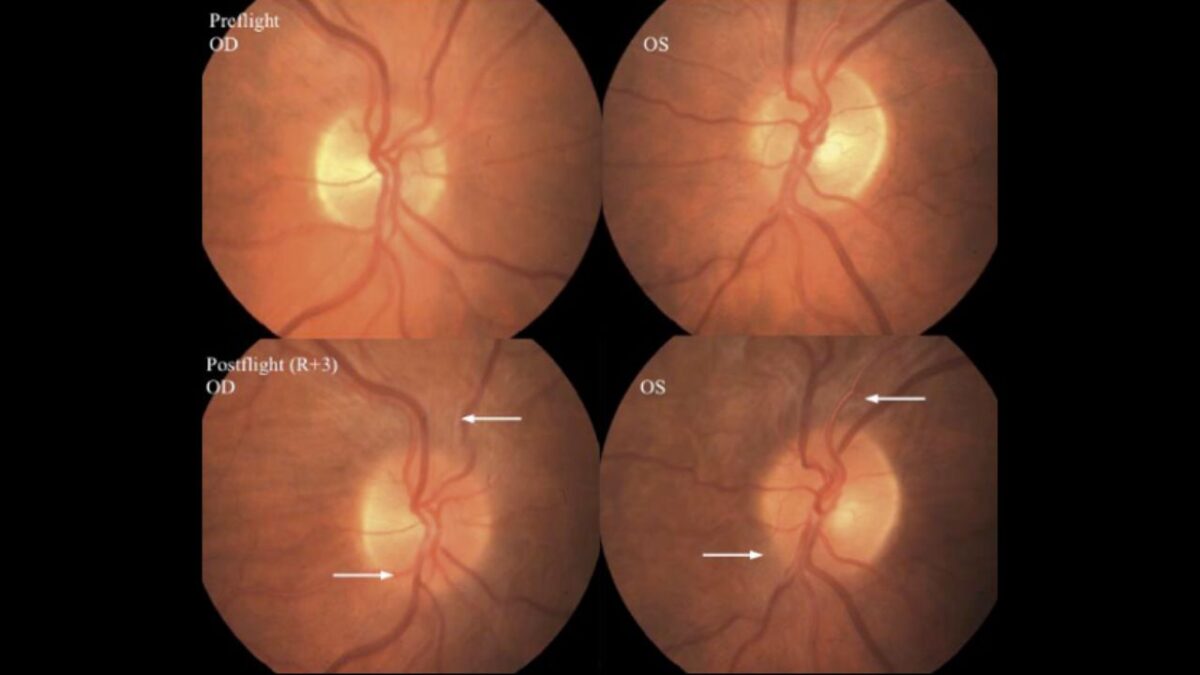
    Some astronauts even need stronger reading glasses as their mission progresses. This condition, known as Space-Associated Neuro-Ocular Syndrome (SANS), is marked by swelling of the optic nerve and a flattened eyeball. This new research was published by NASA on July 18, 2025, in an article titled ‘Vision Changes on Space Station.’

    Astronaut Sunita Williams taking an eye test aboard the ISS wearing a tight thigh cuff.
    As part of the Thigh Cuff investigation, NASA astronaut Sunita Williams performs an eye examination while wearing a cuff on her left leg. Image credit: NASA

    Microgravity causes blood and cerebrospinal fluid to shift toward an astronaut’s head, pressing on their eyes and brain. The Thigh Cuff study tests whether tight leg cuffs can redirect these fluids to reduce pressure. If effective, the cuffs could safeguard vision on missions to Mars and help patients on Earth with fluid buildup from prolonged bed rest. About 10% of astronauts experience significant vision issues, making this a growing concern.

    The Fluid Shifts study, conducted from 2015 to 2020, used MRIs and optical coherence tomography to examine blood flow from the brain. Higher fluid pressure in the skull likely contributes to SANS, with one astronaut’s severe symptoms easing after B vitamin supplements and lower cabin CO₂ levels. The human eye processes roughly 10 million bits of visual data per second, so even slight pressure changes can disrupt vision. These findings suggest spacecraft air quality plays a role in eye health.

    A Canadian Space Agency study, SANSORI, found that spaceflight reduces eye tissue stiffness, similar to changes in aging or glaucoma, which affects over 60 million people worldwide. Less rigid eye tissue may cause the eyeball to flatten in space. This discovery could guide treatments for eye diseases on Earth, where tissue stiffness often impacts vision. Understanding these changes helps connect space and terrestrial medicine.

    Japan’s MHU-8 study examined mice in space, revealing genetic changes in their optic nerves and retinas after flight. Artificial gravity reduced these changes, suggesting that future spacecraft could use rotation to mimic gravity and protect vision. These genetic findings may lead to new treatments for vision loss on Earth. Space research often uncovers solutions with wide-reaching benefits.

    As we plan for longer space missions, protecting astronauts’ vision is important. Studying SANS (Space-Associated Neuro-Ocular Syndrome) tells us how eyes handle pressure and environmental changes, offering vital lessons for eye care everywhere—in space and on Earth.

  • NASA’s Webb spots ‘Sleeping Beauty’ galaxies in the early Universe

    NASA’s Webb spots ‘Sleeping Beauty’ galaxies in the early Universe

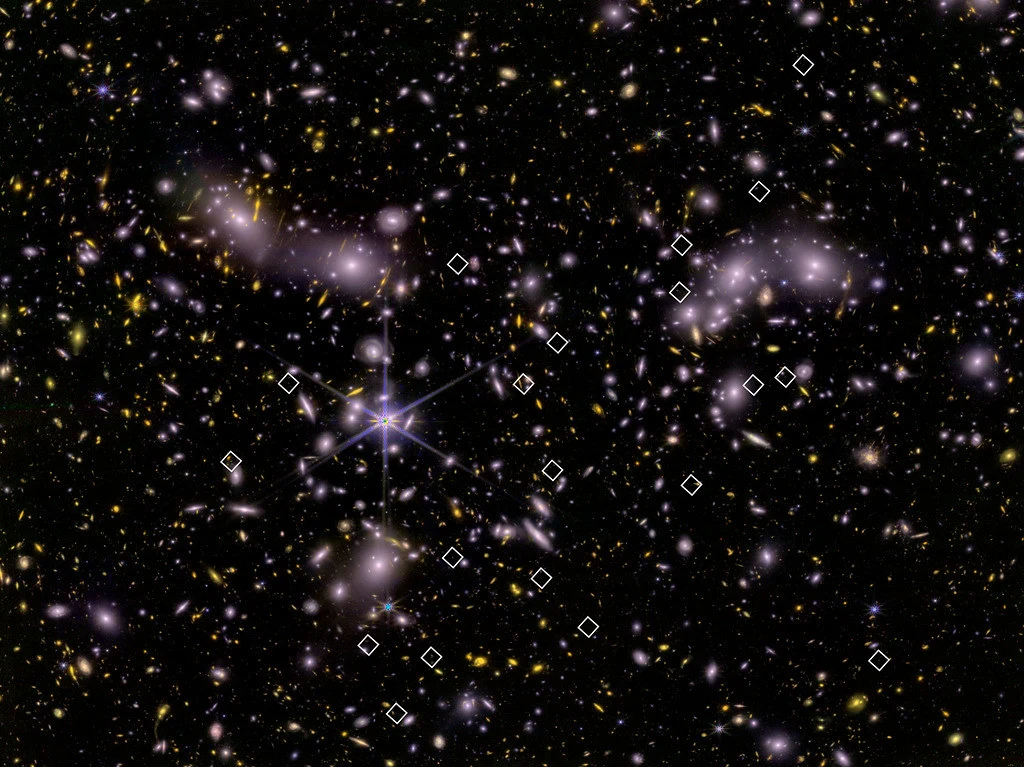
    Using the James Webb Space Telescope (JWST), astronomers have uncovered a surprising group of 14 galaxies that paused their star-forming activity within the first billion years after the Big Bang. These “dormant” galaxies, found in a range of sizes, offer fresh clues about how galaxies grow and evolve in the universe’s infancy.

    Galaxies form stars from cold gas clouds, but sometimes this process stalls. One cause is the intense radiation from supermassive black holes at a galaxy’s core, which can heat or deplete the gas needed for stars. Nearby larger galaxies can also strip away this gas or warm it, halting star formation.

    Another factor is stellar feedback. When stars, through explosions like supernovas or powerful winds, push out or heat the gas, leaving the galaxy in a temporary quiet phase. “This pause usually lasts around 10 to 25 million years,” said Alba Covelo-Paz, a doctoral student at the University of Geneva and lead author of the study, in an email. Over time, the gas can cool and fall back, allowing star formation to restart.

    Until recently, astronomers had only identified four dormant galaxies from this early period, with masses either below a billion times the Sun’s or above 10 billion. This small sample left gaps in understanding how common these pauses were across different galaxy sizes.

    But JWST’s powerful Near-Infrared Spectrograph (NIRSpec) changed that. By analyzing light from about 1,600 galaxies in the DAWN JWST Archive, Covelo-Paz’s team found 14 dormant galaxies with masses ranging from 40 million to 30 billion solar masses. The findings, posted on the preprint server arXiv on June 27, 2025, are awaiting peer review.

    These galaxies weren’t expected to be dormant so early in the universe’s history. Young galaxies are typically thought to form stars rapidly. A 2024 study had already surprised researchers by spotting one such galaxy, previously observed by the Hubble Space Telescope but only confirmed as dormant with JWST’s advanced capabilities. Unlike Hubble, JWST can detect the redshifted light from these distant galaxies and analyze its spectrum to reveal details about their stars.

    The team focused on galaxies showing signs of older or middle-aged stars but no new star formation. They used a tool called Bagpipes to model the galaxies’ star-forming histories, finding that these 14 galaxies had paused star formation 10 to 25 million years ago.

    This suggests a “bursty” pattern, where galaxies alternate between active star-forming periods and quiet phases, likely driven by stellar feedback. “We see these galaxies taking a breather,” Covelo-Paz said. “They’ve likely paused due to processes like supernovas pushing gas out, but they could restart star formation later.”

    Still, questions remain. If these galaxies stay dormant for 50 million years or more, it might point to a permanent shutdown, possibly caused by black holes or other factors. For now, their properties support the idea of a temporary pause.

    To learn more, astronomers are planning a JWST program called “Sleeping Beauties” to hunt for more dormant galaxies and study how long these quiet phases last.

  • Strange new object in our Solar System fuels the hunt for Planet Nine

    Strange new object in our Solar System fuels the hunt for Planet Nine

    A mysterious, distant object named 2023 KQ14 ‘Ammonite’ has reignited the search for Planet Nine! First detected in 2023 by the Subaru Telescope in Hawaii, Ammonite was identified as a trans-Neptunian object (TNO) through the FOSSIL program. This icy body orbits the Sun far beyond Neptune, with its closest approach to the Sun measuring 66 Astronomical Units (AU).

    To confirm the discovery, astronomers carried out follow-up observations in July 2024 using the Canada-France-Hawaii Telescope. They also reviewed archival data from several other observatories. By tracking Ammonite’s position for nearly two decades, the team was able to map its orbit with high precision.

    The FOSSIL (Formation of the Outer Solar System: An Icy Legacy) program uses the Subaru Telescope’s HyperSuprimeCam to study populations of distant objects in the outer solar system. The program aims to uncover clues about the region’s history and structure.

    Ammonite’s orbit is unique. Its semi-major axis is 232 AU, placing it among Sedna-like trans-Neptunian objects (TNOs). These objects orbit far beyond Neptune’s reach, and they may hold secrets about the solar system’s early history.

    “It’s thrilling to find Ammonite because it fills a gap in our map of the outer Solar System,” says Ying-Tung Chen, lead author of the study published in Nature Astronomy. “Objects like this are time capsules, preserving clues about how our solar system formed billions of years ago.”

    Illustration of Planet Nine by NASA
    Planet Nine (Artist’s Concept). Image credit: NASA

    Computer simulations by the FOSSIL team show Ammonite’s orbit has been stable for at least 4.5 billion years, dating back to the solar system’s early days. While its current orbit differs from other Sednoids, simulations suggest their orbits were similar around 4.2 billion years ago. This points to a shared origin in the distant past.

    Ammonite’s steady orbit suggests it wasn’t shaped by the known planets, hinting at a distant, hypothetical planet, often called Planet Nine. The study modeled a planet with about 6.2 Earth masses, orbiting roughly 500 AU from the Sun. This could explain Ammonite’s unusual path.

    “Our results suggest Ammonite’s orbit is stable under the influence of a massive planet at that distance,” says co-author Patryk Sofia Lykawka. “It’s a strong hint that something big is out there, sculpting these orbits.”

    The team ran scenarios, varying the planet’s mass (5 to 9 Earth masses) and orbit size (300 to 500 AU). They also adjusted eccentricity (0.15 to 0.26). Ammonite’s orbit held firm in each case. Larger orbits for this unseen planet, around 500 AU, fit the data best.

    Orbit and Position of Ammonite
    The plot shows objects from the MPC database (February 2025) with orbits tracked for at least one year, semi-major axis > 150 au, and perihelion > 30 au. Named objects, including Ammonite (marked with a star), are shown. Left: Semi-major axis vs. perihelion, with a red dashed line indicating where galactic tides and stars impact orbits, and curved lines showing Neptune’s influence and chaotic diffusion. A hatched box marks an empty region. Right: Difference in perihelion longitude from a proposed planet’s (254°); Ammonite doesn’t align with the clustered objects. Image credit: Chen et al., NatAstr. 2025

    Ammonite fills a curious gap in TNO distribution. Objects with perihelia between 60 and 70 AU were rare until now. “Ammonite sits right in that gap,” Chen says. “It’s like finding a missing puzzle piece that completes the picture.”

    These Sedna-like objects are likely relics from a chaotic time 4.2 billion years ago. A massive planet, possibly Planet Nine, or a passing rogue star could have pushed them into their distant orbits. “They’re survivors of a wild era in the solar system’s youth,” Lykawka says.

    The search for Planet Nine continues. Ammonite’s discovery sharpens the focus for astronomers. Telescopes worldwide are scanning the skies, hoping to spot this hidden giant. The Legacy Survey of Space and Time (LSST), led by the Vera C. Rubin Observatory, promises to transform this search. Its unmatched ability to detect faint, far-off objects could finally help us find Planet Nine.