Category: Space

Explore the vastness beyond our planet. This section covers missions, discoveries, and events that expand our reach into the cosmos. From new rocket launches to deep-space observations, “Space” keeps you updated on humanity’s steps into the unknown.

  • China Achieves First Daylight Laser Ranging to Lunar Satellite, Advancing Space Navigation

    China Achieves First Daylight Laser Ranging to Lunar Satellite, Advancing Space Navigation

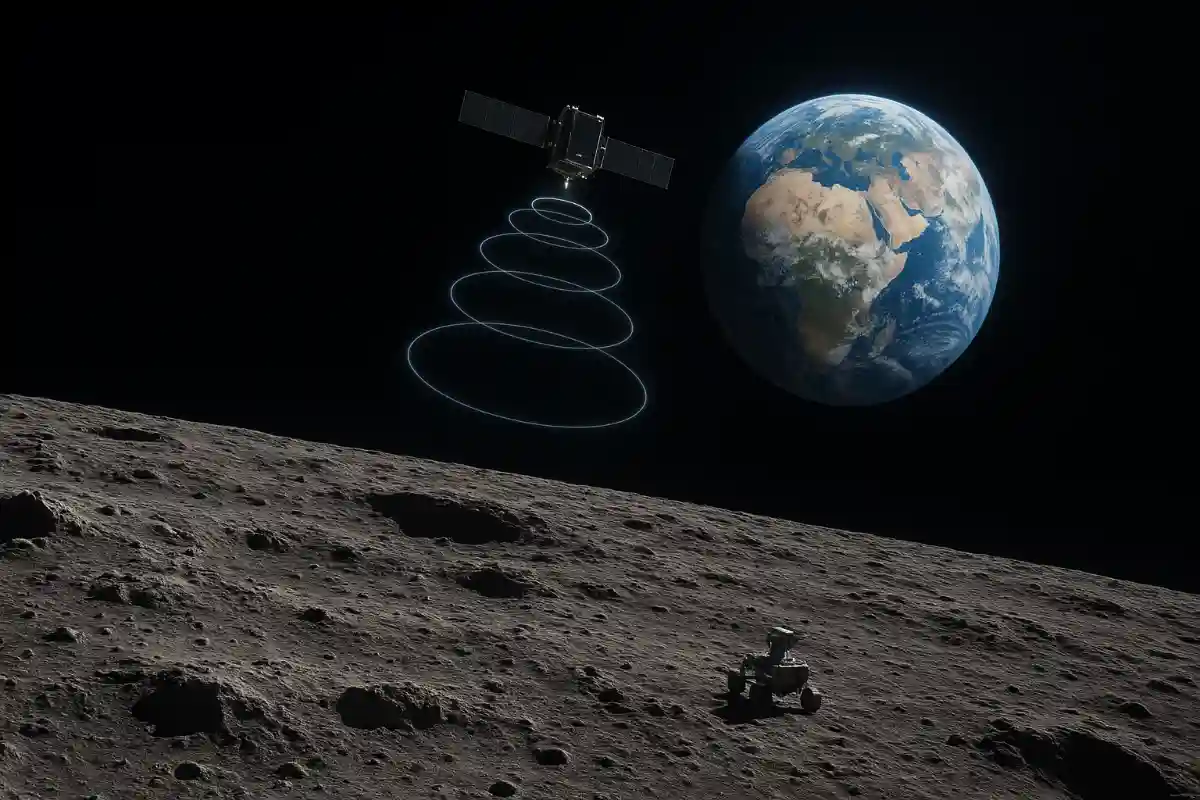
    China has achieved a world first in space navigation by successfully firing a laser beam at a moon-bound satellite in broad daylight. Scientists at the Deep Space Exploration Laboratory in Hefei managed to strike the Tiandu-1 satellite, orbiting 130,000 kilometers from Earth, and record its distance with centimeter-level accuracy.

    The experiment, carried out this week, marks the first time laser ranging has been achieved to a lunar spacecraft under sunny skies. Laser ranging works by sending short pulses of light to a target and measuring the time it takes for them to bounce back.

    Until now, these tests were typically done at night, when faint return signals could be detected more easily without interference from sunlight. China’s team overcame this problem by using specialized filters and highly accurate timing equipment.

    Their system was able to detect returning signals despite the overwhelming brightness of daytime conditions.

    The Tiandu-1 satellite, launched in January, sits about a third of the way between Earth and the Moon. Tracking an object at that distance is difficult because of its speed and size. Researchers described the challenge as similar to hitting a moving hair from several kilometers away.

    Still, their instruments recorded precise readings from laser pulses lasting only a few billionths of a second. Daytime tracking has clear benefits. It allows continuous monitoring of spacecraft without waiting for nightfall.

    This capability is vital for China’s upcoming lunar missions, which include landing astronauts on the Moon by 2030 and building a joint base with Russia by 2035. It will also support their Queqiao relay satellites, designed to maintain constant communication with rovers and landers on the lunar surface.

    The technology builds on earlier methods developed during the Apollo missions, when American astronauts placed retroreflectors on the Moon.

    These are still used to measure its orbit, but China’s test shows how modern tools can work on spacecraft traveling through cislunar space in real time. Beyond the Moon, such technology could also improve navigation for Mars missions and asteroid probes.

    Accurate distance measurements help map gravitational fields and predict spacecraft paths. With an estimated 100,000 satellites expected in low Earth orbit in the coming years, better ranging systems may also help reduce the risk of collisions.

    For astronomers and engineers, the test highlights how small improvements in technology can make a major difference in managing space traffic and planning interplanetary travel.

    China’s success in daytime laser ranging represents a new step in building safer and more reliable navigation systems for future exploration.
  • Astronomers Confirm A New Tiny Moon Orbiting Uranus, Boosting Planet’s Moon Count to 29!

    Astronomers Confirm A New Tiny Moon Orbiting Uranus, Boosting Planet’s Moon Count to 29!

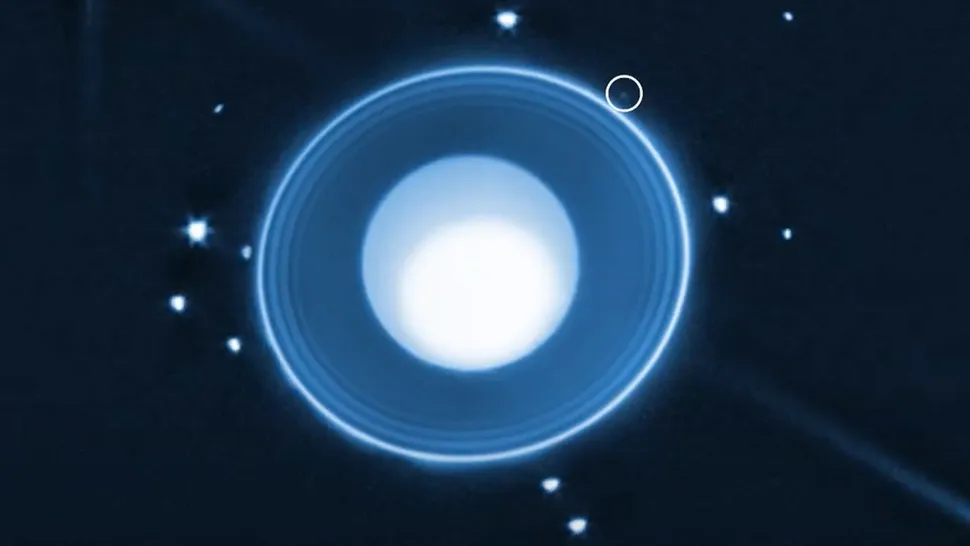
    Astronomers using the James Webb Space Telescope (JWST) have identified a new moon orbiting Uranus, raising the planet’s tally to 29 confirmed satellites. The tiny object, temporarily designated S/2025 U1, was first detected on February 2, 2025, during observations aimed at studying Uranus’s rings and atmosphere.

    Measuring only about 10 kilometers (6 miles) wide, S/2025 U1 is the smallest moon ever found around Uranus. Its faint size meant that earlier missions, including NASA’s Voyager 2 flyby in 1986, completely missed it.

    The discovery came from near-infrared images taken by JWST. Astronomers noticed a faint speck of light moving in sync with Uranus. Further checks confirmed that the object was locked in orbit, rather than a distant star in the background.

    This marks another demonstration of JWST’s sharp vision, capable of spotting objects far too dim for previous instruments. While ground-based telescopes have uncovered several Uranian moons in recent years, none have been as small as this.

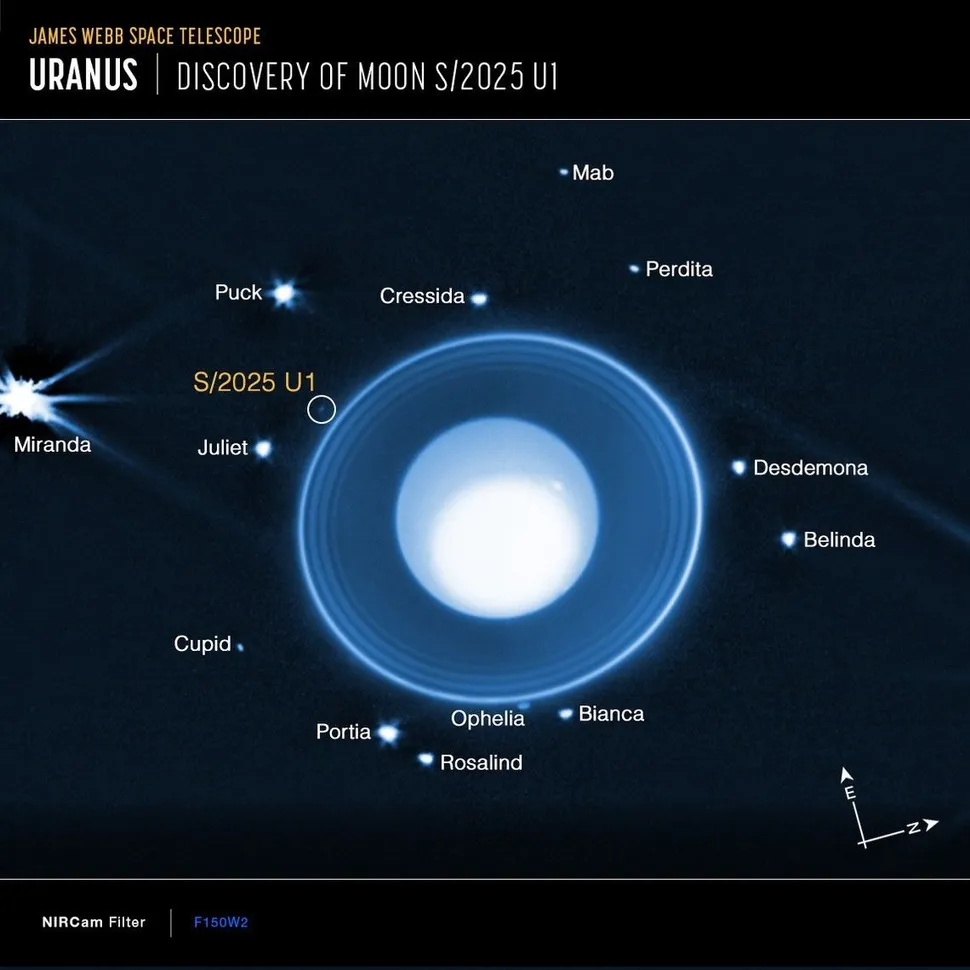
    Annotated image of the S/2025 U1, the New Moon around Uranus
    This JWST NIRCam image shows Uranus’s newly found moon S/2025 U1 along with 13 other moons. Cordelia, which orbits inside the planet’s outer ring, is not visible due to ring brightness. The image combines three sets of data to highlight Uranus’s atmosphere, rings, and moons. Image credit: NASA, ESA, CSA, STScI, M. El Moutamid (SwRI), M. Hedman (University of Idaho)

    S/2025 U1 circles the planet just beyond Uranus’s faint rings. Scientists think it is likely made of rock or ice, like its neighbors. With a diameter no larger than a small town, a person could, in theory, walk across its surface in only a few hours. But with no atmosphere and temperatures far below freezing, it is not a place suited for human visitors.

    The new moon follows the unusual tilted orbital plane created by Uranus’s sideways rotation, keeping it steady among the planet’s existing satellites.

    Most of Uranus’s moons are named after characters from Shakespeare and Alexander Pope. The largest, Titania, spans more than 1,500 kilometers (over 900 miles), while the newly found S/2025 U1 is now the tiniest member of the family.

    How these moons formed is still debated. Some may be remnants of ancient impacts, while others could be captured objects from elsewhere in the solar system. More observations will be needed to determine where S/2025 U1 fits in.

    Even at this size, the moon could play an important role. Its gravity might help maintain the structure of Uranus’s faint rings, keeping them from spreading apart. Studying these interactions could offer clues about the planet’s past collisions and its present dynamics.

    Uranus is still one of the least explored planets, with no dedicated missions since Voyager 2’s brief visit nearly four decades ago. Scientists say this discovery adds weight to calls for a future probe to orbit the planet and study its complex system in detail.

    For now, S/2025 U1 stands as proof that our solar system still holds surprises and that new technology is key to uncovering them.

    Source: New Moon Discovered Orbiting Uranus Using NASA’s Webb Telescope

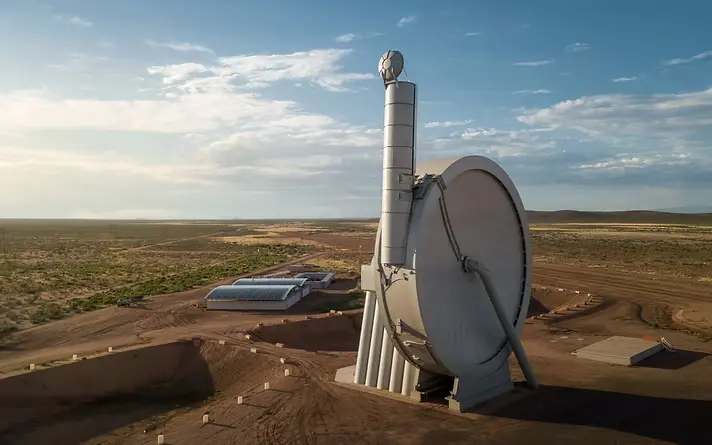
  • Spin Launch’s Spinning-Arm Satellite Launcher Draws Concern from China Over Space Congestion

    Spin Launch’s Spinning-Arm Satellite Launcher Draws Concern from China Over Space Congestion

    A US company developing an alternative to rocket launches has drawn international attention, with China warning the technology could worsen congestion in Earth’s orbit. SpinLaunch, based in California, is building a centrifuge system that hurls satellites into the upper atmosphere before a small rocket stage carries them the rest of the way.

    The company says it could cut costs by up to ten times and reduce emissions by 90 percent, but its plan for frequent launches has raised questions about safety in space.

    At its test site in New Mexico, SpinLaunch built a 108-foot rotating arm inside a vacuum chamber. The machine spins at high speed, accelerating payloads to more than 5,000 miles per hour (six times the speed of sound) before releasing them. A small rocket engine then provides the final push into orbit. Unlike traditional rockets, which require tons of fuel, the system runs on electricity.

    The economic promise is significant. Conventional launches cost tens of thousands of dollars per kilogram, but SpinLaunch says it can bring that down to just a few thousand. The approach also avoids leaving discarded rocket stages in orbit, which are a major source of space debris.

    Because of the intense forces involved, SpinLaunch has developed specially designed flat, disc-shaped satellites weighing up to 200 kilograms. Chinese officials have called them “pancake satellites.” They could deliver broadband internet, Earth observation, and other services, but China has voiced concern that mass deployment could add to already crowded orbital traffic.

    The company has carried out more than 30 suborbital tests since 2021. A NASA payload flew on one of them in 2022, helping to prove the design’s resilience. SpinLaunch expects to begin orbital launches in 2026 and eventually scale to five launches per day.

    The firm also secured $30 million in new funding to accelerate its plans. The round, led by ATW Partners with support from Kongsberg and other existing backers, will help build its Meridian Space constellation, a broadband satellite network planned for low-Earth orbit.

    The first customer connections are expected in the second half of 2026. SpinLaunch has also signed a lease for land in Alaska, where it intends to build its first orbital accelerator, and has made leadership appointments to guide the move toward commercial operations.

    Reaction online has been mostly positive, with the company highlighting the funding as a boost for satellite communications. But international agencies, including NASA, the European Space Agency (ESA), and the UN’s Office for Outer Space Affairs, have stressed that growing satellite constellations will require stricter coordination to avoid collisions.

    SpinLaunch is betting that its system can deliver cheaper and cleaner access to orbit while operating its own constellation. The debate over how to manage an increasingly crowded space environment, however, is far from over.

  • EU Scientists Develop Gecko-Inspired Satellites to Capture and Remove Dangerous Space Debris

    EU Scientists Develop Gecko-Inspired Satellites to Capture and Remove Dangerous Space Debris

    An international team of scientists is developing satellites that use a gecko-inspired grip to capture and remove dangerous space junk from Earth’s orbit. The project, called gEICko, began this year with support from the European Union and brings together experts from Germany, Italy, Portugal, and Spain.

    The effort is led by researchers at Julius Maximilian University of Würzburg in Germany, under Professor Mohamed Khalil Ben-Larbi, alongside partners such as the Technical University of Berlin. Their inspiration comes from geckos, which can walk on walls by using tiny molecular forces known as van der Waals forces.

    Since the launch of Sputnik 1 in 1957, more than 22,000 satellites have been sent into orbit. Many no longer work and now float as debris. The European Space Agency (ESA) tracks about 42,000 objects, with estimates suggesting there are more than 54,000 pieces larger than 10 centimeters.

    These include dead satellites, rocket parts, and fragments from collisions or explosions. With around 12,300 active satellites in use, the rest pose real threats to missions. Even the International Space Station (ISS) has had to dodge debris multiple times.

    The problem is getting worse as companies like SpaceX add thousands of satellites to orbit. Even if launches stopped today, chain reactions of collisions known as Kessler syndrome could create more junk. In 2024 alone, satellite breakups added at least 3,000 new tracked objects. On average, more than three pieces of debris fall back into Earth’s atmosphere every day, but new fragments appear faster than old ones burn up.

    An illustration of the underside of a Gecko's feet.
    An illustration of the underside of a Gecko’s feet. Image credit: Nihal Sayyad/Wonders in Space

    Past attempts to clean space, including nets, harpoons, and robotic arms, have struggled to latch onto spinning or unstable debris. The gEICko team hopes their nature-inspired method will succeed where others failed. Their satellites will use silicone pads with microscopic structures that mimic gecko feet. These pads can stick to smooth surfaces, such as solar panels, without glue.

    The Würzburg group is also developing precise navigation systems that allow the satellites to approach targets at the right speed and angle. “We need precision to avoid making more debris,” Ben-Larbi explained. If direct docking is not possible, the system could deploy a tether coated with the sticky material, whipping out to grab debris like a gecko’s tongue.

    Once a piece of junk is captured, the cleaning satellite can guide it to safely burn up in Earth’s atmosphere or move it into a “graveyard orbit.” The technology is designed for multiple captures and can even draw power from the solar panels of old satellites to extend missions.

    The EU has granted about 4 million euros to the project through its Horizon program, with Würzburg University receiving nearly 700,000 euros. The Technical University of Berlin is coordinating the effort, and other partners include the University of Padua, the University of Lisbon, the Fraunhofer Institute, and DHV Technology. The goal is to produce a working prototype within three years, with full deployment expected in about a decade.

    The design favors small, low-cost satellites that are cheaper to build and launch. It also builds on earlier experiments, such as NASA’s 2017 gecko gripper tests, while focusing on Europe’s space goals.

    New rules now require satellites to de-orbit within 25 years of their mission, or just five years under ESA’s 2023 update. Still, millions of older fragments remain in orbit. ESA’s Zero Debris initiative, supported by 19 countries, calls for near-total cleanup by 2030.

    If successful, the gEICko technology could also help extend the life of working satellites or recycle old ones. For now, it offers a hopeful path to dealing with one of the biggest challenges in keeping space safe for future exploration.

    Source: Cleaning up space with gecko technology

  • New research suggests black holes can trigger unique supernovae, challenging past theories

    New research suggests black holes can trigger unique supernovae, challenging past theories

    Astronomers have spotted a supernova that’s unlike any they’ve seen before, and they think it’s a star that exploded while being consumed by a black hole. This rare event, named SN 2023zkd, was first seen in July 2023, about 730 million light-years away in a low-mass host galaxy with little star formation.

    Classified as a Type IIn supernova, it stands out because of narrow hydrogen lines in its spectrum, along with strong helium features that make it helium-rich. These traits point to the explosion happening inside a dense cloud of gas the star lost earlier.

    A special AI tool, called LAISS, designed to find strange space events, flagged it for immediate attention. This allowed astronomers to get crucial data from the beginning of the explosion, giving them a full picture of what happened.

    Scientists from Harvard, MIT, and other universities believe a massive star, starting with at least 30 solar masses and partially stripped of its outer layers, was in a tight orbit with a black hole. As the star got closer, the black hole’s immense gravity began to pull off gas and dust, forming a swirling disk around it.

    Before the black hole could fully swallow the star, the intense pressure and gravitational stress caused the star to detonate. The blast ejected about 10 solar masses of material at high speeds, with an energy around 2 × 10^51 ergs.

    The light curve showed two peaks: the first reached an absolute magnitude of about -18.7 in the r-band, then it faded, only to brighten again to -18.4 magnitude roughly 240 days later. This second flash came from the shock wave hitting denser material the star had ejected earlier.

    Spectra revealed asymmetric lines from hydrogen and helium, with velocities ranging from 400 km/s in slow-moving equatorial hydrogen to 1,000-2,000 km/s in faster polar helium. These suggest an uneven distribution of material around the system.

    Looking at old data, scientists found that the system had been glowing more brightly for four years before the big explosion, with a persistent brightness around -15 magnitude in the the r-band. This precursor split into two parts: a long steady phase and a ramp-up in the final year.

    The total circumstellar material involved was about 5-6 solar masses, lost in bursts 3-4 years and 1-2 years before the explosion. Such high mass-loss rates, up to 1 solar mass per year, are hard to explain with a single star.

    An alternative view is a tidal disruption where the black hole rips the star apart without a true supernova, but the long precursor and spectral details favor the merger scenario. “This is strong evidence for black holes triggering these special explosions,” said Alexander Gagliano, the lead author of the study. It points to a process where orbital instability leads to a common envelope phase, ending in a blast.

    V. Ashley Villar, a co-author, believes this could be a new kind of supernova that scientists haven’t recognized before. Most massive stars live in pairs, so binary ends like this might be more common than thought.

    This discovery shows how binary systems can produce odd supernovae and perhaps lead to pairs of black holes that merge later, detectable by gravity waves.

    As new, powerful telescopes like the Vera C. Rubin Observatory become fully operational, they will scan the entire sky for transient events. Scientists believe that AI tools will be key in sifting through the vast amounts of data to find similar, hidden classes of supernovae.

    The findings were published in the Astrophysical Journal.

    References

  • Astronomers connect rare ‘little red dots’ galaxies to slow-spinning dark matter halos in early universe

    Astronomers connect rare ‘little red dots’ galaxies to slow-spinning dark matter halos in early universe

    Astronomers

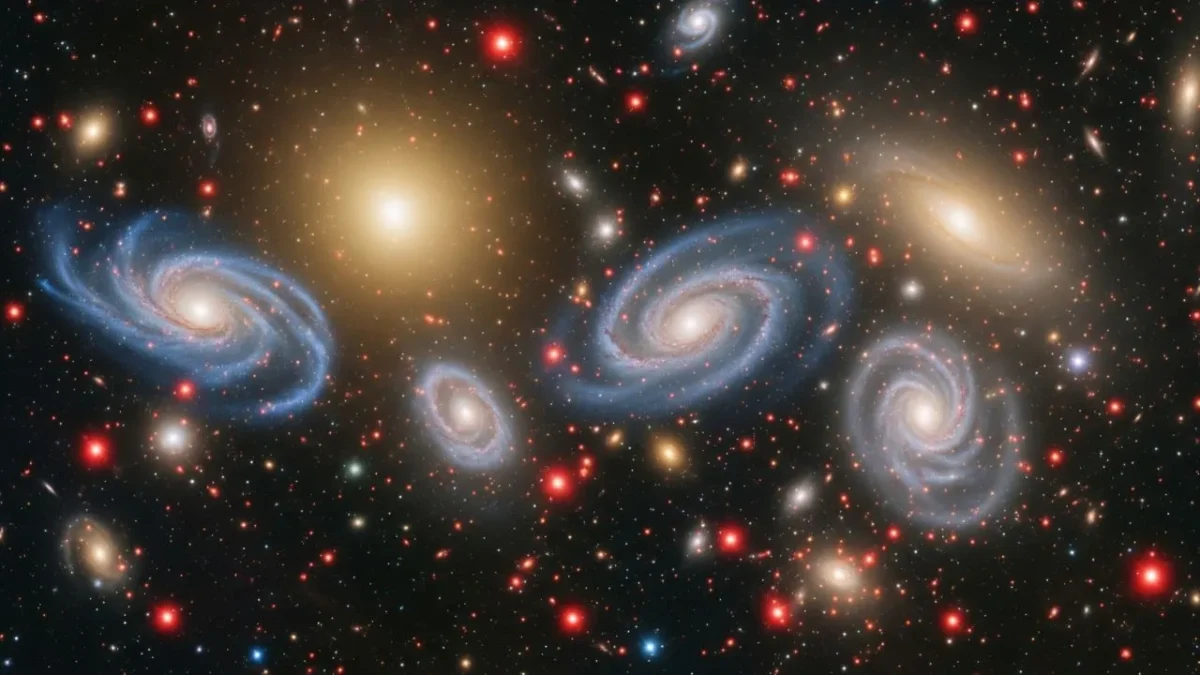
    using the James Webb Space Telescope (JWST) have identified a rare class of compact, red galaxies in the early universe, nicknamed “little red dots.” A new study suggests these galaxies formed inside dark matter halos that spin unusually slowly, causing gas and stars to collapse into dense cores rather than spreading into larger disks.

    Little red dots, or LRDs, appear between redshifts 4 and 8, meaning we see them as they were when the universe was 1 to 2 billion years old. They are smaller than most galaxies, measuring only about 80 to 300 parsecs across, but denser than typical star-forming regions.

    Researchers Fabio Pacucci and Abraham Loeb propose that LRDs form in the slowest-spinning 1% of dark matter halos. Most halos rotate at a moderate rate, allowing galaxies to form with wide, extended disks. In low-spin halos, gravity pulls material inward, producing compact shapes. This rarity matches LRD numbers, which are about 1% of normal galaxies at similar brightness.

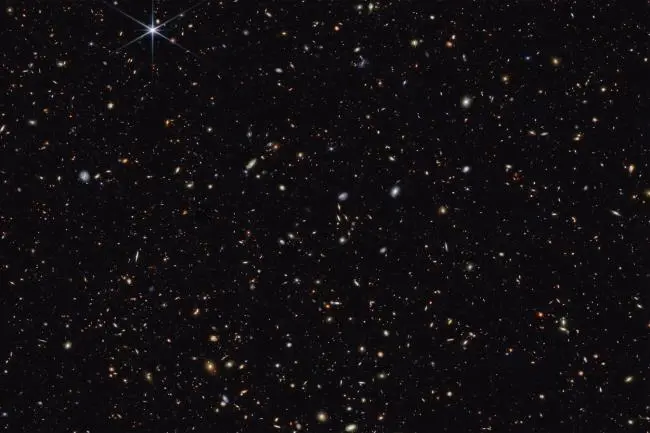
    This deep field image from the James Webb Space Telescope shows distant galaxies scattered across the night sky.
    In this deep-field view from the James Webb Space Telescope, countless distant galaxies fill the scene. The farthest galaxies appear as the “little red dots.” Image credit: NASA, ESA, CSA, STScI, Brant Robertson (UC Santa Cruz), Ben Johnson (CfA), Sandro Tacchella (Cambridge), Marcia Rieke (University of Arizona), Daniel Eisenstein (CfA)

    Modeling shows that a halo at redshift 5 with a mass of 100 billion Suns and a spin of just 0.0153 would host a galaxy smaller than 300 parsecs. Their abundance also matches predictions: rarer than ordinary galaxies but more common than bright quasars.

    The pattern changes over time. At lower redshifts, larger halos would need even slower spins to stay compact, which is uncommon. At higher redshifts, more low-spin halos exist, but their galaxies are too faint for JWST to detect. This explains why LRDs peak around redshift 5 and are scarce at both earlier and later times.

    Observations also show LRDs cluster more than expected, suggesting they form in quieter regions of space. Their dense cores could account for the broad emission lines seen in their light, whether powered by black holes or intense star formation.

    The study concludes that LRDs are not a strange new galaxy type but an extreme outcome of familiar processes. Future JWST observations could test the theory by checking whether these galaxies lack rotation, a hallmark of low-spin origins.

    The study was originally published in Astrophysical Journal Letters.

  • NASA’s Curiosity rover spots a coral-like, flower-shaped Mars rock, hinting at ancient water systems

    NASA’s Curiosity rover spots a coral-like, flower-shaped Mars rock, hinting at ancient water systems

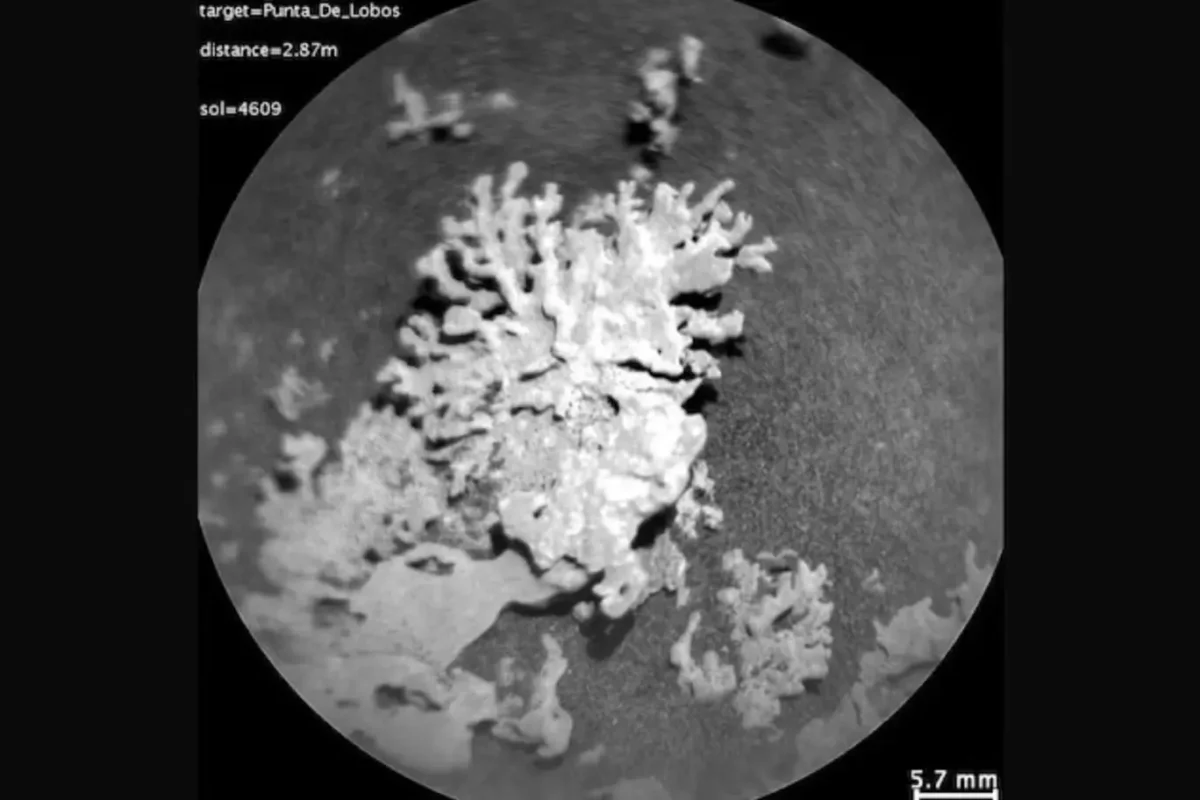
    NASA’s Curiosity rover has spotted rock formations on Mars that look strikingly like coral or flowers. One of the most recent finds, photographed on 24 July, 2025, is a wind-eroded rock about an inch wide, shaped like a piece of reef. These unusual shapes formed when mineral-rich water once flowed through cracks in the rock and left hardened deposits behind.

    Billions of years ago, Mars had rivers, lakes, and possibly an ocean. Water carried dissolved minerals into fractures in the bedrock. When the water evaporated, it left behind minerals that hardened over time. On Earth, the same process creates intricate structures in deserts and dried lakebeds.

    On Mars, eons of wind-driven sand have worn away softer material, leaving behind the more resistant mineral ridges in shapes resembling flowers or corals.

    Flower-shaped structure on Mars.
    Flower-shaped structure on Mars captured by NASA’s Curiosity rover on February 24, 2022. Image credit: NASA

    The newly photographed “Paposo” rock joins a growing list of similar discoveries. In 2022, Curiosity found another flower-shaped rock believed to have formed in the same way. In June this year, the rover also imaged “spiderweb” patterns—networks of ridges that are further evidence of water activity beneath the surface in the planet’s past.

    Curiosity landed in Gale Crater in 2012 after an eight-month, 352-million-mile journey from Earth. Since then, it has travelled over 22 miles, studying Martian geology and climate. Its findings confirm that Mars once had environments that could have supported microbial life.

    The ongoing mission continues to collect samples and images, helping scientists piece together the story of how the Red Planet changed from a watery world to the cold desert we see today.

    These coral-like rocks are physical records of ancient Martian water systems. Each new discovery adds detail to our understanding of Mars’ history and raises fresh questions about the planet’s past climate, its underground water reserves, and its potential to have once hosted life.

  • NASA, Google test AI medical assistant for Astronauts on deep space missions

    NASA, Google test AI medical assistant for Astronauts on deep space missions

    NASA and Google are testing an AI assistant designed to help astronauts diagnose and treat health problems during long missions, including future trips to Mars. The tool, called the Crew Medical Officer Digital Assistant (CMO-DA), uses Google’s technology to guide crews through medical procedures when communication delays make real-time help from Earth impossible.

    The project aims to prepare astronauts for missions where radio signals take up to 20 minutes each way, making quick consultations with doctors on Earth unfeasible. Crews are small, and not every member has medical training, so the AI can provide step-by-step instructions for handling issues such as infections, injuries, and motion sickness.

    NASA’s Johnson Space Center led the effort, working with Google Cloud to develop and test the tool in simulated space environments. During trials, CMO-DA used simple crew inputs to identify problems, recommend treatments, and suggest equipment such as ultrasound devices. It was tested on real astronaut scenarios, including minor wounds and space motion sickness.

    Microgravity weakens bones and muscles, while cosmic radiation increases long-term health risks. CMO-DA could help monitor these conditions and offer preventive measures, drawing on large medical databases without constant Earth contact. Future versions may integrate with wearable sensors to track vital signs in real time and predict potential health problems.

    If successful, the system could be deployed on missions beyond low Earth orbit, supporting NASA’s Artemis program to return astronauts to the Moon by 2026 and sending crews to Mars in the 2030s. It could also benefit medical care on Earth, especially in rural areas or disaster zones where doctors are scarce.

    The partnership is still in the proof-of-concept stage, and further testing is needed to ensure reliability in space. But NASA says the early results show promise for making deep space crews more self-reliant.

  • New HOPE Simulation Facility in Ladakh to Support ISRO’s Future Crewed Missions

    New HOPE Simulation Facility in Ladakh to Support ISRO’s Future Crewed Missions

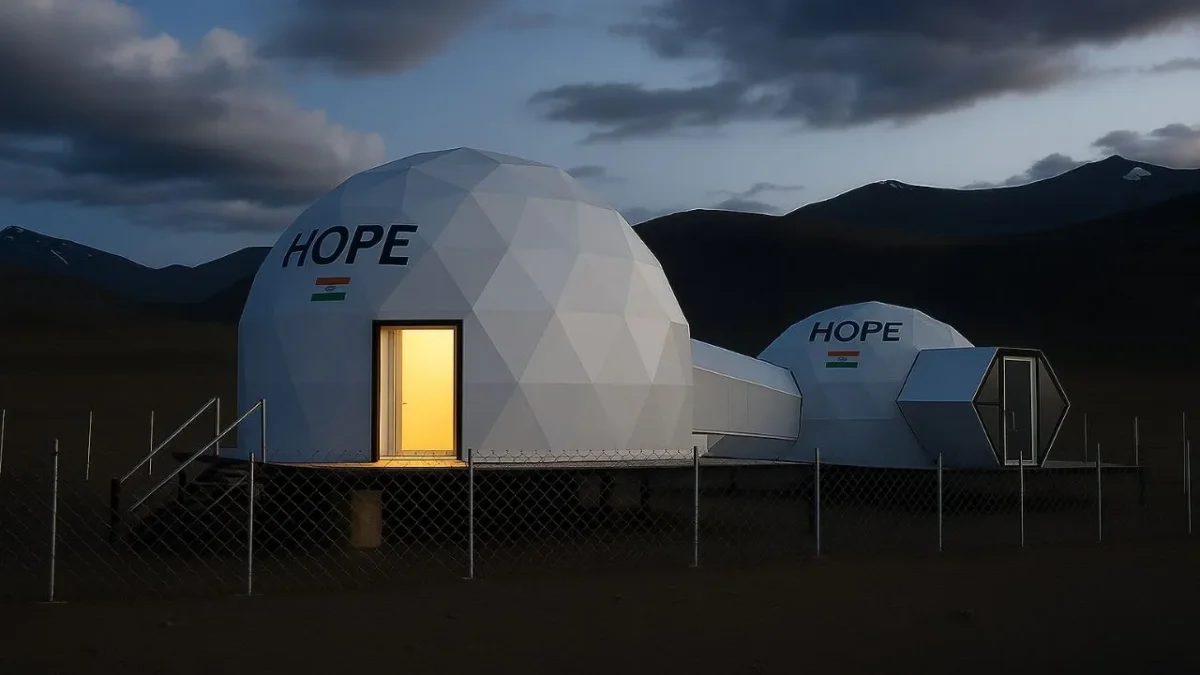
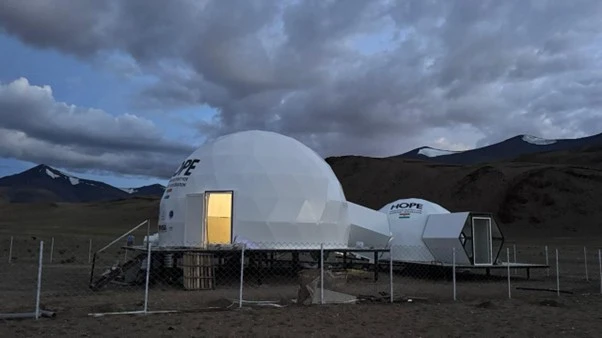
    India’s dream of sending astronauts to the Moon is taking a big step forward in the rugged, high-altitude desert of Ladakh. On August 1, 2025, the Indian Space Research Organisation (ISRO) inaugurated the Himalayan Outpost for Planetary Exploration (HOPE), a facility designed to mimic life on Mars or the Moon.

    Located 4.3 kilometers above sea level in Tso Kar Valley, the HOPE facility is built by Bengaluru-based Protoplanet with ISRO’s support. It includes an eight-meter habitat module for living and a five-meter utility module for operations. These interconnected units simulate the confined spaces astronauts might face on other planets.

    The site’s extreme cold, low air pressure, high ultraviolet radiation, and salty permafrost mirror conditions on early Mars, making it an ideal spot for research.

    ISRO's HOPE facility in Ladakh.
    ISRO sets up the HOPE space simulation facility in Ladakh. Image credit: ISRO

    “This analogue mission is more than a simulation; it is a rehearsal for the future,” said ISRO Chairman Dr. V. Narayanan at the inauguration. The facility will help scientists study how humans cope with isolation, stress, and physical challenges in space-like environments. This is critical for India’s plan to land astronauts on the Moon by 2040.

    The 10-day HOPE mission, running from August 1 to 10, 2025, involves two crew members living in the habitat. Researchers from institutions like the Indian Institute of Space Science and Technology and IIT Bombay are studying their physical and mental responses. They’re testing everything from health-monitoring tools to microbial analysis, ensuring astronauts can stay healthy during long missions.

    “This facility will be helping us mainly in the human spaceflight activities,” said Dr. V. Narayanan.

    Ladakh’s harsh terrain isn’t new to space research. Last year, ISRO’s Human Space Flight Centre ran the Ladakh Human Analog Mission, followed by a 10-day isolation study in Bengaluru. These efforts are building significant data on how Indian astronauts handle space-like conditions, a key step for the Gaganyaan mission and a planned space station by 2035.

    The project isn’t just about science. Protoplanet partnered with Mahindra Automobiles for mobility support and leaned on expertise from The Mars Society and Mars Society Australia, who’ve built similar facilities in deserts and the Arctic. This collaboration shows India’s space sector opening up to private players, a shift backed by Prime Minister Narendra Modi.

    At a cost of just Rs 1 crore, HOPE is a budget-friendly way to prepare for space missions, compared to the Rs 550 crore spent on a 20-day International Space Station trip of Shubanshu Shukla. While it can’t simulate microgravity, the facility covers nearly every other aspect of extraterrestrial life. Dr. Narayanan plans to visit soon to see its potential firsthand.

    India’s space ambitions are soaring, with eight new missions approved, including crewed missions like Gaganyaan. The HOPE facility is a vital piece of this puzzle, offering a glimpse into what it takes to live on another world.

  • NASA Plans to build a Nuclear Power Plant on Moon by 2030s

    NASA Plans to build a Nuclear Power Plant on Moon by 2030s

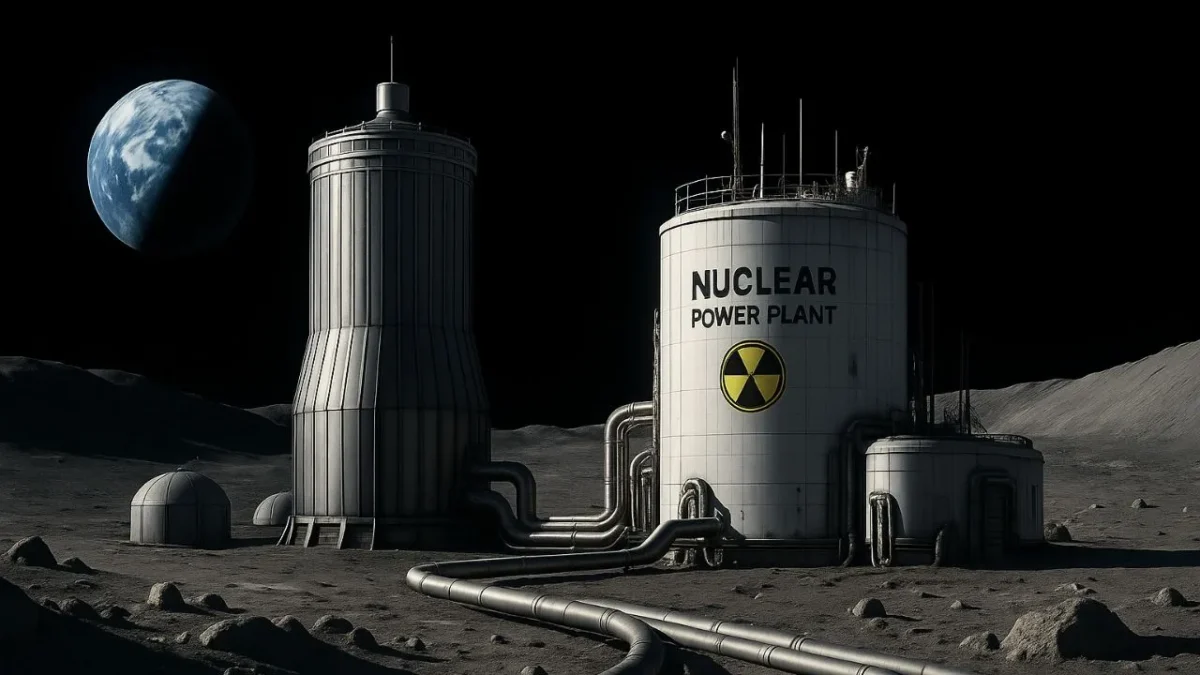
    NASA is set to build a nuclear power plant on the moon by the early 2030s to support its ambitious human exploration plans as part of the Artemis program targeting the lunar south pole. The reactor, designed to generate at least 100 kilowatts of electricity, will provide a reliable energy source during the moon’s two-week-long nights, when temperatures drop drastically and solar panels become ineffective.

    This move comes as China and Russia pursue similar lunar power projects, intensifying competition for strategic lunar sites.

    The lunar south pole, rich in water ice, is a prime target for NASA’s Artemis missions, which aim to establish a sustainable human presence on the moon. However, the region’s prolonged darkness makes solar power unreliable.

    “The lunar night is two weeks. It’s basically two weeks of light, two weeks of darkness. It’s cold and dark, so solar doesn’t work in all the regions that are of interest to explore,” John M. Olson, CEO of Axions Corporation and a retired U.S. Air Force major general, told Florida Today.

    The proposed reactor will use nuclear fission to produce heat, which a closed Brayton cycle will convert into electricity powering life support, scientific tools, and water extraction. This technology builds on decades of research, with NASA investing $200 million since 2000. The U.S. government has now committed $350 million in President Trump’s 2026 budget, with an additional $500 million planned, to fast-track the project.

    NASA aims to select commercial partners within the next eight months, with a launch targeted for 2030. A new Fission Surface Power Program Executive will oversee the effort starting next month.

    The stakes are significant. China and Russia are developing their own lunar reactors, with plans to deploy them by the mid-2030s. If they succeed first, they could claim key lunar territories, potentially limiting U.S. access. The lunar south pole’s resources make it a focal point for international competition, raising concerns about geopolitical tensions in space.

    Challenges remain. Budget constraints, including the planned phase-out of NASA’s Space Launch System after Artemis V, could strain funding. Cost overruns, a common hurdle in large-scale projects, also pose risks.

    NASA emphasizes safety, drawing on its experience with nuclear-powered missions like the Mars rover and Voyager spacecraft, which used plutonium-238 to operate far from the sun.

    A nuclear power plant on the moon would not only power life support and scientific experiments but also lay the groundwork for future Mars missions. As nations race to establish a foothold on the moon, the next decade will shape the future of space exploration.