Tag: ISRO

  • ISRO captures Interstellar Comet 3I/ATLAS from Mount Abu as it exits the Solar System

    ISRO captures Interstellar Comet 3I/ATLAS from Mount Abu as it exits the Solar System

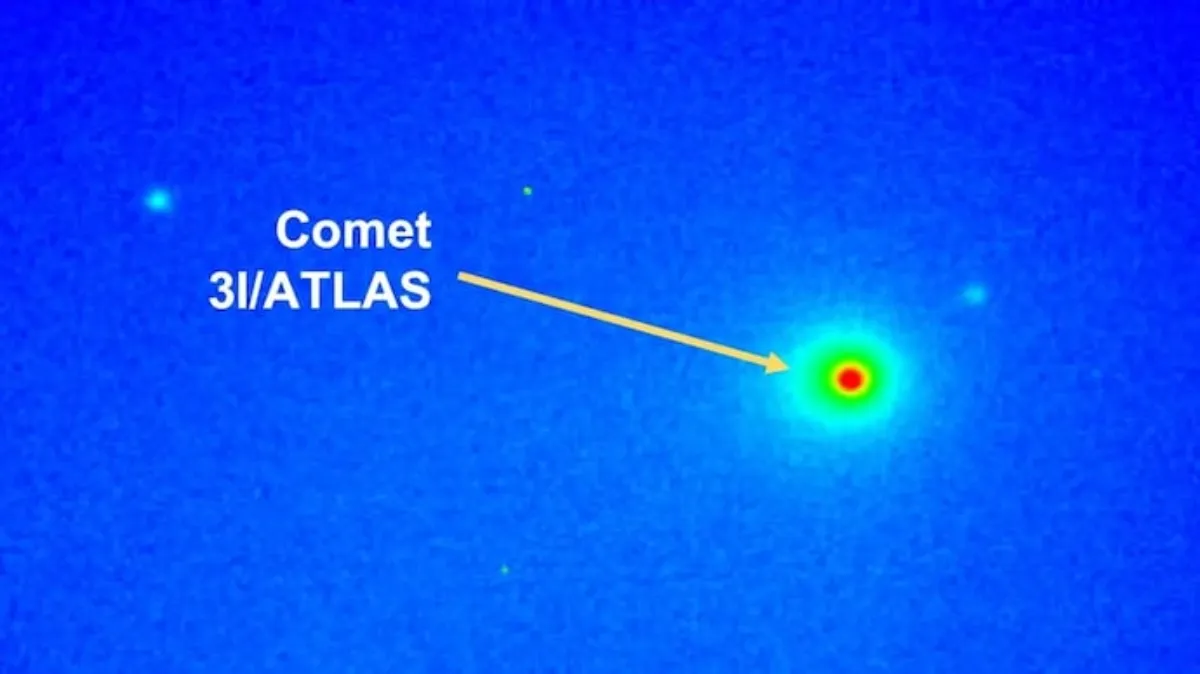
    Indian astronomers have recorded one of the rarest visitors ever seen in the sky. Scientists at the Physical Research Laboratory used the 1.2‑meter telescope at Mount Abu in Rajasthan to image and study the interstellar comet 3I/ATLAS for four nights starting on November 12, 2025.

    The object, which came from outside our solar system, had already passed its closest point to the Sun in late October and is now travelling outward on a one-way path into deep space.

    This makes 3I/ATLAS only the third confirmed interstellar object ever observed in our solar system. The first was ‘Oumuamua in 2017, followed by Comet Borisov in 2019. Unlike most comets, which come from the outer regions of our own system, this object formed around a different star before drifting into our neighborhood.

    The Mount Abu team captured images showing a faint but visible glow around the comet’s core. This glow forms when ice on the surface turns into gas and dust as it is warmed by sunlight. Even though the comet was already moving away from the Sun, it remained active enough to produce a clear cloud around its center.

    Researchers also split the comet’s light into its basic components to study what it is made of. Their data shows a higher level of carbon dioxide compared to water, which is unusual when compared to many comets from our own system. At the same time, it also contains familiar gases such as cyanide and other carbon-based compounds commonly detected in local comets.

    The comet was first discovered on July 1, 2025, by the ATLAS survey in Chile. Further tracking confirmed that it was moving far too fast to be held by the Sun’s gravity. Its stretched, open path shows that it did not originate here and will not return once it leaves.

    At the time of its closest pass, the comet was about 1.5 times farther from the Sun than Earth. While that distance kept it out of public view, it was still close enough for large telescopes to study its behavior and composition. This is why observations from high-altitude sites like Mount Abu were so important.

    Other observatories around the world, as well as instruments near Mars, also tracked 3I/ATLAS. By combining this data, scientists can compare an interstellar object to comets and asteroids formed around our own Sun. This helps them test how common certain materials may be in other star systems.

    Over the coming months, the comet will grow dimmer as it moves farther away from the Sun. By early 2026, it is expected to fade beyond the reach of most telescopes. After that, it will continue its long journey through interstellar space.

    For researchers, even a brief visit like this is important. Each interstellar object carries material from another part of the galaxy. Studying it, even for a short time, adds one more piece to the wider story of how planets and small bodies form around stars across the universe.

  • ISRO to Launch Indiaโ€™s Heaviest Satellite CMS-03 on November 2 Aboard LVM3-M5 Rocket

    ISRO to Launch Indiaโ€™s Heaviest Satellite CMS-03 on November 2 Aboard LVM3-M5 Rocket

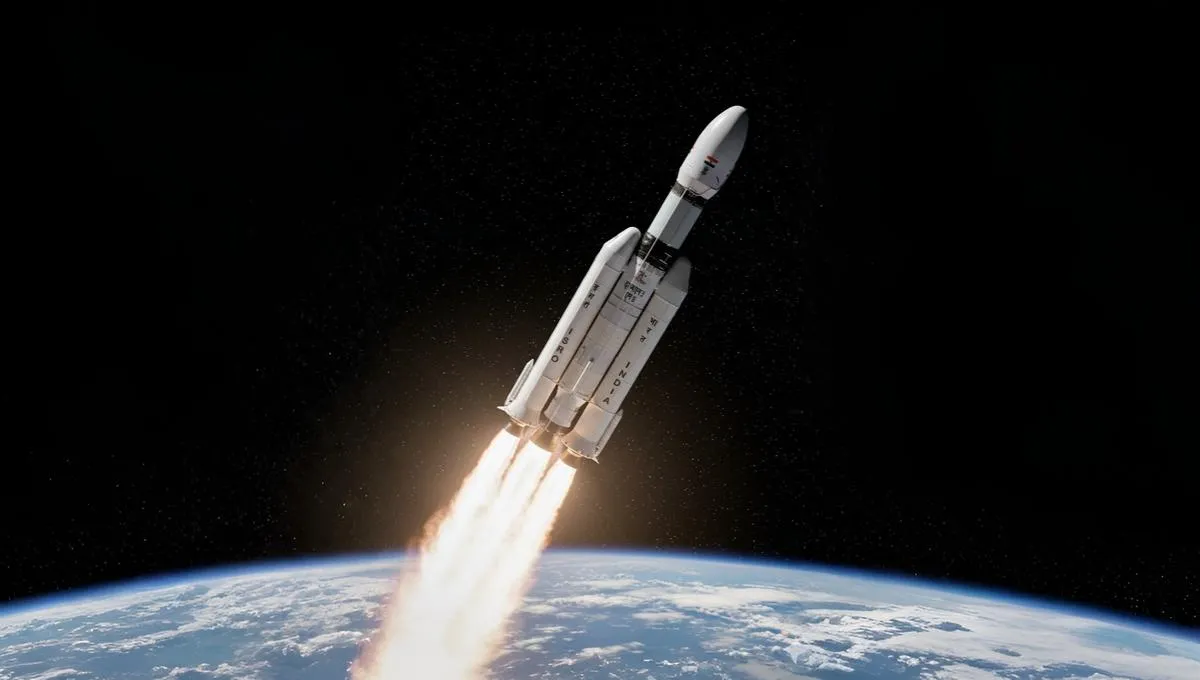
    The Indian Space Research Organization (ISRO) is preparing for a major launch that will boost the nation’s defense communication network. On November 2, 2025, ISRO will send the 4,400-kilogram CMS-03 satellite into orbit aboard the LVM3-M5 rocket from Sriharikota.

    The satellite, the heaviest communication satellite India has ever built, will strengthen secure links across the Indian Ocean and improve coordination for the Indian Navy.

    CMS-03, also known as GSAT-7R, will first enter a geosynchronous transfer orbit before being moved into a geostationary orbit about 36,000 kilometers above Earth. This orbit allows the satellite to remain over the same region, ensuring uninterrupted communication.

    ISRO designed CMS-03 to operate across multiple frequency bands, supporting secure voice, data, and video communications. The satellite acts as a central relay hub, connecting naval assets over large distances, including ships, submarines, and aircraft.

    The new satellite replaces GSAT-7, which was launched in 2013. While that earlier system handled basic communication, CMS-03 offers expanded bandwidth, faster data rates, and better security. It allows real-time data exchange across the Navy’s fleet, improving situational awareness and coordination.

    CMS-03 will also enhance India’s ability to monitor maritime activity in the Indo-Pacific, a region of growing strategic importance. By providing uninterrupted connectivity, the satellite supports both surveillance and tactical operations. It is also expected to help India strengthen communication links with friendly nations during joint naval exercises.

    Standing 43 meters tall, the LVM3 rocket is ISRO’s most powerful launcher. It uses two solid-fuel boosters for liftoff and a cryogenic upper stage powered by liquid hydrogen and oxygen for precise orbital placement. The mission aims to release the satellite into orbit about 16 minutes after launch.

    The LVM3 has completed seven consecutive successful flights, including the Chandrayaan-3 lunar mission in 2023. Engineers rolled the M5 vehicle to the launchpad last week, and final checks are underway. Weather conditions remain favorable, though late-season monsoon clouds could still affect visibility.

    A successful launch will further confirm the LVM3’s reliability and readiness for heavier payloads. ISRO plans to use upgraded versions of this rocket for upcoming Gaganyaan crewed missions. The agency also hopes to attract more international clients by showcasing the vehicle’s consistent performance.

    Beyond defense, satellites like CMS-03 play a broader role in national communication infrastructure. They help link remote regions, improve disaster response, and expand digital access. With this addition, India’s active satellite fleet now exceeds 50, supporting both civilian and military needs.

    The launch is scheduled for Sunday morning from the Satish Dhawan Space Centre. If all goes as planned, the fiery liftoff will mark another milestone in India’s growing space capabilities and its effort to secure the skies above its seas.

  • ISRO Internship & Student Project Trainee Schemes

    ISRO Internship & Student Project Trainee Schemes

    The ISRO Internship & Student Project Trainee Schemes are offered by the Department of Space/ISRO to students who want to get hands-on exposure in space science, technology, and applications. These schemes provide opportunities for undergraduate, postgraduate, and doctoral students to work at ISRO centers and units across India.

    What are the ISRO Internship & Student Project Trainee Schemes?

    The Internship Scheme is designed for students who want a short-term engagement in science or technology disciplines at ISRO. The Student Project Trainee Scheme addresses students who wish to carry out their academic project work, dissertation, or research work at ISRO units in offline mode. The project work is allotted based on availability of expertise, projects, and suitability of the studentโ€™s course to the work at the particular center/unit.

    Why Consider the ISRO Internship & Student Project Trainee Schemes?

    • Practical exposure: Work in an environment where space science and engineering are applied in real missions and research contexts.
    • Academic alignment: Carry out project work that may tie into final-year dissertations or advanced research.
    • Networking: Opportunity to interact with scientists, engineers, and researchers at ISRO centers.
    • Certification: Students receive a certificate of completion upon successful submission of the assignment report and evaluation by the division head.
    • National relevance: Situated within Indiaโ€™s premier space agency, these schemes help students understand how the science and engineering of space applications function operationally.

    Eligibility Criteria

    CriteriaDetails
    NationalityMust be an Indian citizen.
    Academic Status (Internship Scheme)UG/PG/PhD student (or completed within six months) from a recognized university/institution (India or abroad).
    Academic Status (Project Trainee Scheme)Depending on degree level.
    Minimum Academic RequirementAggregate minimum 60% or CGPA 6.32 on a scale of 10.
    Mode of StudyRegular, on-campus students (distance learning is not accepted in most cases).

    Internship Duration and Structure

    SchemeDurationRemarks
    Internship SchemeMaximum 45 days.Short-term exposure while enrolled or just after completion of studies.
    Student Project Trainee Scheme
    BE/BTechMinimum 45 days.
    ME/MTech or MSc (after 1st semester)Minimum 120 days.
    BSc/Diploma (final year only)Minimum 45 days.
    PhD (after coursework)Minimum 30 months.
    Longer-term work aligned to academic project requirements.

    How to Apply: Step-by-Step Process

    Prepare Required Documents

    • Updated resume or CV
    • Bonafide certificate or request letter from your department/institution
    • Academic transcripts (all semester mark sheets) showing CGPA or % aggregate
    • Valid photo identity proof (Aadhaar, college ID, etc.)
    • Permission letter/NOC from your institution if required

    Submit Your Application

    • Visit the official ISRO Internship & Student Project Trainee Schemes webpage on ISROโ€™s site
    • Some centres require sending the documents by email/post to the centreโ€™s HR/student-project division
    • Apply at least a few weeks in advance

    Wait for Confirmation

    • Applications are reviewed at the respective centre/unit based on project availability and suitability
    • If selected, you will receive confirmation with details of the assignment, duration, and other terms

    Complete the Internship/Project

    • Work on the assignment, submit your report or documentation at the end
    • A certificate will be awarded upon satisfactory completion of the project/internship and its evaluation

    What Will You Learn as an Intern or Project Trainee?

    While at an ISRO center, you may gain experience in areas such as

    • Space science and technology, instruments, remote sensing, satellite systems, data analysis
    • Engineering disciplines like electronics, mechanical, electrical, RF systems, digital systems
    • Application of theory to tasks that support Indian space missions and related operations
    • Professional research culture, teamwork and project development in a government-space agency context
    • This type of exposure can strengthen your academic portfolio, build your technical skills, and prepare you for future roles in space science, engineering, data science, or related fields.

    Contact Information

    Contact MethodDetails
    Websitehttps://www.isro.gov.in/InternshipAndProjects.html
    Email/PhoneContact details vary by ISRO center/unit; check the centerโ€™s internship/project traineeship page.
  • NASA and ISROโ€™s NISAR Satellite Sends First Radar Images of Earth

    NASA and ISROโ€™s NISAR Satellite Sends First Radar Images of Earth

    NASA and India’s ISRO have released the first radar images from their joint NISAR satellite, just weeks after its launch from Sriharikota on July 30, 2025. The mission, short for NASA-ISRO Synthetic Aperture Radar, sent back views of Mount Desert Island in Maine on August 21 and farmland in North Dakota two days later.

    Scientists say the data shows how the satellite can track land, crops, forests, and water with clarity unmatched by other Earth-observing missions.

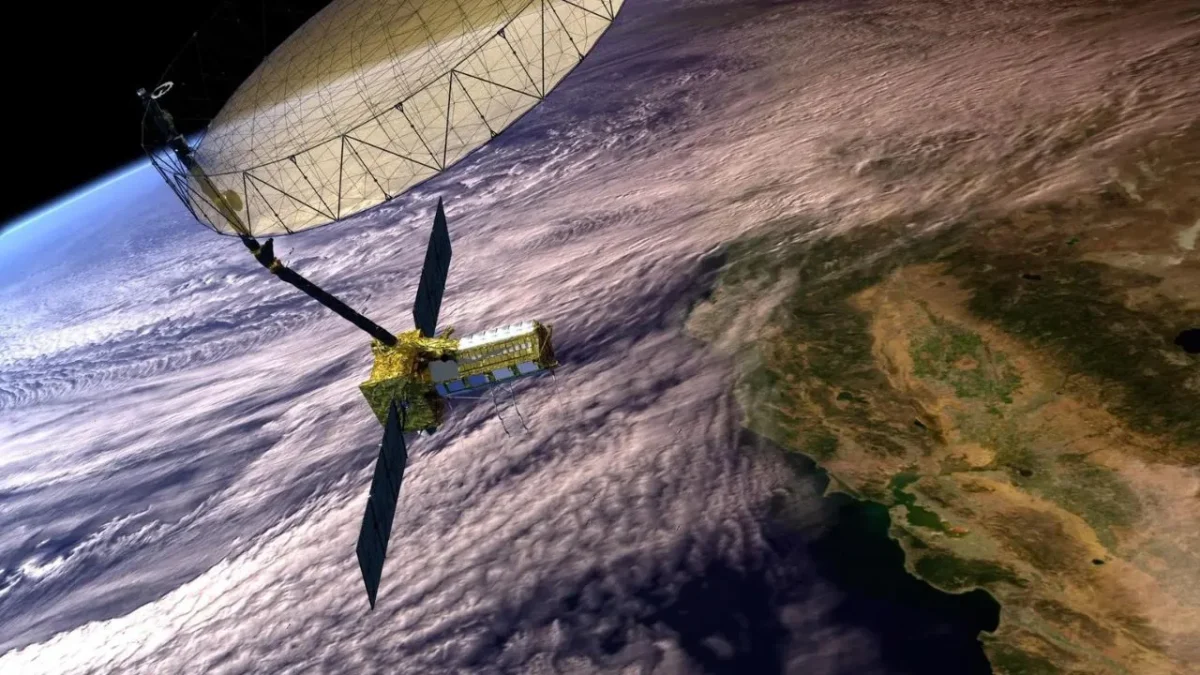
    NISAR is the first spacecraft to carry two radar systems at once. NASA’s L-band radar can detect deep changes in soil, ice, and forests, while ISRO’s S-band radar is tuned for monitoring crops and smaller vegetation. From its orbit 747 kilometers above Earth, NISAR scans nearly the entire planet every 12 days.

    Its 12-meter antenna, the largest NASA has launched, captures swaths 240 kilometers wide and can spot features as small as five meters. Unlike optical satellites, it works day or night and through cloud cover.


    The first images highlight what the system can do. In Maine, forests appeared in green, water in black, and buildings in magenta. In North Dakota, radar distinguished wetlands, forests, bare soil, and irrigated farmland, even showing circular crop patterns.

    Scientists say this ability to separate surface types will help track floods, droughts, deforestation, and melting ice, as well as measure ground shifts from earthquakes or landslides down to a centimeter.

    The mission represents nearly a decade of work between NASA’s Jet Propulsion Laboratory and ISRO. India provided the S-band radar, spacecraft bus, and launch on its GSLV-F16 rocket, while NASA contributed the L-band radar, antenna, and communications systems. Engineers on both sides say the successful deployment of the satellite’s antenna in orbit was a key milestone.

    NISAR is now in its commissioning phase, with full operations set to begin in November 2025. Once active, it will deliver open-access data for researchers worldwide. Scientists expect it to become one of the most detailed Earth-monitoring tools yet, helping governments and communities respond to disasters, manage resources, and understand climate change.

  • ISRO Successfully Tests Parachutes for Gaganyaan Human Spaceflight Mission

    ISRO Successfully Tests Parachutes for Gaganyaan Human Spaceflight Mission

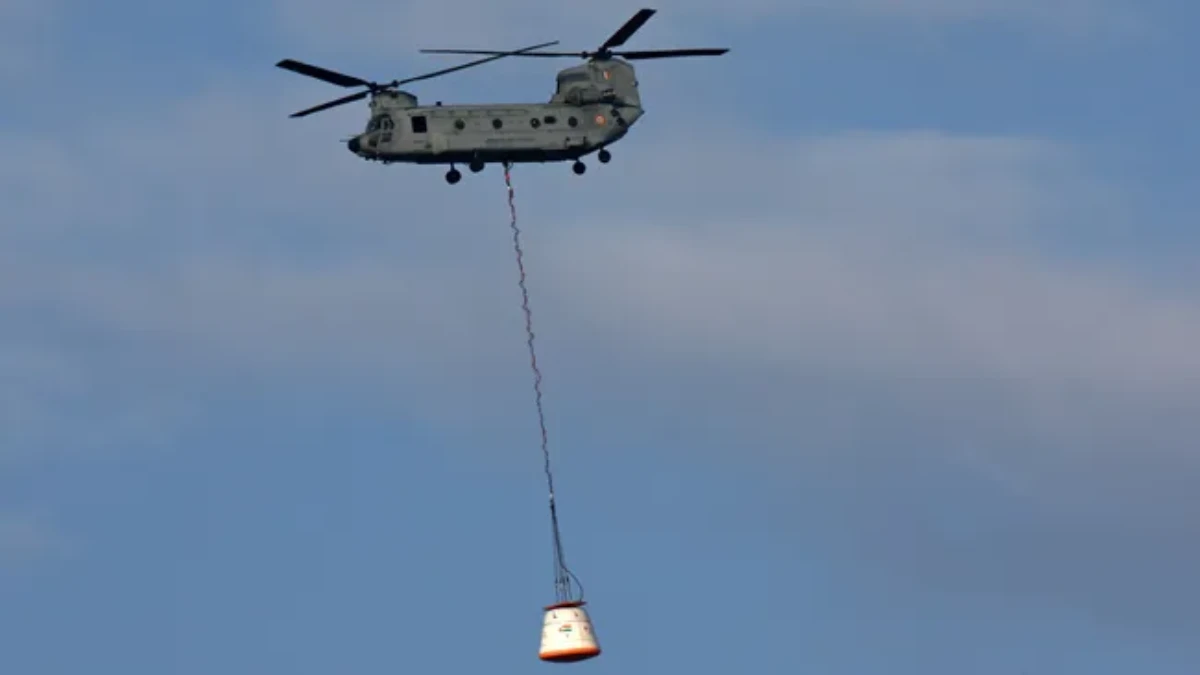
    India has taken a major step toward its first human spaceflight by successfully testing the parachute system for the Gaganyaan crew capsule. On August 24, 2025, engineers at the Satish Dhawan Space Centre dropped a 4.8-tonne mock capsule from an Indian Air Force helicopter flying three kilometers above the ground, reported ISRO.

    The test verified that the parachutes could slow the vehicle safely for splashdown in the Bay of Bengal, a key requirement before astronauts fly in 2027.

    The sequence began with two small pilot chutes pulling out drogue parachutes to stabilize the descent. Three large main parachutes then deployed, reducing the capsule’s speed to about 7 meters per second. The capsule touched down smoothly in the Bay of Bengal, where the Indian Navy retrieved it. The test also confirmed the system’s ability to handle emergency aborts, such as those during launch failures.

    Returning from orbit means decelerating from speeds of 27,000 kilometers per hour. The capsule’s heat shield handles the high temperatures during reentry, but below 10 kilometers parachutes take over.

    India’s design uses high-strength nylon canopies that fold into small compartments yet expand to nearly 30 meters across when deployed. The system follows proven approaches used by NASA’s Orion and Russia’s Soyuz but has been adapted for India’s HLVM3 rocket and mission profile.

    India plans four uncrewed flights before the first crewed mission. The first, G1, is scheduled for December 2025. It will carry Vyommitra, a half-humanoid robot designed to operate controls, monitor cabin systems, and communicate in Hindi and English. Vyommitra will act as a stand-in for astronauts, testing life support and mission procedures in space without risk to human life.

    Four Indian Air Force pilots, Prasanth Balakrishnan Nair, Ajit Krishnan, Angad Pratap, and Shubhanshu Shukla, were chosen for the mission. They have trained in Russia for survival techniques, studied spacecraft systems in India, and practiced operations in the United States.

    In June 2025, Shukla gained real orbital experience by flying on Axiom Space’s Ax-4 mission to the International Space Station (ISS). The team will eventually spend three days in a 400-kilometer orbit during Gaganyaan’s first human flight.

    The Gaganyaan program, first announced in 2018, was initially planned for 2022 but delayed by the pandemic and design changes. The target is now 2027 for the first crewed launch. According to the Indian Space Research Organisation (ISRO), more than 90 percent of hardware is complete. Funding has been secured for an additional uncrewed test, ensuring systems are fully validated before astronauts board.

    Gaganyaan is seen as a foundation for larger projects. ISRO has set goals of developing a national space station by 2040 and preparing for possible crewed missions beyond Earth orbit. The mission builds on India’s achievements, such as the Chandrayaan-3 Moon landing in 2023 and the Aditya-L1 solar observatory launched in 2024. If successful, India will join the United States, Russia, and China as the only nations to send humans into orbit with domestic technology.

    More drop tests and abort system drills are scheduled in 2025 and 2026, alongside the uncrewed Gaganyaan launches. These will clear the way for astronauts to fly in 2027. Beyond national prestige, the program aims to develop technologies for long-duration missions and future lunar exploration. For India, the parachute test marks not just the safe return of a capsule but an essential milestone on the road to human spaceflight.

  • New HOPE Simulation Facility in Ladakh to Support ISROโ€™s Future Crewed Missions

    New HOPE Simulation Facility in Ladakh to Support ISROโ€™s Future Crewed Missions

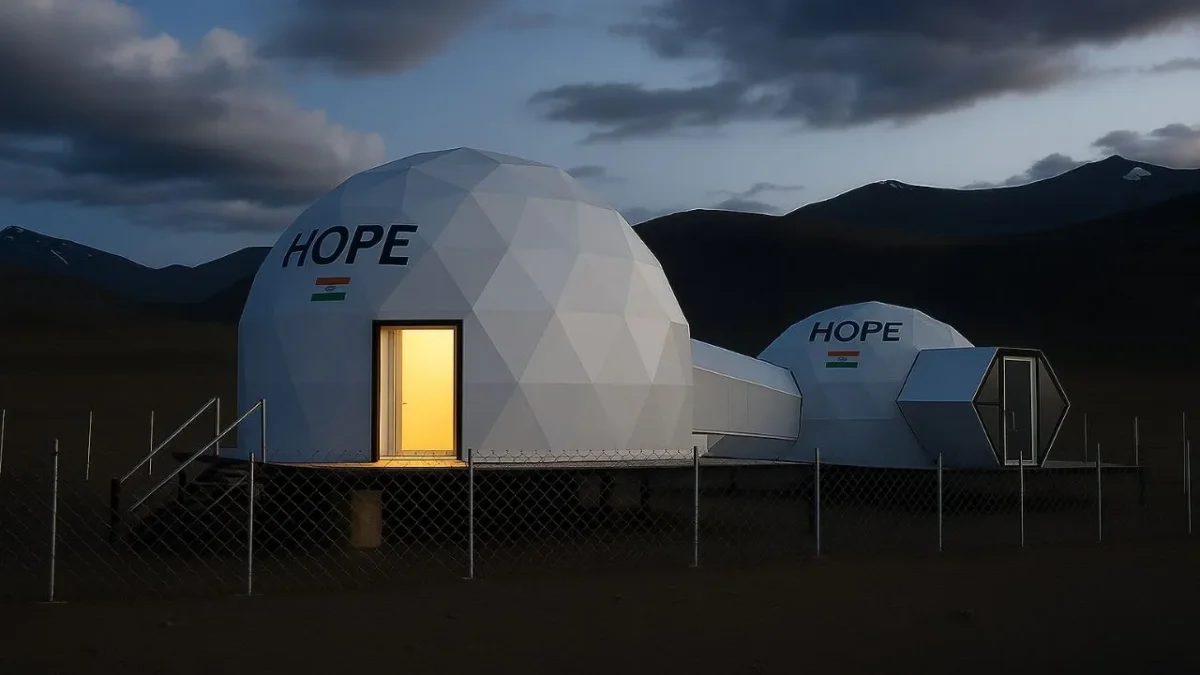
    India’s dream of sending astronauts to the Moon is taking a big step forward in the rugged, high-altitude desert of Ladakh. On August 1, 2025, the Indian Space Research Organisation (ISRO) inaugurated the Himalayan Outpost for Planetary Exploration (HOPE), a facility designed to mimic life on Mars or the Moon.

    Located 4.3 kilometers above sea level in Tso Kar Valley, the HOPE facility is built by Bengaluru-based Protoplanet with ISRO’s support. It includes an eight-meter habitat module for living and a five-meter utility module for operations. These interconnected units simulate the confined spaces astronauts might face on other planets.

    The site’s extreme cold, low air pressure, high ultraviolet radiation, and salty permafrost mirror conditions on early Mars, making it an ideal spot for research.

    ISRO's HOPE facility in Ladakh.
    ISRO sets up the HOPE space simulation facility in Ladakh. Image credit: ISRO

    “This analogue mission is more than a simulation; it is a rehearsal for the future,” said ISRO Chairman Dr. V. Narayanan at the inauguration. The facility will help scientists study how humans cope with isolation, stress, and physical challenges in space-like environments. This is critical for India’s plan to land astronauts on the Moon by 2040.

    The 10-day HOPE mission, running from August 1 to 10, 2025, involves two crew members living in the habitat. Researchers from institutions like the Indian Institute of Space Science and Technology and IIT Bombay are studying their physical and mental responses. They’re testing everything from health-monitoring tools to microbial analysis, ensuring astronauts can stay healthy during long missions.

    “This facility will be helping us mainly in the human spaceflight activities,” said Dr. V. Narayanan.

    Ladakh’s harsh terrain isn’t new to space research. Last year, ISRO’s Human Space Flight Centre ran the Ladakh Human Analog Mission, followed by a 10-day isolation study in Bengaluru. These efforts are building significant data on how Indian astronauts handle space-like conditions, a key step for the Gaganyaan mission and a planned space station by 2035.

    The project isn’t just about science. Protoplanet partnered with Mahindra Automobiles for mobility support and leaned on expertise from The Mars Society and Mars Society Australia, who’ve built similar facilities in deserts and the Arctic. This collaboration shows India’s space sector opening up to private players, a shift backed by Prime Minister Narendra Modi.

    At a cost of just Rs 1 crore, HOPE is a budget-friendly way to prepare for space missions, compared to the Rs 550 crore spent on a 20-day International Space Station trip of Shubanshu Shukla. While it can’t simulate microgravity, the facility covers nearly every other aspect of extraterrestrial life. Dr. Narayanan plans to visit soon to see its potential firsthand.

    India’s space ambitions are soaring, with eight new missions approved, including crewed missions like Gaganyaan. The HOPE facility is a vital piece of this puzzle, offering a glimpse into what it takes to live on another world.

  • NISAR Satellite Successfully Launched on July 30 Aboard ISROโ€™s GSLV-F16

    NISAR Satellite Successfully Launched on July 30 Aboard ISROโ€™s GSLV-F16

    India successfully launched the NASA-ISRO NISAR satellite on July 30, 2025, at 5:40 PM IST from the Satish Dhawan Space Centre in Sriharikota, Andhra Pradesh. The mission lifted off aboard the GSLV-F16 rocket.

    The NASA-ISRO Synthetic Aperture Radar (NISAR) mission is a joint project by the Indian Space Research Organisation (ISRO) and NASA.

    Itโ€™s built to change how we observe Earth by collecting detailed data on land, ice, and vegetation. Scientists will use this information to monitor natural disasters, track changes in climate, and study farming patterns.

    The countdown began at 2:10 PM IST on July 29, with ISRO confirming that final preparations were underway. NISAR is one of the most advanced satellites ever made for studying Earth. It carries two Synthetic Aperture Radars (SARs) that work at different radio frequenciesโ€”L-band and S-band.

    This is the first time a satellite has used both together. These radars can see through clouds, rain, and darkness, capturing clear images of Earthโ€™s surface every six days at each point and globally every 12 days.

    FeatureDetails
    Satellite nameNISAR (NASA-ISRO Synthetic Aperture Radar)
    Launch dateJuly 30, 2025
    Launch time5:40 PM IST
    Launch siteSriharikota, India
    Launch vehicleGSLV-F16
    Orbit altitude747 km
    Weight2,393 kg
    Data output~80 terabytes per day
    Mission cost$1.5 billion (NASA: $1.16B, ISRO: $90M)

    A Unique Dual-Radar System

    What sets NISAR apart is its use of two radar systems on the same satellite. Radar works by sending out microwave signals and collecting the echoes that bounce back. In space, SAR technology allows these systems to function like large ground-based radar antennas. NISARโ€™s 12-meter antenna, provided by NASA, can produce images as clear as those from a 20-km-wide ground system.

    The L-band radar can detect changes beneath tree cover, sand, or ice. This makes it useful for mapping forests and measuring the amount of carbon stored in them. The S-band radar focuses on wider features like fields and water bodies. It can monitor the growth of crops such as sugarcane or soybean, especially in India. These two systems work together, capturing the same area at the same time from different angles. This provides a level of detail not possible with a single radar.

    The satellite is expected to generate about 80 terabytes of data each day, three times more than any previous satellite in its category. Placing two different radar systems on one platform required careful planning to prevent interference between their signals. This is one of the reasons the satellite took more than 15 years to complete.

    A Milestone in Indiaโ€“US Collaboration

    The NISAR satellite being loaded atop ISRO's GSLV rocket.
    NISAR satellite being loaded atop ISRO’s GSLV rocket for launch. Image credit: X/ISRO

    NISAR is the first satellite developed jointly by ISRO and NASA. The idea began in 2007, when NASA proposed a mission to study how Earthโ€™s surface is changing. ISRO officially joined the project in 2012, contributing its own research goals. NASA supplied the L-band radar, GPS systems, and the 12-meter antenna, spending around $1.16 billion. ISRO provided the S-band radar, the GSLV-F16 rocket, and launch support, contributing about $90 million.

    The mission builds on earlier collaborations between the two space agencies, such as NASAโ€™s instrument on ISROโ€™s Chandrayaan-1 lunar mission. Today, NISAR reflects growing cooperation between India and the US in space research. Both agencies will manage and share satellite data from their ground stations.

    Applications and benefits

    NISAR will provide centimeter-level accuracy in observing changes across Earthโ€™s surface. Its data will be useful for:

    • Mapping land shifts caused by earthquakes, landslides, or volcanic activity
    • Tracking ice sheet movements in Antarctica and Greenland
    • Measuring forest biomass and deforestation in the Amazon and other regions
    • Monitoring crop development and estimating yields in Indian agriculture
    • Supporting disaster response efforts with timely satellite imagery

    All collected data will be freely available to researchers and institutions around the world.

    The GSLV-F16 Rocket

    ISRO's GSLV rocket on the launchpad at night.
    ISRO’s GSLV rocket carrying the NISAR satellite standing on the launchpad. Image credit: ISRO

    The GSLV-F16 is a 51-meter-tall rocket that weighs about 420 tons. Itโ€™s designed to carry large satellites like NISAR. The rocket has three stages: a solid-fuel core, four liquid-fuel boosters, and an upper stage powered by cryogenic fuel. Indiaโ€™s cryogenic engine technology, once imported, is now developed locally and has shown strong performance with over 80% success in recent launches.

    At liftoff, the solid stage and boosters fire first, followed by the cryogenic stage, which places NISAR into a 747-km orbit. Once in space, the satelliteโ€™s antennas will unfold and begin operating.

    Development and Cost

    NISAR took more than 15 years to develop. The project faced several delays, especially during the COVID-19 pandemic. One of the biggest technical challenges was combining two different radar systems without causing signal problems. The mission cost about $1.5 billion, with the bulk of the funding from NASA. Despite the cost, the scale and quality of data NISAR will provide makes it one of the most capable Earth-observing satellites ever launched.

    NISARโ€™s launch marks a turning point for Earth observation and international space cooperation. Itโ€™s expected to become an important tool for researchers, governments, and emergency teams around the world. Whether it’s tracking glacier loss, mapping farmlands, or spotting floods, NISAR will help people understand and respond to changes on our planet.

    ISRO will stream the launch live starting at 5:10 PM IST on July 30. All eyes will be on Sriharikota as NISAR begins its mission to study Earth in new detail.

  • ISRO Transfers 10 Advanced Technologies to Indian Private Companies

    ISRO Transfers 10 Advanced Technologies to Indian Private Companies

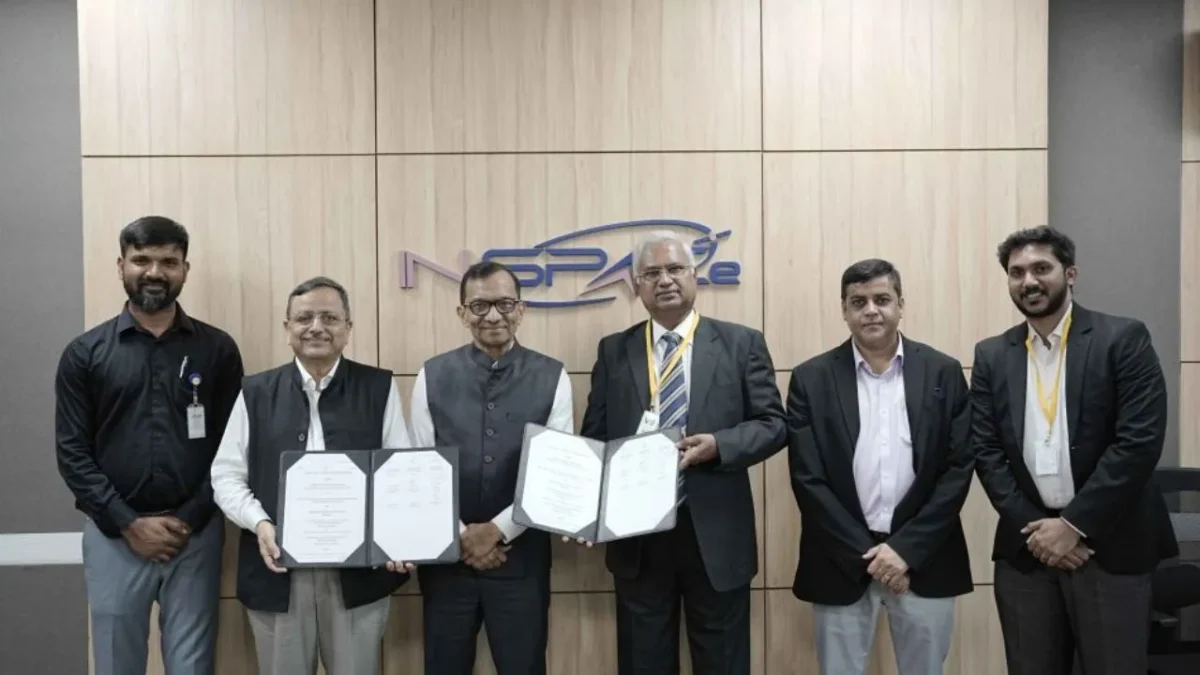
    The Indian Space Research Organisation (ISRO) has transferred 10 groundbreaking space technologies to six Indian companies, boosting the nationโ€™s push for a self-sufficient space industry. Signed on July 3, 2025, in Ahmedabad, these agreements empower private firms to harness ISROโ€™s expertise, fueling innovation and cutting reliance on foreign tech.

    Coordinated by the Indian National Space Promotion and Authorisation Centre (IN-SPACe) and NewSpace India Limited (NSIL), the transfers cover a wide range of tools, from navigation systems to agricultural forecasting models. โ€œThis is a game-changer: Indian companies now have the keys to ISROโ€™s advanced tech, setting the stage for a thriving, homegrown space sector,โ€ said Pawan Goenka, IN-SPACe chairman.

    In Hyderabad, Zetatek Technologies takes on two navigation marvels from ISROโ€™s Inertial Systems Unit: a laser gyroscope and a ceramic servo accelerometer. These precision instruments, which were previously imported, will now be manufactured in India for use in satellite launches, marking a significant milestone.

    Meanwhile, Hyderabadโ€™s Avantel and Jisnu Communications gain three ground station systemsโ€”S/X/Ka tri-band dual circular polarized monopulse feed, tri-axis antenna control servo system, and Ku/C/L and S Band Cassegrain feedโ€”to bolster communication networks for space and defense.

    Over in Ahmedabad, Amnex Info Technologies secures two ISRO-developed geospatial tools from the Space Applications Centre to predict crop yields and monitor pests, offering farmers smarter ways to plan. Jalkruti Water Solutions picks up a portable bathymetry system from the National Remote Sensing Centre, enabling drone-based water body surveys.

    Ramdev Chemicals, also in Ahmedabad, inherits a ceramic-based flame-resistant coating from the Vikram Sarabhai Space Centre, originally designed for launch vehicles but now ready for wider industrial use.

    This move builds on Indiaโ€™s recent space reforms, including the โ‚น511-crore transfer of Small Satellite Launch Vehicle (SSLV) technology to Hindustan Aeronautics Limited (HAL). โ€œISROโ€™s treasure trove of research is now fueling Indiaโ€™s private sector, creating a robust space ecosystem,โ€ Goenka noted. The initiative aims to spark innovation, reduce import dependency, and position India as a global space tech leader.

    With these technologies in private hands, Indiaโ€™s space industry is set to soar. Over 250 startups have sprung up since 2014, and ISROโ€™s programs are delivering โ‚น2.54 for every rupee invested. As India eyes bold goals like Bharatiya Antariksh Station by 2030, these partnerships mark a new chapter of innovation and independence.

  • India to Launch 52 Defence Satellites to Boost Armed Forces amid Operation Sindoor

    India to Launch 52 Defence Satellites to Boost Armed Forces amid Operation Sindoor

    In the aftermath of Operation Sindoor, the Indian government plans to fast-track its ambitious plan to launch 52 defense surveillance satellites by 2029. With a budget of Rs 26,968 crore, the mission is designed to expand Indiaโ€™s space-based monitoring, especially along its borders with China and Pakistan and across the Indian Ocean Region.

    In October last year, the Prime Minister Narendra Modi-led Cabinet Committee approved this funding under the Space-Based Surveillance Programme Phase 3 (SBS-III), aiming to develop and deploy next-generation satellites over the next decade.

    The SBS-III project is led by the Defence Space Agency under the Integrated Defence Staff of the Ministry of Defence. In parallel, the Indian Air Force is acquiring high-altitude pseudo satellites (HAPS) to enhance its intelligence and surveillance capabilities even further.

    As part of Phase 3 of the SBS program, ISRO will be responsible for launching 21 satellites. The remaining 31 will be built and deployed by three private companies. The satellites will operate in both low Earth orbit and geostationary orbit, which will enable faster revisit times and higher resolution tracking. The first launch is scheduled for April 2026, and full deployment is expected by the end of 2029.

    This new satellite constellation will provide real-time imagery to Indiaโ€™s Army, Navy, and Air Force, giving them the ability to detect troop movements, monitor airfields, and track staging zones well before threats approach the border.

    Chief of Integrated Defence Staff, Air Marshal Ashutosh Dixit, emphasized the importance of early detection, saying, โ€œWe must detect, identify, and track potential threats when they are still in their staging areas, airfields, and bases, deep within an adversaryโ€™s territory.โ€

    A standout feature of this mission is the involvement of private industry. For the first time, ISRO will transfer its small satellite launch vehicle (SSLV) technology to private firms, enabling rapid launches during emergency situations.

    The initiative is a direct response to Chinaโ€™s expanding military presence in space, which now includes anti-satellite missiles, electronic warfare tools, and directed energy weapons. India, meanwhile, is refining its own space strategy to meet these emerging challenges, and the satellite network is a key part of that effort.

    Operation Sindoor highlighted the critical role of space-based intelligence. In May 2025, India relied on Cartosat, RISAT, and commercial satellites to track enemy movements. While useful, the operation revealed coverage gaps and slower revisit times. The new satellite constellation under SBS-III is meant to close those gaps and improve situational awareness across all fronts.

    This mission is not just about adding more satellites. It is a step toward building a protective shield in space that can neutralize evolving threats from adversaries. It gives India an edge by enabling faster decisions and preemptive actions.

    Launching the first satellite in April 2026 is an aggressive target, but necessary. In a future where timing can define outcomes, launching before a conflict begins could be the difference between a strong defense and a late response.

  • Skyroot Aerospace brings in Former ISRO chief Dr. Somanath as technical advisor
    Skyroot Aerospace brings in Former ISRO chief Dr. Somanath as technical advisor
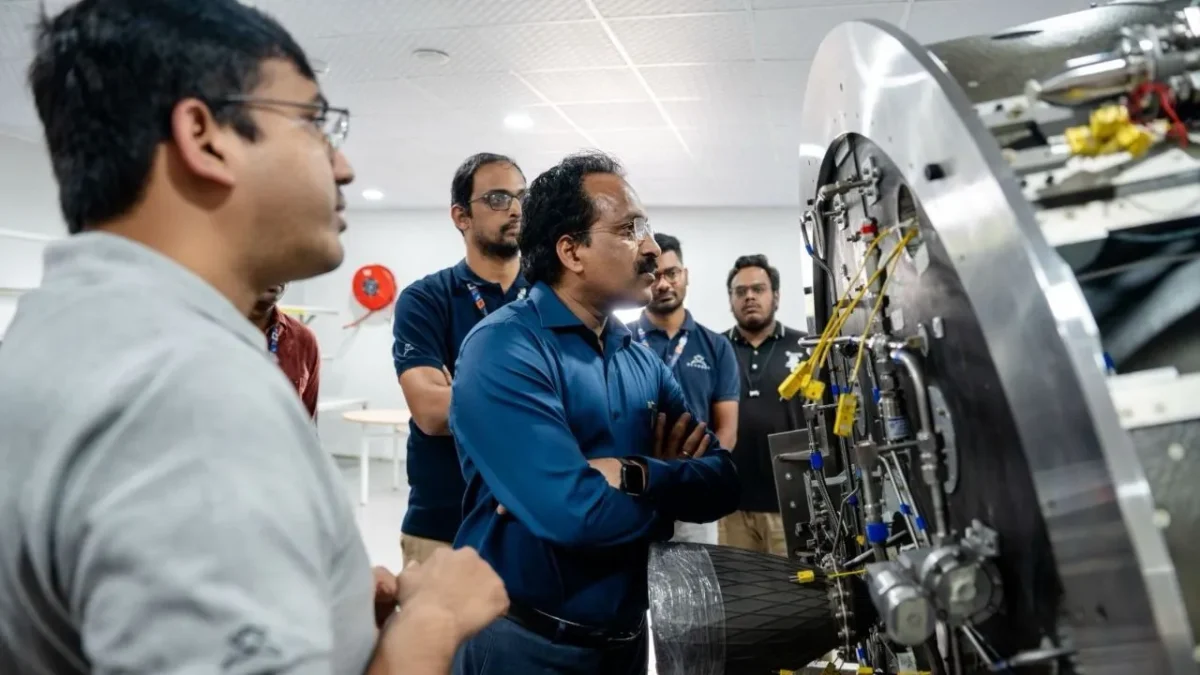
    In a bold move, a Hyderabad-based private space startup, Skyroot Aerospace, has appointed former ISRO chief Dr. S. Somanath as its honorary chief technical advisor ahead of its first orbital-class rocket launch, bringing decades of launch-vehicle expertise to the company.

    Dr. S. Somanath, known for directing ambitious projects like India’s Chandrayaan-3 lunar mission, has joined Skyroot Aerospace as its technical advisor ahead of its inaugural flight of its Vikram-1 satellite launch vehicle. The appointment, announced on 26 June 2025, is non-exclusive and unpaid, allowing him to pursue other engagements.

    About Skyroot Aerospace

    Skyroot Aerospace Private Limited is a private Indian aerospace manufacturer and commercial launch service provider headquartered in Hyderabad, Telangana. With launch vehicles like Vikram-1, a 23 m, carbon-composite, multi-stage orbital launcher featuring a liquid-engine Orbital Adjustment Module, the startup aims to enter the commercial satellite-launch business.

    Bringing in a veteran like Dr. S. Somanath, who led ISRO from January 2022 to January 2025 and oversaw major missions like Chandrayaan-3, Aditya-L1, SSLV, and RLV, gives Skyroot deep technical insight. His advisory support during this critical phase could prove decisive.

    The company quickly gained recognition following the re-entry tests of its Vikram-S rocket. Since then, it has raised approximately USD 95 million, including USD 27.5 million in late 2023, to develop a range of small satellite launch vehicles. These include the Vikram-I, II, and III, which are designed for flexible and rapid commercial launches.

    Additionally, the firm has recently secured a partnership with U.S.-based Axiom Space to explore opportunities for satellite deployment and low-Earth orbit missions, highlighting its global ambitions.