Tag: ISRO

  • ISRO’s Bharatiya Antariksh Hackathon 2025 is here; Apply now!

    ISRO’s Bharatiya Antariksh Hackathon 2025 is here; Apply now!

    The registrations for the Bharatiya Antariksh Hackathon (BAH) 2025 have begun. This year’s hackathon was launched on June 18, 2025, by Dr. V. Narayanan, Secretary of the Department of Space and Chairman of ISRO.

    Organized by the Indian Space Research Organisation (ISRO), the BAH was launched in 2024 with the goal of inspiring young minds to engage in space research and technology and to develop innovative solutions to significant challenges in the field. The BAH offers a fantastic opportunity for young talent to showcase their skills, tackle real-world problems, and potentially secure an internship with ISRO.

    Whatโ€™s New in the 2025 Edition?

    This yearโ€™s hackathon brings 14 problem statements across modern cutting-edge domains, including geospatial technology, space science, image processing, artificial intelligence, and machine learning.

    Who Can Participate?

    Students pursuing undergraduate, postgraduate, or PhD programs in India are eligible. This is your chance to work on problems that matter and create tech that could one day be used by ISRO scientists.

    Note: Working professionals and non-students are not eligible for the hackathon.

    Why should you participate?

    • Learn from the Best: Youโ€™ll be mentored by scientists and experts from ISRO who will guide you through the entire process.
    • Build a Strong Network: Connect with bright minds, researchers, and professionals from academia, industry, and the space sector.
    • Internship at ISRO: Top-performing participants stand a chance to bag internships at ISRO, working on real projects alongside top engineers and scientists.
    • National Recognition: Your work will be showcased on a national stage. Itโ€™s a major boost for your academic and career profile.

    How to Participate?

    • Registration: Head to the official ISRO hackathon portal and sign up before July 9.
    • Form a Team: Gather 3 to 4 like-minded individuals. Participants can belong to different institutions but must form a team within the allowed size limit.
    • Pick a Challenge: Choose one of the problem statements listed on the hackathon website.
    • Start Building: Develop your solution using your skills and mentor guidance.
    • Submit Your Idea: Once ready, submit it for review by ISROโ€™s expert panel.

    Challenges

    Here are the challenges you can choose from:

    • Forest Fire Spread Simulation using AI/ML.
    • Building an AI-based help bot for information retrieval out of a knowledge graph created based on static/dynamic content at a web portal.
    • Satellite-based air pollution monitoring using satellite observations, ground data, reanalysis datasets, and AI/ML.
    • Designing an LLM system for solving complex spatial analysis tasks through intelligent geoprocessing orchestration.
    • Using diffusion models for predicting cloud motion with INSAT-3DR/3DS imagery.
    • Using AI/ML to detect changes in glacial lakes, roadways, and drainage systems via multi-source satellite imagery.
    • Build an application providing granular, real-time, and predictive air quality insights for underserved regions.
    • Propose novel methods to handle imbalanced datasets in Earth observation for improving deep learning outcomes.
    • Developing an ML algorithm to detect and classify tropical cloud formations using half-hourly INSAT satellite data.
    • Using particle data from the SWIS-ASPEX payload aboard Aditya-L1 to identify coronal mass ejection (CME) events.
    • Creating a technique to detect landslides and boulders on the Moon using imagery from Chandrayaan missions.
    • Using dual-image super-resolution and blind evaluation methods to enhance optical satellite imagery resolution.
    • Generate high-resolution Digital Elevation Models (DEMs) of the lunar surface using shape-from-shading techniques.
    • Developing a robust multi-temporal analysis system using LISS-4 imagery for user-defined areas of interest (AOI).

    Hackathon Timeline

    The timeline of the hackathon is as follows:

    • June 18โ€“July 9: Registrations and idea submissions
    • June 25: Problem Statement Explainer Session 1
    • June 26: Problem Statement Explainer Session 2
    • June 27โ€“July 4: Mentor-mentee interactions
    • July 24: Announcement of shortlisted teams.
    • August 7-8: Grand Finale at NRSC, JD Metla Campus, Hyderabad

    Contact Information

    Contact MethodDetails
    Emailisrobah2025support@hack2skill.com
    DiscordJoin Discord Server

    Register now, and be sure to bookmark this page so you won’t miss any updates!

  • ISRO MCF Summer Internship: Check Eligibility, Application Process and More

    ISRO MCF Summer Internship: Check Eligibility, Application Process and More

    The Indian Space Research Organisationโ€™s Master Control Facility (ISRO MCF) in Hassan, Karnataka, offers a coveted summer internship for students eager to explore the world of satellite management and space technology. Undergraduate, graduate, and doctoral students have a rare opportunity to become fully involved in the real-time operations that support India’s space missions through this program.

    What is the ISRO MCF Internship?

    The ISRO MCF Internship is designed for students who want to gain practical exposure in satellite control, space communications, and mission operations. MCF serves as the focal point for ISRO’s satellite operations, handling everything from mission planning and orbit management to satellite tracking.

    At MCF, interns have the opportunity to work alongside seasoned ISRO professionals, participate in meaningful projects, and even receive professional guidance while working on their final year projects or academic dissertations.

    Why Consider the ISRO MCF Internship?

    • Real-World Experience: Interns are involved in live satellite missions and ground station operations.
    • Mentorship: Direct interaction and guidance from ISROโ€™s expert scientists and engineers.
    • Academic Integration: Students can fulfill their academic project requirements under the supervision of ISRO professionals.
    • Professional Networking: Build connections with top experts in Indiaโ€™s space sector.
    • Official Certification: Receive a recognized certificate from ISRO-MCF after successful completion.
    • No Cost: The internship is free. There are no application or training fees.

    Eligibility Criteria

    CriteriaDetails
    NationalityMust be an Indian citizen
    Academic StatusCurrently enrolled in UG, PG, or PhD program (India or abroad), or completed UG/PG within the past 6 months
    Academic ProgressBE/BTech: At least 6 semesters completed; ME/MTech/MSc: At least 1 semester completed
    Minimum Marks60% aggregate or CGPA of 6.32/10
    Mode of StudyMust be a regular, on-campus student (distance learning not accepted)
    Age LimitNo age restriction; recent graduates (within 6 months) are eligible

    Internship Duration and Structure

    TypeDurationPurposeLocation
    Short-Term Internship15โ€“45 daysIdeal for summer/winter breaks or short academic internshipsOffline at MCF, Hassan
    Project Work45โ€“120 daysFor final-year projects, dissertations, or in-depth researchOffline at MCF, Hassan

    How to Apply: Step-by-Step Process

    Gather Required Documents

    • Updated resume or CV
    • Permission/request letter from your department head or institution
    • No Objection Certificate (NOC) from your college/university
    • Copies of all semester mark sheets
    • Valid ID proof (Aadhaar or college ID)
    • Recent passport-sized photo

    Submit Your Application

    • Visit the official MCF internship portal (see the ISRO MCF website).
    • Download and fill out the application form as instructed.
    • Attach all necessary documents.
    • Make sure to apply at least 15 days before your intended start date.

    Wait for Confirmation

    • Selected candidates will be notified via email or phone.
    • If you donโ€™t hear back within 10โ€“15 days, you can follow up with MCF.

    What Will You Learn as an Intern?

    Interns at MCF are exposed to a variety of critical operations, including:

    • Satellite monitoring and control
    • Telemetry and telecommand systems
    • Orbit management and mission planning
    • Ground station operations
    • Spacecraft health assessment
    • Real-time troubleshooting during mission operations

    This hands-on experience is especially valuable for those interested in careers in aerospace, electronics, communications, or computer science.

    Contact Information

    Contact MethodDetails
    Phone08172-273146
    Emailhead.bacs.ppe@mcf.gov.in
    AddressMaster Control Facility (MCF), ISRO, Dept. of Space, Salagame Road, Hassan โ€“ 573201

    End Note

    Students have a unique opportunity to obtain first-hand knowledge of satellite operations and space technology through the ISRO MCF Summer Internship. This program serves as a strong pillar for future space professionals and offers no fees, real project involvement, and direct mentoring. For those who wish to participate in India’s space journey, early application is advised due to limited slots.

  • ISRO Faces Setback: PSLV-C61/EOS-09 mission fails due to an Anomaly

    ISRO Faces Setback: PSLV-C61/EOS-09 mission fails due to an Anomaly

    The Indian Space Research Organisation (ISRO) faced a rare setback as its trusted workhorse, the Polar Satellite Launch Vehicle (PSLV C-61), failed for the first time in 8 years and for the third time in 32 years.

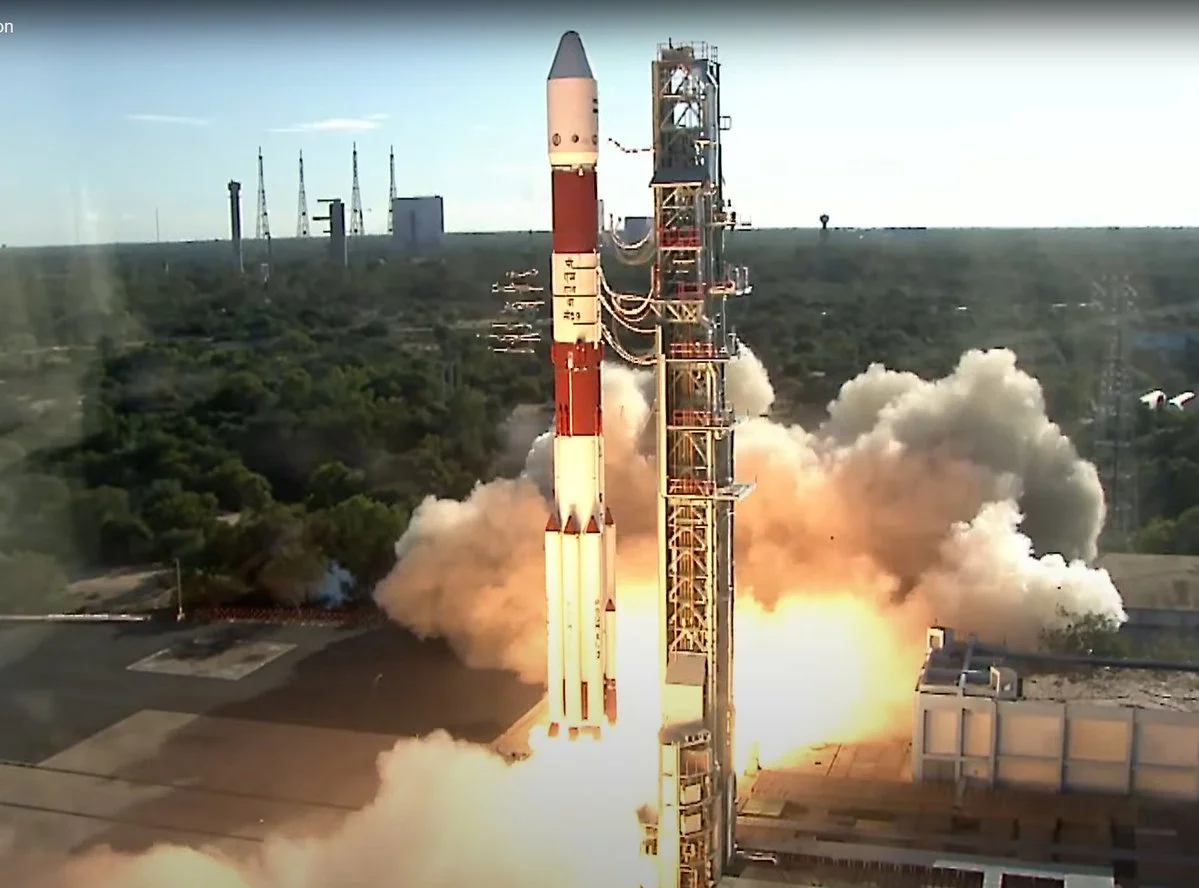
    The PSLV-C61 rocket launched from the Satish Dhawan Space Centre in Sriharikota (SDSC) SHAR on May 18, 2025, at 5:59 AM IST, marking ISRO’s 101st mission and PSLV’s 63rd flight. The PSLV-C61/EOS-09 mission aimed to deploy the Earth observation satellite (EOS-09) into a sun-synchronous polar orbit.

    The first and second stages of the Polar Satellite Launch Vehicle (PSLV) operated as expected. During the third stage, an anomaly caused a drop in chamber pressure within the motor case, resulting in mission failure and the loss of the EOS-09 satellite.

    ISRO chairman V. Narayanan announced, “The first two stages were completed successfully. However, an anomaly was observed in the third stageโ€”a drop in chamber pressure in the motor case. Once we identified the issue, we (ISRO) realized the mission could not be accomplished.” “After analysis, we shall come back,” he added.

    The lost satellite, EOS-09, was designed to provide continuous and reliable remote sensing data for operational applications across various sectors. The satellite was intended to operate alongside its predecessor, EOS-04, to guarantee a smooth continuation of crucial microwave data in the C-band, thereby improving Earth observation capabilities.

    The radar payload was designed to monitor essential applications, including agriculture, forestry, and plantations, under all weather conditions. It was also intended to assess flooding across the nation and evaluate surface water spread. However, the PSLV failure has resulted in a significant setback for this mission. As of the time this article was published, there have been no other updates regarding the failure or any plans for replacement missions.

  • ISRO’s GSLV-F15 launches from Sriharikota marking historic 100th rocket launch

    ISRO’s GSLV-F15 launches from Sriharikota marking historic 100th rocket launch

    The Indian Space Research Organisation (ISRO) achieved a significant milestone on January 29, 2025, with the successful launch of its 100th rocket mission from the Satish Dhawan Space Centre in Sriharikota. This historic event marked not only a century of launches from this spaceport but also the first mission under the leadership of ISRO’s new chairman, V. Narayanan.

    The GSLV-F15 rocket lifted off at 6:23 AM IST, carrying the NVS-02 satellite, part of India’s second-generation Navigation with Indian Constellation (NavIC) system.

    The NVS-02 was successfully deployed into a Geosynchronous Transfer Orbit (GTO) approximately 19 minutes post-launch. The organization later shared the onboard footage of the stage separation and satellite deployment on X (formerly Twitter).

    This satellite is designed to enhance navigation services across India and extends up to 1,500 kilometers beyond its borders.

    With a lift-off mass of 2,250 kilograms, NVS-02 incorporates advanced technology, including a Rubidium Atomic Frequency Standard for precise timekeeping and navigation payloads operating on multiple frequency bands (L1, L5, and S bands).

    This launch is particularly noteworthy as it showcases ISRO’s advancements in cryogenic technology. The GSLV-F15 is the 11th flight utilizing an indigenous cryogenic stage. The rocket’s payload fairing has a diameter of 3.4 meters and is crucial for increasing payload capacity during launches.

    This historic launch reflects nearly five decades of progress since its first major launch in 1979. ISRO continues to inspire with its ambitious goals and commitment, such as Gaganyaan and Chandrayaan 4, to advance India’s position in global space endeavors through future space missions.

  • ISRO’s SpaDeX Mission Concludes Successfully, Paving the Way for India’s Advanced Space Operations

    ISRO’s SpaDeX Mission Concludes Successfully, Paving the Way for India’s Advanced Space Operations

    The Indian Space Research Organisation (ISRO) has successfully completed its Space Docking Experiment (SpaDeX) mission, marking a significant milestone in India’s space capabilities. This achievement positions India alongside the United States, Russia, and China in demonstrating autonomous space docking and de-docking technologies.

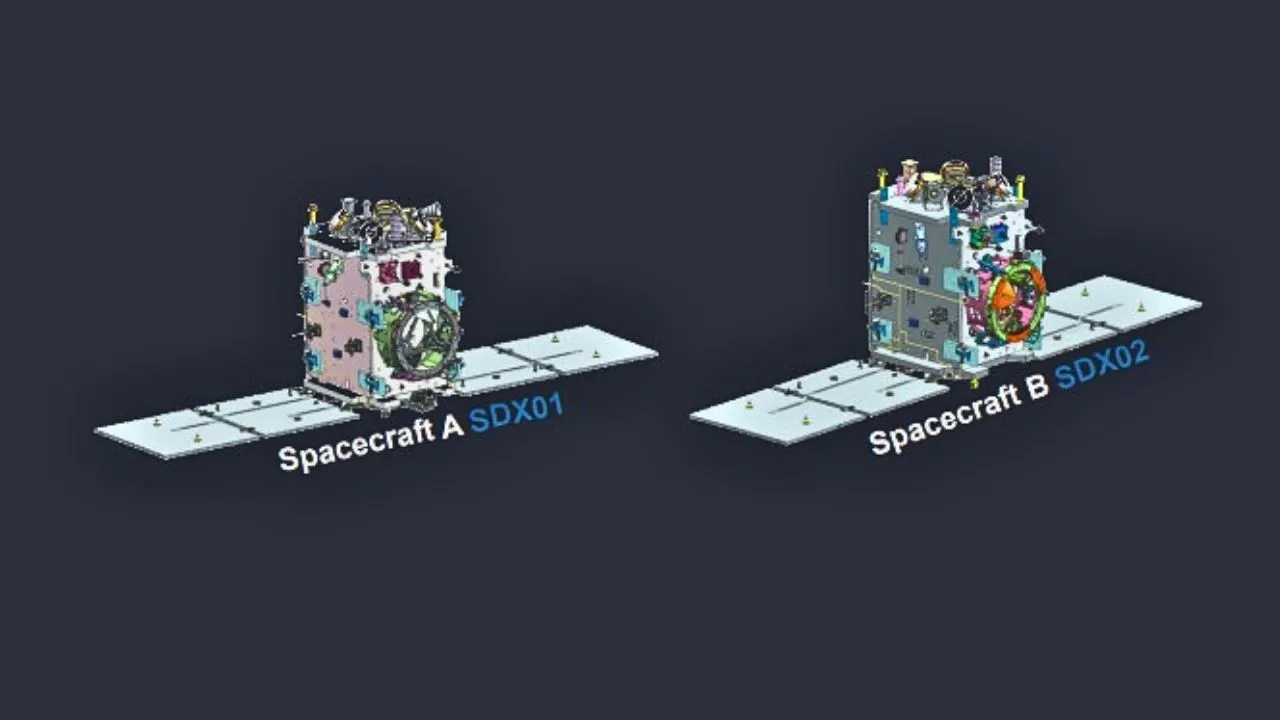
    Launched on December 30, 2024, aboard the PSLV-C60 rocket from the Satish Dhawan Space Centre, the SpaDeX mission deployed two small satellites: SDX-01 (Chaser) and SDX-02 (Target). Weighing 220 kg each, these satellites were placed in a 475 km circular orbit with a 3-second interval between deployments to maintain a safe distance of about 20 km.

    Key Milestones

    Docking (January 16, 2025): The two satellites successfully docked in low Earth orbit, validating ISRO’s docking technology for the first time.

    Undocking (March 13, 2025): The satellites performed a successful de-docking maneuver, captured from both SDX-1 and SDX-2, offering a rare view of in-orbit separation.

    Power Transfer Demonstration (April 21, 2025): A successful demonstration of power transfer between the docked satellites was accomplished, operating a heater element in one satellite via power from the other for approximately 4 minutes.

    Mission Status as of August 2025

    As of August 2025, the SpaDeX mission has concluded its primary objectives. The successful docking, undocking, and power transfer demonstrations have validated ISRO’s capabilities in autonomous space operations.

    Plans for a second phase, SpaDeX-2, are underway, aiming to further advance India’s space docking technologies. A proposal for SpaDeX-2 is expected to be submitted to the government soon, with a potential launch within the next three years, subject to approval.

    Significance for India’s Space Future

    The SpaDeX mission is a critical step toward realizing India’s ambitious space goals, including the establishment of the Bharatiya Antariksha Station (BAS) and crewed lunar missions. By demonstrating autonomous docking and related technologies, ISRO has positioned India as a key player in global space exploration.

    The success of SpaDeX underscores ISRO’s growing capabilities in complex space operations and its commitment to advancing India’s presence in space.

  • ISRO START Program 2025: Opportunity for UG and PG students to get a Certificate from ISRO

    ISRO START Program 2025: Opportunity for UG and PG students to get a Certificate from ISRO

    The Space Science and Technology Awareness Training (START) is a beginner-level certificate program offered by ISRO. It covers various aspects of space science, including astronomy and astrophysics, heliophysics and sun-Earth interaction, instrumentation, and aeronomy.

    Who can apply?

    • Indian students in their final year of undergraduate studies or any year of postgraduate studies.
    • Fields of study: Physical sciences (physics and chemistry) and technology (electronics, computer science, mechanical, applied physics, radiophysics, optics & optoelectronics, instrumentation, and related subjects).

    Requirements for Host Institutes

    1. Lecture hall or auditorium with internet connectivity and projection facilities.
    2. Ability to stream lectures through a videoconferencing platform.
    3. Coordinator to select eligible candidates based on aptitude, academic performance, and venue capacity

    Remember, only institutes, colleges, and universities in India can register for the full program, including the online merit examination. Individual students can participate in the program but wonโ€™t be eligible for the final exam.

    Important Dates

    • Institute registration deadline: January 30, 2025
    • Student registration deadline: January 7, 2025
    • Program duration: January 9 – 31, 2025

    Program Details

    • Daily 2-hour online classes from 9th January to 31st January 2025 on the ISRO E-CLASS platform (https://eclass.iirs.gov.in)
    • Online test at the end of the program.

    Program Certification

    To receive a merit/participation certificate from ISRO, students must:

    1. Attend at least 70% of the online sessions.
    2. Score a minimum of 50% marks in the online examination.

    (Note: The merit certification is to be received by the students who have registered under an ISRO-approved nodal center.)

    How to Register for the ISRO START Program?

    For Institutes/Colleges/Universities (Coordinators only)

    Below are the steps to register your institute:

    Step 1: Visit https://jigyasa.iirs.gov.in/registration

    Step 2: The coordinator should fill in the required details and click on ‘Register.’

    Step 3: Submit the institute’s details and wait for approval from ISRO/DOS.

    Step 4: ISRO will evaluate the submitted institute details and approve them. Once approved, all nodal centers will receive their login credentials for the ISRO E-CLASS Coordinator Management System (CMS).

    Step 5: After the institute is approved as an ISRO Nodal Centre, the students enrolled at the institute will be eligible to register for the program.

    Step 6: Once you receive the student registration link, students can register through this link. Applications will be reviewed by the coordinator based on the students’ merit and academic performance. Approved students will then receive their login credentials for the ISRO E-CLASS Learning Management System (LMS).

    For Individual Students

    Below are the steps for individual student registration:

    (Note: Individual registrants can attend live classes and receive a completion certificate but are not eligible for the merit examination.)

    Step 1: Visit https://elearning.iirs.gov.in/edusatregistration/student

    Step 2: Look for an account activation email in your inbox and click on ‘Activate your Account.

    Step 3: Click on ‘Already Registered,’ enter your login credentials and complete the CAPTCHA, then click on ‘Login.’

    Step 4: Choose the course you wish to enroll in, fill out the required details, and click on ‘Next.’

    Step 5: Fill in the personal details and click ‘Save and Continue.’

    Step 6: Fill in the educational details and click ‘Save and Continue.’

    Step 7: Fill in the professional details, such as employment status, attach your photo and identification document, and click ‘Save and Continue.’

    Step 8: Preview all your details thoroughly and click ‘Submit.’

    Step 9: Once submitted, you will now be eligible to attend the live classes and receive a course completion certificate at the end of the program.

    For more information, visit the Jigyasa Portal.

  • ESA and ISRO Launch Proba-3 on PSLV-XL to Create First Artificial Solar Eclipse

    ESA and ISRO Launch Proba-3 on PSLV-XL to Create First Artificial Solar Eclipse

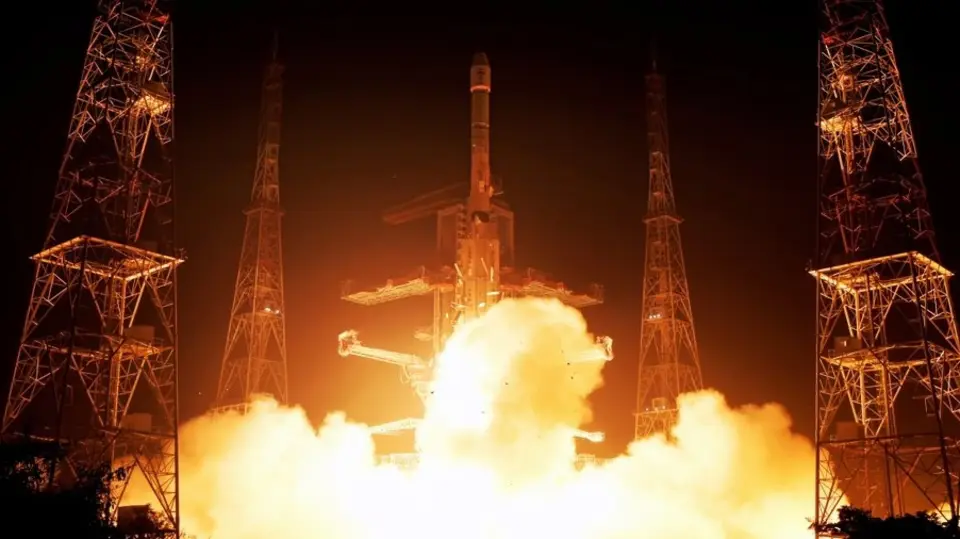
    The European Space Agency (ESA) and the Indian Space Research Organisation (ISRO) successfully launched the Proba-3 mission aboard a PSLV-XL rocket from the Satish Dhawan Space Center in Sriharikota, Andhra Pradesh, at 4:04 pm on Thursday, December 5. The spacecraft had been integrated with the rocket in November, and the launch was rescheduled from December 4 after a technical anomaly delayed liftoff.

    ISRO celebrated the launch on X, describing the mission as a reflection of the dedication of NSIL, ISRO, and ESA teams. The agency highlighted Indiaโ€™s role in advancing global space cooperation and emphasized the importance of international partnerships.

    Proba-3 is designed to study the solar corona by creating the first-ever artificial solar eclipse. The mission involves two spacecraft flying in precise formation to block the Sunโ€™s light and allow instruments to capture detailed observations of the corona. Achieving this level of coordinated flight demonstrates both ESA and ISROโ€™s technical capabilities.

    Beyond its scientific goals, the mission is seen as a milestone in global collaboration. For India, it strengthens its role in joint space projects and builds momentum as ISRO prepares for upcoming missions including the human spaceflight program Gaganyaan, the Chandrayaan-4 lunar mission, and the planned Bharatiya Antariksh Station.

    The success of Proba-3 is expected to inspire scientists and engineers in India while opening the door to more international partnerships, reinforcing the countryโ€™s growing presence in space exploration.

  • Proba 3 Spacecraft Stacked on ISRO PSLV Rocket for December 4 Launch to Study Sun’s Corona

    Proba 3 Spacecraft Stacked on ISRO PSLV Rocket for December 4 Launch to Study Sun’s Corona

    Europe’s Proba 3 spacecraft

    has been successfully stacked on ISRO’s PSLV-XL rocket at the Satish Dhawan Space Centre in India and is scheduled to launch on December 4. This mission, a collaboration between the Indian Space Research Organisation (ISRO) and the European Space Agency (ESA), aims to study the Sun’s corona by creating the first artificial solar eclipse in human history.

    Proba 3 consists of two spacecraft: the Occulter Spacecraft (OSC) and the Coronagraph Spacecraft (CSC). The mission will place the probes in a unique orbit that allows extended observation of the solar corona when the spacecraft are farthest from Earth.

    The mission demonstrates advanced precision flying and synchronization techniques. Both spacecraft must maintain alignment to a millimeter scale, with precise pointing measurements in the thousands of degrees, to achieve the required observational accuracy.

    One spacecraft carries observation equipment, while the other has an occulting disc. The disc blocks the direct light of the Sun, allowing the telescope on the other spacecraft to capture detailed images of the outer atmosphere, or corona, effectively creating a controlled, artificial solar eclipse.

    This first-of-its-kind mission is expected to provide unprecedented insight into solar physics and showcase the capabilities of precision spacecraft formation flying for scientific research.

  • SpaceX Launches GSAT-N2 for ISRO, Boosting India’s High-Speed Communication Network

    SpaceX Launches GSAT-N2 for ISRO, Boosting India’s High-Speed Communication Network

    SpaceX successfully launched the GSAT-N2 communication satellite, also known as GSAT-20, from Cape Canaveral Space Force Station in Florida on November 19, 2024, at 12:01 AM IST, reported the Hindustan Times. The launch marks a major collaboration between SpaceX and the Indian Space Research Organisation (ISRO) through its commercial arm, NewSpace India Limited (NSIL). The satellite was placed into orbit 34 minutes after liftoff.

    The GSAT-N2 satellite, weighing around 4,700 kg, was deployed aboard a Falcon 9 rocket into a Geosynchronous Transfer Orbit (GTO). Operational control has been transferred to ISRO’s Master Control Facility (MCF). The satellite aims to enhance India’s communication infrastructure, especially in remote and underserved regions.

    GSAT-N2 is designed to provide high-throughput communication across India, operating in the Ka-band for faster and more reliable data transmission. It features 32 user beams, including eight narrow spot beams for the Northeast and 24 wide beams for the rest of the country.

    With a throughput of around 48 Gbps, it improves broadband access and enables in-flight internet connectivity for commercial airlines. The satellite has an expected operational lifespan of approximately 14 years.

    Technically, GSAT-N2 uses a multi-beam architecture to maximize frequency reuse and overall throughput. It carries three 2.5-meter parabolic deployable reflectors, a bipropellant chemical propulsion system for orbital adjustments, and sensors such as Sun and Earth sensors to maintain precise attitude control.

    The launch represents a significant milestone for India’s space partnerships, signaling a shift from traditional reliance on providers like Arianespace to international commercial firms. Union Minister Jitendra Singh highlighted the potential for this collaboration to improve internet service delivery nationwide.

    In summary, the successful deployment of GSAT-N2 not only strengthens India’s communication capabilities but also sets the stage for future international collaborations in space technology, meeting the growing demand for high-speed connectivity across the country.

  • ISRO Plans Independent Lunar Space Station by 2040 to Advance India’s Role in Space Exploration

    ISRO Plans Independent Lunar Space Station by 2040 to Advance India’s Role in Space Exploration

    The Indian Space Research Organization (ISRO) has announced plans to launch an independent lunar space station, the Bharatiya Chandrama Antariksh Station, by 2040. The project aims to strengthen India’s presence in the global space economy and support long-term lunar exploration.

    Dr. S. Somanath highlighted ISRO’s ambitious roadmap, including the Chandrayaan-4 mission and the Gaganyaan human spaceflight program. The Gaganyaan mission, India’s first crewed spaceflight, is scheduled no earlier than 2025, with uncrewed test flights planned by the end of this year.

    ISRO has allocated Rs 2,104.06 crore for Chandrayaan-4 to advance lunar research. The planned lunar station will orbit the Moon, collect essential data for future missions, and facilitate international collaboration to study the lunar surface, including its structure and potential resources, according to the Indian Defence Research Wing (IDRW).

    India achieved a major milestone on August 23, 2023, when Chandrayaan-3 successfully landed on the Moon’s south pole. This historic mission allowed ISRO to become the first organization to land in this unexplored region, providing critical data on seismic activity, thermo-physical properties, plasma environment, and elemental composition.

    With projects like the Bharatiya Chandrama Antariksh Station and Chandrayaan-4, India continues to expand its capabilities in space exploration, contributing significant scientific knowledge and paving the way for future lunar missions.