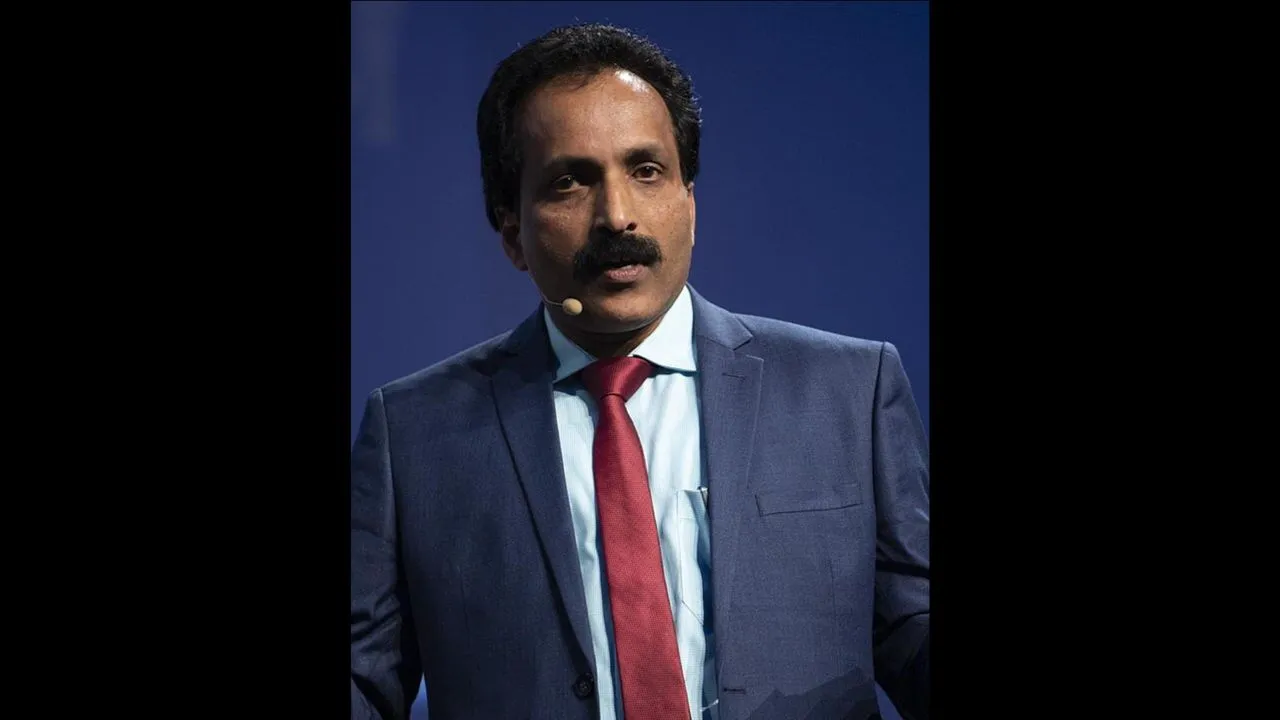
Dr. S. Somanath, chairman of the Indian Space Research Organisation (ISRO), announced that the Gaganyaan mission, originally scheduled for 2025, has been delayed to 2026. The announcement was made during the Sardar Patel Memorial Lecture at Akashvani (All India Radio), according to Firstpost. Dr. Somanath said the delay reflects ISRO’s careful approach to ensure the safety and success of the mission.
The mission will carry four Indian astronauts: Prasanth Balakrishnan Nair, Ajit Krishnan, Angad Pratap, and Wing Commander Shubanshu Shukla. Shukla is currently training at the NASA astronaut training center and will join three other astronauts for the Axiom-4 mission to the International Space Station later this year.
Gaganyaan represents India’s first human spaceflight mission and is a major milestone in the country’s space program. Preparations are ongoing, and ISRO remains committed to completing the mission safely. The announcement coincides with India’s increased investment in space technology, including a budget allocation of Rs 2,104.06 crore for the Chandrayaan-4 mission.
The Gaganyaan mission reflects India’s growing capabilities in human spaceflight and its contributions to the global space economy. Despite the delay, ISRO continues to train astronauts and develop the necessary technology for a successful launch in 2026.
ISRO Chairman Dr. S. Somanath has been honored with the International Astronautical Federation’s (IAF) World Space Award for the achievements of India’s Chandrayaan-3 mission. The award was presented during the 75th International Astronautical Congress in Milan, Italy, on October 14, 2024, recognizing India’s growing role in global space exploration.
ISRO shared the news in a post on X, stating that the award “celebrates India’s contributions to space exploration” while noting that celebrations were underway in Milan following the announcement.
Chandrayaan-3, launched on July 14, 2023, from the Satish Dhawan Space Centre in Sriharikota, achieved a historic soft landing on the Moon’s south pole on August 23, 2023. With that milestone, India became the first nation to reach the lunar south pole and the fourth country in the world to achieve a controlled landing on the Moon.
The mission was developed after Chandrayaan-2’s lander lost contact and crashed in 2019. Learning from that setback, ISRO refined its approach and succeeded with Chandrayaan-3, marking one of the most celebrated achievements in India’s space history.
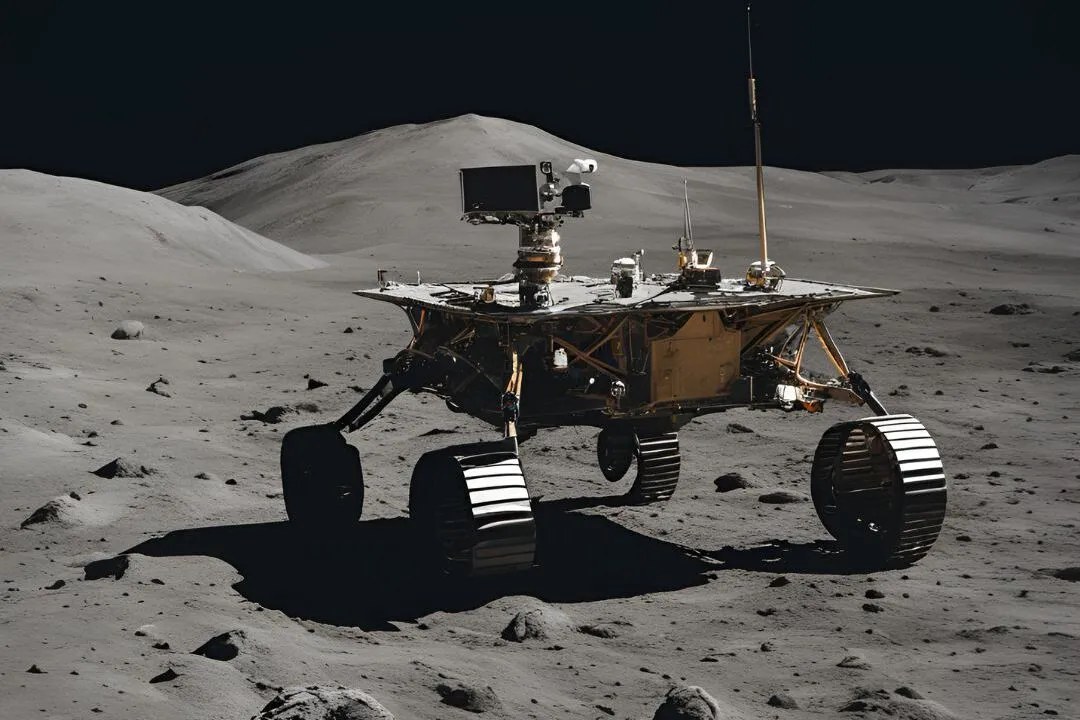
The government has since cleared funding for Chandrayaan-4, approving a budget of ₹2,104.06 crore. The follow-up mission is expected to build on Chandrayaan-3’s success and continue India’s lunar exploration program.
The recognition at Milan highlights ISRO’s growing presence in the international space community, as it strengthens partnerships with agencies including NASA and the European Space Agency. The award adds to India’s reputation as a rising space power and underlines its ambition to play a leading role in future global missions.
India is continuing to expand its space exploration capabilities with the approval of the Chandrayaan-4 mission. The Indian Space Research Organization (ISRO) has made significant progress, from Chandrayaan-3′s historic landing on the moon’s south pole to Gaganyaan, India’s first human spaceflight mission.
Chandrayaan-4 is expected to further strengthen India’s economy, scientific research, and career opportunities in space technology.
According to the Press Information Bureau (PIB), the union cabinet, chaired by Prime Minister Narendra Modi, approved the Chandrayaan-4 mission on September 18. The mission has a budget of Rs. 2,104.06 crore, covering spacecraft development, two LVM3 launch missions, external deep space network support, and special testing.
Chandrayaan-4 will serve as a foundational mission for India’s planned human moon landing by 2040. Objectives include testing docking and undocking procedures, landing, and safely returning to Earth with lunar samples.
The Indian government has also outlined future goals, including an Indian space station by 2035 and sending an astronaut to the moon by 2040. These milestones highlight India’s rapidly growing technological and space exploration capabilities, setting the stage for further achievements in the global space arena.
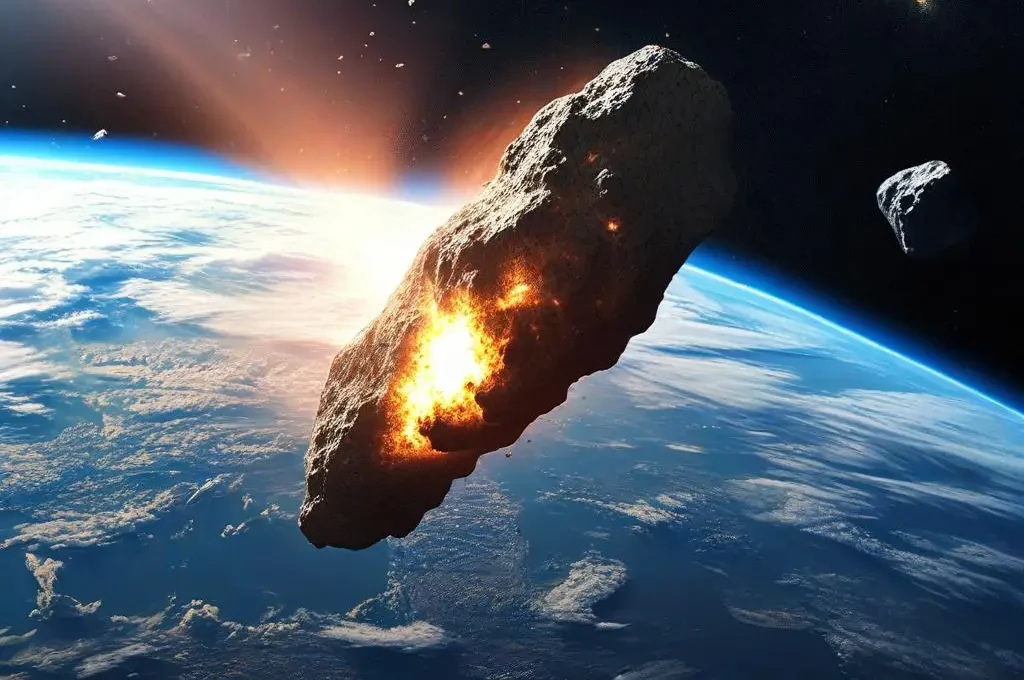
Artist's illustration of an asteroid heading towards the Earth.
The Indian Space Research Organization (ISRO) is stepping up its monitoring of asteroid 99942 Apophis, a 370-meter-wide rock nicknamed the “God of Chaos,” which will make a close pass by Earth on April 13, 2029, and again in 2036.
ISRO Chairman Dr. S. Somanath said in an interview with News18 that a large asteroid strike poses a real risk to humanity. “After all, we have only one Earth to live on. India will cooperate with all nations to ward off this and other such future threats,” he said.
Apophis will pass within 32,000 kilometers of Earth in 2029, closer than many satellites in orbit. Although scientists say it is unlikely to hit Earth, even a small change in its path could have serious consequences.
To track the asteroid and other near-Earth objects, ISRO uses its Network for Space Objects Tracking and Analysis (NETRA) system, based at ISTRAC in Bengaluru. Launched in December 2020, NETRA monitors space debris, space weather, and potential impact threats as part of India’s planetary defense efforts.
Dr. Somanath stressed that studying Apophis is vital to improving global readiness. He said coordinated efforts between space agencies worldwide will be essential in building a reliable defense system to protect Earth from possible future collisions.
ISRO's reliable rocket Launch Vehicle Mark-3 (LVM-3) will be used to launch the Gaganyaan mission in 2025. Image credit: ISRO
India’s human spaceflight mission, Gaganyaan’s test flight, will not lift off in December 2024 as once planned. The Indian Space Research Organisation (ISRO) now expects its first uncrewed test flight, carrying the humanoid robot Vyommitra, to launch by late 2025.
The crewed mission, originally scheduled for a 2025 launch and later delayed to 2026, is now scheduled for early 2027, ex-ISRO chairman Dr. S. Somanath confirmed. The delay reflects the agency’s cautious approach to astronaut safety as it prepares India to become the fourth country to send humans into space independently.
The uncrewed flight, known as G1, will be powered by ISRO’s Launch Vehicle Mark-3 (LVM3), the same rocket that carried Chandrayaan-3 to the Moon in 2023. G1 will test critical systems: rocket performance, crew and service modules, life-support functions, reentry procedures, parachute deployment, and splashdown in the Bay of Bengal.
Vyommitra, a half-humanoid robot designed to mimic astronaut activity, will monitor controls and collect data in microgravity.
Rocket hardware for G1 has already reached the Satish Dhawan Space Centre in Sriharikota. The service and crew modules are being assembled at the UR Rao Satellite Centre in Bengaluru and the Vikram Sarabhai Space Centre in Thiruvananthapuram.
ISRO has also received a full set of parachutes from the Defence Research and Development Organisation (DRDO) in Agra. These include drogue, pilot, and main parachutes designed to ensure a safe landing.
After G1, ISRO will conduct two more uncrewed tests (G2 and G3) in 2026, both carrying Vyommitra to validate further systems. Only after their success will the first crewed flight, H1, take place. Four Indian Air Force astronauts, currently training in Bengaluru, are expected to fly into low Earth orbit in early 2027.
Dr. Somanath also outlined other milestones in India’s space program. ISRO has finished design work for the Chandrayaan-4 and Chandrayaan-5 lunar missions and is awaiting government approval to proceed. Plans for a five-module Indian space station, with the first module scheduled for launch in 2028, were also confirmed.
The Gaganyaan program is seen as a major step in boosting India’s space technology sector. Success will not only advance India’s capabilities in crewed spaceflight but also cement its position among the world’s leading space powers.
Indian Astronaut Shubhanshu Shukla selected for NASA-ISRO joint mission to the ISS. Image credit: Wikimedia Commons
The Indian Space Research Organisation (ISRO) is partnering with NASA and US company Axiom Space to send an Indian astronaut, known as the “Gaganyaatri,” to the International Space Station (ISS) as part of the AXIOM 4 mission.
The announcement came from Union Minister Dr. Jitendra Singh in a written reply to the Lok Sabha. The mission is planned to advance India’s human spaceflight program and strengthen international cooperation in space research.
The astronaut selected for the mission is Group Captain Shubhanshu Shukla, who is currently undergoing training alongside three international astronauts. He will join them aboard the ISS to conduct scientific experiments and participate in space outreach programs.
Shukla was chosen as the prime candidate by ISRO’s Astronaut Selection Board, which also named Group Captain Prasanth Balakrishnan Nair as the backup astronaut. The selection process involved oversight by the Multilateral Crew Operations Panel (MCOP).
The AXIOM 4 mission represents a major step for India’s human spaceflight ambitions. It follows the agreement between ISRO’s Human Space Flight Centre (HSFC) and Axiom Space Inc., a NASA-identified service provider.
This partnership allows ISRO access to the ISS via NASA and supports the ongoing development of India’s Gaganyaan mission, the country’s first independent crewed spaceflight project expected to launch by 2025.
Dr. Singh emphasized that this collaboration will enhance India’s capabilities in human spaceflight and deepen its cooperation with NASA. The mission will provide valuable experience for India’s future space missions and help build stronger ties in international space exploration.
This mission is a key milestone in India’s expanding role in space, reflecting its growing presence on the global stage and ambitions to contribute to international space research efforts.
Indian astronauts selected for the Gaganyaan mission. Image credit: The Indian Express
The Indian Space Research Organization (ISRO) has joined forces with NASA and the US private aerospace company Axiom Space to send an Indian astronaut to the International Space Station (ISS) as part of the Axiom Mission 4 (AX-4). Scheduled for launch no earlier than August 2024 from NASA’s Kennedy Space Center in Florida, this mission will mark a key milestone for India’s space program.
The selected astronaut, called a “Gaganyaatri,” will be one of four candidates currently training under the Gaganyaan Mission, India’s first manned spaceflight program expected to launch by 2025.
Union Minister Dr. Jitendra Singh, Minister of State for Science and Technology, confirmed the collaboration in a written response to the Lok Sabha. He explained that the astronaut will be chosen by ISRO’s Astronaut Selection Board from the four Gaganyaan trainees, all of whom are Indian Air Force test pilots undergoing intensive training at the astronaut facility in Bangalore.
The AX-4 mission will carry the Indian astronaut alongside three international crew members to the ISS. This partnership represents not only a significant step in India’s human spaceflight ambitions but also a broader push for international cooperation in space research. The collaboration with Axiom Space provides ISRO with access to new technologies and expands opportunities for scientific research and resource sharing.
ISRO’s engagement with NASA and Axiom Space also signals a growing trend of public-private partnerships in space exploration. The Gaganyaan program aims to build on this momentum, preparing India for future independent human space missions while fostering international ties. This mission is expected to enhance India’s capabilities in human spaceflight and contribute valuable experience for upcoming projects.
RH-560 rocket mounted with air breathing propulsion system launched from Sriharikota. Image credit: ISRO
The Indian Space Research Organization (ISRO) successfully conducted its second experimental flight test of Air Breathing Propulsion Technology on July 22, 2024, at 7 a.m. Indian Standard Time (IST).
The test took place at the Satish Dhawan Space Centre in Sriharikota, where the propulsion system was mounted on the RH-560 Sounding Rocket and launched to evaluate its performance. This test is a significant step in advancing India’s capabilities in developing efficient propulsion systems for future space missions.
ISRO’s RH-560 Sounding Rocket
The RH-560 sounding rocket on the launch pad, July 22, 2024. Image credit: ISRO
The RH-560 is a two-stage solid motor suborbital rocket designed to test new aerospace technologies. It is the heaviest-sounding rocket developed by ISRO so far and serves as a testbed for critical propulsion systems. During this flight, the rocket successfully carried and ignited the air-breathing propulsion systems, demonstrating key advances in this technology.
ISRO monitored around 110 parameters throughout the flight, including the rocket’s overall performance and the ignition of the air-breathing propulsion system. The data collected will be crucial for refining and developing this propulsion technology further, which could improve the efficiency and cost-effectiveness of future space vehicles.
Before this flight, extensive ground tests took place at various ISRO facilities, including the Liquid Propulsion Systems Centre (LPSC), Vikram Sarabhai Space Centre (VSSC), ISRO Propulsion Complex (IPRC), and CSIR-National Aerospace Laboratories. These tests ensured the reliability and safety of the propulsion systems before they were integrated into the RH-560 rocket.
Air-breathing propulsion technology aims to use oxygen from the atmosphere during initial flight phases instead of carrying all the oxidizer onboard. This can potentially reduce the weight of rockets and increase their payload capacity, making launches more efficient. ISRO’s progress with these tests highlights India’s growing expertise in next-generation aerospace propulsion.
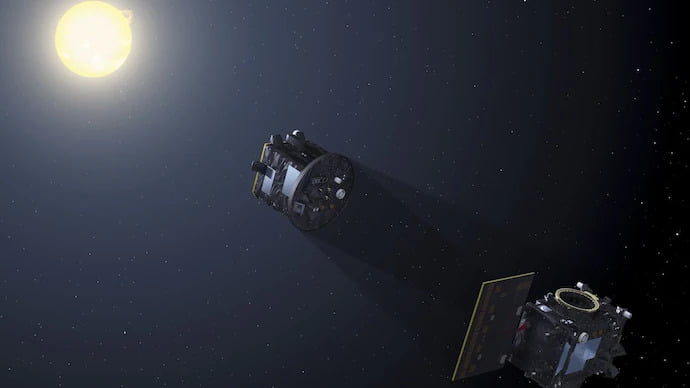
Artists illustration of the Proba 3 spacecraft. Image credit: ESA
The European Space Agency (ESA) and the Indian Space Research Organization (ISRO) launched the Proba-3 mission on December 5, 2024, from India aboard the PSLV-XL rocket. The mission is the first in history to create artificial solar eclipses in space using two spacecraft flying in precise formation.
Designed to study the Sun’s corona in detail, the mission could also advance space-based astronomy and improve predictions of space weather that affect satellites, power systems, and communications.
Proba-3 uses two spacecraft positioned 144 meters apart. One carries a telescope aimed at the Sun, while the other holds an occulting disc to block its bright surface, revealing the much fainter corona. This formation flying approach could lead to future missions capable of building virtual telescopes hundreds of meters wide for sharper, more detailed views of distant space objects.
The mission’s goal is the Sun’s outer atmosphere, or corona, which reaches temperatures above one million degrees Celsius despite being farther from the surface than the cooler layers below.
The corona is the source of space weather events that can damage satellites and disrupt power and communication networks. Because the corona is so faint as compared to the actual surface of the Sun, it can normally be studied only during short natural eclipses. Proba-3 will allow uninterrupted observations for up to six hours, offering data that could improve space weather forecasting.
Technical details
The Proba-3 project began in 2005 as a collaboration between ESA and ISRO. Its two spacecraft fly in a fixed line, separated by 144 meters, with the occulting disc on one craft aligned to block the Sun’s bright inner region from the telescope on the other. This arrangement makes the corona visible in much greater detail than from Earth-based observations.
Mission challenges
Formation flying at this scale requires extreme precision. The spacecraft must maintain positions accurate to within millimeters and point within thousandths of a degree, all while travelling at speeds between 1 and 10 kilometers per second. Each craft carries its own guidance systems and processors, enabling them to operate and align without constant ground control.
The mission’s orbit allows the artificial eclipse to last up to six hours. During this time, the spacecraft coordinate in real time to collect and transmit data. The extended viewing period will give scientists a detailed and continuous record of the corona, helping to answer questions about its structure, heat, and role in driving solar activity.