Tag: Moon

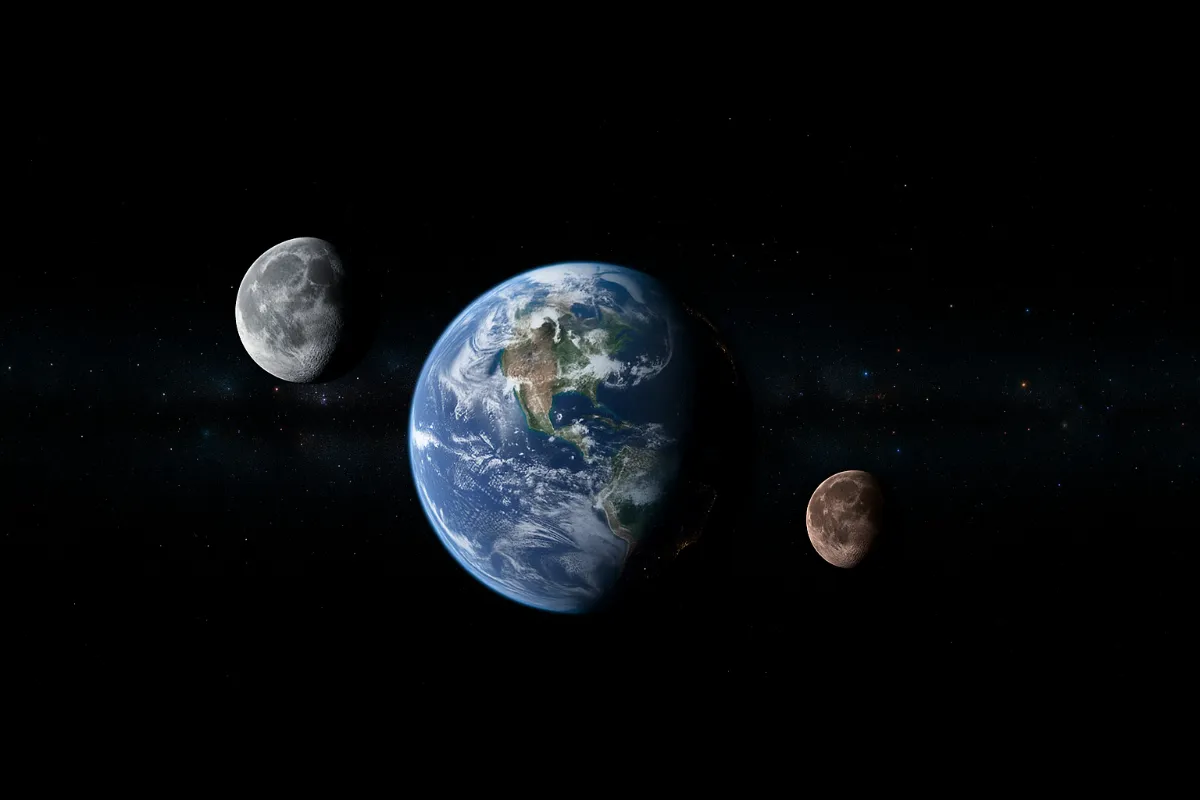
  • Astronomers Discover New ‘Quasi-Moon’ 2025 PN7 that will Orbit Near Earth Until the 2080s

    Astronomers Discover New ‘Quasi-Moon’ 2025 PN7 that will Orbit Near Earth Until the 2080s

    Astronomers have identified a small asteroid, 2025 PN7, that appears to be temporarily locked in step with Earth’s orbit around the sun. The discovery, made on August 2, 2025, by the Pan-STARRS telescope in Hawaii, reveals a 19-meter-wide object that has been accompanying Earth since the mid-20th century and is expected to remain nearby until about 2083.

    The asteroid belongs to the Apollo group, a class of near-Earth objects whose elongated orbits cross Earth’s and extend toward Mars. Its current path keeps it close enough to act as a “quasi-moon,” a companion that orbits the sun but appears to move alongside Earth due to their synchronized motion.

    Unlike the moon, which is bound by Earth’s gravity, quasi-moons orbit the sun on nearly the same timeline as Earth. From our perspective, they seem to loop or hover near the planet in a stable but temporary arrangement.

    2025 PN7 follows what astronomers describe as a horseshoe-shaped orbit. The sun’s gravity dominates, but Earth’s pull subtly alters its path, causing it to drift back and forth across our orbit. This gravitational balance keeps it near us for decades without risk of collision.

    Models show that 2025 PN7 has been sharing Earth’s orbital neighborhood since around 1965. Its distance from Earth varies from about 299,000 kilometers to as far as 17 million kilometers. The asteroid’s motion is influenced by Jupiter’s gravity, which gradually shifts its path over time.

    At just 19 meters across, 2025 PN7 is faint and hard to detect without powerful telescopes. Scientists estimate it will remain stable for nearly six more decades before slowly drifting away, possibly toward an orbit near Venus.

    Early observations suggest that 2025 PN7 is likely a rocky or stony asteroid, possibly originating from the main asteroid belt between Mars and Jupiter. Like other Apollo-type asteroids, it may have been nudged inward after ancient collisions.

    Future spectroscopy will help determine its composition, whether it’s primarily silicate rock, metal, or a mix of both. Such data could offer clues about how material moves through the inner solar system and what resources small asteroids may hold.

    Tracking objects like 2025 PN7 helps refine our understanding of orbital mechanics and near-Earth object behavior. Quasi-moons provide insight into how asteroids interact with planets and how gravitational resonances form.

    The asteroid poses no danger to Earth, but studying its orbit improves our ability to model others that might pass closer in the future. These findings also aid planetary defense research, as predicting the paths of small bodies is key to identifying real threats.

    Astronomers plan to monitor 2025 PN7’s brightness and rotation using both optical and radar observations. NASA’s upcoming NEO Surveyor mission, designed to detect near-Earth objects in infrared light, may capture more detailed data once operational.

    If its orbit remains stable, 2025 PN7 will continue to share Earth’s path for nearly 60 more years before it drifts away. Until then, it joins a short list of known quasi-moons, including 3753 Cruithne and Kamo‘oalewa, reminding us that even near our planet, space is full of quiet companions.

  • NASA Rescues VIPER Rover With Blue Origin Deal for 2027 Moon South Pole Mission

    NASA Rescues VIPER Rover With Blue Origin Deal for 2027 Moon South Pole Mission

    NASA confirmed that its long-delayed VIPER rover will finally head to the Moon’s south pole after awarding Blue Origin a contract to deliver it aboard the company’s Blue Moon Mark 1 lander. The decision secures a late 2027 launch for the rover, which has been in storage since costs and delays derailed its earlier ride.

    VIPER’s mission is to search for water ice in permanently shadowed craters, a resource that could support future human bases.

    The rover nearly met a permanent end in 2024 when NASA canceled its original deal with Astrobotic, which was set to launch VIPER on the Griffin lander. That contract started at $200 million for a 2023 mission but ballooned to $800 million after design changes and schedule slips.

    Confidence fell further when Astrobotic’s Peregrine lander failed in its 2024 debut due to a fuel leak, raising doubts about Griffin’s reliability.

    To revive the project, NASA awarded Blue Origin a $190 million task order under its Commercial Lunar Payload Services program. Blue Origin’s Blue Moon Mark 1 is designed to carry heavy cargo, with VIPER as its main payload for this mission.

    The lander’s first flight is scheduled for late 2025 on a New Glenn rocket, delivering other NASA equipment to the lunar surface. A second lander is already in production for VIPER’s delivery two years later.

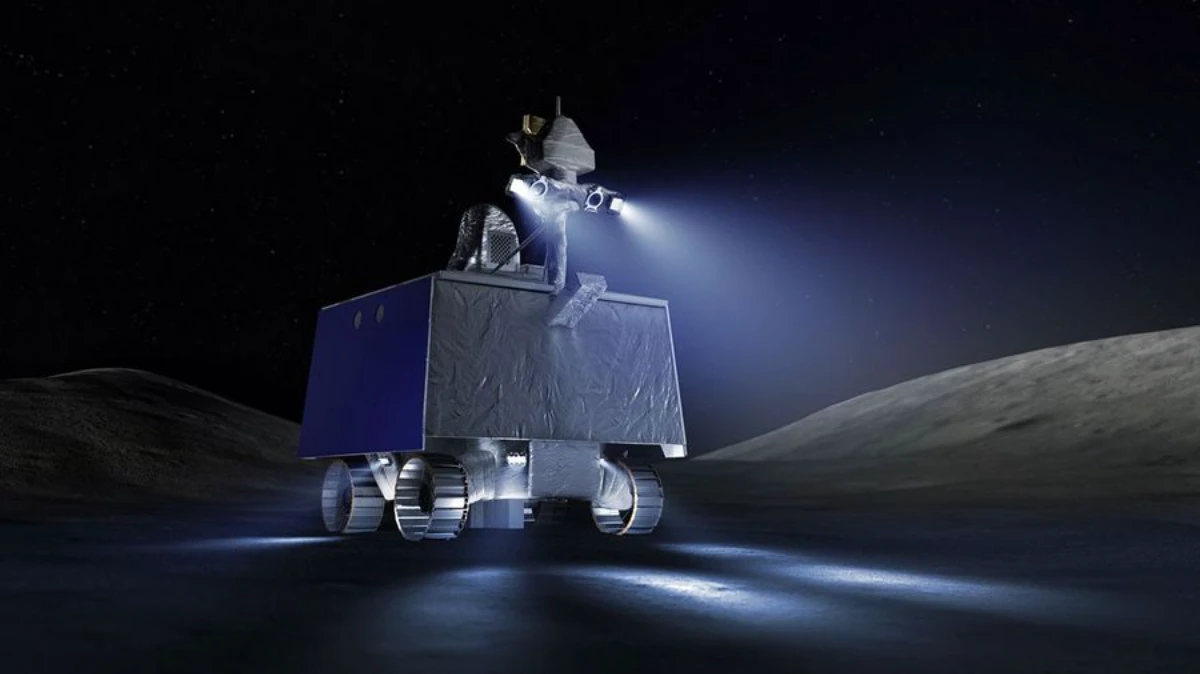
    VIPER, short for Volatiles Investigating Polar Exploration Rover, is about the size of a golf cart and weighs 950 pounds. Unlike Mars rovers, it is built for the Moon’s harsh extremes, from 250°F in direct sunlight to -280°F in permanent shadow. Its headlights will allow it to enter craters that never see daylight. Over a planned 100-day mission, it will travel roughly 12 miles at a top speed of half a mile per hour.

    The rover carries four main instruments. TRIDENT, a one-meter drill, will extract subsurface samples. Two spectrometers, NIRVSS and NIRS3, will study reflected light for water signatures.

    A mass spectrometer called MSolo will analyze gas molecules released from the soil to confirm the presence of ice. Together, these tools will map how water and other frozen gases are distributed beneath the surface.

    Scientists are particularly interested in the Moon’s south pole, where deep craters act as cold traps. At temperatures near -397°F, water ice remains stable for billions of years.

    Estimates suggest that up to two percent of the soil’s top meter could be ice by weight. Researchers believe much of it came from comet impacts, with some possibly formed by ancient volcanic activity.

    Finding ice matters because it could be turned into oxygen for breathing and hydrogen for fuel, reducing the need to transport supplies from Earth. Future Artemis crews could use local resources to support lunar bases. The results will also inform long-term exploration, including human missions to Mars, where similar methods may be applied.

    Blue Origin will handle the landing and deployment of VIPER, while NASA will operate the rover from Earth. Unlike Mars missions, operators can send real-time commands thanks to the Moon’s close distance, improving precision and safety. If successful, the data collected by VIPER could help identify safe and resource-rich landing sites for astronauts in the 2030s.

    VIPER’s revival shows NASA’s reliance on private industry to achieve its lunar goals. By combining commercial landers with agency science teams, the mission keeps Artemis on track to establish a lasting human presence on the Moon.

    Source: NASA Selects Blue Origin to Deliver VIPER Rover to Moon’s South Pole

  • China Achieves First Daylight Laser Ranging to Lunar Satellite, Advancing Space Navigation

    China Achieves First Daylight Laser Ranging to Lunar Satellite, Advancing Space Navigation

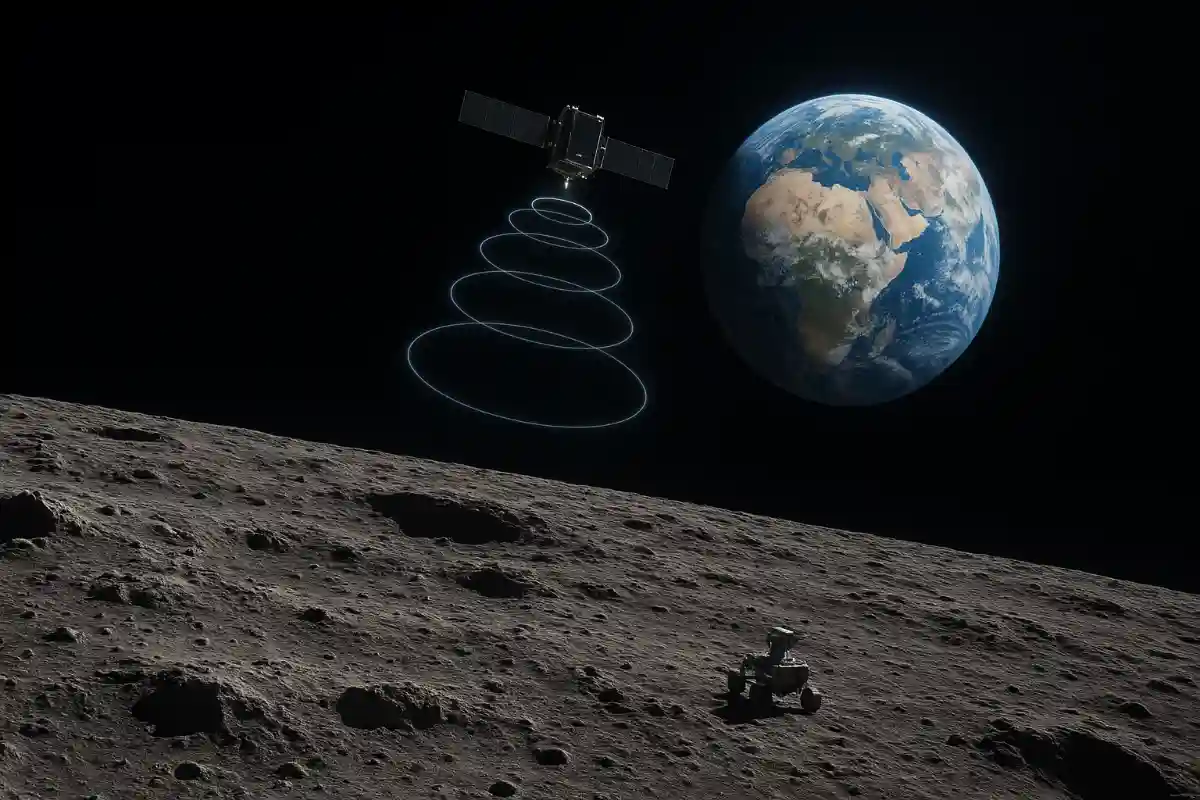
    China has achieved a world first in space navigation by successfully firing a laser beam at a moon-bound satellite in broad daylight. Scientists at the Deep Space Exploration Laboratory in Hefei managed to strike the Tiandu-1 satellite, orbiting 130,000 kilometers from Earth, and record its distance with centimeter-level accuracy.

    The experiment, carried out this week, marks the first time laser ranging has been achieved to a lunar spacecraft under sunny skies. Laser ranging works by sending short pulses of light to a target and measuring the time it takes for them to bounce back.

    Until now, these tests were typically done at night, when faint return signals could be detected more easily without interference from sunlight. China’s team overcame this problem by using specialized filters and highly accurate timing equipment.

    Their system was able to detect returning signals despite the overwhelming brightness of daytime conditions.

    The Tiandu-1 satellite, launched in January, sits about a third of the way between Earth and the Moon. Tracking an object at that distance is difficult because of its speed and size. Researchers described the challenge as similar to hitting a moving hair from several kilometers away.

    Still, their instruments recorded precise readings from laser pulses lasting only a few billionths of a second. Daytime tracking has clear benefits. It allows continuous monitoring of spacecraft without waiting for nightfall.

    This capability is vital for China’s upcoming lunar missions, which include landing astronauts on the Moon by 2030 and building a joint base with Russia by 2035. It will also support their Queqiao relay satellites, designed to maintain constant communication with rovers and landers on the lunar surface.

    The technology builds on earlier methods developed during the Apollo missions, when American astronauts placed retroreflectors on the Moon.

    These are still used to measure its orbit, but China’s test shows how modern tools can work on spacecraft traveling through cislunar space in real time. Beyond the Moon, such technology could also improve navigation for Mars missions and asteroid probes.

    Accurate distance measurements help map gravitational fields and predict spacecraft paths. With an estimated 100,000 satellites expected in low Earth orbit in the coming years, better ranging systems may also help reduce the risk of collisions.

    For astronomers and engineers, the test highlights how small improvements in technology can make a major difference in managing space traffic and planning interplanetary travel.

    China’s success in daytime laser ranging represents a new step in building safer and more reliable navigation systems for future exploration.

  • NASA Plans to build a Nuclear Power Plant on Moon by 2030s

    NASA Plans to build a Nuclear Power Plant on Moon by 2030s

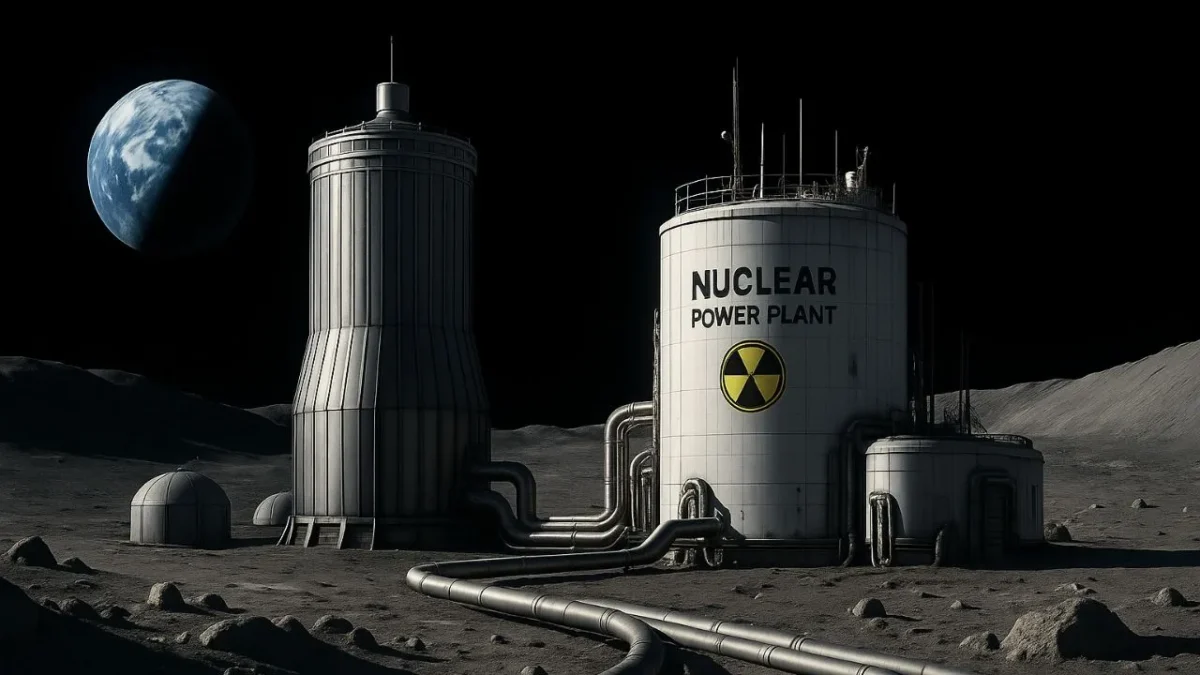
    NASA is set to build a nuclear power plant on the moon by the early 2030s to support its ambitious human exploration plans as part of the Artemis program targeting the lunar south pole. The reactor, designed to generate at least 100 kilowatts of electricity, will provide a reliable energy source during the moon’s two-week-long nights, when temperatures drop drastically and solar panels become ineffective.

    This move comes as China and Russia pursue similar lunar power projects, intensifying competition for strategic lunar sites.

    The lunar south pole, rich in water ice, is a prime target for NASA’s Artemis missions, which aim to establish a sustainable human presence on the moon. However, the region’s prolonged darkness makes solar power unreliable.

    “The lunar night is two weeks. It’s basically two weeks of light, two weeks of darkness. It’s cold and dark, so solar doesn’t work in all the regions that are of interest to explore,” John M. Olson, CEO of Axions Corporation and a retired U.S. Air Force major general, told Florida Today.

    The proposed reactor will use nuclear fission to produce heat, which a closed Brayton cycle will convert into electricity powering life support, scientific tools, and water extraction. This technology builds on decades of research, with NASA investing $200 million since 2000. The U.S. government has now committed $350 million in President Trump’s 2026 budget, with an additional $500 million planned, to fast-track the project.

    NASA aims to select commercial partners within the next eight months, with a launch targeted for 2030. A new Fission Surface Power Program Executive will oversee the effort starting next month.

    The stakes are significant. China and Russia are developing their own lunar reactors, with plans to deploy them by the mid-2030s. If they succeed first, they could claim key lunar territories, potentially limiting U.S. access. The lunar south pole’s resources make it a focal point for international competition, raising concerns about geopolitical tensions in space.

    Challenges remain. Budget constraints, including the planned phase-out of NASA’s Space Launch System after Artemis V, could strain funding. Cost overruns, a common hurdle in large-scale projects, also pose risks.

    NASA emphasizes safety, drawing on its experience with nuclear-powered missions like the Mars rover and Voyager spacecraft, which used plutonium-238 to operate far from the sun.

    A nuclear power plant on the moon would not only power life support and scientific experiments but also lay the groundwork for future Mars missions. As nations race to establish a foothold on the moon, the next decade will shape the future of space exploration.

  • Chinese scientists use Sunlight to extract Water from Lunar Soil

    Chinese scientists use Sunlight to extract Water from Lunar Soil

    A team of Chinese researchers has found a way to turn lunar soil into water, oxygen, and even rocket fuel. That might sound like science fiction, but it’s a real step toward building self-sufficient Moon bases, andย it could save future space missions a lot of money.

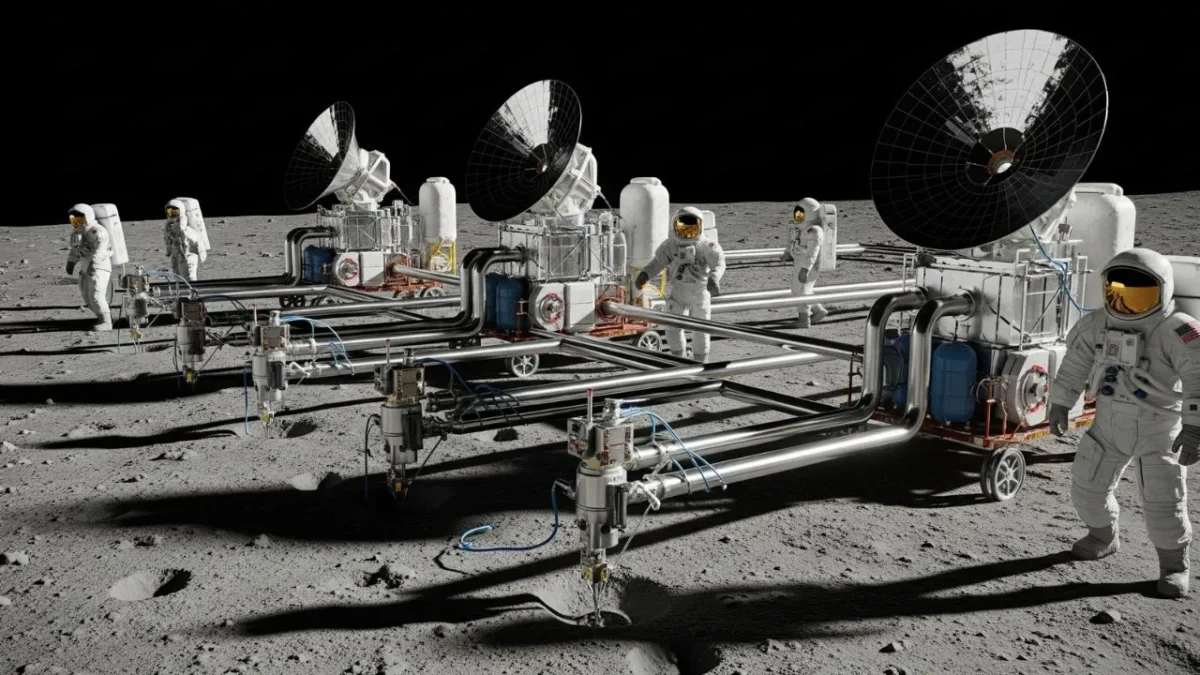
    The trick lies in the lunar regolith, the dusty surface layer covering the Moon. It contains minerals like ilmenite that hold small amounts of water. The team developed a solar-powered method to heat the soil and extract useful materials. The water can be used for drinking or broken down to make oxygen. And when combined with gases from astronautsโ€™ exhaled breath, it could even create fuel.

    It matters because space is expensive. Really expensive. A USDA ARS report from 2023 estimated that sending just one gallon of water to space costs about $83,000. Thatโ€™s why scientists are so focused on using whatโ€™s already out there. NASA estimates the Moonโ€™s poles could hold around 270 billion tons of water ice, which is enough to support missions for decades.

    The same method could also recycle carbon dioxide from astronauts and turn it into hydrogen and carbon monoxide, both of which can be used as fuel. Itโ€™s a compact process that could help future Moon bases run more independently.

    Lunar soil from resting at the base of a photothermal reactor.
    Lunar soil from the Chang’e-5 mission resting at the base of a photothermal reactor. Image credit: Sun et al.

    Lu Wang and his team at the Chinese University of Hong Kong, Shenzhen, tested the technique using samples from Chinaโ€™s Changโ€™e-5 mission. Their study, published July 16, 2025, in Joule, showed promising results. Wang even described the soilโ€™s efficiency as “magic” because of its unexpected chemical potential.

    Of course, there are still hurdles. Lunar soil isnโ€™t the same everywhere, and extreme temperatures that can swing from 260ยฐF to -280ยฐF make it hard to design reliable equipment. Plus, this system canโ€™t yet produce enough to fully support a mission. Itโ€™s more of a starting point than a finished solution.

    Still, itโ€™s a promising one. China is aiming for a permanent Moon base by 2035, and NASAโ€™s Artemis program is working on similar tech. Whoever gets there first could shape how we explore the rest of the solar system.

    Weโ€™re not ready to fuel rockets or support full missions with moon dust just yet, but weโ€™re getting closer. Continued improvements will determine whether this method can sustain a human presence on the Moon.

  • November Supermoon is the last supermoon of 2024: Don’t miss!

    November Supermoon is the last supermoon of 2024: Don’t miss!

    The Beaver Moon, also the last supermoon of 2024, will rise in India at approximately 2:58 AM IST on November 16, 2024, as reported by TOI. Due to its proximity to Earth, this full moon is notable for being both larger and brighter than usual making it a significant event for skywatchers across the country.

    However, the supermoon will obstruct the view of the Leonid meteor shower. The best viewing experience will be shortly after sunset on November 16, when the moon appears particularly striking as it rises against the twilight sky.


    What is a Beaver Moon?

    The term “Beaver Moon” refers to the full moon in November, named for the time when beavers are actively preparing for winter by building their dams. This name has its roots in North American traditions and reflects the natural behaviours of wildlife during this season. Additionally, it is known by other names such as the Frost Moon or Snow Moon, indicating the onset of colder weather.


    What is a Supermoon?

    A supermoon occurs when a full moon coincides with perigee, the point in its orbit when it is closest to Earth. This results in the moon appearing up to 14% larger and 30% brighter than a typical full moon. The Beaver Moon marks the fourth and final supermoon of 2024, following earlier supermoons in August, September, and October.


    How to Watch the Beaver Moon

    To observe the Beaver Moon effectively:

    • Find a clear location: Look for an open area for an unobstructed view.
    • Timing: The best time to see it will be shortly after sunset on November 16.
    • Use binoculars or a telescope: While not necessary, these can enhance your view of lunar details.
    • Photography tips: If you wish to capture images of the moon, use a DSLR camera with manual settings. Adjust ISO, aperture, and shutter speed according to your needs.

    This celestial event presents a great opportunity for both casual observers and photography enthusiasts alike.

  • Stunning Photos Capture Rare Supermoon Harvest Moon Eclipse on September 17-18, 2024

    Stunning Photos Capture Rare Supermoon Harvest Moon Eclipse on September 17-18, 2024

    The rare combination of a supermoon and the harvest moon eclipse on September 17-18, 2024, captivated observers around the world. The partial lunar eclipse coincided with the harvest moon, enhancing its visual impact and leaving witnesses amazed by the celestial display.

    Photographers, both professional and amateur, captured some remarkable images of the event. Highlights include shots from Abhimanyu Singh, Rami Ammoun, Evan Benko, and Jeremy Gil Chris. These photographs showcase the intricate details and rich colors of the moon during the eclipse.

    mini magick20240921 34469 mm49aw
    Image credit: Abhimanyu Singh
    The partial lunar eclipse right now PartialLunarEclipse
    Image credit: Rami Ammoun
    mini magick20240921 35446 6wnojw
    Image credit: Evan Benko
    mini magick20240921 34469 2jnv3v scaled
    Image credit: Jeremy Gil Chris

    Capturing such images requires knowledge of astrophotography techniques, telescope adjustments, and camera settings. Read our detailed astrophotography guide and telescope guide to learn more about photographing the night sky and experiencing the magic of celestial events firsthand.

  • Chinese Scientists Publish First Study on Lunar Soil from Chang’e 6, Revealing Unique Composition of Moon’s Far Side

    Chinese Scientists Publish First Study on Lunar Soil from Chang’e 6, Revealing Unique Composition of Moon’s Far Side

    China’s team of scientists has released the first research findings on lunar soil brought back by the Chang’e 6 mission, offering new information about the moon’s far side.

    The paper, published on September 17 in the National Science Review, details the unique characteristics of the 1.935 kilograms of lunar samples returned by the mission in June 2024. The research highlights differences between soil from the far side and previously studied samples from the near side.

    The Chang’e 6 mission launched from Hainan Island on May 3, 2024, and returned to Earth on June 25, landing in northern China. The samples were collected from the side of the moon that faces away from Earth. Teams from the National Astronomical Observatories of the Chinese Academy of Sciences, the Lunar Exploration and Space Engineering Center, and the Beijing Institute of Spacecraft System Engineering have analyzed the material since its return.

    The research shows that the far side soil is more porous and less dense than near side samples. It contains higher levels of plagioclase and lower amounts of olivine compared to the Chang’e 5 samples. Lithic fragments in the samples include basalt, breccia, agglutinate, glasses, and leucocrate.

    The concentration of trace elements such as thorium, uranium, and potassium also differs from earlier lunar samples collected by the Apollo missions and Chang’e 5.

    Scientists note that these findings could support future lunar missions, including crewed landings planned by China by 2030. Understanding the soil’s composition can guide the design of spacesuits and equipment for astronauts, making missions safer and more efficient. The study offers the first detailed look at material from the moon’s far side, a region previously unexplored through direct sample collection.

    Source: A journal on Chinese and global scientific achievement

  • Partial Lunar Eclipse and Rare Super Harvest Moon Captivate Skywatchers Worldwide

    Partial Lunar Eclipse and Rare Super Harvest Moon Captivate Skywatchers Worldwide

    A rare astronomical event unfolded on September 17–18, 2024, when a partial lunar eclipse coincided with the Super Harvest Moon. The spectacle was visible across large parts of Asia, Africa, North America, South America, and the world’s oceans, drawing attention from professional astronomers and casual stargazers alike.

    The eclipse lasted just over four hours, offering millions of people a chance to see the Moon partially darkened as Earth’s shadow moved across its surface.

    Timing and Visibility

    The eclipse began at 8:41 p.m. EDT on September 17, reached its maximum phase at 10:44 p.m. EDT, and ended at 12:47 a.m. EDT on September 18. At its peak, about a quarter of the Moon’s surface appeared darker as it passed through Earth’s umbra. The long duration and widespread visibility made it one of the most-watched lunar events of the year.

    What Made It Special?

    This eclipse stood out because it coincided with the Harvest Moon and a Supermoon. The Harvest Moon is the full moon nearest to the autumnal equinox, providing brighter evenings that historically helped farmers bring in crops.

    A supermoon occurs when the Moon is at perigee, its closest point to Earth, making it appear up to 14% larger and 30% brighter than average. The combination of these events with an eclipse made for an especially striking night sky.

    Observers also noted the Moon’s distinct orange hue, caused by its lower position in the sky during autumn and Earth’s atmosphere scattering shorter wavelengths of light.

    Understanding Lunar Eclipses

    A lunar eclipse happens when Earth moves between the Sun and the Moon, casting a shadow on the lunar surface. Eclipses only occur during full moons. There are three main types:

    • Total lunar eclipse: the entire Moon is covered by Earth’s shadow.
    • Partial lunar eclipse: only part of the Moon passes through Earth’s shadow.
    • Penumbral lunar eclipse: the Moon passes through the outer part of Earth’s shadow, often subtle and difficult to see.

    The most recent lunar eclipse before this one occurred on March 25, 2024, and was penumbral in nature.

    How to Watch and Capture an Eclipse?

    Unlike solar eclipses, lunar eclipses are safe to watch with the naked eye. Using binoculars or a telescope can enhance the view, allowing observers to see lunar craters and details more clearly. Many astronomy enthusiasts also took the chance to photograph the event.

    To capture sharp images, experts recommend using a DSLR or mirrorless camera with manual settings, mounted on a sturdy tripod. Adjusting ISO, aperture, and shutter speed can bring out different details, while a remote shutter or timer helps reduce camera shake.

    The September 2024 eclipse was the year’s last significant lunar eclipse, but more are on the horizon. According to astronomers, a total lunar eclipse is expected in March 2025, visible across parts of North and South America, Europe, and Africa. For those who missed this Super Harvest Moon eclipse, the coming year will provide another opportunity to witness one of nature’s most dramatic night-sky displays.

    Refer to our Full Moon Calendar for more!

  • IAU Backs Creation of Lunar Time Zone as NASA Targets 2026 for Moon Standard Time
    IAU Backs Creation of Lunar Time Zone as NASA Targets 2026 for Moon Standard Time
    The International Astronomical Union (IAU) has joined efforts to establish a dedicated time zone for the Moon, supporting a plan led by NASA to create a new standard by 2026. The decision, discussed at the IAU’s General Assembly in Cape Town, South Africa, follows an April directive from the White House instructing NASA to design a lunar time system.

    At present, space missions rely on the time zone of the country that launched them, but as more international partners prepare to operate on the Moon, experts say a unified system is necessary. A standardized lunar time, known as Lunar Coordinated Time (LTC), would improve communication, navigation, and scientific coordination between crews and spacecraft.

    On Earth, global time is regulated through Coordinated Universal Time (UTC), which is calculated using 450 atomic clocks located in 85 laboratories worldwide. The Moon presents different challenges. Its weaker gravity and orbital dynamics cause time to run slightly faster by about 58.7 microseconds per Earth day compared to UTC.

    Although the difference is tiny, researchers stress that even microsecond-level errors can affect navigation, spacecraft tracking, and synchronization of systems. The National Institute of Standards and Technology (NIST) recently highlighted how Earth-based UTC clocks would drift if used directly on the lunar surface.

    A lunar time system would be set using atomic clocks adapted to the Moon’s gravity. These would allow astronauts and robotic missions to operate on a consistent schedule, avoiding discrepancies between countries and ensuring safety during complex missions such as NASA’s Artemis program, which aims to return astronauts to the Moon later this decade.

    The IAU’s support reflects a growing international consensus that the Moon, as a shared space environment, will require its own infrastructure, including timekeeping. Establishing Lunar Coordinated Time is now seen as a critical step toward building long-term human presence beyond Earth.