Category: Space

Explore the vastness beyond our planet. This section covers missions, discoveries, and events that expand our reach into the cosmos. From new rocket launches to deep-space observations, “Space” keeps you updated on humanity’s steps into the unknown.

  • Chinese astronauts enjoy the first-ever space BBQ aboard the Tiangong space station

    Chinese astronauts enjoy the first-ever space BBQ aboard the Tiangong space station

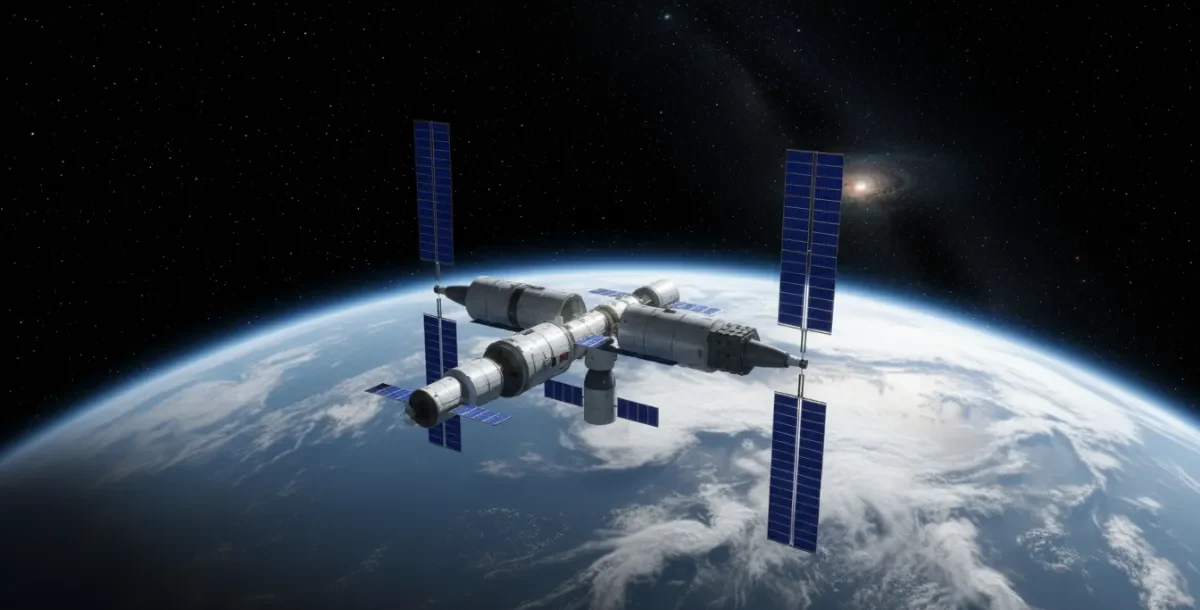
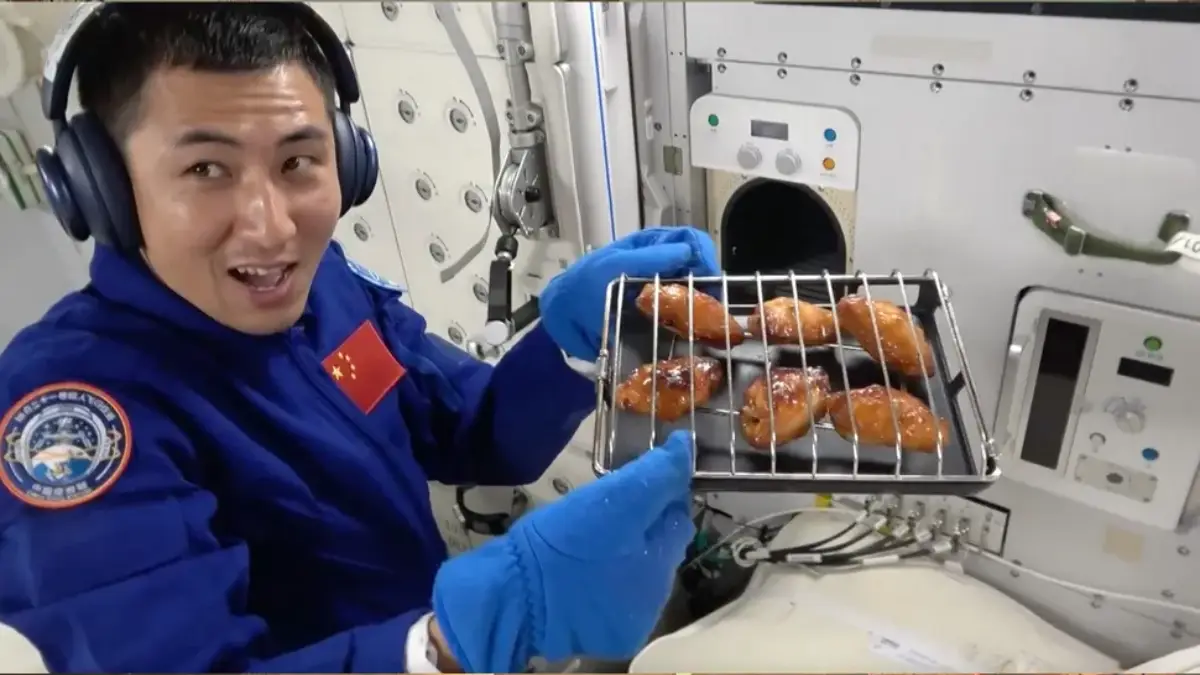
    Chinese astronauts have baked food in space for the first time, using a new oven inside the Tiangong station. The test happened this month after a cargo ship delivered the kitchen-sized unit. The crew cooked chicken wings to check if the equipment is safe and reliable in orbit, and mission managers said the trial worked as planned.

    The oven marks a new stage in China’s effort to make long stays on Tiangong more comfortable. Astronauts often remain there for six months, eating packed or reheated meals. Engineers say hot, freshly cooked food can improve mood and help crews handle long work schedules. The station will rely on these upgrades as China prepares for future visits and longer missions.

    Cooking in orbit is not as simple as it sounds. Without gravity, liquids float and heat moves slowly. Flames take round shapes instead of rising. To manage this, the oven seals the food inside a grill cage and rotates it on its own. That keeps juices from drifting into the cabin. It took nearly half an hour to cook the wings, which is slower than on Earth.

    Safety is a priority. Fire spreads fast in oxygen-rich air, and a small spark could damage the station. The oven runs without open flames and acts like an air fryer. Sensors track the temperature and send alerts to the cabin system if something changes. Officials say all parts passed tests on the ground before launch.

    Both the Shenzhou 20 and Shenzhou 21 crews joined the first bake. They shared food before the Shenzhou 20 team returned to Earth this week. The remaining astronauts will stay in orbit for several more months to run science tests and station repairs.

    The oven weighs under 10 kilograms and fits against a wall panel in one of the labs. It heats up to 200 degrees Celsius while using low power from the station’s solar arrays. Engineers say it can handle hundreds of cooking cycles, enough to last for years. The design is permanent, unlike NASA’s one-time cookie experiment on the International Space Station in 2019.

    China believes better food could help with longer missions, including planned lunar bases in the 2030s. Astronauts on those trips will face even more isolation, and the ability to cook could help them stay focused. For now, China says the Tiangong oven will keep running as part of daily life in orbit, adding new meals to a menu once limited to packets and reheated trays.

  • Maharashtra becomes the first Indian State to sign a deal with Elon Musk’s Starlink

    Maharashtra becomes the first Indian State to sign a deal with Elon Musk’s Starlink

    The Maharashtra government has signed a plan with Elon Musk’s satellite network, Starlink, to bring high-speed internet to remote districts that still lack stable broadband. The agreement, announced on Wednesday, makes Maharashtra the first state in India to formally adopt satellite internet as part of its digital rollout. Officials say the goal is to give schools, health centers, and disaster response teams fast connections without waiting for cables or cell towers.

    “With this landmark decision, Maharashtra will lead India in satellite-enabled digital infrastructure.
    This is a giant leap towards future-ready Maharashtra. Congratulations, Maharashtra!” Chief Minister Mr. Devendra Fadnavis posted X.

    The trial will run for 90 days. It will begin in tribal schools in Nandurbar and at primary health posts in Washim, where slow or unreliable service has long held back online classes and telemedicine. A government team led by Chief Minister Devendra Fadnavis will check the results every month and issue recommendations before wider use.

    Starlink uses satellites in low-Earth orbit, flying a few hundred kilometers above the ground. Their short distance cuts network delays to under 50 milliseconds, which is close to the speed of normal broadband in cities. Because these satellites are always moving, signals pass from one to the next as they circle the planet. Each craft uses solar power and lasers to send data between neighbors before it reaches an antenna on the ground.

    Maharashtra officials say this avoids the problems of building fiber networks in rough terrain. Rural districts include hills, plateaus, and long forest routes where cables are expensive to lay and often damaged by weather. Many villages also face routine mobile blackouts during storms. Satellite links do not depend on towers, so service continues even when local networks fail.

    The state wants to test Starlink for emergency communication too. Police boats along the Konkan coast and control rooms on the Samruddhi Mahamarg highway will use it during the trial. Heavy rain and floods cut several districts off in 2024. Leaders believe satellite coverage could keep rescue teams online through medical calls, tracking data, and live weather reports.

    SpaceX has launched thousands of Starlink satellites in recent years using reusable Falcon 9 rockets. Each satellite weighs about 260 kilograms and unfolds a solar array in orbit. As of late 2025, the network has passed 6,000 active satellites worldwide. The company advertises download speeds of 100 to 200 Mbps, enough for video calls, online classes, and digital payments.

    Engineers will install small dish antennas. They resemble flat white plates and lock onto satellites through software guidance. Local workers will be trained to maintain and replace them. Government officials say launch costs and hardware prices have dropped due to frequent commercial flights, which makes satellite service cheaper than it was a decade ago.

    Astronomers have raised concerns about satellite brightness. Reflections from large constellations have shown up as streaks in long-exposure images. Starlink has said it is testing darker coatings and hardware to reduce glare. The state expects to hold further talks as the network expands.

    The agreement fits into the Digital Maharashtra program, which aims to give internet access to every district by the end of the decade. State leaders say the long-term plan includes connected schools, telemedicine hubs, and smart systems for coast security. Data collected from the trial will decide how fast the service expands.

    If the pilot works, remote villages that have never had stable internet could come online within months. The next review of the project is expected at the end of the first 30-day report.

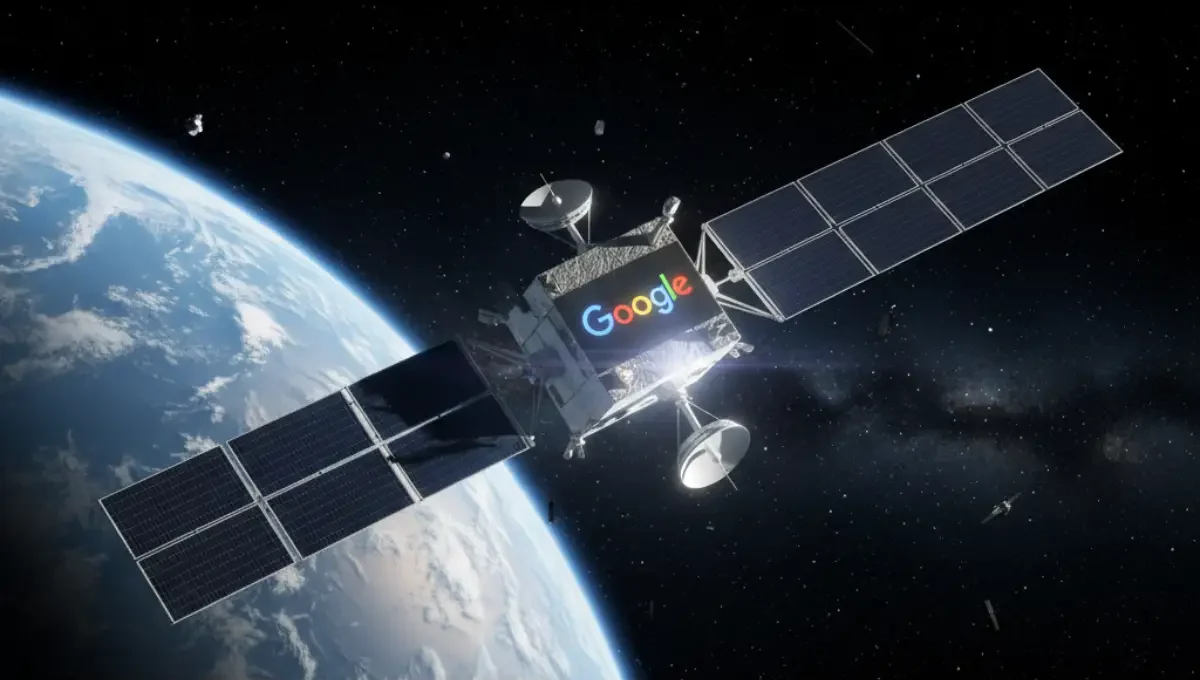
  • Google plans to put solar-powered data centres in low-Earth orbit to support rising AI energy demand

    Google plans to put solar-powered data centres in low-Earth orbit to support rising AI energy demand

    Google is studying a plan to place future AI data centers in space. The idea, called Project Suncatcher, involves solar-powered computing satellites in low-Earth orbit. There is no launch date yet, but the company sees this as a way to handle the growing electricity use of artificial intelligence systems and the pressure that large server buildings put on land, cooling systems, and power grids on the ground.

    Running AI models uses very large amounts of energy. A single data center can consume as much electricity as a small town. On Earth, these facilities need land, water for cooling, and steady power. In orbit, solar panels receive strong sunlight for most of each trip around Earth, without clouds or atmosphere blocking the light. That gives more power per square meter than panels on the ground.

    Cooling would work differently. Since there is no air, heat cannot simply be blown away. Satellites use large radiator panels that release heat as infrared light. The method is common on weather satellites and the International Space Station. The challenge is scaling it up to handle the heat from powerful computer chips designed for machine learning.

    Google wants to move data between space and Earth using laser links instead of radio. These optical beams can carry large amounts of information, but they need clear skies and precise pointing. Weather can interrupt the signal, so Google would need many ground stations in different countries. If one station is blocked by clouds, another can receive the data.

    Maintenance is another challenge. If a server breaks on Earth, engineers can fix it quickly. In orbit, repairs are harder. Google would need robot missions or would replace damaged satellites with new ones. Launch costs will play a major role in deciding whether the idea becomes real, even as rockets become cheaper due to frequent commercial flights.

    Astronomers are watching the plan closely. Large groups of satellites can interfere with telescopes, especially when they reflect sunlight. They appear as streaks on long-exposure images. If Project Suncatcher grows into a large network, the astronomy community will likely ask Google to reduce brightness or adjust orbits to protect sky observations.

    Even if the plan changes, it shows how quickly AI is reshaping global computing. Companies already build data centers in cold regions to reduce cooling costs. Moving some of that computing power to space would be a new step in the search for energy and stability. It suggests that satellites may become more than communication tools; they could become major computing hubs.

    The idea also raises a new debate about the future of the night sky. As AI grows, companies may look beyond Earth for the power and space needed to run it. Space, once used mainly for science and communication, could slowly become part of the world’s computing infrastructure.

    Source: Exploring a space-based, scalable AI infrastructure system design

  • Space debris delays homecoming of Chinese astronauts; engineers inspect damaged craft in orbit

    Space debris delays homecoming of Chinese astronauts; engineers inspect damaged craft in orbit

    China has delayed the return of its Shenzhou 20 astronauts after engineers detected what may be a debris strike on their reentry capsule, keeping the crew aboard the Tiangong space station longer than planned. The three astronauts were due to come back this week, but officials halted the landing while they inspect the damage and confirm the spacecraft is safe to fly.

    The China Manned Space Agency found the issue during routine checks. Engineers believe a small piece of debris hit the capsule’s outer shell. They have not given a size or timeline for repairs, but mission controllers say the delay is a precaution. The current landing zone remains Inner Mongolia.

    The crew Chen Dong, Chen Zhongrui, and Wang Jie launched in April for a mission of science experiments and maintenance tasks. They recently handed daily station duties to members of the Shenzhou 21 mission, who arrived in late October. That overlap means Tiangong now holds six astronauts at once, which allows the schedule to continue without interruption.

    Space debris is the suspected cause. At Tiangong’s height, even a tiny object can punch through metal because it moves faster than a bullet. China, the United States, and Europe track more than 36,000 large objects in orbit. Millions of smaller fragments remain untracked. Space stations dodge close calls several times a year by firing onboard thrusters.

    Officials say the debris hit shows the risks that long-term crews face as more satellites and spent rocket parts fill low orbit. Tiangong uses protective shields and safe docking paths, and the crew carried out four spacewalks to install extra bumpers earlier in the year. Those shields are built to vaporize small objects before they reach the main hull.

    Life on the station continues during the delay. The crew has completed medical tests, plant growth studies, and power system checks. They also observed cultural events and recorded video classes for students on Earth. With six people now onboard, researchers have added more lab work, including protein crystal studies and solar sail tests.

    Shenzhou spacecraft use a design based on older Russian capsules, but China has updated the controls and landing systems. Once the damaged area is cleared, mission planners will set a new date. Crews parachute down to the Gobi Desert, where teams recover them within minutes.

    China has flown nine crewed missions to Tiangong since 2021. The station is expected to run for at least a decade. Space officials say the delay will not change future launch dates, but it may speed up work on cleanup tools and ground-based lasers that can push debris into safe orbits.

    Currently, the Shenzhou 20 astronauts will wait until engineers finish their checks. Mission control says the team is safe, and the station continues to operate normally.

  • Astronomers Detect the First “Heartbeat” of a Newborn Magnetar

    Astronomers Detect the First “Heartbeat” of a Newborn Magnetar

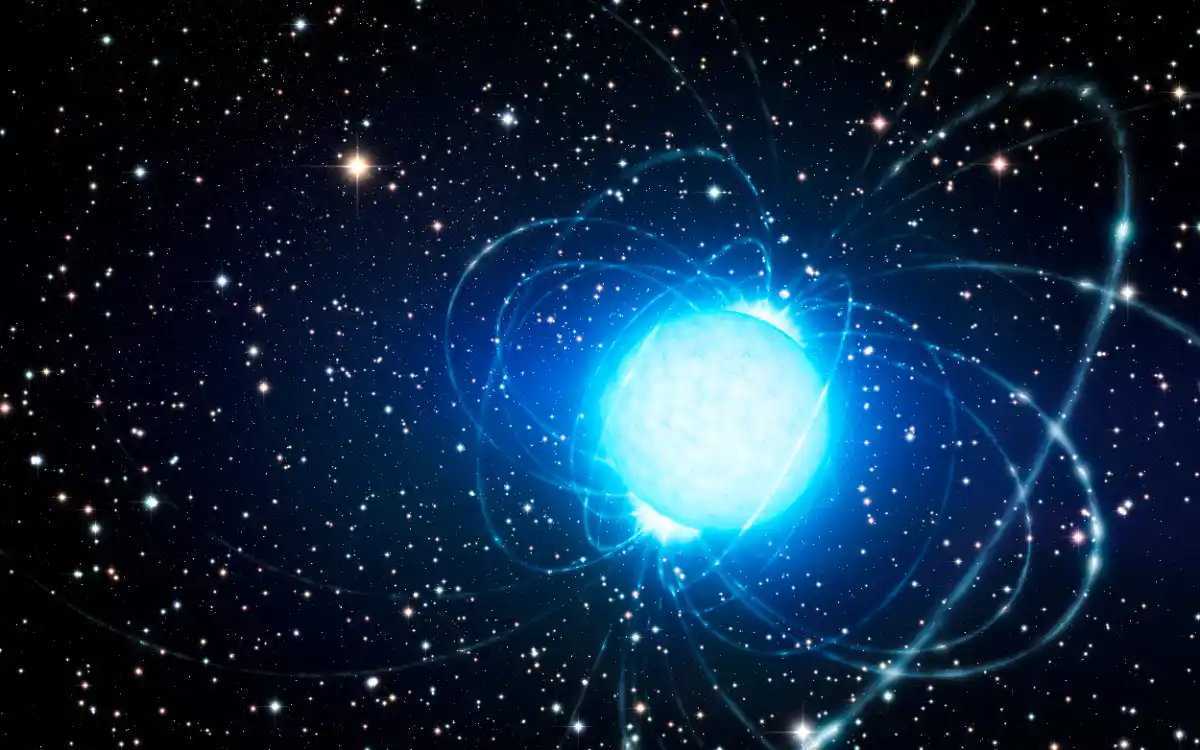
    In a major astrophysical breakthrough, an international team from the University of Hong Kong, Nanjing University, and the Chinese Academy of Sciences has detected the first-ever “heartbeat” of a newborn magnetar, a highly magnetized neutron star, inside a powerful gamma-ray burst known as GRB 230307A.

    The signal, identified as a rapid 909-hertz pulsation lasting just 160 milliseconds, reveals a magnetar spinning over 900 times per second and marks the first direct evidence that such objects can power some of the universe’s most extreme explosions. The findings were published in Nature Astronomy in September 2025.

    GRB 230307A was first detected on March 7, 2023, when China’s GECAM satellites and NASA’s Fermi Gamma-ray Burst Monitor recorded one of the brightest bursts ever seen. It lasted nearly a full minute, far longer than typical short gamma-ray bursts linked to neutron star collisions.

    Optical telescopes later confirmed that the source lay about 1.9 billion light-years away. The burst’s brightness and duration suggested an unusually energetic central engine, leading researchers to suspect the formation of a fast-spinning magnetar rather than an immediate black hole collapse.

    Researchers analyzed more than 600,000 data points from GECAM’s detectors using advanced statistical tools to search for hidden periodic signals. In the burst’s early emission phase, they found a clear 909-hertz quasi-periodic oscillation, a repeating pulse equivalent to a spin period of roughly 1.1 milliseconds.

    The team verified the signal across multiple instruments with independent Monte Carlo tests, establishing it at a 5-sigma confidence level, the gold standard for discovery in physics. The pulsation was strongest between 100 and 200 kilo-electron volts, suggesting it originated from the magnetar’s magnetic wind imprinting its rotation onto the gamma-ray jet.

    “This is the first time scientists have directly observed a periodic signal from a newly born magnetar inside a gamma-ray burst,” said Run-Chao Chen, lead author and doctoral researcher at Nanjing University.

    Professor Bing Zhang of the University of Hong Kong, co-author of the study, described it as “a long-sought confirmation that magnetars can survive neutron star mergers and act as central engines driving cosmic explosions.” Zhang first predicted this magnetar-powered model more than a decade ago, and the new detection provides the strongest evidence yet for it.

    Unlike short, two-second bursts created when merging neutron stars form an instant black hole, the longer emission of GRB 230307A implies a neutron star survived temporarily. Data show that its extreme rotation and trillion-gauss magnetic fields funneled energy into two collimated, magnetized jets.

    For about 160 milliseconds, slight asymmetries in one jet made the spin visible as a gamma-ray pulse before the emission smoothed out as the burst evolved. Spectral modeling indicates the jet’s power source was an electromagnetic outflow, known as a Poynting-flux jet, rather than a matter-dominated one.

    The discovery reshapes how astronomers understand gamma-ray bursts. It confirms that magnetars can form and shine briefly after mergers, bridging observational gaps between gamma-ray emissions, gravitational waves, and the physics of dense nuclear matter.

    It also provides new ways to probe the structure of neutron stars. Further analysis may help test whether magnetar interiors hold exotic quark matter, an idea long debated in nuclear physics. Future missions like Insight-HXMT and Einstein Probe are expected to capture more such gamma-ray pulses, improving chances of catching the magnetic spin signatures of newborn neutron stars.

    Researchers suggest that combining gamma-ray and gravitational-wave data could eventually confirm magnetar births in real time, linking light and gravity across the cosmos. For now, the 909-hertz pulse from GRB 230307A stands as the first recorded rhythm of a star being born in fire and magnetism, echoing from nearly two billion light-years away.

    Source: Evidence for a brief appearance of gamma-ray periodicity after a compact star merger

  • ESA Student Internship Programme

    ESA Student Internship Programme

    The ESA Student Internship Programme offers university-level students the chance to join Europe’s space sector via a fully integrated placement at one of ESA’s centers. For students nearing completion of a master’s (or sometimes in their final bachelor year), this is a way to gain substantial space-industry exposure.

    What is the ESA Student Internship Programme?

    The ESA Student Internship Programme enables students to work on real tasks in space science, engineering, operations, business, or non-technical domains. Interns spend three to six months at one of ESA’s establishments, contributing to projects while remaining enrolled at university.

    Why Consider the ESA Student Internship Program?

    • Real-world assignment: Interns support actual activities at ESA and its centers.
    • International environment: You’ll work in a multicultural organization with peers and professionals from across Europe.
    • Thesis or project integration: The internship may be aligned with your master’s thesis or final project, subject to agreement with your university.
    • Networking and professional development: You’ll meet people in Europe’s space field and gain experience valued by the space industry and research institutions.
    • Time-limited, focused structure: Designed for students to gain experience within a defined timeframe (3-6 months) and then return to studies.

    Eligibility Criteria

    CriteriaDetails
    Academic StatusMust be enrolled at a university, preferably in the final or penultimate year of a master’s program.
    NationalityMust be a citizen of one of the ESA Member States, Associate Member States, or Cooperating States.
    Student Status DurationYour student status must cover the entire duration of the internship.
    One Internship OnlyYou may undertake only one ESA student internship to allow broader opportunity for others.

    Internship Duration and Structure

    TypeDurationLocation
    Student Internship3 to 6 monthsESA establishment in Europe; start dates are flexible between February and October (subject to agreement).

    How to Apply: Step-by-Step Process

    1. Prepare your documents
    2. Update your CV or resume
    3. Write a motivation letter tailored to the specific internship and how your background matches it.
    4. Ensure you maintain student status through the internship period
    5. Submit your application
    6. Opportunities are published annually (typically in November) and remain open for about one month.
    7. Create a candidate profile on ESA’s recruitment website, upload your documents, and select one or two relevant internships (max two applications per candidate).
    8. Await selection. Shortlisting and selection occur from December to February in many years.

    If selected, the start date is agreed upon between you, your tutor/university, and ESA, anywhere between February and October.

    What Will You Learn as an Intern?

    At ESA, interns may engage in

    • Engineering, software or system design tasks
    • Earth observation, astrophysics, planetary science or data analysis
    • Business, law, procurement, finance or communications jobs in a space-agency context
    • Working in international teams, applying academic skills to real-life operational or research tasks

    This helps you gain practical work experience in the space domain, understand the workflows and culture of a major organization, and build connections for your future career or research direction.

    Contact Information

    Contact MethodDetails
    Websitehttps://www.esa.int/About_Us/Careers_at_ESA/Student_Internships2
    Emailcontact.human.resources@esa.int
    AddressEuropean Space Agency, Career & Recruitment Division, via one of its European establishments (see website)
  • NVIDIA H100 GPU Heads to Orbit as Starcloud Tests Space-Based Data Centers Next Month

    NVIDIA H100 GPU Heads to Orbit as Starcloud Tests Space-Based Data Centers Next Month

    Starcloud, a company in Redmond, Washington, plans to launch a satellite carrying an NVIDIA H100 chip next month. The satellite, called Starcloud-1, will fly on a SpaceX Falcon 9 from California. The mission will test whether data centers can operate in orbit instead of on the ground. Starcloud says the goal is to cut pollution and energy waste tied to large computing centers.

    Starcloud-1 is about the size of a household refrigerator and weighs about 130 pounds. It will enter low Earth orbit and run on solar power. Starcloud used to operate under the name Lumen Orbit. The company works with Crusoe, which provides cloud services for businesses.

    Starcloud argues that data centers on Earth use huge amounts of electricity each year. Many countries rely on fossil fuels to feed their power grids. These centers also use water to cool server rooms and release heat into nearby areas. The company says Orbit removes those problems. The satellite will collect direct sunlight without clouds blocking the rays. Cooling will come from heat leaving into space.

    At the center of the system is the NVIDIA H100. It is much faster than any chip that has run in orbit before. Starcloud says it can process satellite images for weather, farming, and disaster tracking. It will also run Google’s Gemma model. This will be the largest language model ever tested in space.

    By processing data in orbit, Starcloud hopes to shorten the time needed for analysts to make decisions. Most satellites send raw images to Earth first. Engineers then wait for computers on the ground to study the data. Starcloud-1 aims to do that work without the delay.

    The satellite will follow the line where daytime meets night to keep its solar panels in nearly constant sunlight. Engineers tested the hardware to survive strong vibrations during liftoff. They also added shields to protect the chip from high-energy particles, which can damage electronics.

    Starcloud says earlier experiments used small computers on the International Space Station. Those systems handled limited processing. Starcloud-1 will provide far more power.

    If the flight succeeds, Starcloud plans a second satellite with more processing units. The company also has a long-term plan for a larger station that could support NVIDIA’s next generation of Blackwell chips. CEO Philip Johnston says lower launch prices make those plans more realistic.

    Starcloud believes faster processing in orbit could improve weather warnings, farming tools, and climate research. It also argues that space-based computing could lower stress on power grids. The company sees the launch as a step toward moving some digital services off the planet.

    Source: A supercomputer chip going to space could change life on Earth

  • SpaceX Wins $2 Billion Pentagon Deal to Build Satellite Shield Under Trump’s Golden Dome Plan

    SpaceX Wins $2 Billion Pentagon Deal to Build Satellite Shield Under Trump’s Golden Dome Plan

    Elon Musk’s SpaceX has been awarded a $2 billion Pentagon contract to build a new line of satellites for the United States, as per a recent report by the Wall Street Journal. The work will support the Golden Dome missile defense system, a program launched during Donald Trump’s administration. The network will use small satellites in low Earth orbit to spot missile launches and aircraft in real time, giving commanders faster warning of incoming attacks.

    Golden Dome is meant to create a space-based security shield. Instead of relying only on ground radars, the satellites will watch the planet from a few hundred miles up. They will use infrared cameras that detect the heat from rocket engines the moment a missile leaves the ground. U.S. officials say this will help track threats over long distances and allow interceptors more time to respond.

    The Pentagon expects the system to operate with hundreds of satellites. They will fly in low Earth orbit, roughly 300 to 600 miles above the surface, passing over the same region every few minutes. This rapid movement allows them to update data often and send alerts to control rooms on the ground.

    Engineers say this setup will reduce blind spots and provide constant monitoring rather than waiting for a few large satellites to come back into range.

    SpaceX was chosen because it already runs a massive satellite network. Its Starlink system has thousands of spacecraft in orbit, and the company launches new ones on a regular basis. SpaceX builds satellites at a fast rate, cuts launch costs with reusable rockets, and has a history of classified missions for U.S. intelligence agencies. Lockheed Martin and other defense giants competed for the contract, but SpaceX offered a cheaper and faster plan.

    Musk proposed a subscription-style model. Instead of owning the hardware, the government will pay for access to the network and upgrades over time. Supporters say this approach keeps technology current and reduces repair and storage costs. Critics fear it could lock national defense systems to a private company.

    The satellites will detect missile launches using heat signatures. When a rocket fires, its engines burn hot and bright in infrared light. Specialized sensors capture that signal, and onboard computers calculate the missile’s path. By comparing speed, angle, and altitude, the software can predict where the missile is heading. The data then moves to military command centers, where operators can order interceptors or raise alerts.

    Low Earth orbit helps because it provides sharp images and less distortion. The shorter distance also means faster data transfer. The same technology can track aircraft and possibly drones. Although Golden Dome is a military program, its sensors could also support emergency response efforts, like spotting wildfires or volcanic activity.

    The deal raises questions about the growing militarization of space. Defense officials argue that orbital surveillance is needed as Russia, China, and North Korea test new weapons. Others warn that more satellites may worsen the risk of collisions and space debris.

    More launches are expected from Cape Canaveral in the next few years as the network expands. Supporters hope the project will deter attacks by giving the United States clearer warning of threats. Opponents worry about a new era of competition in orbit.

    For now, the contract marks another step in SpaceX’s influence over U.S. space operations. It puts the company at the center of a major national defense effort, turning satellite surveillance into a key part of future security planning.

  • Goodyear Unifies Global Aviation Tire Division, Names New Leader as Air Travel Rebounds

    Goodyear Unifies Global Aviation Tire Division, Names New Leader as Air Travel Rebounds

    Goodyear is combining its aviation tire operations around the world, a move the company says will speed up development and improve support for airlines and military fleets. The change takes effect on November 1, 2025, and will be led by Joe Burke, who becomes vice president of global aviation and will report to Grégory Boucharlat, head of commercial operations.

    The company says the unified structure will help it respond faster to rising air traffic and maintenance demands. Passenger numbers are expected to grow sharply through 2040, putting more pressure on aircraft parts that are already pushed to their limits.

    Burke joined Goodyear in 2015 and previously served as general manager of its aviation business. He has past experience at Michelin, giving him a long background in tire design and manufacturing. Goodyear supplies tires for commercial jets, private aircraft, and military planes and works with airports across North America, Europe, and Asia.

    The Akron-based company entered aviation more than a century ago. In 1909, it built the first air-filled tire for planes. Early aircraft used wooden skids or thin bicycle wheels that could not handle rough landings. The new “pneumatic” tire absorbed shocks by compressing air, giving pilots better control on runways.

    Goodyear continued developing aviation tires through the 1920s. In 1928 it produced the Airwheel, a low-pressure tire that moved across soft ground without sinking. It mounted directly to the axle and required no traditional wheel assembly, which made it lighter and easier to use on early aircraft.

    Today’s aircraft tires face some of the harshest conditions in transportation. A jet touches down at more than 150 miles per hour, generating enough friction to heat rubber above 250 degrees Fahrenheit. The tread must grip the runway instantly, even in heat, rain, or dust.

    To withstand these forces, Goodyear uses vulcanized rubber, a process created in 1839 by Charles Goodyear. Heat and sulfur harden the material so it resists tearing and cracking. Modern versions also contain strong synthetic fibers, such as aramid, similar to those used in body armor. Airlines often retread these tires several times, cutting waste and lowering costs.

    Goodyear also tests its products on machines that simulate millions of landings. Engineers watch how the rubber wears and how much heat builds inside. The company hopes its new structure will speed up research into better materials, including tires that can seal small punctures or send data to ground crews.

    Goodyear says the goal is simple: aircraft need dependable equipment. A failed tire can shut down a runway or delay flights. With one global team, the company believes it can cut response times, deliver replacements faster, and support expanding fleets.

    As air travel continues to recover, airlines are buying more planes and flying longer routes. Goodyear says its changes will help keep pace with that growth.

    Source: Goodyear Unifies Global Aviation Business to Accelerate Innovation and Growth

  • Astronomers Detect Signs of a Past Galactic Clash in Nearby Dwarf Galaxy UGCA 32

    Astronomers Detect Signs of a Past Galactic Clash in Nearby Dwarf Galaxy UGCA 32

    Astronomers have found new evidence that a nearby dwarf galaxy may have recently collided with a neighbor, altering its shape and motion. The study, led by Adebusola Alabi of North-West University in South Africa, reveals that UGCA 320, located about 6 million light-years away, shows clear signs of gravitational disruption likely caused by an encounter with the nearby dwarf galaxy UGCA 319.

    Researchers built a detailed picture of UGCA 320 using data from the Hubble Space Telescope, the Southern African Large Telescope, and the Very Large Telescope. The findings, published in Monthly Notices of the Royal Astronomical Society, suggest that the galaxy’s uneven structure and motion are the result of a slow-moving galactic interaction.

    UGCA 320 is a dwarf irregular galaxy rich in gas and stars of different ages. Its strikingly blue color, measured at a V-I value of 0.1 magnitudes, points to a young population of stars no older than 120 million years, mixed with ancient stars over 10 billion years old.

    The galaxy spans about 2,000 light-years across, and its stars rotate at speeds up to 40 kilometers per second (double the speed of its ionized gas). Both move in the same direction but are slightly misaligned, suggesting the stars and gas no longer share the same plane.

    Velocity maps reveal an unusual distortion roughly 1,000 light-years from the center, where stellar rotation slows and becomes irregular. Using a technique known as kinemetry, Alabi’s team found that stars in the galaxy’s core rotate at a 250-degree angle offset from the outer disk.

    UGCA 319, located about 100,000 light-years from UGCA 320, appears to be the likely partner in this interaction. The two galaxies move at a relative speed of about 12 km/s. Observations from the MHONGOOSE survey show that UGCA 320’s neutral hydrogen gas extends unevenly, hinting at a tidal pull from its neighbor. However, no gas bridge connects them yet, suggesting the encounter is still in its early phase.

    Despite its large gas reserves, UGCA 320 is forming new stars very slowly. Its star formation rate is about 0.025 solar masses per year, enough to sustain growth over billions of years but far below that of more active galaxies. Researchers say the gas remains too cool and diffuse to collapse efficiently into stars, a common trait among dwarf galaxies.

    Chemical studies show that both stars and gas in UGCA 320 contain low amounts of heavy elements, between 15% and 30% of the Sun’s levels. The uniform metallicity across the disk suggests that the galaxy has evolved slowly without strong bursts of star formation to enrich its material.

    Scientists study galaxies like UGCA 320 because dwarf galaxies played a major role in shaping the early universe. About 13 billion years ago, small, star-forming galaxies emitted intense ultraviolet radiation that helped clear hydrogen gas left over from the Big Bang. Systems like UGCA 320 and UGCA 319 serve as modern analogues, showing how smaller galaxies interact and evolve over time.

    The pair, along with a third dwarf named LEDA 886203, forms an isolated group free from the influence of larger galaxies like the Milky Way. This isolation makes them a rare opportunity to study dwarf-galaxy interactions without external interference.

    Alabi’s team plans to conduct follow-up observations of UGCA 319 to look for matching signs of disruption and to study a faint tail extending from UGCA 320’s northwest edge. These studies could confirm whether the galaxies are actively exchanging material.

    Researchers say UGCA 320’s quiet collision helps explain why some dwarf galaxies stay faint while others grow brighter after encounters. In a universe shaped by mergers, even the smallest interactions can leave lasting marks on the galaxies we see today.

    Source: Stars and ionized gas in UGCA 320: a nearby gas-rich, dwarf Irregular galaxy