
Category: Space

Explore the vastness beyond our planet. This section covers missions, discoveries, and events that expand our reach into the cosmos. From new rocket launches to deep-space observations, “Space” keeps you updated on humanity’s steps into the unknown.

  • New Stellar Map Reveals How the Milky Way’s Core Moves and Evolved Over Billions of Years

    New Stellar Map Reveals How the Milky Way’s Core Moves and Evolved Over Billions of Years

    Astronomers in Chile have produced the most detailed map yet of how stars move in the Milky Way’s central bulge, offering new clues about how our galaxy’s core formed and evolved.

    Led by Claudia Quezada of the Pontificia Universidad Católica de Chile, the team combined data from several major telescopes, including the European Southern Observatory’s Very Large Telescope (VLT), to track the speed and direction of more than 23,000 stars near the galactic center.

    The Milky Way’s bulge, a dense mass of old and metal-rich stars at its center, contains nearly one-third of all the stars in the galaxy. It has long puzzled astronomers because of its odd, peanut-like shape and complex rotation. Earlier studies showed that stars in this region move in cylindrical patterns, rotating as a solid structure, but large gaps in the data, especially near the dusty galactic plane, left the picture incomplete.

    To fill those gaps, Quezada’s team analyzed new observations taken with MUSE, an instrument on the Very Large Telescope (VLT) that can separate the light of individual stars in crowded areas.

    They also drew on earlier datasets from the GIBS and APOGEE surveys, which measure stellar velocities and chemical compositions. The researchers added nine new MUSE fields close to the Milky Way’s plane, within 150 parsecs of its center, capturing details that earlier surveys had missed.

    Because the galactic center is packed with stars that overlap in telescope images, the team built a custom data-processing tool called PHOTfun, written in Python. It models each star’s shape and brightness to separate it from its neighbors. A companion tool, PHOTcube, extracts individual spectra from MUSE’s data cubes.

    Both programs are freely available to other astronomers and have already proven more effective than older software at removing interference from the infrared sky.

    Using this new pipeline, the researchers measured radial velocities and calculated velocity dispersions, which show how much that motion varies within a region. The final dataset covered 57 fields across longitudes and latitudes of up to 10 degrees around the galactic center.

    Their findings confirm that the Milky Way’s bulge rotates cylindrically, meaning that stars at the same distance from the center move at nearly identical speeds, no matter their height above or below the galactic plane. This supports the idea that the bulge grew from the galaxy’s disk billions of years ago, when gravitational instabilities caused it to buckle and form a bar-shaped structure.

    However, the new velocity dispersion map revealed several updates. The “wing-like” flares that earlier maps showed near the plane are gone, replaced by a smoother, boxier shape. The central peak, where stellar motion is most chaotic, now appears thinner, extending about 280 parsecs vertically and reaching speeds above 140 kilometers per second.

    Astronomers are debating what causes this peak. It could come from the Milky Way’s dense nuclear cluster, a region holding about 30 million solar masses within just a few parsecs, or from stars moving along elongated orbits in the central bar. Simulations suggest that the bar’s angle relative to our line of sight naturally increases the apparent motion, making an extra mass concentration unnecessary.

    The data also hint at differences between the galaxy’s metal-rich and metal-poor stars. Richer stars are more tightly bound to the bar, while poorer ones form a rounder, more spheroidal component. Separating future velocity maps by chemical composition could show whether these groups move differently, revealing more about the Milky Way’s early mergers and growth.

    The new map is not meant to make dramatic discoveries but to refine what we know. The models now fit the data to within 10 percent accuracy, a notable improvement over previous efforts. Astronomers say these results will help test theories of how galaxies like ours evolve, since the Milky Way is one of the few where scientists can measure individual stars in such detail.

    Upcoming observations with the James Webb Space Telescope (JWST) and the European Extremely Large Telescope (ELT) are expected to build on this work, allowing scientists to measure age and metal gradients within the bulge. Those details could show whether today’s bar and bulge formed entirely from disk stars or if early mergers played a larger role.
    Source: New kinematic map of the Milky Way bulge

  • ISRO to Launch India’s Heaviest Satellite CMS-03 on November 2 Aboard LVM3-M5 Rocket

    ISRO to Launch India’s Heaviest Satellite CMS-03 on November 2 Aboard LVM3-M5 Rocket

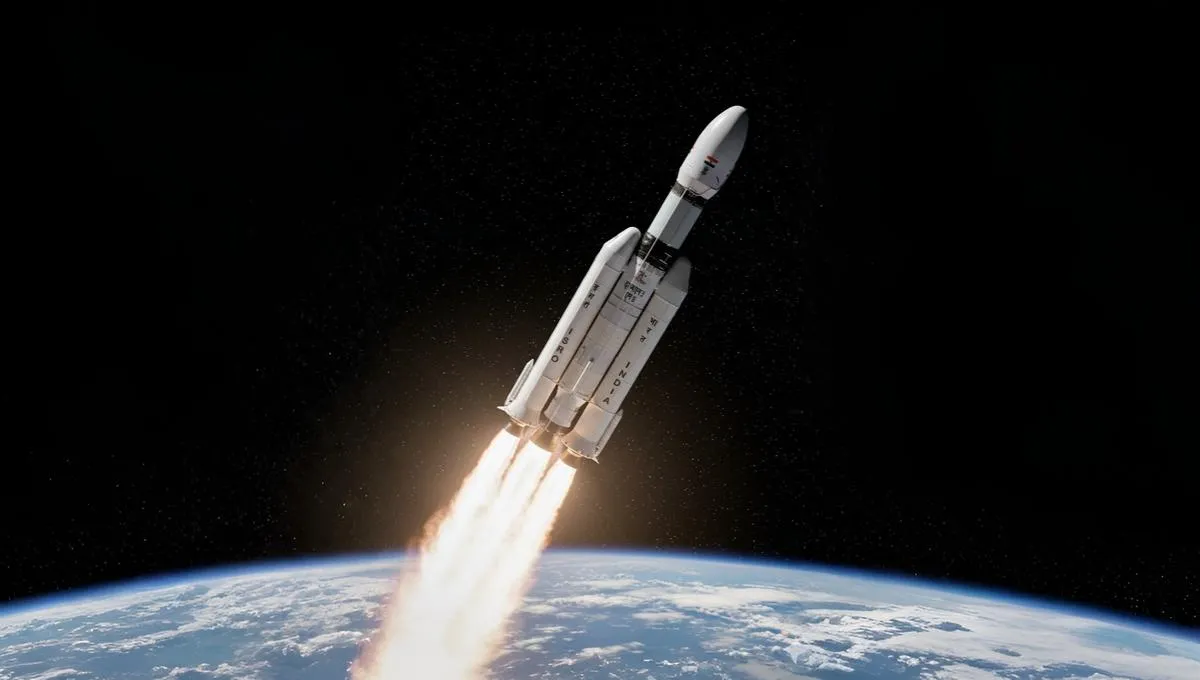
    The Indian Space Research Organization (ISRO) is preparing for a major launch that will boost the nation’s defense communication network. On November 2, 2025, ISRO will send the 4,400-kilogram CMS-03 satellite into orbit aboard the LVM3-M5 rocket from Sriharikota.

    The satellite, the heaviest communication satellite India has ever built, will strengthen secure links across the Indian Ocean and improve coordination for the Indian Navy.

    CMS-03, also known as GSAT-7R, will first enter a geosynchronous transfer orbit before being moved into a geostationary orbit about 36,000 kilometers above Earth. This orbit allows the satellite to remain over the same region, ensuring uninterrupted communication.

    ISRO designed CMS-03 to operate across multiple frequency bands, supporting secure voice, data, and video communications. The satellite acts as a central relay hub, connecting naval assets over large distances, including ships, submarines, and aircraft.

    The new satellite replaces GSAT-7, which was launched in 2013. While that earlier system handled basic communication, CMS-03 offers expanded bandwidth, faster data rates, and better security. It allows real-time data exchange across the Navy’s fleet, improving situational awareness and coordination.

    CMS-03 will also enhance India’s ability to monitor maritime activity in the Indo-Pacific, a region of growing strategic importance. By providing uninterrupted connectivity, the satellite supports both surveillance and tactical operations. It is also expected to help India strengthen communication links with friendly nations during joint naval exercises.

    Standing 43 meters tall, the LVM3 rocket is ISRO’s most powerful launcher. It uses two solid-fuel boosters for liftoff and a cryogenic upper stage powered by liquid hydrogen and oxygen for precise orbital placement. The mission aims to release the satellite into orbit about 16 minutes after launch.

    The LVM3 has completed seven consecutive successful flights, including the Chandrayaan-3 lunar mission in 2023. Engineers rolled the M5 vehicle to the launchpad last week, and final checks are underway. Weather conditions remain favorable, though late-season monsoon clouds could still affect visibility.

    A successful launch will further confirm the LVM3’s reliability and readiness for heavier payloads. ISRO plans to use upgraded versions of this rocket for upcoming Gaganyaan crewed missions. The agency also hopes to attract more international clients by showcasing the vehicle’s consistent performance.

    Beyond defense, satellites like CMS-03 play a broader role in national communication infrastructure. They help link remote regions, improve disaster response, and expand digital access. With this addition, India’s active satellite fleet now exceeds 50, supporting both civilian and military needs.

    The launch is scheduled for Sunday morning from the Satish Dhawan Space Centre. If all goes as planned, the fiery liftoff will mark another milestone in India’s growing space capabilities and its effort to secure the skies above its seas.

  • Impulse Space Plans 2028 Moon Cargo Missions to Support NASA’s Future Lunar Outposts

    Impulse Space Plans 2028 Moon Cargo Missions to Support NASA’s Future Lunar Outposts

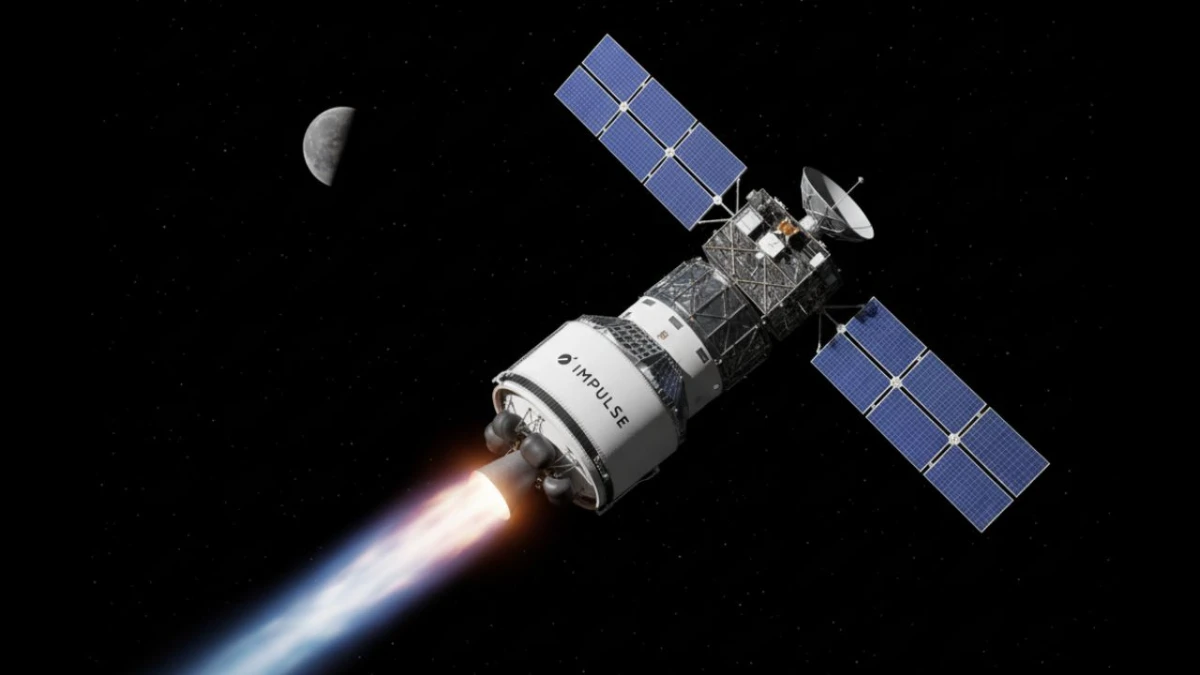
    California-based Impulse Space aims to begin delivering cargo to the Moon by 2028, joining the growing race to build infrastructure for future lunar bases. Founded by former SpaceX engineer Tom Mueller in 2021, the company plans to pair its new lunar lander with its Helios transfer vehicle to carry up to three tons of equipment per trip, filling a gap between small NASA landers and large vehicles like SpaceX’s Starship.

    Impulse’s approach focuses on reliability and simplicity. Its lunar lander will use thrusters powered by nitrous oxide and ethane fuels that remain stable for months in space, unlike cryogenic propellants that evaporate quickly. The Helios stage will push the lander from low Earth orbit to lunar orbit in about a week before releasing it for descent to the surface.

    The company expects its first Helios mission to launch in late 2026. If all goes to plan, two lunar lander missions per year will follow by 2028, delivering about six tons of cargo annually. Mueller said the project targets a “missing middle” in lunar logistics payloads between 0.5 and 13 tons that current missions struggle to accommodate.

    These deliveries could prove vital for upcoming scientific and crewed efforts. NASA’s Artemis program aims to return astronauts to the Moon around 2026 or 2027, with early missions focused on building a long-term presence. Cargo flights like Impulse’s would supply the tools, power systems, and science equipment needed before humans arrive.

    Much of this work will center on the Moon’s south pole, where frozen water lies in permanently shadowed craters. Extracting and studying that ice could support life support systems and even provide fuel for future Mars missions. NASA’s VIPER rover, scheduled for 2027, will explore those deposits; Impulse’s landers could later deliver follow-up instruments or construction gear.

    Mueller, who helped design SpaceX’s Merlin engines, believes smaller, storable-fuel systems can make lunar transport more affordable. By skipping complex in-orbit refueling and using proven hardware, Impulse hopes to cut costs while keeping schedules tight. The company faces competition from Blue Origin and other commercial players pursuing similar goals.

    Beyond logistics, these missions could help scientists place telescopes on the Moon’s surface, offering clearer views of space without atmospheric interference. They could also test materials for radiation shielding and resource extraction.

    “The Moon needs regular deliveries before it can support a real base,” Mueller said. “If we can get that right, everything else will follow.”

    For astronomers and engineers alike, Impulse’s 2028 target marks another step toward making the Moon a permanent part of humanity’s reach into space.

  • ISRO Internship & Student Project Trainee Schemes

    ISRO Internship & Student Project Trainee Schemes

    The ISRO Internship & Student Project Trainee Schemes are offered by the Department of Space/ISRO to students who want to get hands-on exposure in space science, technology, and applications. These schemes provide opportunities for undergraduate, postgraduate, and doctoral students to work at ISRO centers and units across India.

    What are the ISRO Internship & Student Project Trainee Schemes?

    The Internship Scheme is designed for students who want a short-term engagement in science or technology disciplines at ISRO. The Student Project Trainee Scheme addresses students who wish to carry out their academic project work, dissertation, or research work at ISRO units in offline mode. The project work is allotted based on availability of expertise, projects, and suitability of the student’s course to the work at the particular center/unit.

    Why Consider the ISRO Internship & Student Project Trainee Schemes?

    • Practical exposure: Work in an environment where space science and engineering are applied in real missions and research contexts.
    • Academic alignment: Carry out project work that may tie into final-year dissertations or advanced research.
    • Networking: Opportunity to interact with scientists, engineers, and researchers at ISRO centers.
    • Certification: Students receive a certificate of completion upon successful submission of the assignment report and evaluation by the division head.
    • National relevance: Situated within India’s premier space agency, these schemes help students understand how the science and engineering of space applications function operationally.

    Eligibility Criteria

    CriteriaDetails
    NationalityMust be an Indian citizen.
    Academic Status (Internship Scheme)UG/PG/PhD student (or completed within six months) from a recognized university/institution (India or abroad).
    Academic Status (Project Trainee Scheme)Depending on degree level.
    Minimum Academic RequirementAggregate minimum 60% or CGPA 6.32 on a scale of 10.
    Mode of StudyRegular, on-campus students (distance learning is not accepted in most cases).

    Internship Duration and Structure

    SchemeDurationRemarks
    Internship SchemeMaximum 45 days.Short-term exposure while enrolled or just after completion of studies.
    Student Project Trainee Scheme
    BE/BTechMinimum 45 days.
    ME/MTech or MSc (after 1st semester)Minimum 120 days.
    BSc/Diploma (final year only)Minimum 45 days.
    PhD (after coursework)Minimum 30 months.
    Longer-term work aligned to academic project requirements.

    How to Apply: Step-by-Step Process

    Prepare Required Documents

    • Updated resume or CV
    • Bonafide certificate or request letter from your department/institution
    • Academic transcripts (all semester mark sheets) showing CGPA or % aggregate
    • Valid photo identity proof (Aadhaar, college ID, etc.)
    • Permission letter/NOC from your institution if required

    Submit Your Application

    • Visit the official ISRO Internship & Student Project Trainee Schemes webpage on ISRO’s site
    • Some centres require sending the documents by email/post to the centre’s HR/student-project division
    • Apply at least a few weeks in advance

    Wait for Confirmation

    • Applications are reviewed at the respective centre/unit based on project availability and suitability
    • If selected, you will receive confirmation with details of the assignment, duration, and other terms

    Complete the Internship/Project

    • Work on the assignment, submit your report or documentation at the end
    • A certificate will be awarded upon satisfactory completion of the project/internship and its evaluation

    What Will You Learn as an Intern or Project Trainee?

    While at an ISRO center, you may gain experience in areas such as

    • Space science and technology, instruments, remote sensing, satellite systems, data analysis
    • Engineering disciplines like electronics, mechanical, electrical, RF systems, digital systems
    • Application of theory to tasks that support Indian space missions and related operations
    • Professional research culture, teamwork and project development in a government-space agency context
    • This type of exposure can strengthen your academic portfolio, build your technical skills, and prepare you for future roles in space science, engineering, data science, or related fields.

    Contact Information

    Contact MethodDetails
    Websitehttps://www.isro.gov.in/InternshipAndProjects.html
    Email/PhoneContact details vary by ISRO center/unit; check the center’s internship/project traineeship page.
  • China’s Zhuque-3 Rocket Completes Major Static Fire Test, “It will take them over 5 years to beat…” Says Elon Musk

    China’s Zhuque-3 Rocket Completes Major Static Fire Test, “It will take them over 5 years to beat…” Says Elon Musk

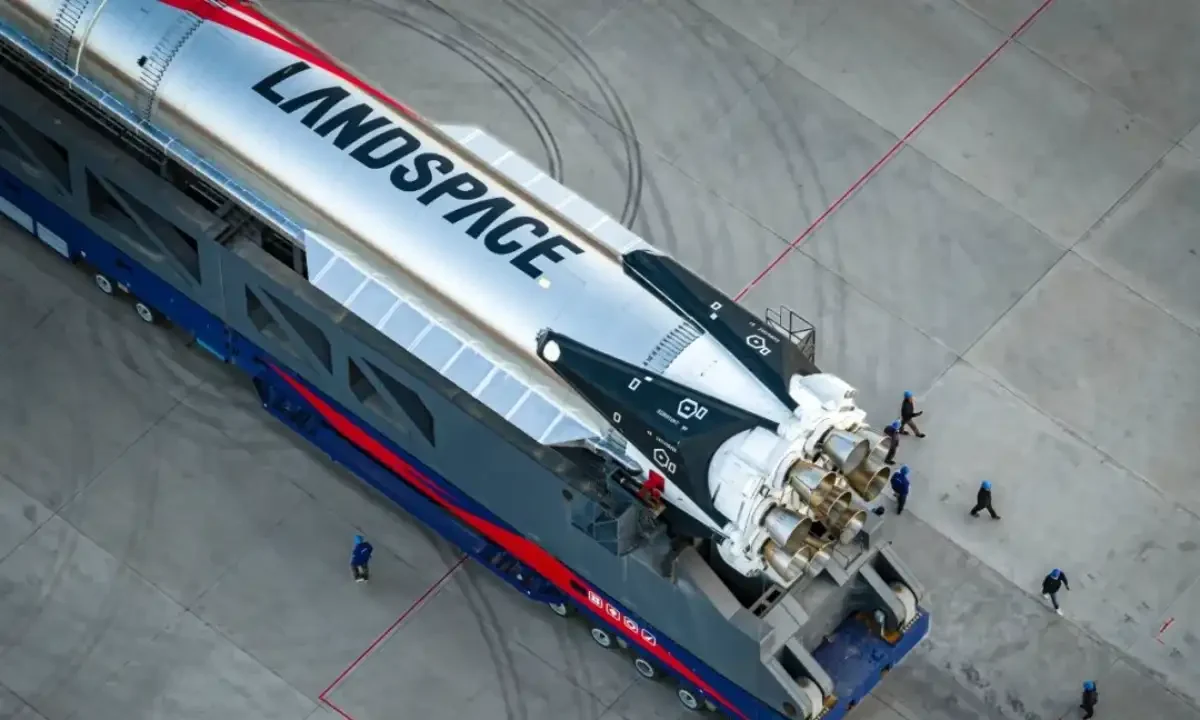
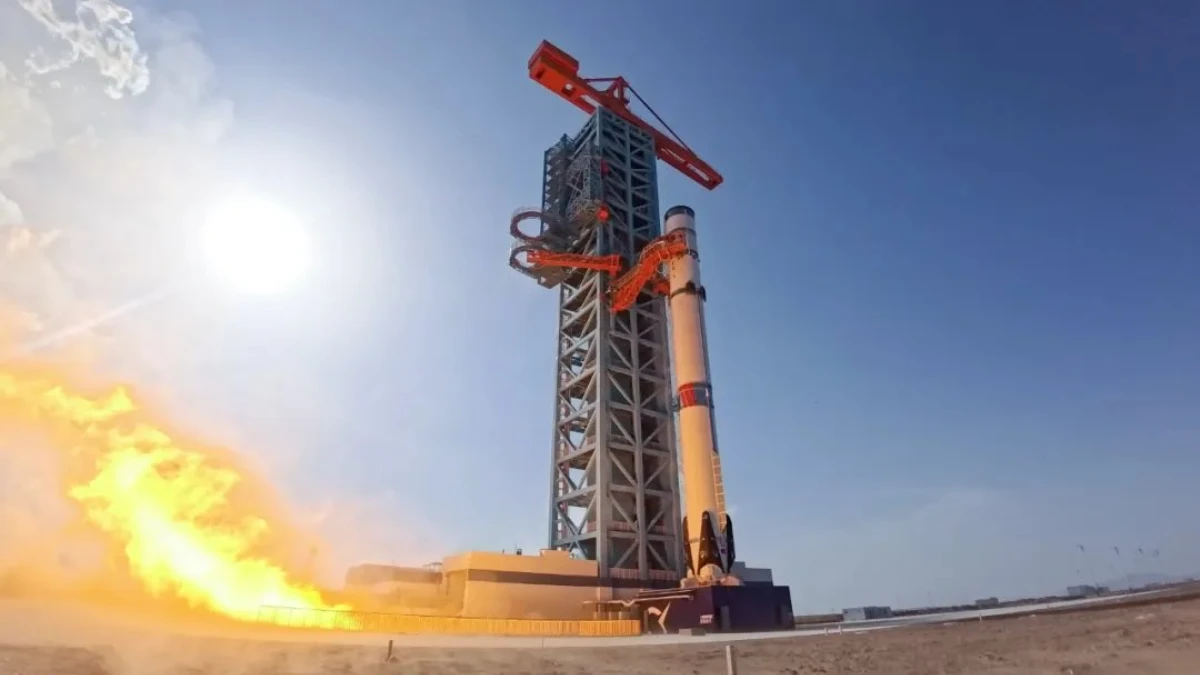
    China’s private rocket company LandSpace has completed a full-scale static fire test of its Zhuque-3 rocket, marking a major step toward its first orbital launch. The test took place on October 24 at the Dongfeng launch site, where all 12 engines on the first stage ignited successfully, confirming the rocket’s readiness for flight in the coming months.

    Land Space Zhuque-3 Static Fire Test.
    Land Space Zhuque-3 Static Fire Test. Image credit: LandSpace/X

    The brief but powerful test saw Zhuque-3’s methane-fueled TQ-12 engines produce more than 900 tons of thrust combined, enough to lift 21 tons to low Earth orbit. That performance puts it on par with SpaceX’s Falcon 9, a comparison that has drawn attention across the global space community.

    Zhuque-3 is a two-stage rocket designed for reusability. The first stage, made of stainless steel, is meant to return to Earth and land on its legs, while the upper stage is expendable. The choice of stainless steel makes the rocket more durable during reentry, reducing damage and maintenance time between launches.

    Methane fuel is another key feature. Unlike kerosene, it burns cleaner and leaves less residue inside engines, which makes reuse more efficient. It’s also easier to produce synthetically, which could be useful for future missions to Mars. LandSpace has been testing the design for several years, including a 350-meter flight test of the booster in January 2024.

    The similarities between Zhuque-3 and SpaceX’s Falcon 9 are clear: grid fins for steering, landing legs, and an emphasis on reusability to cut launch costs. But LandSpace’s approach adds a few improvements. By combining a stainless-steel structure with methane fuel, Zhuque-3 blends features from SpaceX’s Falcon 9 and Starship, both of which have influenced modern rocket design.

    Online discussions have compared the two rockets in detail, with some enthusiasts noting that Zhuque-3’s 12 engines could offer greater redundancy than Falcon 9’s nine engines. Others have pointed out that while Falcon 9 has a long track record of success, Zhuque-3’s first launch will determine whether these design advantages hold up in practice.

    SpaceX CEO Elon Musk said on X on October 24, 2025, “It will take them over 5 years to reach Falcon 9 levels of reliability and production/launch rate, by which time SpaceX will have transitioned to Starship and be doing over 100 times the annual payload to orbit of Falcon.”

    For scientists and astronomers, reusable rockets like Zhuque-3 could open more opportunities for affordable missions. Lower launch costs mean smaller observatories, universities, and research teams could send instruments into orbit.

    A reusable launcher capable of carrying heavy payloads could support more satellites and telescopes, expanding research into black holes, exoplanets, and cosmic radiation. China’s growing private space sector could also accelerate global competition, pushing faster innovation and more frequent missions.

    LandSpace aims to launch Zhuque-3 before the end of the year, beginning with a test mission to prove its reusability. If the first flight succeeds, it could signal the start of a new chapter for Asia’s space ambitions.

    The successful static fire marks a quiet but important milestone, showing that China’s private space industry is rapidly catching up with the world’s leading players.

  • Space Debris from Suspected Chinese Rocket Lands Smoking in Western Australia Outback

    Space Debris from Suspected Chinese Rocket Lands Smoking in Western Australia Outback

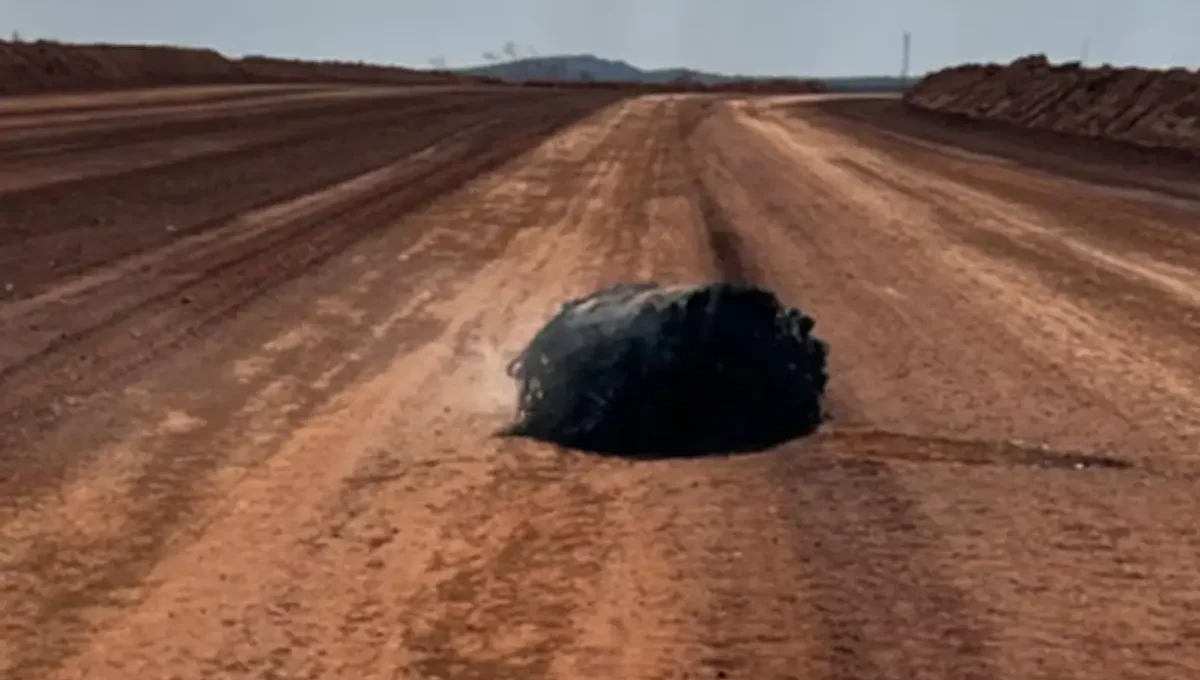
    A piece of suspected space debris from a recent Chinese rocket launch crash-landed near the mining town of Newman in Western Australia on October 18, 2025, sparking an investigation by local and federal authorities. The large cylindrical object, still smoking when discovered by miners, is believed to be part of a rocket’s upper stage that survived reentry before slamming into the desert landscape.

    Police quickly sealed off the area after miners reported a metallic structure lying across a remote road, still radiating heat from its descent. The object, roughly the size of a large barrel, showed signs of intense thermal damage: charred carbon fiber, warped metal, and streaks of melted resin. No injuries were reported.

    Early inspections by experts from the Australian Space Agency and the Australian Transport Safety Bureau confirmed the debris was not from an aircraft. Instead, it matched the characteristics of a composite over-wrapped pressure vessel (COPV), a type of high-pressure tank used to store gases or propellants on rockets. These tanks are built to withstand extreme vibration and temperature changes during launch and sometimes endure the heat of reentry without fully burning up.

    Space archaeologist Alice Gorman identified the object as likely belonging to the upper stage of China’s Jielong 3 rocket (AKA Smart Dragon 3), which launched in late September 2025 carrying a batch of commercial satellites. Dutch satellite tracker Marco Langbroek independently confirmed the likelihood, noting that the object’s design and reentry path aligned with data from the Jielong 3 mission.

    The Jielong 3, developed by China Rocket Co. under CASC, is part of Beijing’s expanding program to provide rapid, low-cost satellite deployment. However, as with many modern rockets, not all components disintegrate on reentry. Lightweight carbon fiber composites can survive the fiery descent, especially when shaped to resist aerodynamic heating.

    During reentry, most spacecraft fragments vaporize from frictional heat exceeding 1,500 degrees Celsius. But carbon fiber COPVs are resilient; their reinforced layers protect the inner metal liner from melting. Analysts believe the object tumbled as it fell, preventing any single side from taking the full heat load, which may explain why it landed mostly intact.

    Australia’s wide and sparsely populated interior has become a frequent landing site for uncontrolled reentries. In recent years, parts of SpaceX and Indian rocket stages have been found in rural areas or along western beaches. The country’s 3 million square miles of open terrain make it a likely target zone for falling debris.

    NASA estimates that more than 36,000 objects larger than a softball currently orbit Earth, with millions of smaller fragments traveling at speeds of up to 28,000 kilometers per hour. Collisions between satellites and old rocket bodies increase this count each year, raising concerns about safety in orbit and the risk to populated areas during reentries.

    European Space Agency director Josef Aschbacher, visiting Australia earlier this year, said that with global launch activity tripling over the past decade, the world must adopt stricter end-of-life measures for rockets. Many experts, including Gorman, argue for mandatory reentry planning, ensuring upper stages are either guided into the ocean or equipped with systems that help them burn up safely.

    Western Australia Police are leading the current investigation, supported by the Australian Space Agency and local mining authorities. Teams are collecting samples for chemical and isotopic testing to trace the object’s manufacturing origin. Results are expected to confirm whether the debris indeed came from China’s Jielong 3 mission.

    If verified, the incident could open diplomatic discussions about liability under the United Nations Outer Space Treaty, which holds launching states responsible for damage caused by their space objects. Similar cases in the past have prompted international calls for better space debris management.

    For now, the scorched tank remains secured in a police storage facility in Newman. It stands as another reminder of how our growing presence in space occasionally leaves traces on Earth, sometimes falling back to remind us of the risks of orbiting above.

  • Europe’s Aerospace Giants Unite in $11.7 Billion Deal to Build Satellite Powerhouse

    Europe’s Aerospace Giants Unite in $11.7 Billion Deal to Build Satellite Powerhouse

    Three of Europe’s top aerospace firms, Leonardo, Thales, and multinational Airbus, have agreed on a framework to merge their satellite businesses into a new joint venture worth about 10 billion euros ($11.7 billion), reported Reuters. The deal, expected to be finalized by the end of 2025, aims to create a unified European leader in satellite manufacturing and operations amid fierce global competition.

    The venture will combine Airbus’s Defence and Space division, Thales Alenia Space (jointly owned by Thales and Leonardo), and Telespazio, which manages ground control and data services. Together, these units generate between 6 and 6.5 billion euros annually but have faced shrinking profit margins and rising costs due to intense competition from private and state-backed rivals.

    The new structure, informally called Project Buomo, will be based in France and modeled after MBDA, the pan-European missile consortium that united industry players from multiple nations. Officials say the plan will strengthen Europe’s autonomy in space, allowing it to compete with the United States and China in both commercial and defense satellite markets.

    Executives from all three firms describe the move as a necessary step to survive a rapidly changing market. Small, low-cost satellites launched in large constellations by firms like SpaceX have transformed the industry. SpaceX’s Starlink network, with over 6,000 satellites, has set new standards for speed and affordability, pressuring traditional manufacturers to adapt.

    China’s growing space industry has also accelerated the race. The country’s launch providers have hit record numbers this year, offering low-cost rides to orbit. European officials say the merger will help counter that dominance by sharing costs, technology, and infrastructure.

    Beyond commercial contracts, the merger could reshape how Europe contributes to major scientific missions. Instruments from Airbus and Thales Alenia Space already power spacecraft like ESA’s Euclid telescope, launched in 2024 to study dark matter. A stronger combined company could fast-track future projects, such as exoplanet hunters and next-generation Earth-observation satellites.

    For defense, the alliance is expected to focus on secure communications, reconnaissance, and early-warning systems. Europe currently depends partly on U.S. and private satellite services. A unified effort could improve independence in surveillance and secure data transfer across borders.

    The deal will face intense regulatory review, especially from France and Italy, which hold key stakes in Thales and Leonardo. The European Commission will examine competition concerns, given that the venture would control a large share of the regional satellite market.

    Integrating more than 20,000 employees across multiple countries and corporate systems will also be difficult. Past attempts to merge European aerospace units have failed due to national interests and management disagreements. This time, leaders are promising a leaner structure to avoid duplication and inefficiency.

    Michael Schoellhorn, head of Airbus Defence and Space, said in a recent statement that talks are “on the right track,” adding that a united approach is essential if Europe wants to keep pace with global rivals.

    A stronger European satellite industry could have wide-reaching effects. Satellites track deforestation, monitor rising sea levels, and power navigation systems. More efficient production and collaboration could reduce costs for climate and communication programs while boosting Europe’s position in space exploration.

    The merger represents a strategic shift toward cooperation over competition within Europe’s fragmented aerospace sector. If finalized, it will mark one of the continent’s largest industrial consolidations in recent years and a major step toward ensuring Europe remains visible in the fast-changing space economy.

  • US Unveils ‘Golden Dome’ as Russia and China Step Up Aggressive Satellite Maneuvers in Orbit

    US Unveils ‘Golden Dome’ as Russia and China Step Up Aggressive Satellite Maneuvers in Orbit

    The race for control of Earth’s orbit is accelerating as the United States, Russia, and China expand military activity in space. Russia and China have been testing close-proximity maneuvers that mimic attack formations, while the US is developing a new space-based defense system known as the Golden Dome. The shift signals growing tension in low-Earth orbit, where satellites are becoming both strategic assets and potential targets.

    In recent months, US officials have tracked several Russian satellites performing complex proximity operations, a move viewed as preparation for offensive and defensive actions in orbit. These tests involve one satellite shadowing another at close range, capable of jamming signals or altering a target’s course.

    In early 2025, the US Space Command confirmed that multiple Russian spacecraft circled a target satellite at altitudes near 300 miles, using short thruster bursts to maintain position.

    The same pattern appeared in 2024 when Russia’s Cosmos 2576 followed a US imaging satellite along a shared orbital path. Though no collisions occurred, these rehearsals build the precision skills needed for space combat. Analysts say they demonstrate how Russia is training to disable or disrupt rival satellites without open conflict.

    China is following a similar path. Its Shiyan and Shijian satellites have been conducting synchronized maneuvers in low-Earth orbit that US officials describe as simulated dogfights.

    In 2024, three Shiyan-24C and two Shijian-6 satellites performed complex rendezvous maneuvers, coming within meters of each other in coordinated tests. The exercises reportedly involved grappling arms and laser systems being studied for anti-satellite roles.

    China’s satellite fleet has grown rapidly, with more than 1,000 active satellites in orbit, second only to the US. The country launched 66 rockets in 2024, many carrying surveillance payloads and prototype space-defense systems. The Pentagon has also raised concerns about Chinese work on directed-energy weapons designed to disable satellites by overheating their sensors.

    In response, the US is building the Golden Dome, a space-based missile and satellite defense system announced by President Trump in May 2025. With a $175 billion budget, it combines space-based sensors and interceptors capable of tracking and neutralizing intercontinental missiles and hypersonic weapons from orbit. The system is being managed by Space Force General Michael Guetlein, who said the goal is to provide global coverage using a constellation of hundreds of satellites.

    Initial trials in Alaska have shown progress in detecting mock missile launches. SpaceX is reportedly among the contractors being considered to help deploy the Golden Dome network, given its experience managing large constellations through Starlink. Full deployment could take a decade, but early prototypes are already being tested in classified programs.

    Critics warn that the Golden Dome could accelerate the weaponization of space, breaking long-standing norms established by the 1967 Outer Space Treaty, which designates space for peaceful use. China has already condemned the plan, calling it a threat to international stability. Analysts fear the system could push other nations to expand their own offensive programs.

    Astronomers are also worried about the growing number of satellites and debris that threaten visibility from Earth. Past anti-satellite tests, such as China’s 2007 strike that produced more than 3,000 debris fragments, have already made some orbital regions dangerous. Russia’s 2021 test added 1,500 more pieces, many still in orbit today.

    Debris clouds can reflect sunlight and disrupt astronomical observations. Large constellations like Starlink already interfere with deep-sky imaging, and the addition of weaponized systems could make the problem worse. Missions such as the European Space Agency’s Euclid telescope rely on clear skies to map billions of galaxies. Increasing orbital clutter could limit the data they collect.

    Scientists warn that continued satellite conflicts could trigger the Kessler syndrome, a chain reaction of collisions that renders parts of orbit unusable for decades. The UN has called for a moratorium on debris-generating tests, but enforcement remains weak. With new systems like Golden Dome and rival nations stepping up military drills, the race for orbital dominance is tightening.

    For now, astronomers and defense experts agree on one point: if diplomacy fails to catch up with technology, the next frontier of conflict may be fought above our heads.

  • China’s Three Gorges Dam Alters Earth’s Spin and Daily Rhythm Through Massive Water Shift

    China’s Three Gorges Dam Alters Earth’s Spin and Daily Rhythm Through Massive Water Shift

    China’s Three Gorges Dam, the world’s largest hydroelectric project, is not only generating electricity and controlling floods but also affecting the Earth’s rotation. Completed in 2006 along the Yangtze River in Hubei Province, the dam holds 39 billion cubic meters of water. Scientists say this massive shift in weight slightly changes the planet’s daily spin.

    Spanning more than 2 kilometers, the Three Gorges Dam produces 22,500 megawatts of electricity. The reservoir, large enough to fill Lake Mead 20 times, also serves as flood control. Beyond these benefits, the dam’s construction and operation have a measurable effect on Earth’s rotation because of the mass of water it holds at 31 degrees north latitude.

    The physics behind this change is straightforward. Earth rotates like a spinning top. When mass is redistributed closer to the poles, the planet’s spin slows down. Filling the reservoir moved roughly 40 trillion kilograms of water northward. This change increases the Earth’s moment of inertia, causing days to lengthen slightly.

    NASA scientists have tracked the impact. Their measurements show that each day now lasts 0.06 microseconds longer. While this is an extremely small amount, it is significant enough for astronomers and geophysicists, who monitor changes in Earth’s rotation using atomic clocks and GPS satellites.

    These measurements place the dam’s effect in perspective. Natural events, such as the 2004 Sumatra earthquake, shortened days by 2.68 microseconds, while climate-related ice melt adds around 1.7 milliseconds per year. Human constructions are now on a scale that can influence planetary motion, adding to natural shifts.

    The dam’s influence extends beyond Earth’s spin. About 1.3 million people were relocated due to the reservoir, and ancient archaeological sites were submerged. At the same time, it cuts carbon emissions by an estimated 100 million tons each year, a positive step for climate mitigation. However, silt accumulation behind the dam and downstream ecological disruption remain challenges that engineers and environmentalists continue to address.

    For scientists and stargazers, even tiny shifts in Earth’s rotation matter. Tracking these changes helps refine calculations for satellite navigation, astronomical observations, and climate studies. The Three Gorges Dam provides a clear example of how large human projects now interact with global systems in measurable ways.

    The dam shows that human activity can influence fundamental planetary processes. While the effect on daily life is minimal, it is a reminder that engineering projects of this scale reach beyond their immediate goals, subtly shaping the planet’s dynamics and providing valuable data for science and observation.

  • NASA Shutdown and JPL Layoffs Disrupt Space Projects and Threaten Scientific Progress

    NASA Shutdown and JPL Layoffs Disrupt Space Projects and Threaten Scientific Progress

    NASA is facing significant disruption as a U.S. government shutdown began on October 1, 2025, leaving thousands of employees furloughed and delaying key projects. The shutdown occurred after Congress failed to approve a federal budget.

    At the same time, NASA’s Jet Propulsion Laboratory (JPL) in Pasadena, California, announced it would lay off 550 staff, about 11% of its workforce, due to flat budgets and anticipated funding cuts for 2026. These combined setbacks are affecting operations across the agency.

    NASA employs more than 18,000 people nationwide. During the shutdown, around 15,000 staff face furloughs, which means forced time off without pay.

    Essential operations continue, such as monitoring the International Space Station (ISS), which houses seven astronauts, and maintaining satellites that observe Earth’s weather or space. However, most non-essential research and administrative functions are halted, creating delays across missions.

    The layoffs at JPL add another layer of strain. JPL is responsible for planetary exploration and robotic spacecraft, including rovers on Mars and probes to the outer planets. Leadership says the cuts are part of a reorganization to prioritize critical projects in light of flat budgets and a proposed 24% funding reduction for NASA in 2026. Still, staff worry about the loss of expertise and the long-term impact on research and development.

    Several major NASA projects continue with minimal interruption. The International Space Station (ISS) remains staffed by a skeleton crew of 200 workers who monitor life support systems, maintain equipment, and ensure the safety of experiments.

    Artemis, the program to return humans to the Moon, also continues under pre-funded contracts. Recent launches, such as the October 5 Atlas V carrying a reconnaissance satellite, proceeded as scheduled. However, no new grants or research initiatives can start, delaying studies in fields such as astrophysics and Earth sciences.

    Data analysis from Mars missions is particularly affected. The Perseverance rover collects rock samples and conducts experiments, but furloughs prevent teams from processing the data. This creates backlogs in identifying organic molecules and other signs of past life.

    Earth science missions also face delays. Satellites tracking hurricanes, wildfires, and climate trends see slower data processing, affecting forecasts and emergency planning. Previous shutdowns have caused days-long delays in storm tracking, illustrating the real-world consequences.

    Research from space telescopes like Hubble and James Webb continues, but scientists lack access to communication channels and computing resources. This slows collaboration and the release of findings to the global community. International partners must adjust schedules, which can strain cooperative projects and slow the overall pace of discovery.

    Repeated shutdowns and layoffs risk long-term impacts. JPL has implemented job cuts four times in two years, prompting concerns that skilled engineers may leave for private companies. This could reduce public sector capacity to carry out complex space missions. NASA’s budget, about 0.5% of federal spending, supports technologies used in everyday life, including GPS and medical advancements.

    Despite the challenges, NASA has recovered from previous shutdowns. The agency has resumed major missions after disruptions, relying on volunteers, private sector partnerships, and careful prioritization. Still, morale and efficiency are affected, and prolonged uncertainty threatens the agency’s ability to maintain scientific momentum.

    NASA’s situation underscores the link between government funding and scientific progress. Furloughs and layoffs not only delay current missions but also impact future research and technological development. To continue exploring space effectively, stable funding and consistent staffing are essential for the agency and the broader scientific community.