Category: Space

Explore the vastness beyond our planet. This section covers missions, discoveries, and events that expand our reach into the cosmos. From new rocket launches to deep-space observations, “Space” keeps you updated on humanity’s steps into the unknown.

  • NASA launches Sentinel 6B to expand global sea level record as oceans keep rising

    NASA launches Sentinel 6B to expand global sea level record as oceans keep rising

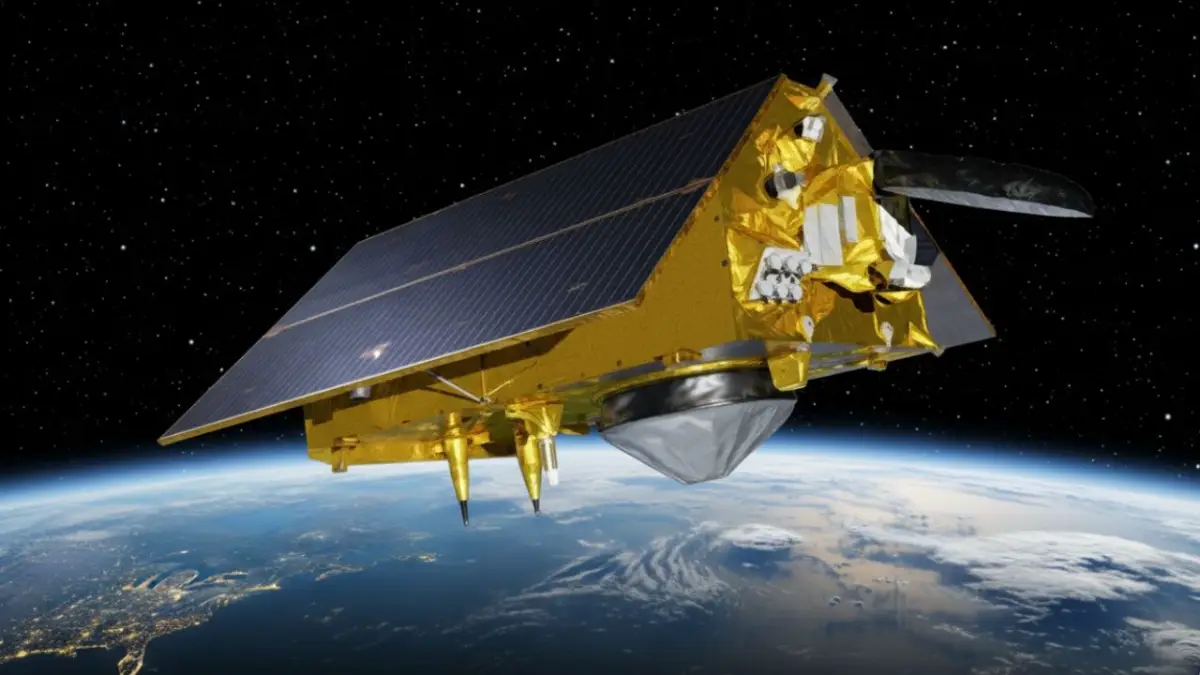
    A new satellite built to track rising oceans is now in orbit after a night launch from California. Sentinel 6B rode a SpaceX Falcon 9 from Vandenberg Space Force Base on November 16, 2025, lifting off at 9:21 p.m. local time. The mission aims to deliver the most detailed sea level data yet as coastal cities face higher tides and more frequent flooding.

    The Falcon 9 returned its booster to a landing site a few minutes after liftoff, marking the company’s 500th flight with a reused stage, and the satellite sent its first signal home less than an hour after separating from the rocket.

    Sentinel 6B carries a radar instrument that sends pulses toward the ocean and measures the time it takes for the signal to return. This lets scientists track sea height across most of the planet with accuracy to a few centimeters.

    The readings work through clouds and at night, which keeps the record steady even in storms. The satellite also measures wave heights, wind speeds over the ocean, and temperature layers in the atmosphere, details that feed into weather models used for daily forecasts and hurricane tracking.

    The mission comes as sea levels continue to rise. Global averages have climbed about 10 centimeters in the last 25 years, and the pace has increased as oceans warm and ice sheets add more water. Some regions see faster change than others because of shifting currents.

    Cities including Miami, Shanghai, and Dhaka already face higher tides and stronger storm surges. Governments use sea level data to plan coastal barriers, guide new construction, and decide when to move people out of high-risk areas.

    Sentinel 6B will operate with its twin, Sentinel 6 Michael Freilich, which launched in 2020. Both satellites will fly in the same orbit for about a year so teams can compare readings and check for calibration errors. After that period, the older satellite will shift to a new orbit where it will help map features on the seafloor by tracking tiny changes in the ocean surface caused by underwater mountains. Sentinel 6B will then take over as the primary source for global records.

    The launch continues a record of sea level measurement that began in 1992 with the joint NASA and French space agency mission TOPEX/Poseidon. Jason 1, Jason 2, and Jason 3 followed. Together, these satellites produced a continuous dataset that now spans more than three decades.

    With Sentinel 6B active, the record is expected to extend close to 40 years by the end of the decade. Long records allow scientists to separate natural shifts, such as temporary dips from cooler ocean cycles, from long-term change driven by warming.

    The project involves NASA, the European Space Agency (ESA), NOAA, EUMETSAT, and the Copernicus program. Airbus in Germany built the satellite and prepared it for storage before launch. The French space agency supplied instruments and technical support. Data from the mission will be shared openly with researchers and governments.

    Sentinel 6B now circles Earth at about 1,336 kilometers and completes one orbit in 112 minutes. Engineers will spend the next few months testing every system. Routine sea level measurements are expected to begin in early 2026. Once active, the satellite will be one of the main tools used by scientists and coastal planners as communities face rising water and more frequent flooding.

  • Early Polarization Data Reveals a Stunning Supernova Explosion in NGC 3621 Galaxy

    Early Polarization Data Reveals a Stunning Supernova Explosion in NGC 3621 Galaxy

    Astronomers have captured one of the most detailed early looks at a dying star after a type II supernova in the nearby galaxy NGC 3621 was caught only 1.2 days after it erupted. The blast, named SN 2024ggi, sits about 7 million parsecs from Earth. Early readings came from the FORS2 instrument on the Very Large Telescope in Chile, giving researchers a rare view of how the shock broke through the star’s surface and pushed outward in a fixed direction.

    Polarization happens when light waves align instead of moving in random directions. Most supernovae show almost none of it because their blasts expand in a round shape. When the blast is slightly stretched, the scattered light no longer cancels out, and a small part of it becomes aligned. This lets researchers map the shape of the explosion without taking a direct picture.

    The first FORS2 measurements produced a straight line on the Q-U plot, which meant the blast followed a clear axis from the start. The position angle was about 66 degrees. This showed that the shock did not expand evenly and instead pushed harder along one direction as it emerged from the star’s outer layers.

    High-energy elements such as oxygen and carbon followed the same axis as the main light. Hydrogen features, which form farther from the center, appeared more mixed. This pattern showed that the earliest light escaped along the central axis while cooler material filled a wider region.

    About ten days after the blast, the polarization changed sign but kept almost the same direction. This shift meant the visible shape changed from stretched to flattened, while the axis itself stayed fixed. The debris continued to point the same way even as the structure changed during expansion.

    Between day two and day seven, the axis turned by nearly sixty degrees. During this period, the expanding material ran into gas the star had released earlier in its life. That gas formed a tilted disk around the star. The short rotation in the measured angle came from the combined effect of the disk and the explosion before the original axis took over again.

    These findings provide clues to how the core collapsed. One model predicts a chaotic, uneven blast driven by neutrinos. Another point is rotation and magnetic fields, which can force matter to move along a stable direction. SN 2024ggi stayed aligned from the first day through almost a month, which supports the rotation-based model. The blast was moderately stretched, enough to create steady polarization without the extreme shapes seen in some other events.

    Several other facilities also followed SN 2024ggi in the weeks after the event, including the 2.4-meter Lijiang Telescope in China, the 3.6-meter Telescopio Nazionale Galileo in Italy, and the 6.5-meter Magellan telescopes in Chile. But the earliest polarization data that revealed the axis came from the VLT’s FORS2.

    Only a small number of type II supernovae have been measured this early. SN 2023ixf, another nearby event, showed uneven expansion too, but its first readings came after the shock had already crossed the outer layers. SN 2024ggi is the first case in which astronomers caught the breakout itself and later saw the same axis deeper in the hydrogen envelope.

    The early and consistent data make SN 2024ggi one of the clearest recorded examples of a massive star showing its final structure in real time. The event suggests that some stars do not explode evenly and instead follow a stable direction shaped by their rotation and magnetic fields long before they collapse.

    Source: An axisymmetric shock breakout indicated by prompt polarized emission from the type II supernova 2024ggi

  • Dark Matter and Dark Energy Might Be an Illusion, Says New Physics Model

    Dark Matter and Dark Energy Might Be an Illusion, Says New Physics Model

    A physicist at the University of Ottawa is challenging one of modern astronomy’s biggest idea that invisible dark matter holds galaxies together. In a study published in September, Rajendra Gupta argues that galaxies may not need unseen mass at all. Instead, he suggests that the laws of physics themselves change over time as the universe expands, altering gravity and the speed of light in ways that mimic dark matter’s effects.

    Gupta’s research builds on his “Covarying Coupling Constants plus Tired Light” model, or CCC+TL. It modifies the basic constants of nature rather than introducing new forms of matter or energy. By adjusting how the speed of light and gravity’s strength vary with cosmic age, his model reproduces the rotation speeds of galaxies from the SPARC database, a major collection of observations that record how fast stars orbit their galactic centers.

    The model also explains supernova brightness and cosmic expansion without invoking dark energy. For decades, astronomers have used dark matter to explain why galaxies spin faster than visible stars and gas can support.

    In standard physics, outer stars should orbit more slowly, yet their speeds stay nearly constant far beyond the galactic core. To account for this, researchers proposed halos of invisible dark matter surrounding galaxies. Despite extensive searches with detectors such as Xenon1T, no dark matter particles have ever been found.

    The James Webb Space Telescope (JWST) has added new questions to the mystery. Webb has observed massive, well-formed galaxies appearing just a few hundred million years after the Big Bang. Standard dark matter models predict that galaxies at that time should be smaller and less organized. Gupta’s CCC+TL framework naturally produces large, early galaxies, as its variable constants allow faster structure formation and a longer cosmic timeline.

    The model also offers a possible solution to the Hubble tension, the ongoing disagreement over the universe’s expansion rate. Measurements from nearby galaxies differ from those inferred from the early universe’s background radiation. Gupta’s equations suggest the universe could be about 27 billion years old, roughly twice the standard estimate, which would reconcile these differences by giving the cosmos more time to evolve.

    His theory builds on an idea first proposed in 1937 by physicist Paul Dirac, who suggested that the strength of gravity might change over time. In Gupta’s version, both the gravitational constant and the speed of light vary according to a time-dependent factor represented as f(t) = exp[α(t – t₀)].

    The value of α is small and negative, meaning gravity and light speed slowly weaken as the universe ages. These changes modify Einstein’s equations and alter how galaxies behave on large scales.

    In this framework, there is no need for a cosmological constant or invisible energy. The new terms that emerge from α act like dark matter and dark energy. Near a galaxy’s dense center, the constants barely change, and ordinary matter dominates. Farther out, the variation becomes stronger, increasing the gravitational pull that keeps stars moving steadily even in low-density regions.

    To test the model, Gupta analyzed several galaxies from the SPARC database, including NGC 3198, a classic spiral with a flat rotation curve. His equations reproduced the observed rotation speeds using only visible matter and the variable constants. Across seven galaxies of different shapes and sizes, he found consistent thresholds where α begins to rise, corresponding to the radius where the flat rotation pattern starts.

    The model also scales up to larger structures such as galaxy clusters. When Gupta applied it to gravitational lensing data, which shows how clusters bend light from distant galaxies, the results matched observed patterns using the same parameters. At earlier cosmic times, the influence of α-matter fades, predicting steeper rotation curves in young galaxies, a trend already seen in recent JWST data.

    Gupta combines the changing constants with a modified view of how light travels called tired light, where photons gradually lose energy as they move through space. This process increases redshift without requiring dark energy. Critics of tired light argue that it would blur distant images, but Gupta says his model avoids this by linking redshift to the changing speed of light instead of scattering.

    If the theory holds up, it could remove both dark matter and dark energy from cosmology. Galaxies would form and remain stable because of evolving physical laws, not hidden substances. The model could also help explain gravitational lensing and the cosmic microwave background by introducing small, gradual variations in the constants across space and time.

    Astronomers plan to test these ideas with future data. The European Space Agency’s Euclid telescope and Japan’s LiteBIRD mission could detect whether physical constants vary across cosmic distances. Gravitational wave detectors such as LISA may also find early-universe signals consistent with Gupta’s predictions.

    While many scientists remain cautious, Gupta’s work reflects a growing curiosity among cosmologists about whether the universe’s constants are truly constant. If confirmed, his theory could mean that dark matter and dark energy are not separate substances at all but illusions created by the slow, natural drift of the universe’s fundamental laws.

    Source: Testing CCC+TL Cosmology with Galaxy Rotation Curves

  • ESA Releases New Space Rider Blueprint. Europe’s First Reusable Spaceplane Is Closer Than You Think!

    ESA Releases New Space Rider Blueprint. Europe’s First Reusable Spaceplane Is Closer Than You Think!

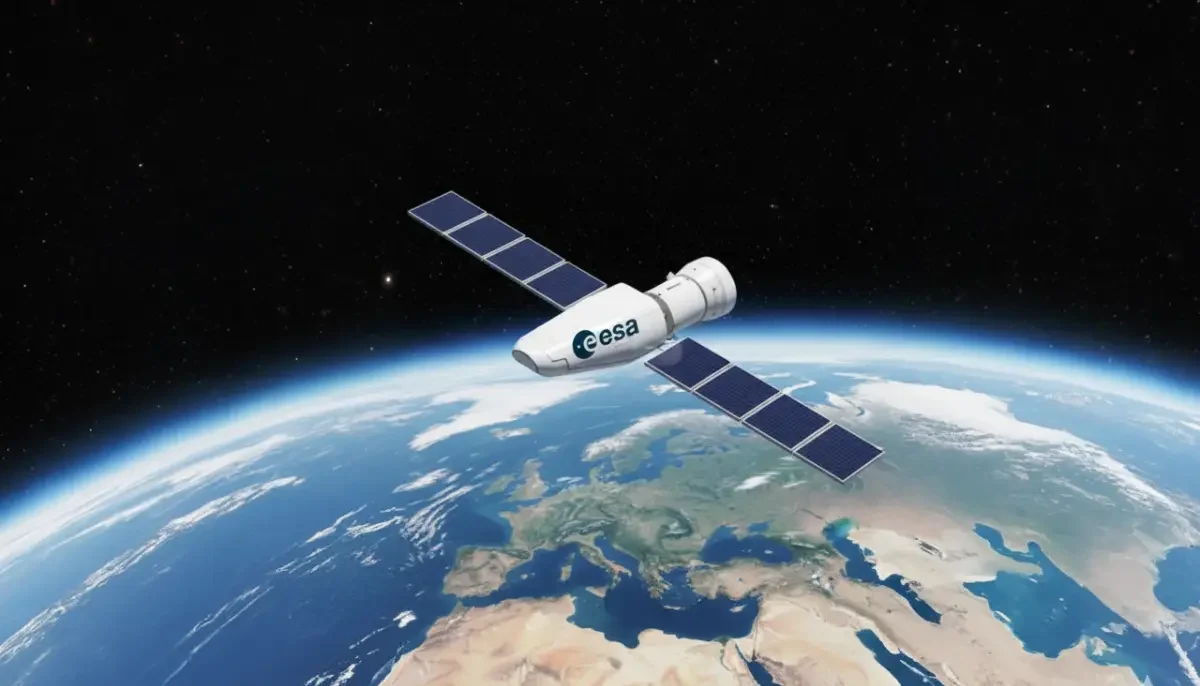
    The European Space Agency is moving closer to the first flight of Space Rider, a reusable orbital spaceplane designed to carry research equipment into low Earth orbit and return to a runway.

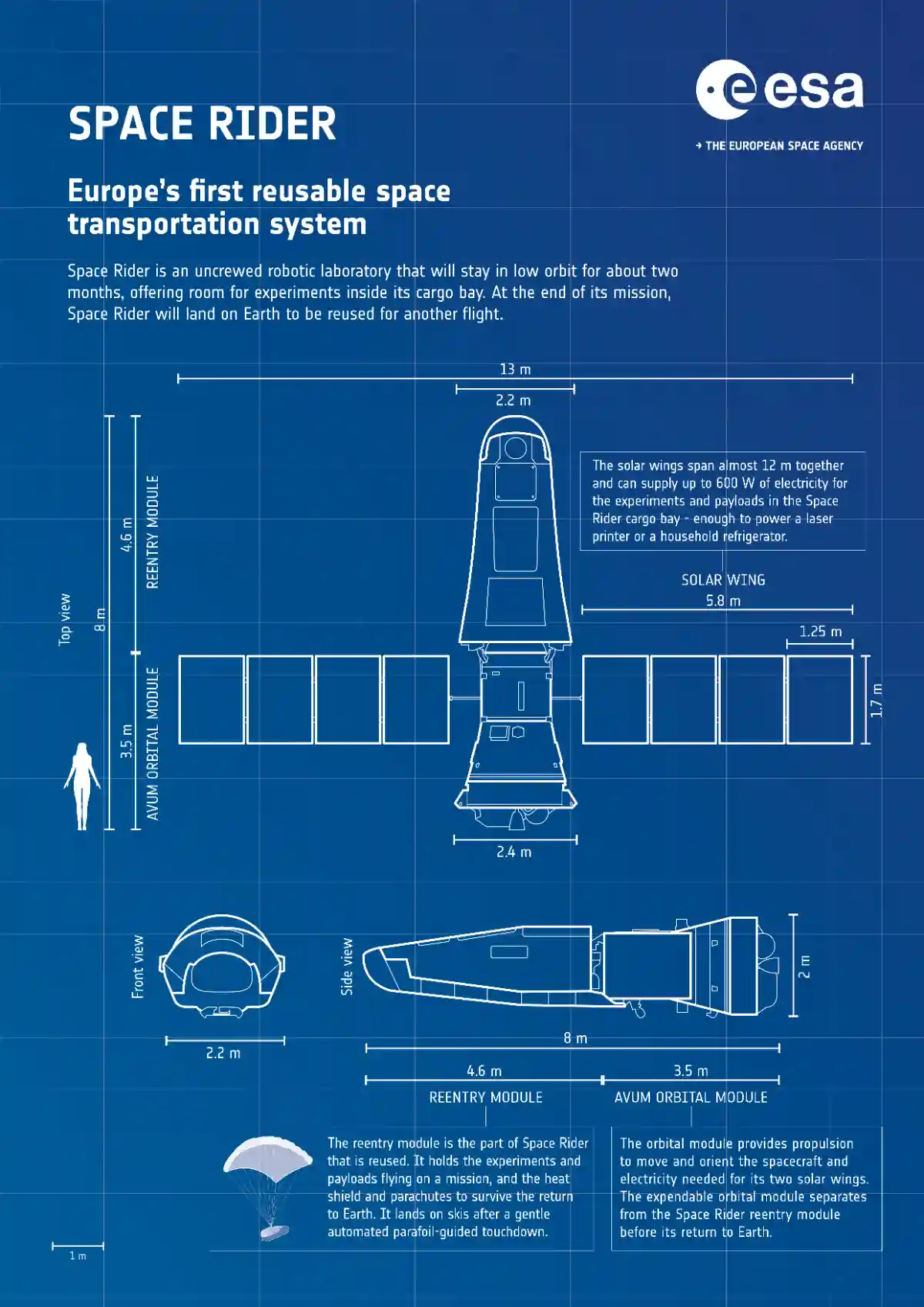
    On November 5, ESA released a new set of design drawings that show updated wings, simplified outer panels, and easier access points for loading science packages. Work on the reentry module is in its final stages before teams connect it with the service module for full system tests.

    Blueprint of ESA's Space Rider.
    Space Rider blueprint poster showing the craft’s dimensions and major components. The uncrewed vehicle is roughly the size of two minivans and rides to orbit on Vega C.

    The uncrewed craft will launch from French Guiana on a Vega-C rocket and aims for a mid-2026 debut after schedule adjustments. ESA says the program will give Europe a reliable and lower-cost way to place experiments in orbit for weeks or months before bringing them back for study.

    The agency began developing Space Rider in 2015, building on experience from the Automated Transfer Vehicle that once carried cargo to the International Space Station (ISS). ESA partnered with Thales Alenia Space and Avio to produce a compact vehicle that can fly as many as five missions.

    Engineers strengthened the structure to withstand repeated heating during reentry and designed a service module that supplies power, navigation, and maneuvering during the mission. By 2023 the project entered full production, and major hardware deliveries signaled the start of the final testing phase.

    The spacecraft is about 11 meters long with a payload bay able to hold medium-sized scientific packages. It will operate around 400 kilometers above Earth, where weightlessness allows experiments that cannot be carried out on the ground.

    Researchers plan to use the platform for material testing, small biology samples, combustion studies, and technology trials. Space Rider will run on solar power and hydrazine thrusters that help it maintain its position or turn toward new targets.

    The return to Earth is one of the most demanding parts of the mission. A carbon-fiber heat shield will protect the craft as it reenters at orbital speed, and once temperatures drop, the vehicle unfolds a winged section and deploys parachutes to guide it toward a runway.

    In June 2025, a full-scale test model completed autonomous drop tests over Sardinia, showing that the guidance system can handle changing wind and uneven air. ESA plans a complete drop test by the end of 2025 to rehearse the full descent sequence.

    ESA previously aimed for a spring 2026 launch but now expects the first mission in the middle of the year to ensure enough margin for safety reviews.

    Space Rider is expected to support a wide range of research. Compact telescopes could operate above the distortion of Earth’s atmosphere, while sensors could track solar activity or test new satellite hardware.

    Past studies on the International Space Station showed how microgravity changes crystal growth and protein behavior, and the new vehicle offers a faster way to repeat and expand those experiments without waiting for crewed missions.

    The program also reflects a broader shift toward reusable systems in Europe. Vega-C produces fewer emissions than older boosters, and a reusable craft reduces waste across multiple missions. Universities and small companies are expected to benefit from simpler access to orbit. ESA has also lined up potential landing sites in the Azores, including Santa Maria Island, to give the program more flexibility.

    With final tests approaching, Space Rider has become one of ESA’s most closely watched projects. If the schedule holds, Europe will soon gain a reusable spacecraft capable of regular orbital missions and rapid turnaround for scientific research.

  • NASA’s EscaPADE Mission Heads to Mars. New Glenn Scores First Successful Booster Landing

    NASA’s EscaPADE Mission Heads to Mars. New Glenn Scores First Successful Booster Landing

    NASA launched two small spacecraft toward Mars on Wednesday, using Blue Origin’s New Glenn rocket in a high-profile flight from Cape Canaveral. The twin probes, named Blue and Gold, will spend two years traveling through deep space before reaching the Red Planet in September 2027, where they will study how solar radiation stripped Mars of its thick atmosphere billions of years ago.

    The mission was New Glenn’s cleanest performance to date. Its debut flight in January reached orbit but did not complete its landing. This time, the fairing opened on schedule, and the upper stage placed the EscaPADE spacecraft into a parking orbit. Engineers later confirmed the probes powered up and sent back signals. A ViaSat prototype satellite rode along to test new communication hardware.

    Teams postponed earlier launch attempts on November 9 and 11 because of high winds near the Cape. Conditions improved on November 13, allowing New Glenn’s seven BE-4 engines to ignite at 3:55 p.m. EST. The rocket climbed through clear skies as crowds watched from beaches.

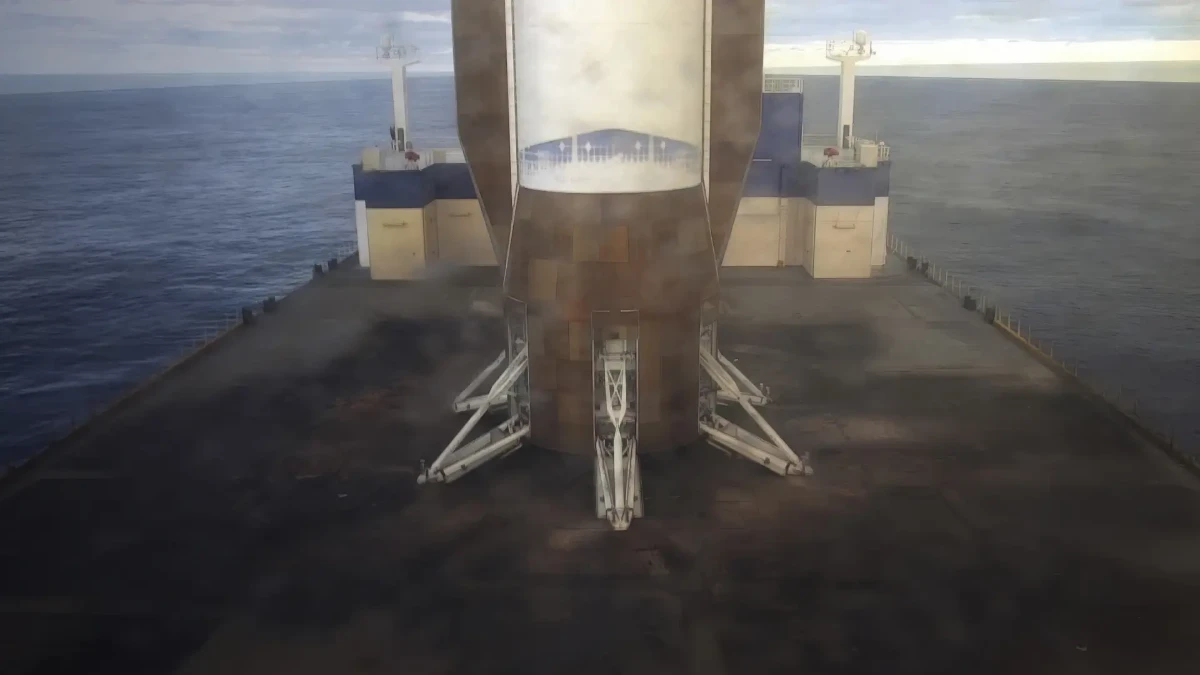
    Seven minutes after liftoff, the first stage separated as planned, then steered itself to a landing on the barge Jacklyn about 375 miles offshore. It was New Glenn’s first successful booster recovery at sea.

    “Today was a tremendous achievement for the New Glenn team, opening a new era for Blue Origin and the industry as we look to launch, land, repeat, again and again,” said Jordan Charles, Vice President, New Glenn.

    Jeff Bezos posted a video of the booster landing on X shortly after the launch. The clip shows the rocket slowing above the barge before touching down. His post drew wide attention.

    SpaceX CEO Elon Musk, whose company dominates the commercial launch industry, offered congratulations despite being a business rival.

    “Congratulations, Jeff Bezos and the Blue Origin team!” Musk wrote in response to the landing announcement.

    The probes, Blue and Gold, will track how charged particles from the Sun strike Mars and interact with its weak magnetic field. Mars once had a thick atmosphere but lost most of it across billions of years. Scientists want to better understand those losses and how they continue today.

    Each spacecraft is about the size of a microwave oven and carries two simple tools: a magnetometer and a particle detector. NASA kept the mission under $100 million by using compact hardware and a high-altitude orbit that gives a wide view of the planet’s upper atmosphere.

    EscaPADE will remain near Earth for about a year before using a gravity-assist maneuver in late 2026. A close pass in November 2026 will give the satellites the speed they need for the trip to Mars. They are expected to arrive in September 2027 and settle into long, stretched orbits.

    Once there, Blue and Gold will measure the solar wind’s effect on the planet’s thin atmosphere and gather data linked to dust storms and radiation levels. NASA plans to use the results to support future crewed missions and work on Mars Sample Return.

    EscaPADE joins decades of missions sent to Mars but stands out for its small design and focus on the planet’s outer atmosphere during a period of rising solar activity.

    NASA sees the mission as a step toward better planning for future human travel. For Blue Origin, the flight strengthens New Glenn’s place in the heavy-lift market. The probes are now circling Earth, beginning a long journey toward a planet that continues to raise new questions.

  • Zomato Co-Founder Deepinder Goyal Unveils Electric uSTOL Drone by LAT Aerospace

    Zomato Co-Founder Deepinder Goyal Unveils Electric uSTOL Drone by LAT Aerospace

    Zomato co-founder and Smart Shark Deepinder Goyal introduced a new fully electric fixed-wing drone this week, marking the first major public reveal from his young aviation startup, LAT Aerospace. Goyal shared photos and videos on X from an undisclosed test site showing the drone in early ground trials as the team prepares for its first flights.

    The aircraft aims to prove whether a compact electric design with ultra-short takeoff ability can work in India’s crowded cities, where rapid air transport could ease pressure on roads.

    Goyal launched LAT Aerospace earlier this year as a separate venture from Zomato and the Eternal group that oversees it. The company aims to build small electric aircraft for short trips over dense urban areas.

    India’s major cities face heavy traffic and long commute times, and Goyal says lightweight aircraft could offer a faster option for moving packages or, eventually, passengers. The drone unveiled this week is the team’s test model to study basic performance before building larger versions.

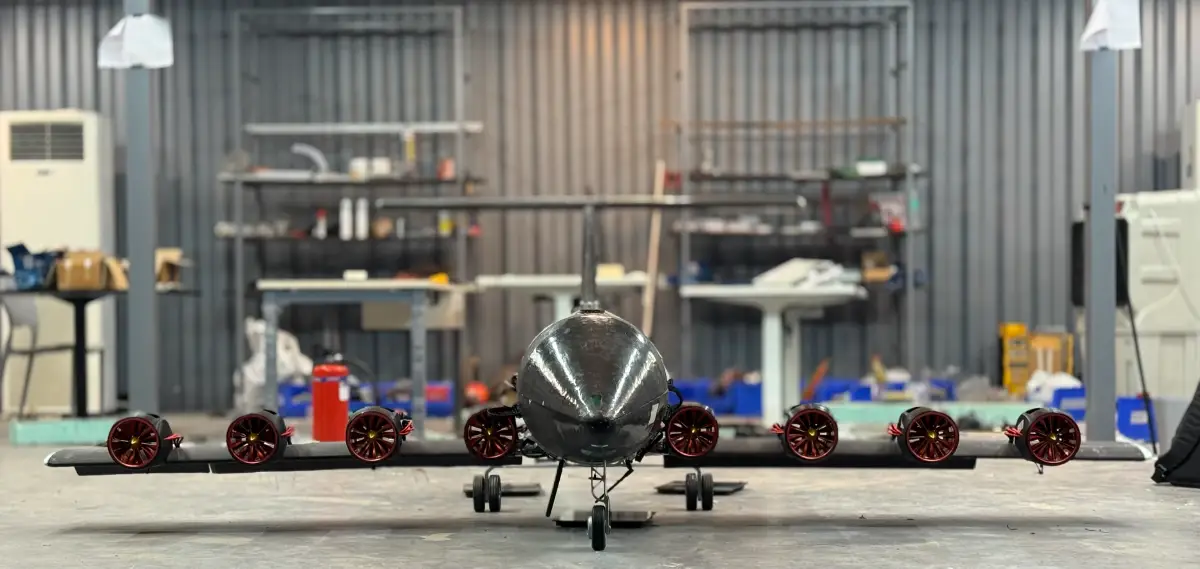
    The aircraft shown in his post has a black, fixed-wing frame and eight electric propellers. It was placed inside a temporary hangar for early checks. Videos show it moving down a short strip of pavement with its motors running at low power. Goyal described it as a USTOL demonstrator, meaning it aims to lift off within about 40 meters. LAT Aerospace built the aircraft in a few months to test the limits of electric takeoff in tight spaces.

    The drone uses a lithium-ion battery pack designed to keep it in the air for about 60 minutes. At its planned cruise speed, that gives it a range of roughly 150 kilometers. The team sees that as enough for major regional routes, including trips between large cities like Mumbai and Pune without a charging stop. Electric motors also reduce noise, which is a major concern for aircraft operating near homes in crowded areas.

    The company says its ultra-short takeoff ability comes from high lift at low speeds. The wing design includes extra surfaces that direct airflow and help push the aircraft upward during takeoff. Combined with fast-spinning electric propellers, the design supports use in narrow spaces such as rooftops or small fields. Ground tests this week showed the drone moving smoothly and handling low-speed taxi runs without issues.

    Electric aircraft convert most of their stored battery power into thrust, while fuel-powered engines lose much of their energy as heat. That makes electric drones cleaner and quieter, though today’s battery limits restrict how far they can fly. Current cells hold around 250 watt-hours per kilogram, which sets a ceiling on range. LAT Aerospace is researching hybrid systems that pair batteries with small turbines for longer flights.

    Goyal has hinted that the company may build those turbines in-house to control weight and fuel use. Early estimates suggest they could operate at about 30 percent efficiency, which would extend range while keeping the aircraft small. The company is also studying cooling systems for the batteries, as they heat up under heavy power loads. Wing strength in strong winds is another area the team is adjusting as it runs daily tests.

    In his public post, Goyal wrote that the drone had completed its first ground rolls and that the team was pushing to fly it soon. He included a short clip showing all eight propellers spinning as engineers monitored the aircraft. His comment that he hoped it “doesn’t blow up” drew a wide reaction from India’s tech and aviation communities, with many asking when the first flight would take place.

    The company expects its first flight tests within weeks. If successful, LAT Aerospace will use the data to develop cargo drones for routine tasks such as grocery delivery. The longer plan includes small air taxis that could carry people across cities in a few minutes. India’s aviation planners hope to see thousands of short urban flights per day by 2030, a goal that depends on quiet and compact aircraft.

    Goyal says the drone uses mostly Indian-made parts. That includes motors, wings, sensors, and control systems. As battery technology advances toward 400 watt-hours per kilogram, LAT Aerospace expects its aircraft to double their range. The company says its work could mark the start of new urban flight networks across India, with the upcoming first flight serving as the project’s first major test.

  • Massive G4 Solar Storm Lights Up Skies Across the U.S. Auroras Reached as far as Florida!

    Massive G4 Solar Storm Lights Up Skies Across the U.S. Auroras Reached as far as Florida!

    A powerful solar flare triggered a major geomagnetic storm that reached G4 intensity. The event pushed auroras far beyond their usual range, giving many regions a rare chance to see the lights. Operators monitored satellites, navigation signals, and power grids because storms of this level can disrupt technology.

    A powerful solar storm lit up the skies across North America this week, painting them in shades of green and purple visible as far south as Florida. The G4-class geomagnetic storm, one of the strongest of 2025 so far, was triggered by a massive burst of energy from the Sun on November 11, reported NOAA.

    The event began when an intense solar flare erupted from an active region on the Sun’s surface. These flares occur when tangled magnetic fields suddenly snap and release large amounts of energy. This eruption sent a coronal mass ejection, or CME, racing toward Earth at millions of miles per hour.

    When it struck on November 12, the blast compressed Earth’s magnetic field, creating a G4-level geomagnetic storm. On NOAA’s five-point scale, G5 is the most severe, and G4 is enough to cause strong magnetic disturbances and widespread auroras.

    How does an aurora form? When charged particles from the Sun collide with gases in Earth’s upper atmosphere, they emit light. Oxygen produces green glows at lower altitudes, while nitrogen creates red and purple tones higher up. During this storm, the intense solar wind pushed the auroral oval much farther south than usual.

    People from Alaska to Wisconsin captured striking photos of crimson and emerald bands moving across the sky, while residents in Florida reported pink streaks over the Gulf Coast.

    Auroras seen over Jacksonville Beach, Florida.
    Auroras seen over Jacksonville Beach, Florida. Image credit: Linda Johnson

    Among those lucky enough to see the spectacle was Ryan Hall, a digital meteorologist known online as “The Weather Man.” While flying over Michigan with his wife, he saw the aurora spread beneath the aircraft like a glowing river. He shared photos and videos with his followers on X, describing the experience as a once-in-a-lifetime sight. The clips showed how the aurora shifted in real time, changing from a calm green glow to bright, flickering waves.

    Despite the storm’s intensity, no major blackouts or satellite failures were reported. Geomagnetic storms of this strength can interfere with navigation systems, GPS, and radio communications, and airlines sometimes reroute polar flights to avoid high radiation exposure. NOAA’s Space Weather Prediction Center monitored the situation closely and provided alerts to help operators prepare for potential issues.

    The storm arrived during the peak of the Sun’s 11-year activity cycle, known as solar maximum. This is when sunspots, flares, and CMEs become more frequent and powerful. The last major solar storm of this scale happened in 2012, and scientists say the current level of solar activity is similar to the period leading up to the 1989 Quebec blackout.

    More solar eruptions launched earlier in November could still reach Earth, meaning auroras may continue over the coming days. Space weather experts recommend checking aurora forecast apps and heading to dark, open areas for the best view.

    For many, the November 2025 storm will be remembered as one of the most spectacular sky shows in years a vivid reminder of how closely our planet’s magnetic shield is connected to the changing moods of the Sun.

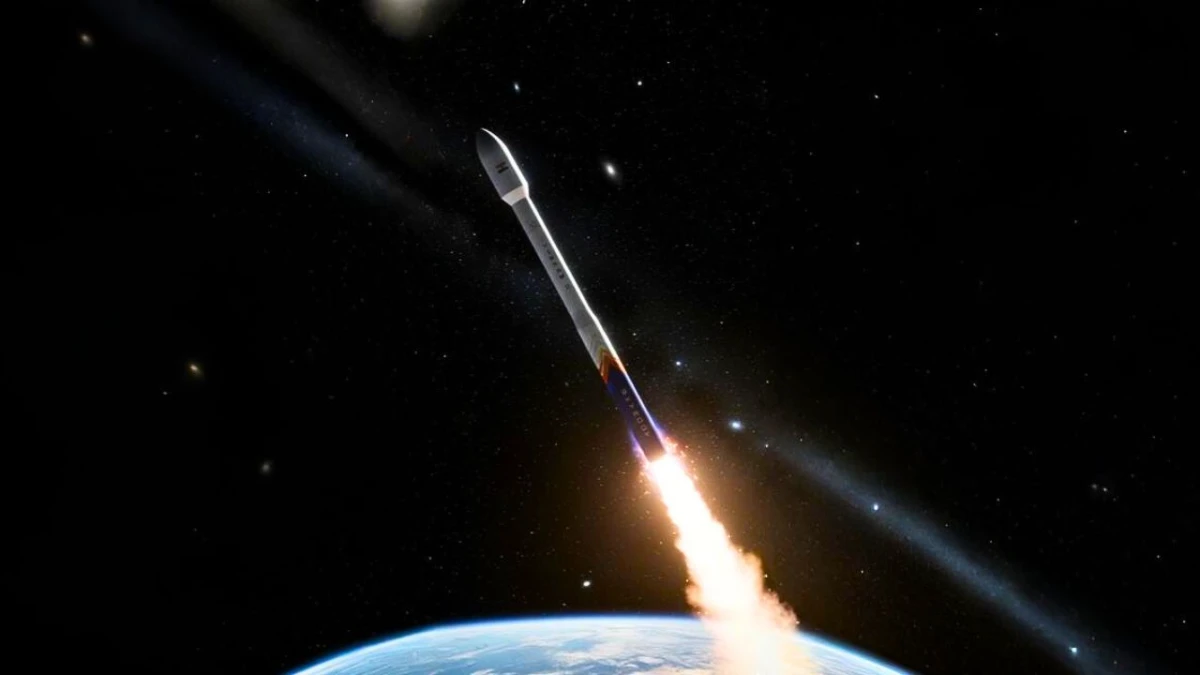
  • Skyroot targets January 2026 launch as Vikram-1 prepares to carry private satellites to orbit

    Skyroot targets January 2026 launch as Vikram-1 prepares to carry private satellites to orbit

    Hyderabad’s Skyroot Aerospace

    plans to send Vikram-1, its first orbital rocket, into space in January 2026. The flight will take place from Sriharikota and will carry commercial satellites for Catalyx Space. If successful, it will mark India’s first privately built rocket to reach orbit, showing how fast the country’s space sector is changing after years of government dominance.

    Vikram-1 stands at about 20 meters, roughly the height of a mid-sized apartment block. It uses four stages to climb through the atmosphere and enter space. The first three stages run on solid fuel stored inside composite shells. This gives the rocket strong lift at liftoff and reduces the number of moving parts. Skyroot says the first stage can deliver up to 1,000 kilonewtons of thrust.

    The final stage uses liquid fuel. The pair of chemicals ignite as soon as they meet, so the engine can start and stop without a spark. This allows the rocket to adjust course once it reaches space. The complete vehicle can place about 480 kilograms into low Earth orbit, which suits clusters of small satellites and rideshare missions.

    Skyroot was founded in 2018 by two former ISRO engineers, Pawan Kumar and Naga Bharath Daka. The company started with a small team and basic equipment, focusing first on a suborbital test rocket. That rocket, called Vikram-S, reached 89.5 kilometers in November 2022. It demonstrated carbon-fiber construction and helped the company test its engines and electronics under real conditions.

    After that flight, engineers ran a series of ground tests. They pushed the engine casings to 82 atmospheres of pressure, verified fairing separation in a fraction of a second, and carried out repeated ignition checks. By mid-2025, most of the rocket’s parts were built across factories in India and then brought together for final assembly.

    The company is targeting the fast-growing market for small satellites. Traditional Indian rockets like the PSLV can carry large payloads, but they are often booked months in advance. Vikram-1 aims to support quicker launches with smaller payloads, offering access to orbit at a lower cost. CubeSats used for weather tracking, internet networks, or astronomy are among the likely customers.

    At about 500 kilometers above Earth, satellites circle the planet every hour and a half. Many commercial and research missions choose these orbits for stable lighting conditions and short communication delays. Vikram-1 can place nearly 300 kilograms into such a path, which is useful for space imaging and monitoring.

    If the January mission works as expected, Skyroot plans to move ahead with Vikram-II. The second model will include a cryogenic upper stage that uses liquid hydrogen and liquid oxygen. That change should allow the rocket to carry about 900 kilograms. It could support missions that need higher altitudes or longer travel times, including trips around the Moon.

    Private investment in Indian space companies has grown since 2020. Skyroot joins other startups, including Agnikul Cosmos, that are designing launch vehicles and engines. ISRO continues to run major missions, but private rockets like Vikram-1 may help reduce waiting times and open new business for smaller customers.

    For Skyroot, the next few months will focus on final assembly, checks on the guidance systems, and rehearsals at the launch range. A successful flight would mark a new stage for commercial space in India and give the country another way to reach orbit without relying only on government rockets.

  • Pakistan’s First Astronaut Set to Join China’s Tiangong Space Station in New Space Partnership

    Pakistan’s First Astronaut Set to Join China’s Tiangong Space Station in New Space Partnership

    China will send a Pakistani astronaut to its Tiangong space station in a short-term mission expected in the coming months, officials from both countries said. It will be the first time a non-Chinese astronaut boards Tiangong, marking a new stage in cooperation between the two governments and raising questions about how China plans to open its station to international partners.

    China and Pakistan signed the agreement in February. The astronaut will train with Chinese crew members before flying as a payload specialist. Officials have not announced a launch date, but the mission is expected to align with China’s Shenzhou-22 rotation in spring. The flight will lift off from the Jiuquan Satellite Launch Center in the Gobi Desert.

    Pakistan and China have a long record of joint projects. China has helped build roads, power plants, and telecommunications networks in Pakistan. In space, the two sides already cooperate on satellite launches used for disaster monitoring and agriculture.

    Pakistan’s space agency, SUPARCO, plans to use the Tiangong mission to test experiments in microgravity, where liquids move differently and crystals form more evenly than on Earth. The results could improve sensors and scientific equipment used in weather prediction and crop studies.

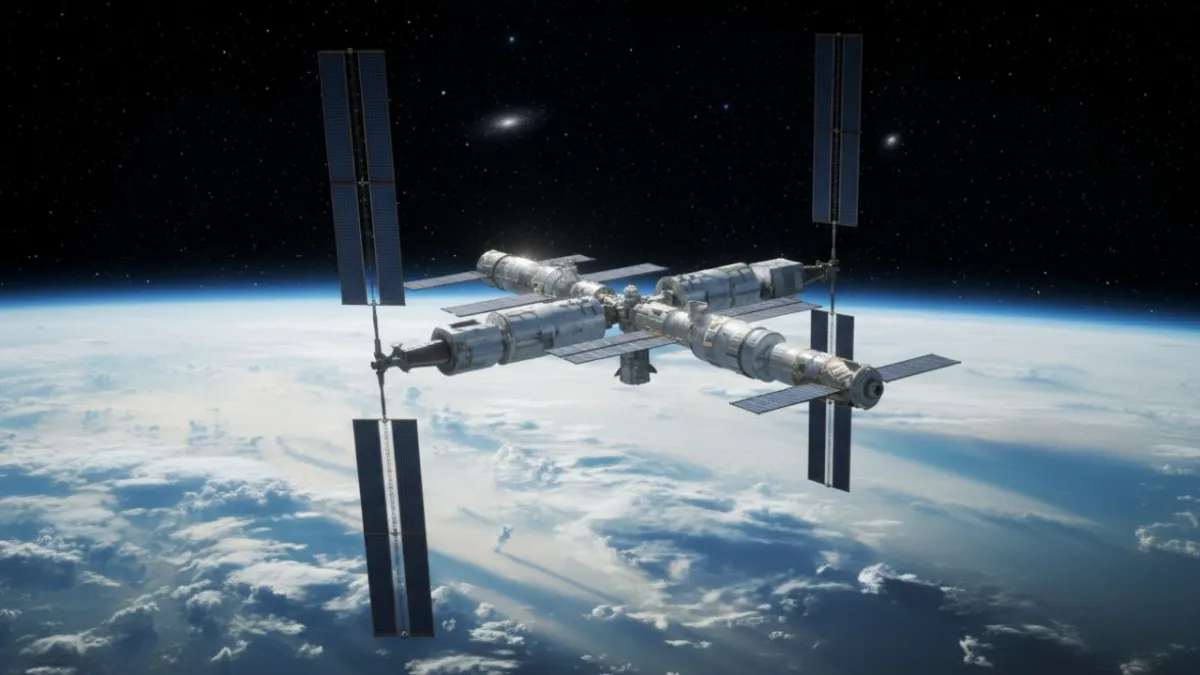
    Tiangong orbits about 400 kilometers above Earth and was completed in 2022. The three-module station carries laboratories for biology, physics, and medical studies. Solar panels generate power for life support, navigation, and research equipment. The station normally has three astronauts on board, but it can support more during short visits.

    Life on the station is tightly managed. Crews recycle most of their water from humidity and waste. They grow small batches of vegetables under controlled lighting to supplement packaged food. The station performs regular maneuvers to avoid space debris traveling at high speed, and mission control monitors objects that pass near its path.

    Pakistan is selecting candidates for the mission. Once final picks are made, they will complete training in China. Lessons include basic Mandarin, emergency routines, and how to work in weightlessness. New astronauts also spend hours in simulators that copy the narrow interior of the Shenzhou capsule.

    The rocket will reach orbit in under ten minutes. When it docks, the visiting astronaut will move into the station to set up equipment and carry out tests. Work could include crystal growth for medical research or studies that improve satellite images used for storms and flooding. Pakistan has struggled with heat waves and rising flood risks. Officials hope better satellite data will help with planning and emergency response.

    China says Tiangong will operate for at least a decade. That timeline extends past the planned retirement of the International Space Station, which is expected to shut down in 2030. Beijing has invited more countries to send short-term visitors or run experiments that can fit inside the station’s labs. China and Pakistan are also partners in a proposed lunar research station that could support future moon missions.

    For Pakistan, the flight will be a national first. The mission is likely to attract strong public attention, especially among students interested in science. More details on the launch schedule are expected when China finalizes its next crew rotation.

  • Astronomers Detect Most Powerful and Most Distant Energy Flare from a Supermassive Black hole

    Astronomers Detect Most Powerful and Most Distant Energy Flare from a Supermassive Black hole

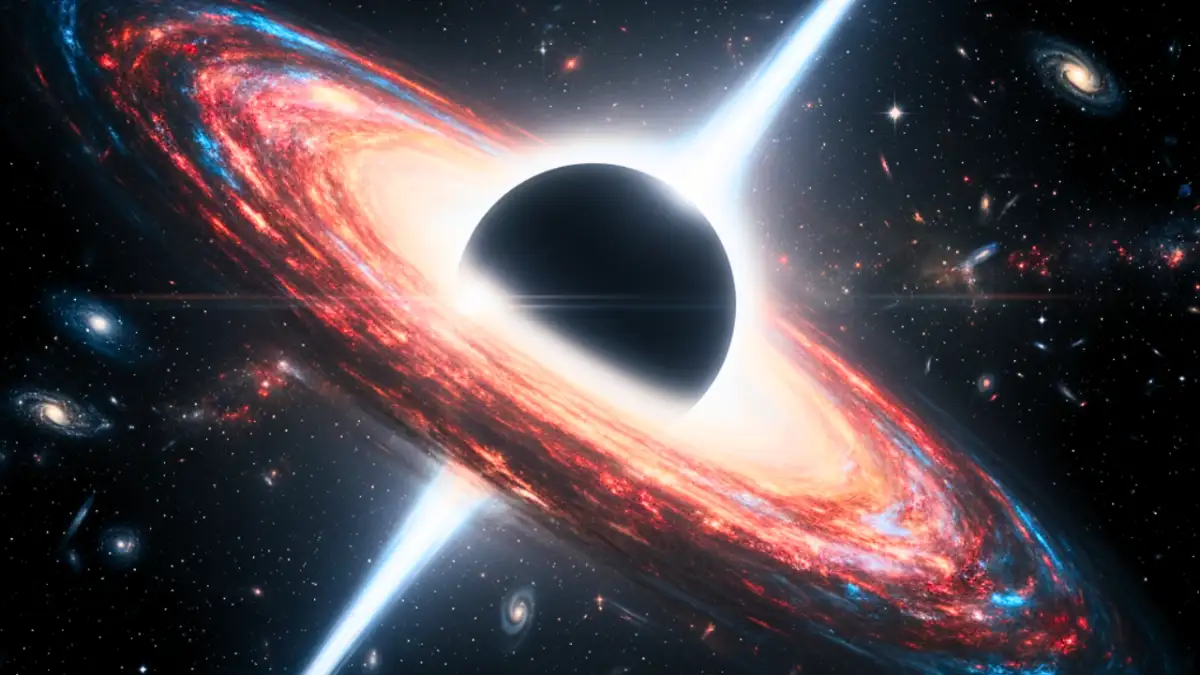
    Astronomers have detected the brightest blast ever seen from a supermassive black hole, caused when it ripped apart a huge star in a distant galaxy. The event, named J2245+3743, was first detected in 2018 and appears to come from a black hole about 500 million times the mass of the Sun. At its peak, it shone with the power of about 10 trillion suns.

    “If you convert our entire Sun to energy, using Albert Einstein’s famous formula E = mc², that’s how much energy has been pouring out from this flare since we began observing it.” Said co-author K. E. Saavik Ford, a professor at the City University of New York (CUNY) Graduate Center and Borough of Manhattan Community College and the American Museum of Natural History (AMNH).

    Researchers believe the flare came from a star at least 30 times heavier than the Sun. That size is unusually large for this type of destruction. Most known cases involve stars only a few times heavier than the Sun. The blast is so powerful that it outshines every other known flare of its kind.

    The Zwicky Transient Facility in California spotted the sudden rise in brightness seven years ago. The system scans the sky every night to record changes that might signal a violent event. After the first alert, telescopes at Palomar Observatory and the Keck Observatory in Hawaii captured light patterns that matched a star being pulled apart. Infrared readings from NASA’s WISE satellite showed that the light was not a trick caused by a jet pointed directly at Earth. Other sky surveys helped map the full rise and fall in brightness.

    The star appears to have been close enough to be stretched and broken by the black hole’s gravity. Parts of the star then heated up while falling inward, creating a long burst of light. The flare faded slowly, which suggests the black hole has spent years swallowing the remains.

    Because this galaxy is about 10 billion light-years away, the light we see began its journey when the universe was much younger. Time also appears to run slower at that distance because space continues to expand. Seven years of observation on Earth equals only about two years where the event happened.

    Earlier tidal disruptions were far weaker. The previous record holder, known by the nickname “Scary Barbie,” was only a fraction as bright. The new event released roughly the same amount of energy as converting a star the size of the Sun directly into light and heat.

    More than 100 events of this type have been confirmed, but most occur in quiet galaxies. In this case, the black hole sits inside an active region filled with dust and gas. That type of environment often hides star destruction, which makes this discovery stand out. Some scientists think violent bursts like this could explain sudden changes in bright galaxies and might link to high-energy particles that occasionally strike Earth.

    The complete ZTF archive may contain more events waiting to be identified. In coming years, the Vera C. Rubin Observatory in Chile will scan a much wider area. Astronomers expect it to find many more black holes tearing stars apart in the distant universe.