
Category: Space

Explore the vastness beyond our planet. This section covers missions, discoveries, and events that expand our reach into the cosmos. From new rocket launches to deep-space observations, “Space” keeps you updated on humanity’s steps into the unknown.

  • India Successfully Tests Shape-Shifting Wing Technology for Future Fighter Jets

    India Successfully Tests Shape-Shifting Wing Technology for Future Fighter Jets

    India’s Defence Research and Development Organisation (DRDO) and National Aerospace Laboratories completed the country’s first successful flight test of a wing that changes shape in mid-air last week, bringing the technology closer to use in next-generation stealth fighters and military drones. The test used a small aircraft fitted with a wing that can bend its front edge by about six degrees in less than a quarter of a second.

    The shift changes lift and drag on demand, which could help future jets perform better during combat while staying harder to detect on radar. Engineers designed the wing to bend smoothly without gaps or hinges. The smooth surface cuts radar reflections, a key feature for stealth aircraft. India wants the system for its Advanced Medium Combat Aircraft, the stealth fighter planned for the next decade, along with drones and the Navy’s upcoming carrier-based jets.

    The team mounted the shape-shifting section onto a 300-millimeter test aircraft and flew it through more than 120 wing changes during a single flight. The wing held up under wind gusts, propeller wash, and quick turns. Sensors tracked each movement and matched predictions from earlier lab work, giving engineers confidence the design can scale up to a full-size aircraft.

    After landing, inspectors found no wear on the wing, suggesting the system can handle repeated use. That durability matters for military aircraft that fly in harsh conditions.

    The wing moves using special metals that contract when heated and stretch when cooled. A short electrical pulse changes the temperature just enough to shift the shape. A cut along the front edge helps the metal flex without adding heavy motors or hydraulics.

    The entire system adds minimal weight and uses little power because software heats only the spots that need to move. That efficiency is important for fighter jets, where every kilogram affects range and speed.
    NASA and the U.S. Air Force tested similar wings nearly twenty years ago, but making them light, affordable, and reliable has proved difficult. India hopes to stand out by building systems that work well in hot and dusty conditions common across the region.

    More flights are planned. If the system performs well in larger wings, India could install it in operational aircraft within a few years. The successful test shows that flexible wings are no longer just a concept!

  • Hubble Captures New Images of Interstellar Comet 3I/ATLAS

    Hubble Captures New Images of Interstellar Comet 3I/ATLAS

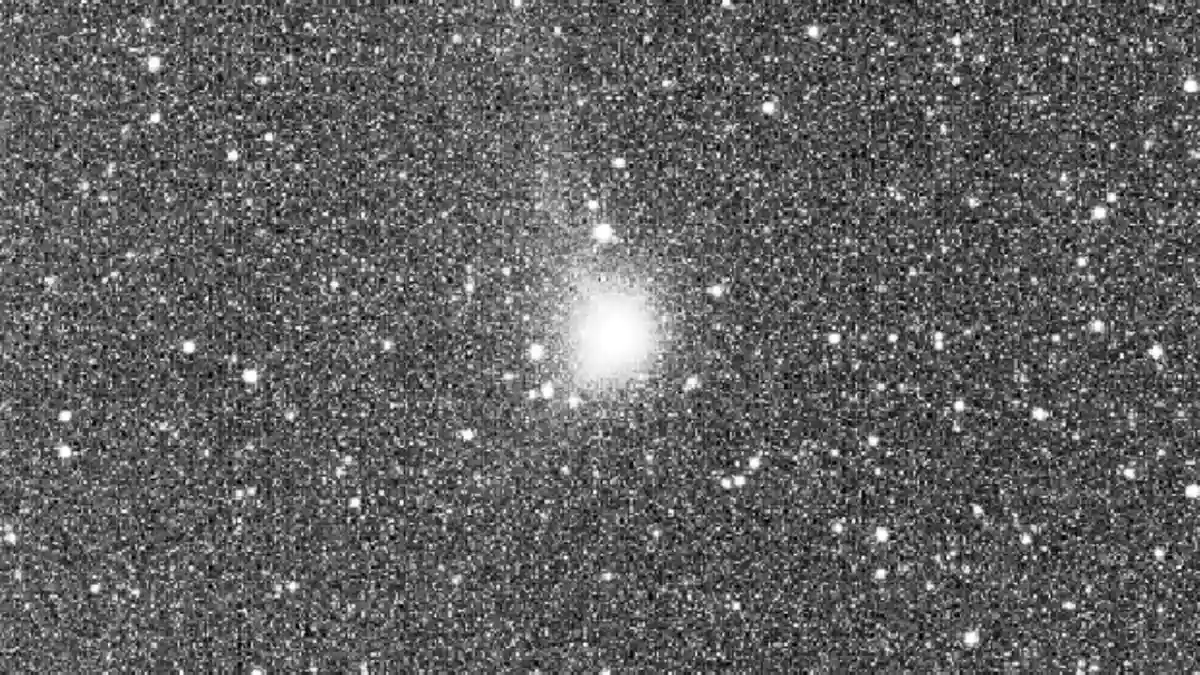
    The Hubble Space Telescope has taken a second set of images of 3I/ATLAS, a comet from outside our solar system that made a brief pass near the Sun in late 2025. The updated view, recorded on November 30, shows the comet still active as it moves away, giving scientists another chance to study material that formed around a distant star.

    Hubble used its Wide Field Camera 3 to photograph the visitor from about 286 million kilometers. The comet appears as a bright, hazy drop of dust and gas, while background stars stretch into faint streaks because the telescope tracked the comet’s quick motion. These new images help astronomers follow how the object behaves after its closest approach to the Sun.

    This session followed Hubble’s first look in July 2025, captured shortly after the comet’s discovery. Those early images suggested a small icy core, likely under one kilometer wide, surrounded by a broad dust cloud. The November images show the coma slightly uneven, which hints that the nucleus is still venting gas as it cools.

    The comet was first spotted on July 1, 2025, by the ATLAS survey telescope in Chile. It moved at 61 kilometers per second and followed a path that proved it came from beyond the solar system. By the next day, observatories around the world confirmed it. With that, 3I/ATLAS joined a very short list as only the third known interstellar visitor, after Oumuamua in 2017 and comet Borisov in 2019.

    Once confirmed, the discovery set off a coordinated effort across the solar system. JWST observed the comet in August and detected carbon dioxide along with smaller amounts of water ice and gas. The Very Large Telescope (VLT) found cyanide and nickel.

    NASA’s Psyche and Lucy spacecraft captured long-distance views that helped refine trajectory models. Even the Perseverance rover managed to spot a faint blur from the surface of Mars.

    Comet 3I Atlas captured by the JUICE instrument.
    ESA’s Juice spacecraft captured a NavCam image of interstellar comet 3I/ATLAS on 2 November 2025, showing its bright coma and hints of both a plasma tail and a faint dust tail. Image credit: ESA/Juice/NavCam

    ESA’s Juice spacecraft observed interstellar comet 3I/ATLAS in November 2025 using five of its science instruments. While the full data set will not reach Earth until February 2026, the team downloaded a small portion of a single Navigation Camera image to get an early look. The camera, meant for navigation rather than detailed science, still captured the comet with surprising clarity.

    The cropped image, taken on 2 November from about 66 million kilometers, shows the comet’s glowing coma and hints of two tails: a plasma tail extending upward in the frame and what may be a fainter dust tail stretching toward the lower left. The view came during the spacecraft’s first observation window and just before its closest approach on 4 November.

    Juice is currently using its main antenna as a heat shield, so it must rely on a slower backup antenna to send data home. That is why the full instrument data from JANUS, MAJIS, UVS, SWI, and PEP will not arrive until 18 and 20 February 2026.

    Scientists say the combined data gives a rare chance to compare material from another system with comets in our own. Early results show familiar ingredients, although the high level of carbon monoxide hints that the object formed in a colder region around its parent star.

    The comet will skim near Jupiter’s orbit in March 2026 before fading from view. Hubble and JWST plan more observations into early next year.

  • Jupiter’s rapid growth may explain why some meteorites formed millions of years after the Sun

    Jupiter’s rapid growth may explain why some meteorites formed millions of years after the Sun

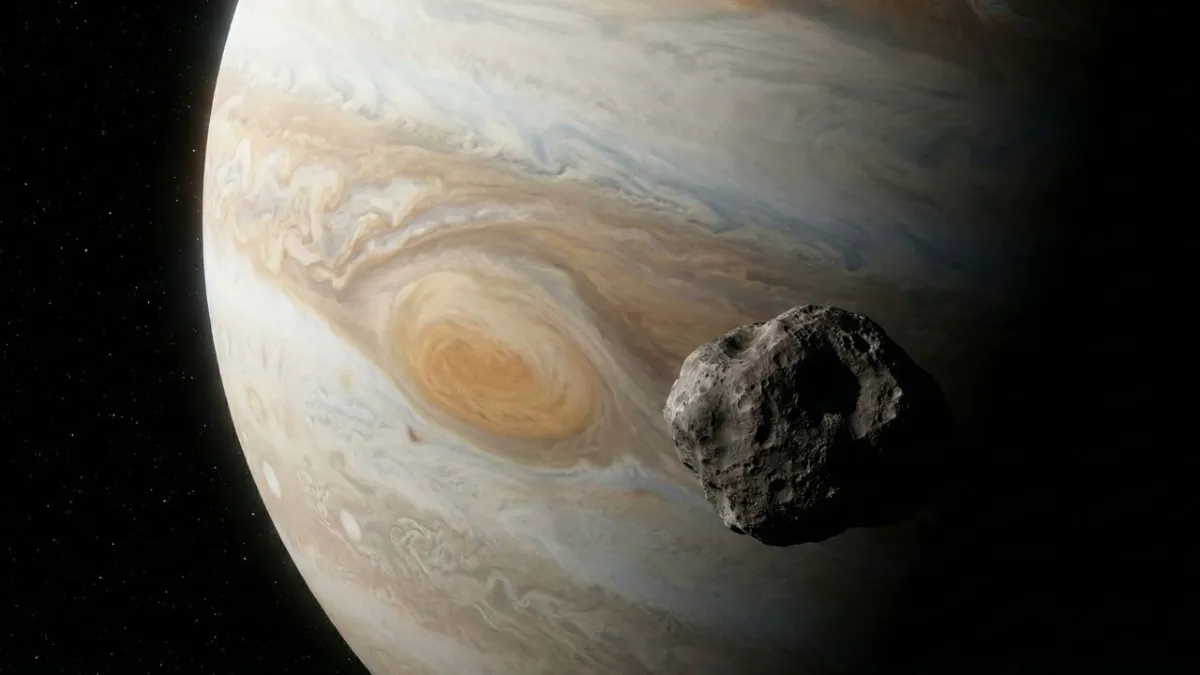
    In the early solar system, most solid material formed fast. Iron-rich bodies appeared within the first million years. But a different group of rocky space material called chondrites formed two to three million years later. Scientists now think Jupiter, the largest planet, caused that delay by changing how gas and dust moved near the Sun and by shaping where rocks could form and survive.

    Chondrites are some of the oldest and most basic space rocks. They contain small, round beads that formed when dust briefly melted and cooled in space. These rocks are common in meteorites that fall to Earth today. For a long time, researchers could not explain why these objects appeared later than other early bodies in the solar system.

    A research team used computer models to study the young solar system. They placed a growing Jupiter about five times farther from the Sun than Earth, close to its current position. The models show that Jupiter gained most of its mass in less than a million years. As it grew, its strong gravity pushed aside gas and created a wide gap in the disk around the Sun.

    This gap was not empty. It caused waves in the gas that formed dense rings closer to the Sun. These rings slowed down drifting dust and small rocks. Instead of falling into the Sun, the material collected in certain zones and stayed there for long periods.

    At the same time, Jupiter’s presence sped up the loss of gas in the inner solar system. Without a large planet, the gas would last for several million years. With Jupiter in place, the inner region cleared much faster, changing how and where new bodies could form.

    In the earliest stage, some solid worlds formed quickly. These early bodies are linked to iron meteorites found today. Later, growing rocky planets crashed into one another and released new dust into space. Normally, this dust would drift away, but the rings made by Jupiter trapped it instead.

    Over time, enough material built up in these regions to form a second group of rocky bodies. These new planetesimals appeared between the orbits of Mercury and Mars, around two to three million years after the solar system began. These are believed to be the parent bodies of chondrite meteorites.

    Jupiter also influenced the movement of young planets. In a thick gas disk, growing planets often spiral toward the Sun. The dense rings created by Jupiter slowed or even stopped this motion. When the gas disappeared soon after, it froze the inner planets in place.

    This helped keep rocky planets, including Earth, in stable paths around the Sun instead of being pulled inward. The inner solar system we see today likely formed because Jupiter arrived early and changed the structure of the disk.

    Modern telescopes have seen similar patterns around other young stars. Rings and gaps appear in these disks where large planets are forming. One well-known example shows clear banded structures around a very young star, suggesting the same process may be common across the galaxy.

    The findings suggest Jupiter played a key role not just in shaping its own path but in deciding when and where rocky worlds and certain meteorites could form. Without that early influence, the inner solar system would likely look very different today.

    Source: The late formation of chondrites as a consequence of Jupiter-induced gaps and rings

  • Scientists Rule Out Key Sterile Neutrino Theory After Major Fermilab Study Reports No Signal

    Scientists Rule Out Key Sterile Neutrino Theory After Major Fermilab Study Reports No Signal

    Scientists at Fermilab have delivered a major update on a problem that has puzzled the physics community for three decades. After six years of observations, the MicroBooNE experiment has found no sign of a hidden “sterile” neutrino, dismissing the simplest explanation for strange results reported in earlier studies. The new findings, published in four papers in Nature, challenge a long-running idea that once seemed like an easy fix to a stubborn mystery.

    The story began in the 1990s when the LSND experiment, and later the MiniBooNE detector in the 2000s, picked up odd behavior from beams of neutrinos. These tiny particles usually switch between three known types as they move, but both experiments saw changes that happened much faster than expected. The simplest explanation was a fourth type of neutrino that does not interact with matter.

    It would mix with the other three and cause the rapid flavor changes the earlier detectors reported. The idea caught on quickly, partly because it promised new physics beyond the standard picture and was straightforward to test.

    MicroBooNE was built to run that test with much greater detail. The detector sits at Fermilab near Chicago and contains a large tank filled with liquid argon. When a neutrino hits an argon atom, it creates a spray of charged particles that leaves crisp tracks inside the detector.

    Those tracks give researchers a clear view of each interaction. MicroBooNE observed two separate neutrino beams, which helped reduce uncertainty and gave the team a reliable picture of what was happening inside the tank. If a sterile neutrino existed, the detector should have seen an unusual excess of electron-like events.

    Instead, it saw nothing out of the ordinary. The analysis reported no excess of any kind and ruled out almost all of the region where the simple one-sterile-neutrino model was expected to show up. The result surprised many physicists because the earlier MiniBooNE signal is still present.

    That older detector continues to record an unexplained bump in its data. Since both detectors sit along the same beamline, MicroBooNE should have confirmed the finding if the sterile neutrino idea was correct. The disagreement has now become even sharper, raising new questions about whether MiniBooNE is seeing an unseen background effect or whether something more complex is happening.

    Researchers are not short on ideas. Some are looking at more exotic explanations involving extra particles, new interactions, or even unusual behavior inside the beam. Others expect the anomaly to fade once more precise measurements arrive. Two other Fermilab detectors, ICARUS and SBND, are already gathering data and will give the field more clarity soon.

    MicroBooNE has also pushed forward the technology behind liquid argon detectors, which sets the stage for the much larger DUNE project now being built in South Dakota. That future experiment will track neutrinos over a long distance and relies on the detailed measurements that MicroBooNE has helped refine.

    Source: Search for light sterile neutrinos with two neutrino beams at MicroBooNE

  • Physicists have created a Quantumn wire that can transport Mass and Energy without friction

    Physicists have created a Quantumn wire that can transport Mass and Energy without friction

    A research team in Vienna has shown that a gas of rubidium atoms, cooled to billionths of a degree and confined to a thin one-dimensional line, can move mass and energy with almost no resistance. They measured the Drude weight, a number that indicates how much of a system’s transport behaves like a perfect conductor, and found that it remains strong even when the atoms collide and the temperature is above absolute zero.

    The experiment relies on a one-dimensional Bose gas held in a narrow trap just above absolute zero. Under these conditions, the atoms move in highly controlled ways, allowing researchers to test theories of quantum transport. The team focused on a property called integrability, which appears when a system has many conserved quantities.

    In such systems, collisions do not cause particles to lose track of their motion. While most materials quickly lose this order, the Vienna setup holds it long enough for direct observation. The atoms form a quasi-condensate at these temperatures. It resembles a Bose-Einstein condensate but includes some thermal motion, and even with strong interactions the gas continues to flow with almost no slowing.

    To test this, the researchers used two methods. In the first, they applied a steady force by tilting the trap. Instead of the current rising and then leveling off, atoms kept shifting to one side at an accelerating rate. This shows that the current increased at a constant rate, which signals a finite Drude weight. The second method prepared the gas in two sections with slightly different densities.

    When the barrier was removed, atoms streamed from the higher-density region to the lower-density one, forming two clear waves moving in opposite directions. A machine-learning model that followed conservation laws helped reconstruct the flow and extract the Drude weight again. Both approaches closely matched predictions from generalized hydrodynamics, which treats the gas as a set of fast-moving quasiparticles.

    The results show that particle transport scales with density divided by mass, as expected for free particles, even though the atoms interact strongly. For energy transport, the Drude weight grows slowly at low densities and almost linearly at higher densities. Slightly lower values compared with theory come from small distortions in the trap that act like defects, but the overall agreement remains close.

    The behavior seen here extends beyond ultracold atoms. Similar physics appears in quantum magnets, spin chains, and certain strongly correlated materials. A system like this gives researchers a clear way to test their models and to study how perfect transport breaks down when small disturbances are added.

    As experimental tools improve, scientists can now watch quantum transport unfold in real time, something that was not possible two decades ago. Future work may increase interactions, add spin, or push the system far from equilibrium to see how it responds.

    Source: Characterising transport in a quantum gas by measuring Drude weights

  • Physicists propose that the Universe was built from Geometry alone without Matter or a Big Bang

    Physicists propose that the Universe was built from Geometry alone without Matter or a Big Bang

    A new theory from physicists at the University of Connecticut challenges one of cosmology’s core assumptions: that the universe began with a Big Bang filled with matter. In an August paper, Professor Philip Mannheim and his team present a model where the universe arises purely from geometry, with empty space shaped by curvature and gravitational waves.

    Their approach builds on Einstein’s equations, adapting them to a negatively curved universe that evolves without matter, energy, or an explosive start. The idea is that space itself may have enough structure to generate everything we observe.

    By applying the field equations to a saddle-shaped geometry, the team shows that expansion can occur naturally, powered only by gravity. In this picture, an empty curved space produces gravitational waves that evolve according to general relativity without particles or dark energy.

    The group also revisits the cosmological principle, which assumes the universe looks the same in every direction. Instead of imposing uniformity, the model lets it emerge from geometry. The equations remain self-consistent without assuming isotropy at the outset.

    The framework describes a three-dimensional space with negative curvature and a scale factor a(t) that grows linearly with time. This removes any singularity or beginning. The universe extends infinitely into the past, expanding steadily. Adding a cosmological constant yields properties similar to de Sitter space, aligning with observations.

    Mathematically, the universe is locally flat in four dimensions but globally shaped by negative curvature. Gravitational waves dominate the dynamics, satisfying the vacuum Einstein equations and propagating without sources. Mannheim’s team derived exact wave solutions, showing how spacetime’s electric and magnetic components can oscillate even without matter.

    These waves could leave subtle imprints on the cosmic microwave background through the integrated Sachs–Wolfe effect. For a curvature value of k = -2.3 × 10⁻⁶⁰ cm⁻², the predicted signal declines with angular scale, forming a low-frequency pattern that resembles faint gravitational echoes.

    The theory also fits neatly within conformal gravity, which keeps physical laws consistent under local changes in scale. In this framework, effects usually attributed to dark matter, such as galaxy rotation speeds, follow naturally from negative curvature. Conformal models already match supernova data and explain accelerated expansion without extra parameters, and they may help ease the Hubble tension.

    Recent results from Planck and the James Webb Space Telescope hint at slight curvature and unexpectedly mature early galaxies, both of which could support this geometry-driven origin.

    If correct, the universe may have emerged from quantum fluctuations of the gravitational field alone, long before any inflation-like phase. Future missions such as LiteBIRD could test the idea by searching for the subtle tensor signatures predicted by the model.

    Source: Creating a Universe from Nothing as an Alternative to the Cosmological Principle

  • Chang’e-6 Moon samples reveal farside Soil is far stickier than any samples collected before

    Chang’e-6 Moon samples reveal farside Soil is far stickier than any samples collected before

    China’s Chang’e-6 mission returned the first soil ever gathered from the Moon’s farside in June 2024, and researchers now say it behaves very differently from any samples collected before. Tests show the dust and tiny rock grains stick together far more than material from the near side, a result that could affect how future landers, rovers, and astronauts move and build on that part of the Moon.

    After the samples arrived on Earth, scientists began careful lab work. They placed small amounts of the soil into controlled test setups to see how the grains behaved. They focused on how steep the material could pile up before sliding down.

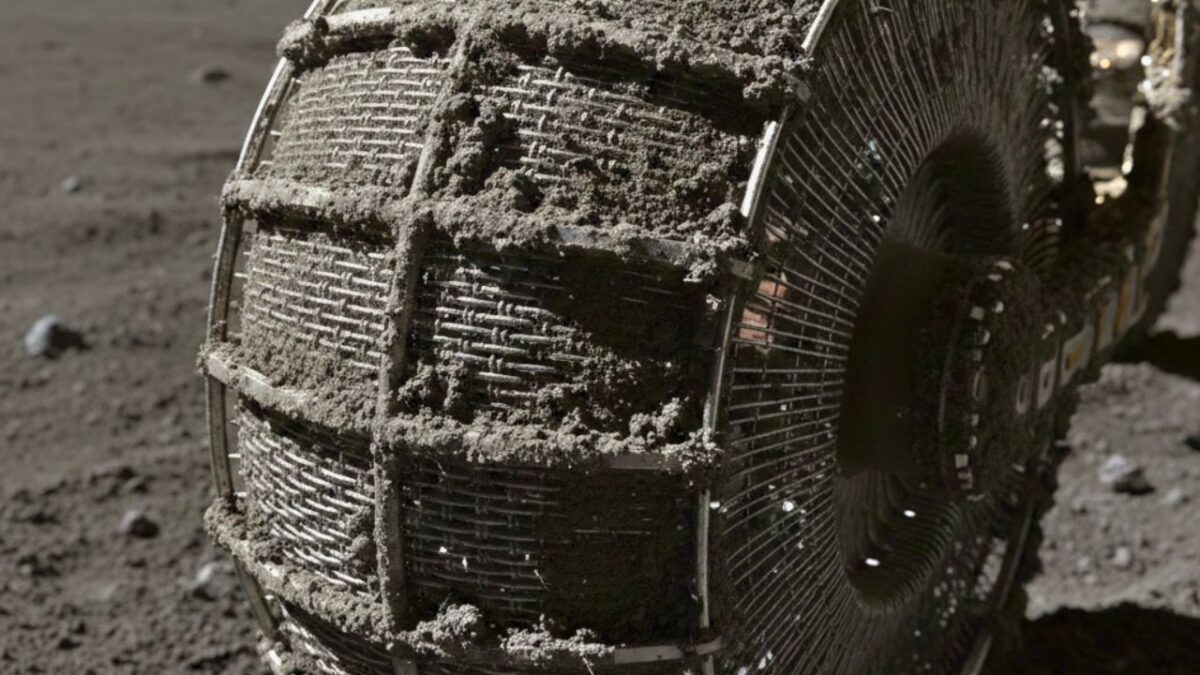
    When a 5-gram portion was poured through a simple funnel, the soil formed a cone that held at around 53 degrees. That angle is much steeper than anything recorded from Apollo or Chang’e-5 sites on the near side.

    In a second test, researchers placed the soil inside a slowly spinning drum. As the drum turned, the soil clung to the wall and built up slopes of about 70 degrees before collapsing. This is close to vertical when compared with most natural materials.

    On Earth, normal beach sand usually collapses at around 35 degrees. Even the soil from Chang’e-5, which landed on the Moon’s near side, only reached about 45 degrees in the same type of test.

    Two main reasons explain this behavior.

    First, the particles are far smaller. About 60 percent of the Chang’e-6 soil measures less than 48 micrometers across, which is thinner than a human hair. Smaller grains tend to grip each other through weak natural forces.

    Second, the particles are rough and sharply shaped. Instead of smooth, rounded grains, they look cracked and uneven. These uneven edges lock together and resist sliding.

    The landing area lies inside the South Pole-Aitken basin, one of the Moon’s oldest and most heavily hit regions. Over billions of years, countless tiny impacts have crushed the rock into fine dust and sharp fragments. The soil in this region also contains more plagioclase, a type of mineral that breaks apart easily into flat, jagged pieces. This adds even more fine and angular material to the mix.

    Unlike the near side of the Moon, this area was not covered by later lava flows. The nearside saw newer rock spread across large areas, mixing and smoothing older layers. The far side remained exposed much longer, allowing the surface to be broken down further.

    This type of soil can change how machines work on the Moon. Rover wheels may sink more easily. Drills and digging tools could face extra resistance. Dust stirred up by engines may settle and stick instead of floating away. There may also be one benefit. Because the soil holds together, slopes and crater walls can remain steeper without collapsing. This could matter when placing equipment near hills or building barriers for protection.

    For future bases, the sticky soil could help in some construction tasks. It packs closely and may hold shapes better for structures made from local material. At the same time, builders may need stronger machines to cut, move, and sift it.

  • CERN Physicists detect rare top quark with W and Z bosons, offering new test of particle physics

    CERN Physicists detect rare top quark with W and Z bosons, offering new test of particle physics

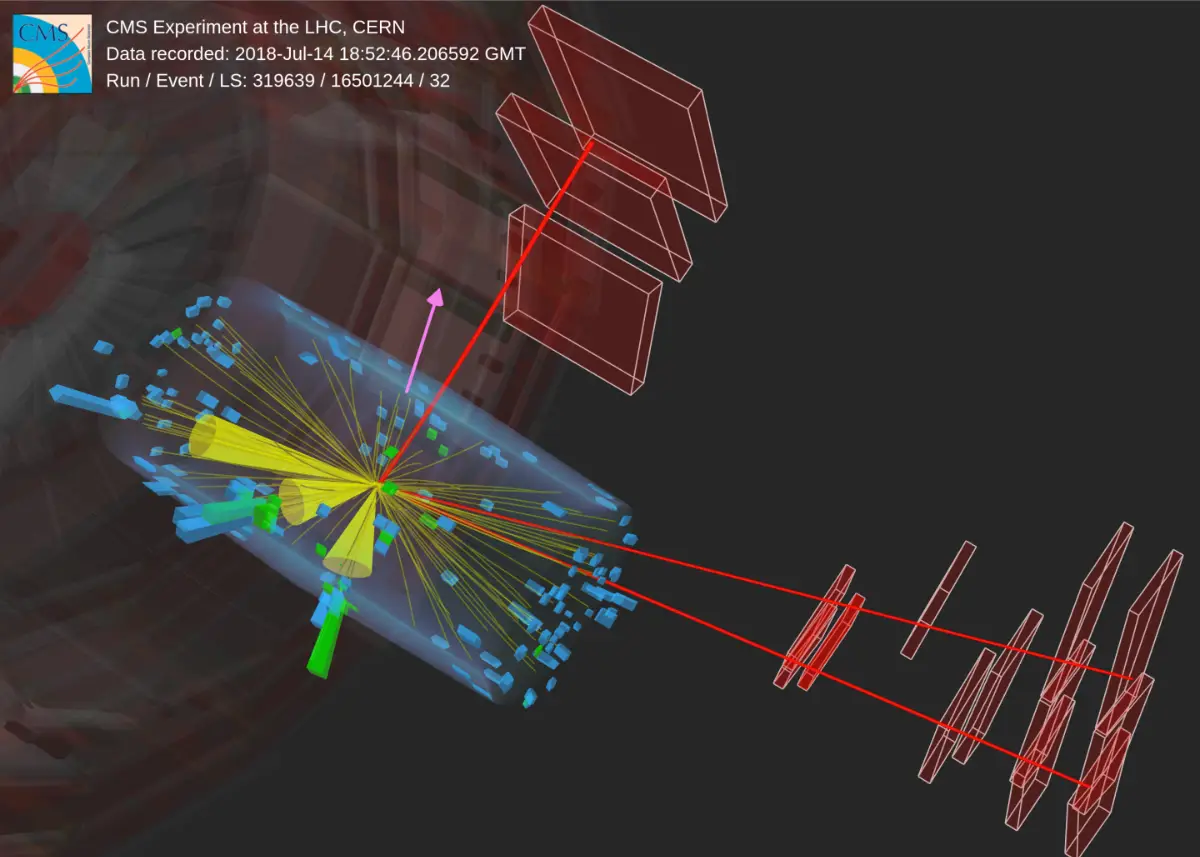
    Physicists at CERN have confirmed the first observation of a single top quark produced with both a W and a Z boson, a result recorded by the CMS experiment at the Large Hadron Collider in Geneva and announced in November 2025.

    The process appears only once in about a trillion proton-proton collisions, and the CMS team relied on machine-learning tools to pick it out from a much larger set of similar events. Researchers say this detection could help test how the known forces of nature behave and could point to physics that current theories do not explain.

    The top quark, discovered in the 1990s, is the heaviest known elementary particle. Because of its mass, it has a strong connection to the Higgs field, which gives particles mass. When the top quark appears in the same collision as W and Z bosons, it creates a rare setting for studying that relationship. The W and Z bosons carry the electroweak force, so seeing all three particles in one event offers a new way to measure how this force interacts with matter.

    The main difficulty was finding the signal. Another process, known as ttZ production, looks very similar and happens several times more often. CMS scientists used a machine-learning model that searched for small differences in the particle tracks and decay patterns. After analyzing data from millions of collisions, the team confirmed that the single-top-with-W-and-Z signal was present.

    The measured rate came out slightly higher than expected, but the data is still limited. Physicists will collect more collisions in future runs of the LHC to confirm whether the difference is real or just a statistical bump. If the higher rate remains, it may indicate unknown interactions or new particles influencing the process.

    The tWZ result adds to a growing list of rare observations at the LHC. Although most collisions produce common particle combinations, these unusual events help test the limits of the Standard Model of particle physics. Even a small mismatch between prediction and measurement can lead researchers toward new theories.

    For now, the CMS collaboration has shown that the LHC can detect one of the rarest Standard Model events currently reachable with existing technology. More data will show whether this detection is just a step in confirming known physics or the start of something new.

    Source: First observation of single top quark production with W and Z bosons

  • Skyroot Aerospace Inaugurates India’s Largest Private Rocket Factory

    Skyroot Aerospace Inaugurates India’s Largest Private Rocket Factory

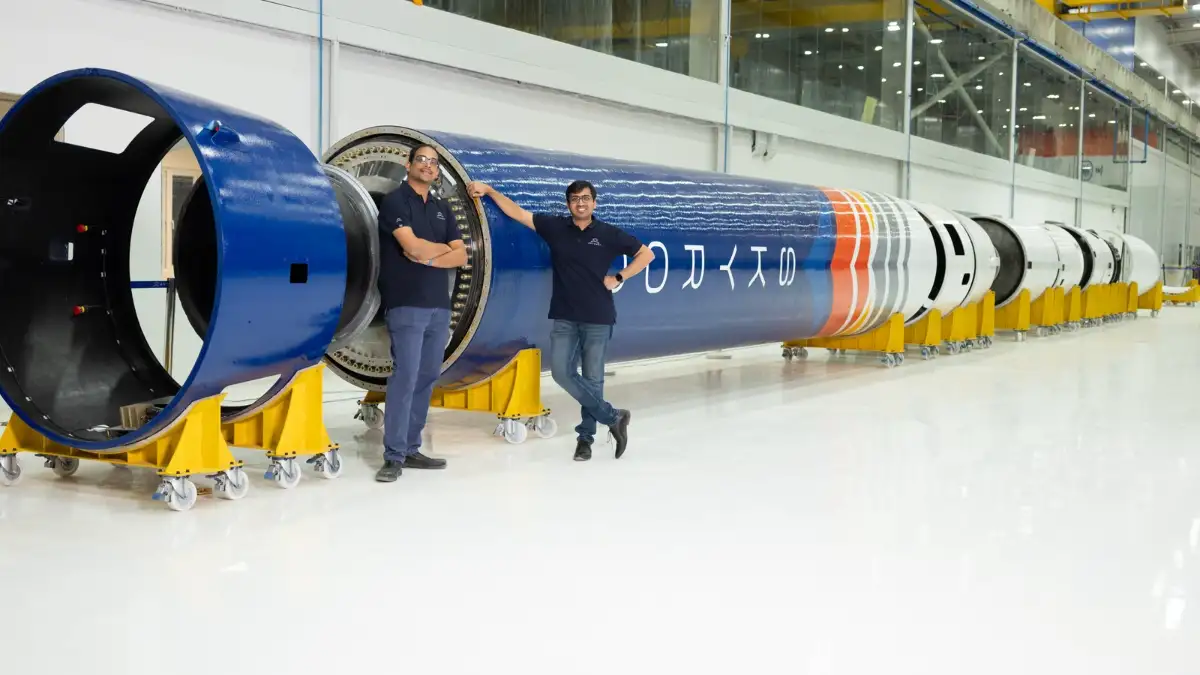
    India’s space story entered a new chapter on November 27, 2025, when Skyroot Aerospace opened its Infinity Campus in Hyderabad and unveiled Vikram-I, the country’s first privately developed orbital-class rocket. For those of us who study the universe, moments like this are rare and important. They mark the point where curiosity meets capability, and science gains a new way to reach the sky.

    The Infinity Campus is more than a factory. Spread across about 200,000 square feet, it is built to take a rocket from blueprint to finished vehicle under one roof. Clean rooms protect sensitive components from dust. Test bays allow engines and structures to be checked repeatedly. Advanced 3D printers shape complex engine parts that once took weeks to build by machine. This kind of in-house production shortens timelines and reduces cost, which is exactly what a modern space program needs if it plans to fly often.

    Vikram-I stands around 22 meters tall and is designed for small satellite missions. It can carry roughly 300 kilograms into low-Earth orbit, a region about 400 to 600 kilometers above the planet where satellites travel at nearly 28,000 kilometers per hour. Rockets aiming for this orbit must reach speeds close to 7.8 kilometers per second, which means the engineering involved is far more demanding than a suborbital hop.

    The vehicle uses a combination of solid and liquid propulsion stages. Solid fuel provides strong, reliable thrust during the early phase of flight, while the liquid upper stage allows for finer control during orbital insertion. Carbon-composite materials keep the structure light without sacrificing strength. These choices reflect a careful balance between power, precision, and cost.

    Skyroot’s earlier launch in 2022, the Vikram-S mission, proved that the company could build and fly rocket systems safely. That short suborbital mission reached the edge of space and returned valuable data. Vikram-I takes the next big step by aiming not just to touch space but to stay there, placing real payloads into orbit around Earth.

    India’s private space sector has grown quickly since reforms in the early 2020s allowed companies to participate more freely in launches and satellite work. Dozens of startups now focus on propulsion, imaging, data analysis, and materials science. Skyroot is part of a larger ecosystem that complements the work of ISRO rather than replacing it. Together, they create a more flexible and capable national space program.

  • Millisecond pulsar PSR J0900−3144 glitches for first time in decades

    Millisecond pulsar PSR J0900−3144 glitches for first time in decades

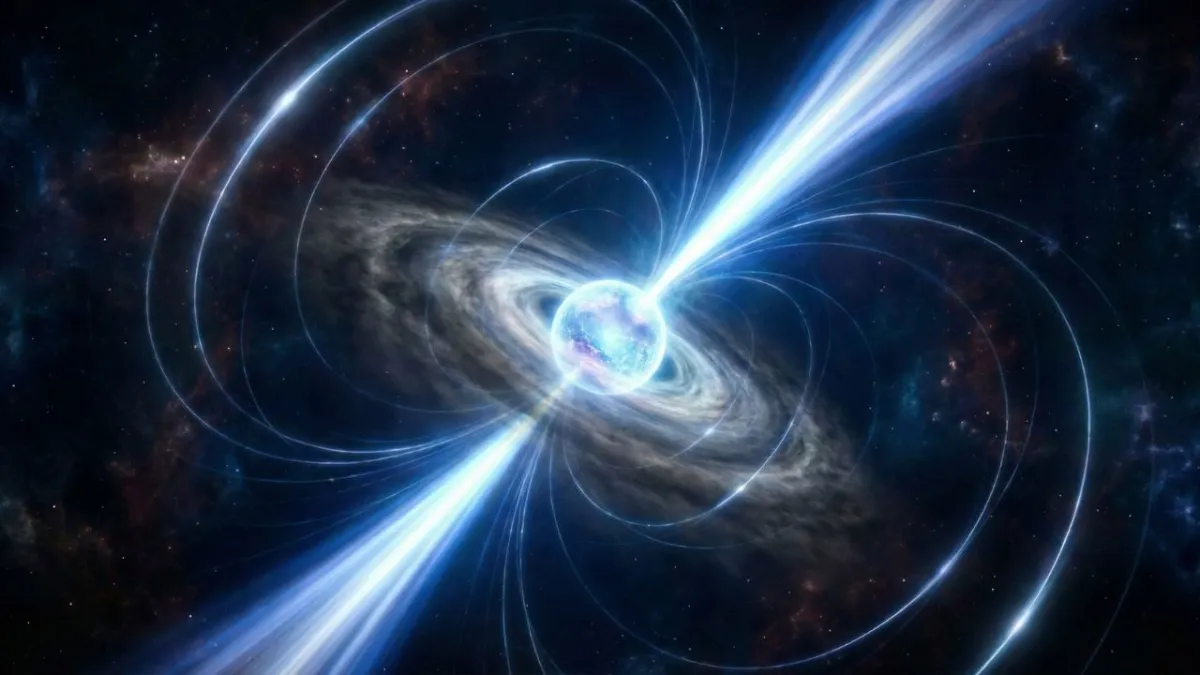
    A 10-millisecond pulsar named PSR J0900-3144, about 3,500 light-years from Earth, suddenly sped up in September 2022. This is only the third time a glitch has been seen in a millisecond pulsar. Astronomers found the change after studying more than 14 years of data from several observatories. The event challenges the idea that these fast, old stars are perfect cosmic clocks and may affect how scientists search for gravitational waves.

    The small speed change appeared in timing data from telescopes, including MeerKAT, Parkes, Nançay, and Jodrell Bank. The shift in spin was only about 1.15 × 10⁻¹², but over long periods it shows up as a clear step in the star’s normal rhythm. When scientists compared this signal to normal background noise, the data strongly supported the glitch explanation.

    Glitches are common in young pulsars. These stars slow down and change speed when material inside them shifts and transfers spin to the outer layer. Millisecond pulsars are much older and were thought to be too stable for this to happen. The new finding shows that even these fast, long-lived stars can still experience sudden changes, even if the size of the change is far smaller than in younger pulsars.

    The discovery also changes how often researchers expect such events. Before this, only two glitches had been confirmed in millisecond pulsars over fifty years. With this new case, the estimated rate becomes about one glitch every 400 years per pulsar. Since major groups now track around 120 of these objects for many years at a time, more glitches may appear in the near future.

    This matters for projects that use pulsars to search for low-frequency gravitational waves. If a small glitch goes unnoticed, it can look like red noise in the data. That can make a pulsar seem less reliable than it really is and reduce the strength of the overall signal scientists are trying to find.

    To test this problem, the team added fake glitches into simulated data. They found that glitches similar in size to this one usually need 10 to 15 years of strong data to be clearly identified. Shorter data sets can easily mistake the change for normal noise, which is a concern for newer observing programs in countries still building long-term records.

    Even though the glitch is tiny, it tells scientists more about what lies inside a millisecond pulsar. It suggests that part of the star’s inner structure can still shift and affect its rotation. This event confirms that these stars are not as perfectly stable as once believed and that their small changes must be taken seriously in future research.

    Source: A glitch in the millisecond pulsar J0900-3144