Category: Space

Explore the vastness beyond our planet. This section covers missions, discoveries, and events that expand our reach into the cosmos. From new rocket launches to deep-space observations, “Space” keeps you updated on humanity’s steps into the unknown.

  • Zomato Founder’s Aerospace Startup Nails Ultra Short Takeoff in First High-Risk Test Flight

    Zomato Founder’s Aerospace Startup Nails Ultra Short Takeoff in First High-Risk Test Flight

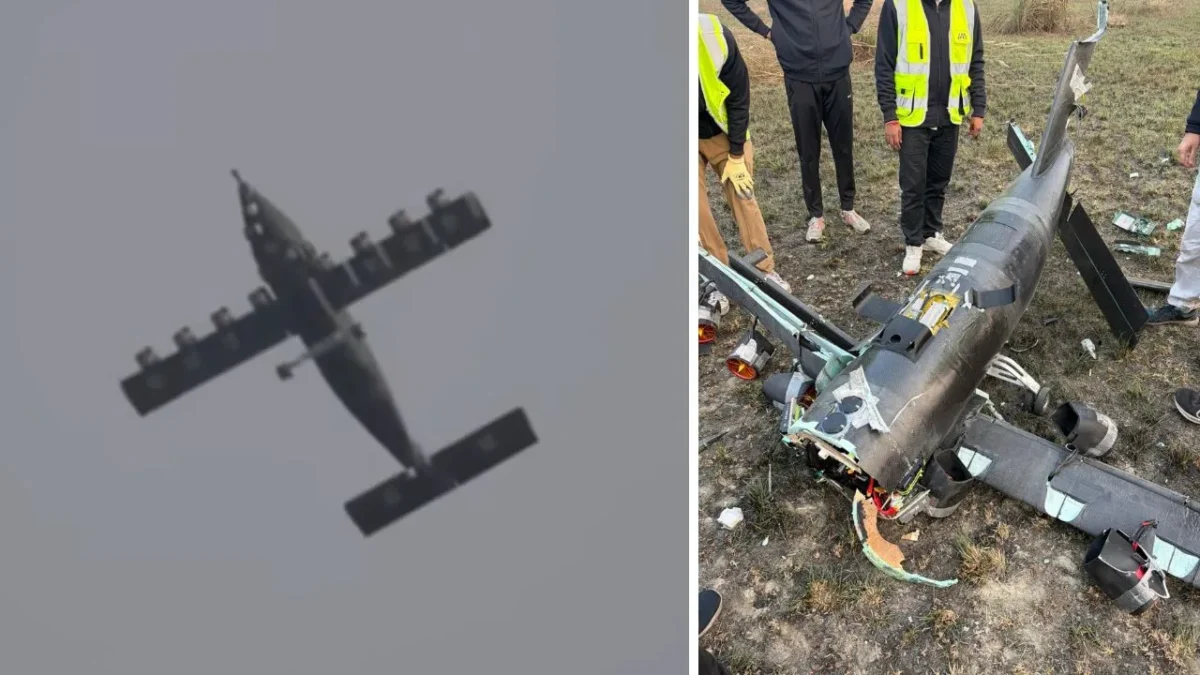
    On January 4, 2026, LAT Aerospace conducted its first flight test of an experimental aircraft called Lat One v0.1, designed to operate from extremely short takeoff areas. The startup, founded by Zomato’s Deepinder Goyal and aerospace engineer Surobhi Das, set out to prove that the aircraft could lift off using far less space than a conventional runway.

    A video shared by Goyal showed the plane leaving the ground within a remarkably short distance, confirming that the core concept performed as intended.

    The aircraft crashed shortly after takeoff, an outcome the team had already expected. Engineers had identified structural limitations through internal simulations and chose to proceed with the test to collect real-world data rather than delay the program. The test produced the data required to guide the next phase of development.

    This method of testing reflects a common approach in high-risk engineering programs, where early test failures help teams identify problems faster than simulations alone. Spaceflight programs have followed similar paths, accepting early losses in exchange for rapid progress and better designs.

    “Overall, we learned so much from this entire experience. We will come out better and stronger from this.” Goyal said on Linkedin.

    LAT Aerospace was launched in January 2025 with a clear objective: to develop compact aircraft capable of taking off and landing in locations where traditional airplanes cannot operate. Most aircraft depend on long runways, heavy infrastructure, and carefully prepared surfaces, which limits access to remote or rugged areas.

    Ultra short takeoff and landing, or uSTOL, aircraft aim to overcome these limits by generating high lift at low speeds through wing design, thrust placement, and precise control systems. This allows operations closer to remote towns, research facilities, and challenging terrain.

    The company is now working on Lat One v0.2, which will attempt a complete flight, including a controlled landing. Goyal has stated that landing presents a tougher challenge than takeoff, requiring accurate control, structural strength, and stability under stress.

    If successful, the program could have uses well beyond regional aviation. Aircraft that operate from tight spaces could support emergency response, supply missions to remote regions, and scientific work in harsh environments. Over time, the company has also indicated interest in electric propulsion to reduce emissions.

  • Scientists may have found a way to Generate Electricity using Earth’s Rotation

    Scientists may have found a way to Generate Electricity using Earth’s Rotation

    Scientists have shown that Earth’s rotation can produce a small but steady electric current, ending a debate that has lasted nearly 200 years. The finding comes from an experiment carried out by Princeton researchers published in March 2025 in Physical Review Research.

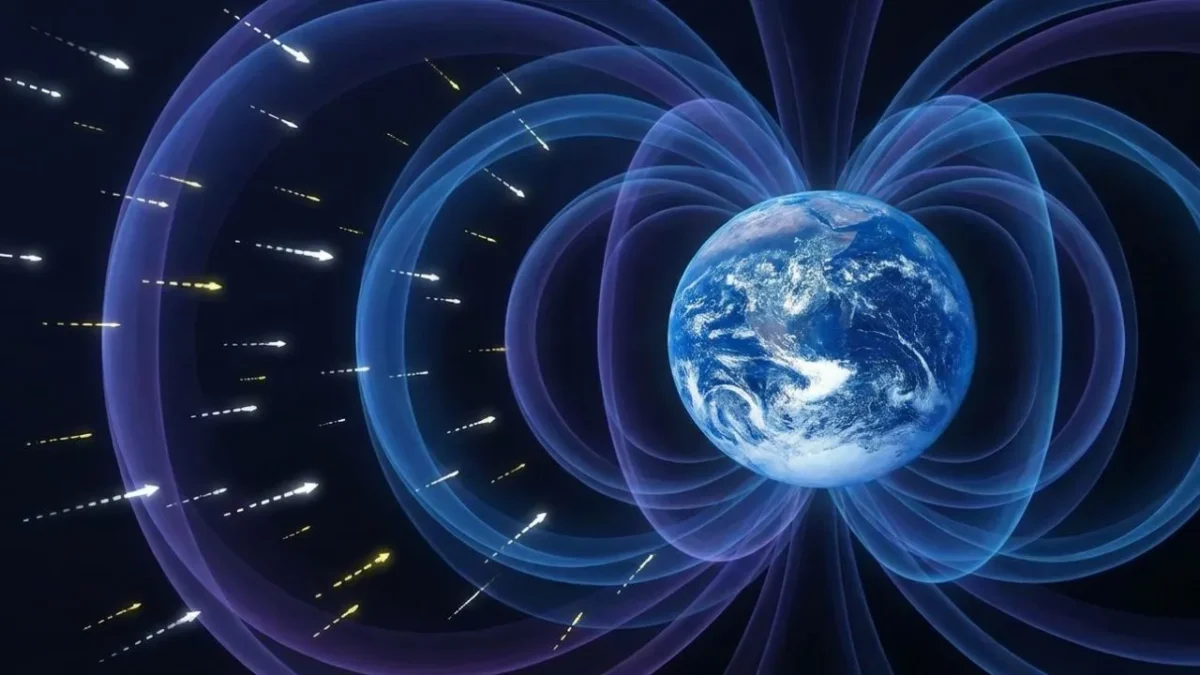
    The idea sounds simple. Earth spins through its own magnetic field at high speed, especially near the equator. In theory, that motion should push electric charges and create power. In practice, every past attempt failed. Charges inside solid materials cancel the effect almost instantly. Even Michael Faraday could not make it work in the 1800s.

    Physicist Christopher Chyba and his team found a workaround by changing the shape and material of the conductor. Instead of a solid object, they built a hollow cylinder made from a soft magnetic material called ferrite. They aligned it at a precise angle to Earth’s rotation and magnetic field.

    That detail mattered. In this setup, the usual charge cancellation does not fully occur. When the device sat in the correct position, it produced a measurable voltage of about 17 microvolts and a current of 25 nanoamps. Rotate it the wrong way, and the signal disappeared. Flip it around, and the current reversed direction.

    The team repeated the test at a second location miles away and saw the same result. Extensive checks ruled out heat effects, electrical noise, and other common sources of error. The power output is tiny and not meant for everyday use. You will not charge a phone or light a bulb with it. Still, the experiment proves that Earth’s spin can supply electrical energy in principle, drawing from the planet’s massive rotational energy store.

    Researchers say the next step is independent replication. If confirmed, the idea could one day help power small sensors or space missions where sunlight is limited. For now, it answers a long-standing question with a clear yes: Earth’s rotation really can generate electricity, even if only a whisper of it.

  • Satellites spot tiny Red Plankton that feed endangered Right Whales in the Gulf of Maine

    Satellites spot tiny Red Plankton that feed endangered Right Whales in the Gulf of Maine

    Scientists have found a new way to track tiny red plankton by using satellite images. The work, led by researchers at Bigelow Laboratory for Ocean Sciences, focuses on the Gulf of Maine, where endangered North Atlantic right whales depend on dense swarms of a single species of copepod to survive.

    The copepod, known as Calanus finmarchicus, may be small, but it plays a large role in the marine food chain. Right whales rely on it almost entirely, filtering huge volumes of water to feed. With fewer than 350 right whales left, knowing where their food gathers could help reduce deadly ship strikes and fishing gear entanglements.

    Instead of relying only on ship surveys, which cover limited areas and take time, researchers turned to satellite data that already scan the ocean daily. The key lies in the copepod’s color. These animals store energy using a red pigment absorbed from algae. When they gather in large numbers near the surface, the water takes on a subtle reddish tint.

    Satellites such as NASA’s Aqua mission measure how sunlight reflects off the ocean in different colors. The research team adjusted these measurements to highlight unusual red signals that stand out from normal ocean water. Those signals often point to dense copepod swarms.

    To confirm what the satellites see, scientists used computer models that simulate how light moves through seawater filled with plankton, plants, and other particles. By comparing real satellite colors with model results, they could estimate copepod numbers in each patch of ocean. In some cases, satellite estimates matched ship-based measurements taken at the same time.

    The method is not foolproof. Other plankton species and algae blooms can also change ocean color. Seasonal knowledge and field data help reduce confusion, especially during autumn when similar species appear or during rare blooms that tint the water.

    The Gulf of Maine is warming faster than most of the world’s oceans, which has already shifted where copepods gather. Right whales have followed those changes, often moving into busy shipping lanes where the risk of collision rises. Near real-time maps of food hotspots could help managers slow ships or adjust fishing activity when whales are likely nearby.

    Future satellites with finer color detection could sharpen these maps even more. For now, the study shows that satellites can spot the ocean’s smallest workers and help protect some of its largest animals. Sometimes, saving a whale starts with finding a red speck in a sea of blue.

  • NASA and NOAA Improve Solar Storm Forecasts, Cutting CME Arrival Errors by Several Hours

    NASA and NOAA Improve Solar Storm Forecasts, Cutting CME Arrival Errors by Several Hours

    Scientists from NASA and NOAA have reported advancements in predicting when solar storms will reach Earth, cutting forecast errors by several hours in some cases. The progress comes from upgraded computer models tested on dozens of past coronal mass ejections, or CMEs, using real spacecraft data. The findings matter as solar activity remains high and modern society depends more than ever on satellites, power networks, and space missions that solar storms can disrupt.

    CMEs erupt from the Sun when magnetic fields snap and fling huge clouds of charged particles into space. These clouds can race toward Earth at speeds of up to 2,000 kilometers per second and arrive within two to four days. When they hit, they can trigger bright auroras but also interfere with GPS signals, damage satellites, and stress power grids. Even a few extra hours of warning helps operators protect equipment or adjust operations.

    The new report examined 38 Earth-directed CMEs recorded between 2012 and 2019. Researchers ran more than 1,200 simulations to compare older forecasting methods with updated ones. They used observations from the ACE spacecraft near Earth to measure how close each prediction came to the real arrival time.

    At the center of the work are two linked models that simulate conditions from the Sun to Earth. One estimates solar wind speed near the Sun, while the other tracks how a CME moves through space. In the past, these models relied on a single daily snapshot of the Sun’s surface. That approach ignored how fast the Sun changes as it rotates.

    The team tested time-updated magnetic maps that refresh every few hours. They also added an ensemble system that runs multiple versions of the Sun’s magnetic field to cover unknowns, especially on the far side of the Sun that telescopes cannot see directly. In addition, they corrected long-standing measurement offsets in ground-based data, which improved how the models matched real solar wind conditions.

    Results varied by time period. For older events, some upgrades showed little benefit. For storms after 2017, however, the improved setup reduced average arrival-time errors by three to six hours compared with earlier methods. Time-updated maps helped most when CMEs traveled through fast or uneven solar wind.

    Challenges remain. Storms that clip Earth rather than hit head-on remain hard to time, and far-side solar changes still introduce uncertainty. Even so, the study shows clear progress.

    NOAA plans to move these tools into daily operations later this decade. As solar cycle 25 slowly declines toward its next quiet phase, better forecasts will remain essential. Solar storms may be natural events, but with smarter prediction, their impact on life and technology does not have to be a surprise.

    Source: NASA/NOAA MOU Annex Final Report: Evaluating Model Advancements for Predicting CME Arrival Time

  • NASA’s Parker Probe Reveals Sun’s Magnetic Edge Swells With Solar Activity

    NASA’s Parker Probe Reveals Sun’s Magnetic Edge Swells With Solar Activity

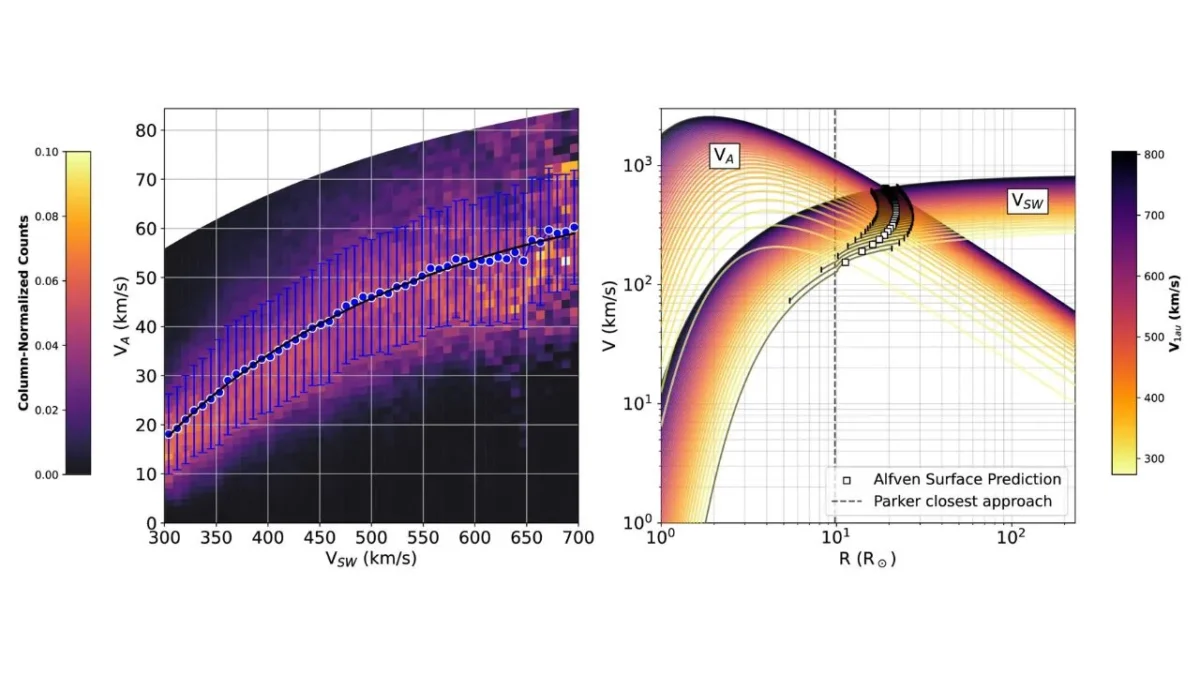
    NASA’s Parker Solar Probe has crossed a hidden boundary around the Sun that shapes how solar wind escapes into space, and new research shows that this boundary expands, contracts, and grows more uneven as the Sun moves through its activity cycle. By combining close-range measurements from Parker with data from Europe’s Solar Orbiter and spacecraft near Earth, scientists tracked how this zone, known as the Alfvén surface, changed from the calm phase of solar cycle 25 to its recent peak.

    Parker has flown closer to the Sun than any spacecraft before, reaching about 3.8 million miles above the surface. During several of these close passes, the probe moved inside the Alfvén surface, where the Sun’s magnetic field still controls the motion of charged particles. Above that boundary, the solar wind escapes freely and carries energy and rotation away from the star.

    The study shows that the height of this surface is not fixed. Near the quiet period of 2019, it sat roughly 12 to 17 solar radii from the Sun. As solar activity climbed toward its peak in 2024, the boundary swelled outward to about 15 to 23 solar radii. This expansion matters because a higher boundary allows the Sun to lose spin more efficiently over time, shaping how stars age.

    To map this shifting region, researchers blended observations from multiple spacecraft. Parker supplied direct crossings close to the Sun, Solar Orbiter filled in the middle distances, and satellites near Earth provided steady long-range measurements. By tracking wind speed, magnetic strength, and particle density, the team reconstructed the surface’s shape and confirmed their results against Parker’s direct encounters.

    The maps also show that the boundary grows rougher during busy solar periods. Its shape becomes more uneven, with bumps and dips linked to solar storms and erupting regions on the Sun’s surface. During quieter times, the boundary appears smoother and closer in.

    These findings carry practical value for space weather forecasting. Changes in this boundary affect how energetic particles travel through the solar system, which can influence satellites, astronauts, and missions to the Moon and Mars. The results also help scientists understand how stellar winds may affect planets around other stars.

    Parker Solar Probe will continue its close passes for several more years as solar activity declines again. Along with future high-latitude views from Solar Orbiter, these observations will help build a clearer picture of how our star breathes, spins, and shapes the space around it.

    Source: Multispacecraft Measurements of the Evolving Geometry of the Solar Alfvén Surface over Half a Solar Cycle

  • Quote of the Day: “Science is a beautiful gift to humanity; we should not distort it.” – Dr. A.P.J. Abdul Kalam

    Quote of the Day: “Science is a beautiful gift to humanity; we should not distort it.” – Dr. A.P.J. Abdul Kalam

    Science often feels ordinary because it sits quietly in our daily lives. Your phone knows where you are. Planes cross oceans without getting lost. Doctors stop diseases that once killed entire towns. None of this feels dramatic anymore. That calm presence is exactly why science matters. It works best when it stays honest, open, and grounded in reality.

    “Science is a beautiful gift to humanity; we should not distort it.” Dr. A. P. J. Abdul Kalam once warned that science should not be distorted. That warning matters more today than ever. We live in a time when facts travel fast, but false claims move even faster. When people bend science to suit fear, money, or pride, everyone pays the price.

    This is not a philosophical debate. It affects health, safety, education, and trust.

    How Science Earned Our Trust

    Science did not appear fully formed. People built it slowly by asking questions, testing ideas, and accepting when they were wrong. That habit set it apart from belief systems based on authority alone.

    In space research, progress followed that same path. Early sky watchers guessed what stars were. Later, better tools showed they were distant suns. Each step relied on proof, not comfort. When new data challenged old views, scientists adjusted their thinking.

    That pattern explains why science works. It corrects itself. It does not protect pride. It rewards patience and honesty.

    This process led to modern medicine, clean water systems, safe bridges, weather warnings, and satellite navigation. None of these came from opinion. They came from careful testing and public review.

    Why Space Research Still Matters

    Some people ask why we spend money studying space when problems exist on Earth. The answer is simple. Space research improves life here.

    Navigation systems came from work on satellites. Medical imaging borrowed tools first designed to study distant objects. Even simple items like phone cameras improved through research meant for telescopes.

    Recent space observations pushed this progress further. New telescopes now see objects formed soon after the universe began. These findings help scientists test ideas about how matter formed and how galaxies grew. That knowledge feeds better models, better tools, and better predictions.

    This matters because accurate models guide real decisions. They help engineers design safer systems. They help planners prepare for natural threats. They help students learn how evidence shapes truth.

    Where Distortion Begins

    Distortion rarely starts with lies shouted from rooftops. It begins with doubt framed as curiosity.

    Claims that Earth is flat still circulate online. So do claims that massive objects in space do not exist, despite clear images and measurements. These ideas spread because they offer simple answers and a sense of belonging.

    Social media rewards bold claims, not careful thinking. Algorithms push content that triggers emotion. Calm explanations struggle to compete.

    Money also plays a role. Some industries fund studies designed to confuse the public. They highlight uncertainty while ignoring clear trends. This tactic delays action and protects profits.

    In science reporting, cherry-picked facts mislead readers. A single data point becomes a headline. Context disappears. Trust erodes.

    The Cost of Getting It Wrong

    When people stop trusting science, real harm follows.

    During disease outbreaks, false claims slow treatment. During climate debates, delayed action worsens damage. In cities, poor lighting policies erase the night sky while wasting energy.

    Light pollution offers a clear example. Excess lighting hides stars and disrupts wildlife. Studies show better lighting saves money and improves safety. Still, some officials ignore the data to avoid change.

    The loss goes beyond darker skies. Children miss early moments of curiosity. Communities lose a shared sense of place. Science warned us early. Distortion stalled progress.

    Why Peer Review Still Matters

    Peer review sounds dull, but it protects truth. Scientists share work openly. Others check the methods, repeat tests, and look for errors. Flawed ideas fail. Strong ones survive.

    This system does not promise perfection. It promises correction.

    In space research, teams review images and measurements for months before releasing results. Independent groups confirm findings. Amateur observers often verify paths of objects using simple tools. This openness keeps claims grounded.

    The public benefits when this process stays visible. It shows that science does not demand trust. It earns it.

    Teaching Skepticism the Right Way

    Healthy skepticism asks questions without assuming answers. It checks sources and follows evidence.

    Bad skepticism rejects evidence before seeing it.

    Education plays a key role here. When students learn how data works, they spot weak claims quickly. They learn that changing your mind after new evidence shows strength, not weakness.

    Planetariums and science centers help by showing how simple measurements reveal distance, age, and motion. No mystery. Just steps anyone can follow.

    This approach builds confidence. People trust what they can test.

    What Happens Next

    The next decade will bring faster data, sharper images, and more powerful tools. Artificial images will look real. Fake videos may mimic space missions or health studies.

    This raises new challenges. Clear labeling of generated media will matter. Open access to raw data will matter more. Journalists must slow down and verify before publishing.

    Space research will continue to deliver practical returns. Better satellites will improve weather tracking and disaster response. Medical tools will benefit from advances in imaging and materials.

    But these gains depend on trust. Without it, progress stalls.

    The Role of the Public

    Science does not belong to labs alone. Public support funds research. Public pressure shapes policy.

    People can help by checking sources, sharing responsibly, and supporting open research. Ask who funded a study. Ask whether others confirmed it. Ask what the data shows, not what a headline claims.

    Small actions count. Support dark-sky rules. Attend public lectures. Encourage schools to teach evidence-based thinking.

    Curiosity works best when paired with discipline.

    Keeping Science Honest

    Science stays useful only when people defend its rules. Those rules include transparency, correction, and humility.

    We should expect scientists to explain their work clearly. We should expect journalists to report carefully. We should expect leaders to respect evidence, even when it feels inconvenient.

    Kalam’s warning remains timely. Science gave us flight, communication, and longer lives. It did so by refusing shortcuts.

    The future will test that discipline. Better tools will reveal more facts. Whether society accepts them depends on how well we guard truth today.

    Science does not ask for belief. It asks for attention. When we give it that, it rewards us with progress we can trust.

  • SpaceX targets $1.5 Trillion IPO and this could change the Space Industry forever!

    SpaceX targets $1.5 Trillion IPO and this could change the Space Industry forever!

    SpaceX insiders say the company may go public in 2026 with a valuation target near $1.5 trillion, more than double its recent private share sale price and a figure that would rank among the largest stock market debuts in history. If this plan moves forward, it would give investors their first chance to buy into the world’s busiest launch company.

    SpaceX completed 132 orbital launches in 2025, flying more missions than every other launch provider combined. Its reusable Falcon 9 rockets cut costs and brought in steady money from commercial flights and crew trips to the International Space Station.

    Much of the valuation talk centers on Starlink, the satellite internet network now serving about 8.5 million users worldwide. With thousands of satellites already in orbit, analysts expect revenue to top $10 billion this year. The network brings fast internet to areas with limited service and gives SpaceX a reliable income stream that sets it apart from competitors who rely only on launch contracts.

    The system has drawbacks. Astronomers say the bright satellites streak through telescope images and ruin observations. The company has worked to dim the hardware, but scientists still lose data. Some joke about cosmic photobombs, though the frustration is real.

    SpaceX’s long-term bet is on Starship, the massive rocket designed to send large payloads to space at far lower costs. Recent tests showed the booster can return to its launch tower for catch attempts, a step Elon Musk says is necessary for quick reuse. NASA has backed the system for upcoming moon missions, and early cargo plans for Mars sit further down the timeline.

    If Starship reaches full reuse, launch prices could drop enough to open new business opportunities, from space factories to high-volume research missions. That potential helps justify the ambitious valuation.
    But challenges remain.

    Tech stocks can swing wildly, and Musk’s public comments often shift investor expectations in real time. Regulators watch Starlink’s growing presence closely and have placed limits on radio bands to protect other uses. With more satellites planned, space debris worries continue to grow and could bring new restrictions.

    The timing matters too. A 2026 listing would come during a period when market conditions can change fast. The company would need to convince investors that its growth can support a valuation that dwarfs most corporations.

    If SpaceX proceeds, it could raise more than $30 billion for rocket development and network expansion. Supporters see it as a major moment for the space industry. Skeptics say the numbers look stretched. Either way, the next year will show whether the company can turn big talk into an actual market debut.

  • Starlink Disappoints Indian Users With ₹34,000 Setup Fee and ₹8,600 Monthly Bill

    Starlink Disappoints Indian Users With ₹34,000 Setup Fee and ₹8,600 Monthly Bill

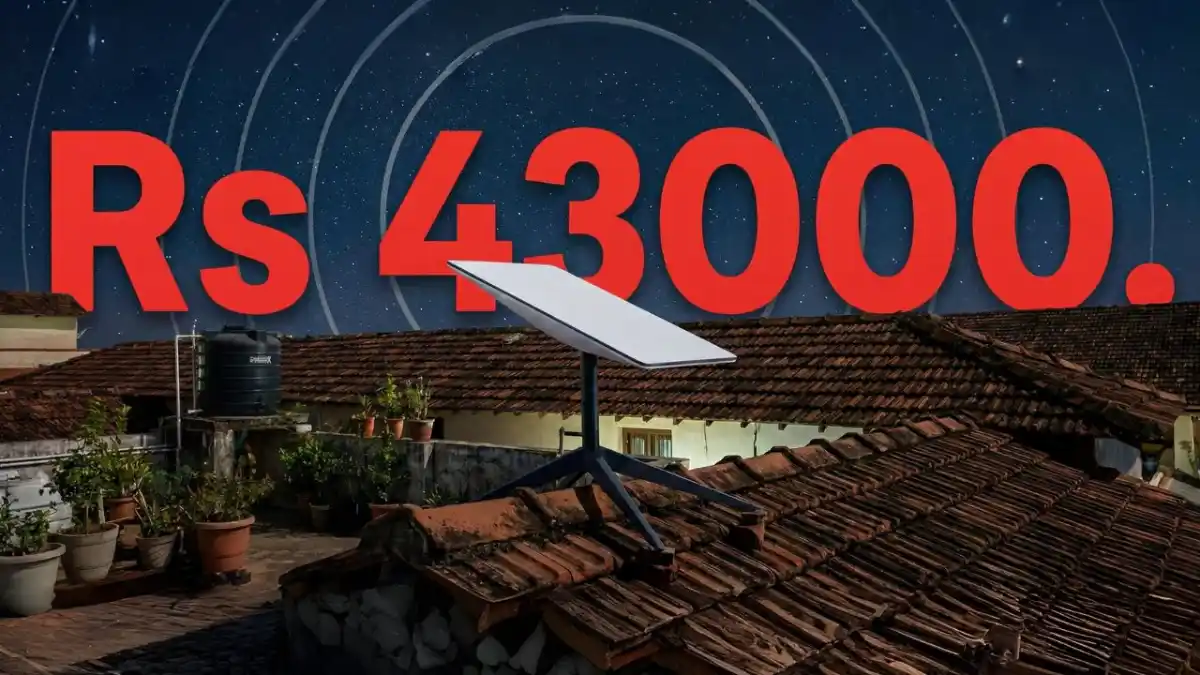
    SpaceX has announced Starlink will charge Indian customers ₹34,000 for hardware and ₹8,600 per month for satellite internet when service starts in early 2026, setting off a debate about whether rural users can afford prices that dwarf typical broadband bills below ₹1,000. The hardware package includes a dish, router, and cables. The monthly plan offers unlimited data and a 30-day trial. The company says it’s targeting rural areas where fiber and cable don’t reach, not cities with established internet options.

    Many villages across India still face weak mobile coverage or rely on a single tower shared by entire communities. Starlink argues these gaps justify higher prices, even though the monthly cost exceeds what many rural residents pay for phones. Some observers noted the irony online.

    The satellite system uses low-orbit technology already operating in other countries. The network sits closer to Earth than traditional satellites, which cuts lag and keeps speeds consistent. Users only need a clear sky view, common in rural settings. But the price remains a sticking point. Bangladesh pays roughly half the Indian rate, which intensified the debate. Critics question why India faces higher charges when the technology is identical.

    Starlink has cleared initial hurdles with IN-SPACe and the Department of Telecommunications but needs final spectrum approval from the telecom ministry before switching on service. Gateway stations are under construction in Mumbai, Delhi, and Pune. Maharashtra signed a deal with SpaceX to connect remote districts. Test links started in October, though full service remains offline.

    If approvals come through on schedule, rural homes could gain stable access for schoolwork, online services, and daily communication in 2026. The price will block many potential customers, but some may accept the cost where storms and power cuts regularly knock out mobile signals.

    Lower prices could attract more users, but SpaceX hasn’t shown interest in matching local rates. Higher prices might limit adoption to wealthier rural households or businesses willing to pay for reliability.

    The next year will reveal whether India grants final approvals and whether SpaceX adjusts its strategy. Rural internet access has long been a problem in India, and satellite service could help solve it. Whether enough people can afford the solution is another question entirely.

  • China’s ‘Artificial Sun’ Pushes New Limits With Record 17-Minute Plasma Run

    China’s ‘Artificial Sun’ Pushes New Limits With Record 17-Minute Plasma Run

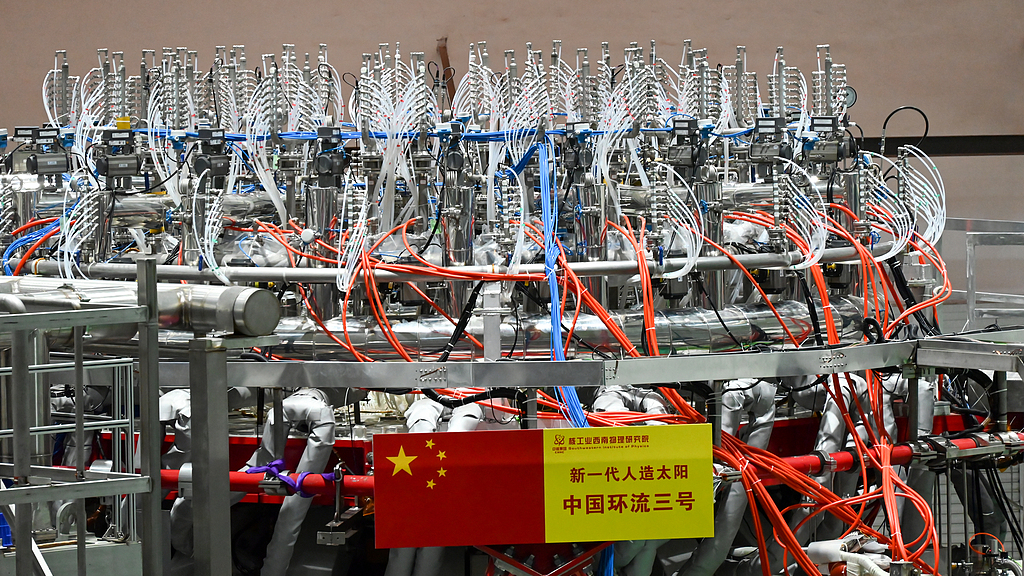
    China’s EAST fusion reactor in Hefei held superheated plasma for 1,066 seconds in January 2025, setting a world record and reigniting debate about whether fusion power can move from lab success to practical energy generation before mid-century.

    The facility uses powerful magnets to trap hydrogen plasma in a ring where temperatures reach beyond 100 million degrees Celsius. Scientists heat the fuel far hotter than the sun’s core because Earth lacks the pressure needed to squeeze atoms together. The goal is to keep plasma stable long enough to test systems that future power plants will require.

    The January run stood out for both length and stability. Engineers doubled the heating power during the test and kept the plasma in a high-performance state without crashes or sudden drops. The team said the smooth operation shows that long runs are possible without damaging reactor walls. The result also beat their previous record of 403 seconds from August 2024, showing steady improvement in a field where failures are common.

    Work continued through the year with upgrades to the exhaust system, which must handle constant blasts of particles during actual power generation. Engineers tested a new design that protects the chamber’s lower section and prevents impurities from building up. China has poured money into these systems as part of its contribution to ITER, the international reactor being built in France that expects its first plasma test in 2025.
    Another project nearby is attracting attention.

    The BEST reactor, now being assembled, aims to produce small amounts of fusion electricity by the late 2020s. Workers installed the base in October 2024, and officials hope to complete the machine by 2027. The unit uses Chinese-made magnet materials and packs stronger fields into a smaller space. If successful, it could serve as a blueprint for early commercial plants.

    Researchers say the work also helps astronomy and physics studies because the same reactions powering stars drive their experiments. Data from EAST helps scientists improve models of how stars heat up, age, and explode. Some may joke about “bottling a sun,” but the numbers from Hefei feed real research.

    China’s long-term plan targets fusion power on its grid by 2050. That timeline depends on continued advances, stable funding, and machines that can run for hours instead of minutes. The latest record shows progress, but it also reminds everyone that fusion remains an expensive race with many obstacles ahead. For now, the artificial sun burns hotter and longer, even if the actual payoff remains years away.

  • Drone Strike Leaves Chernobyl’s Protective Dome Leaking, Raising Safety Concerns

    Drone Strike Leaves Chernobyl’s Protective Dome Leaking, Raising Safety Concerns

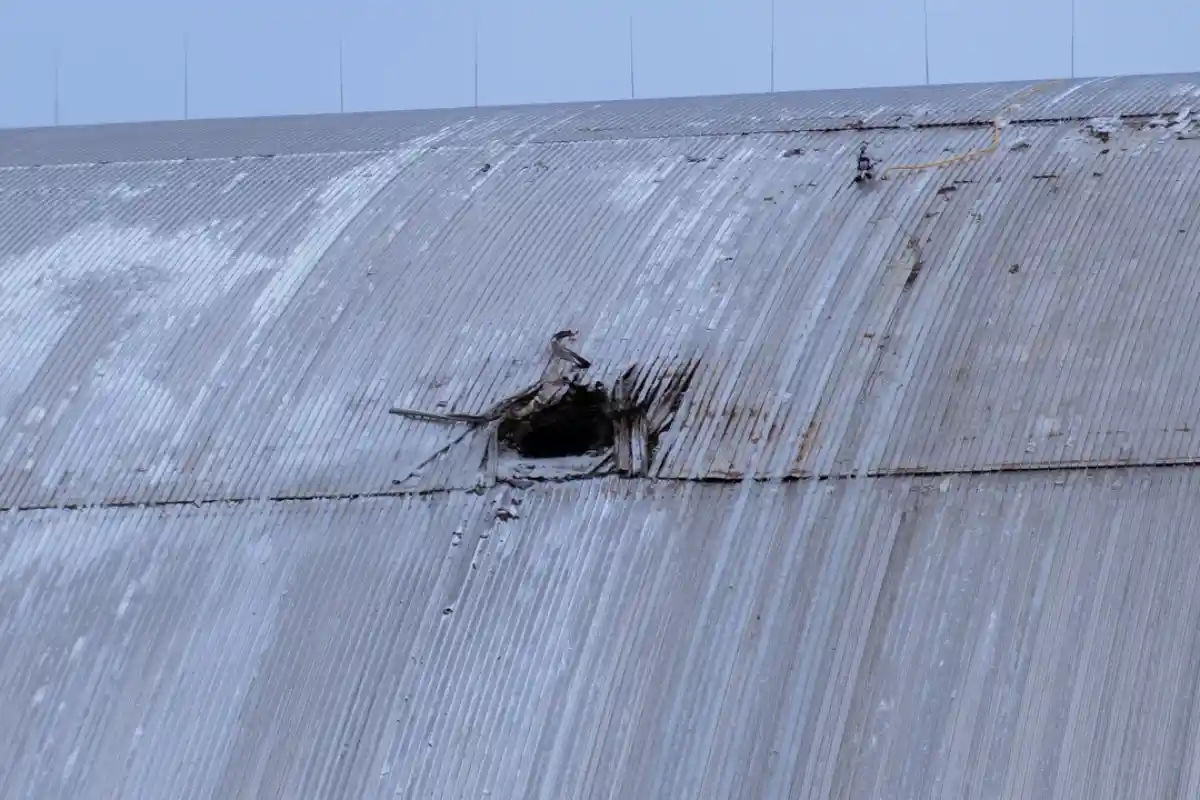
    A Russian drone strike in February tore a 15-square-meter hole in Chernobyl’s protective steel dome, and inspectors now say the structure is no longer airtight, raising questions about whether it can protect the site for decades to come as planned. The International Atomic Energy Agency (IAEA) reported that the February 14 attack damaged the outer layer of the New Safe Confinement, the massive steel arch built to contain radioactive debris from the 1986 disaster.

    While the inner concrete shell stayed intact and radiation levels remain normal, new gaps in the structure could let in weather and wildlife, speeding up corrosion and wear.

    The steel dome was supposed to last 100 years. Workers moved it into place in 2016 to replace an aging concrete shell that covered reactor four after the April 26, 1986, explosion and fire. That accident killed more than 100 workers and spread radioactive dust across Europe, forcing thousands from their homes and creating a 30-kilometer zone that remains empty today.

    The drone was heading toward Ukraine’s power grid when it crashed into the roof and started a fire. Ukraine blamed Russia; Russia denied responsibility. Crews patched the hole, but inspections found openings large enough to compromise the dome’s primary safety functions.

    The damage creates a new problem for teams trying to remove 200 tons of melted fuel still inside the reactor. That work already stretches into the 2060s, and any setback could push the timeline back further. The dome needs to stay stable and maintain low air pressure to keep radioactive particles from drifting out while machines handle the dangerous cleanup work.

    Fixing the structure will need cranes, steel, and money from other countries, all while the war continues. For now, radiation readings stay normal, and there is no immediate threat to public safety. But the long-term worry remains.

    The site survived nearly 40 years after the disaster, only to face new damage from a conflict that has nothing to do with nuclear safety. Wildlife still wanders through the empty zone, which has become an unexpected nature reserve. The weakened dome shows that old disasters need constant attention, even when the world is focused on other things.