Tag: NASA

  • NISAR Satellite Successfully Launched on July 30 Aboard ISROโ€™s GSLV-F16

    NISAR Satellite Successfully Launched on July 30 Aboard ISROโ€™s GSLV-F16

    India successfully launched the NASA-ISRO NISAR satellite on July 30, 2025, at 5:40 PM IST from the Satish Dhawan Space Centre in Sriharikota, Andhra Pradesh. The mission lifted off aboard the GSLV-F16 rocket.

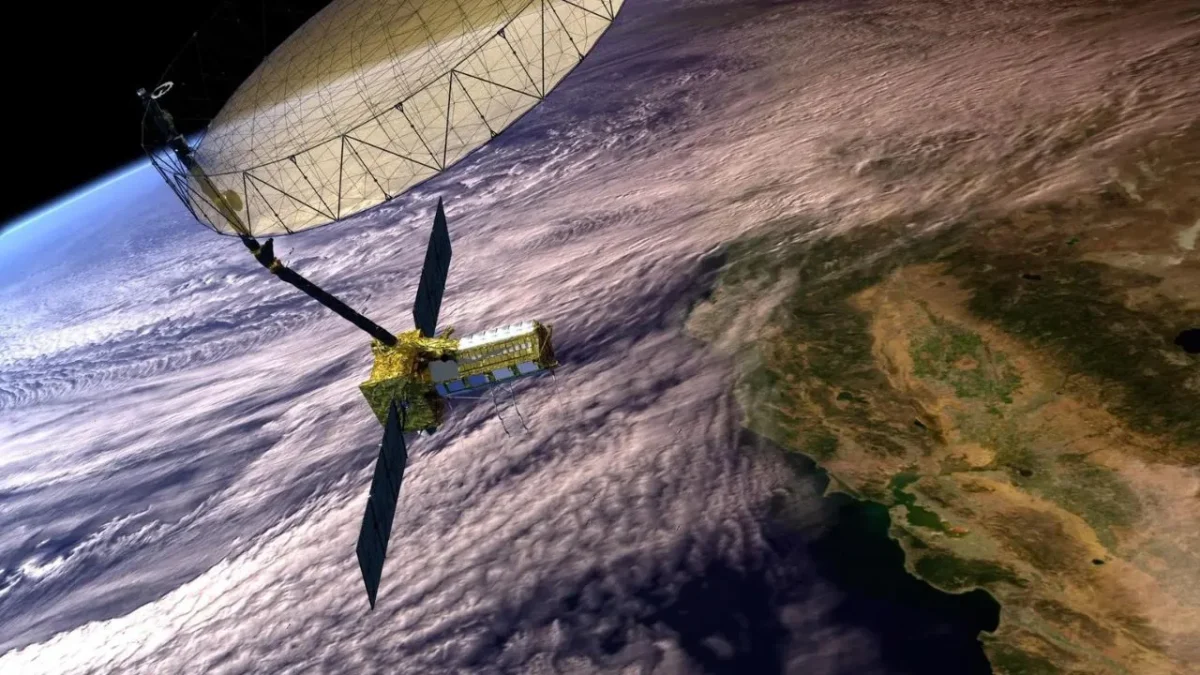
    The NASA-ISRO Synthetic Aperture Radar (NISAR) mission is a joint project by the Indian Space Research Organisation (ISRO) and NASA.

    Itโ€™s built to change how we observe Earth by collecting detailed data on land, ice, and vegetation. Scientists will use this information to monitor natural disasters, track changes in climate, and study farming patterns.

    The countdown began at 2:10 PM IST on July 29, with ISRO confirming that final preparations were underway. NISAR is one of the most advanced satellites ever made for studying Earth. It carries two Synthetic Aperture Radars (SARs) that work at different radio frequenciesโ€”L-band and S-band.

    This is the first time a satellite has used both together. These radars can see through clouds, rain, and darkness, capturing clear images of Earthโ€™s surface every six days at each point and globally every 12 days.

    FeatureDetails
    Satellite nameNISAR (NASA-ISRO Synthetic Aperture Radar)
    Launch dateJuly 30, 2025
    Launch time5:40 PM IST
    Launch siteSriharikota, India
    Launch vehicleGSLV-F16
    Orbit altitude747 km
    Weight2,393 kg
    Data output~80 terabytes per day
    Mission cost$1.5 billion (NASA: $1.16B, ISRO: $90M)

    A Unique Dual-Radar System

    What sets NISAR apart is its use of two radar systems on the same satellite. Radar works by sending out microwave signals and collecting the echoes that bounce back. In space, SAR technology allows these systems to function like large ground-based radar antennas. NISARโ€™s 12-meter antenna, provided by NASA, can produce images as clear as those from a 20-km-wide ground system.

    The L-band radar can detect changes beneath tree cover, sand, or ice. This makes it useful for mapping forests and measuring the amount of carbon stored in them. The S-band radar focuses on wider features like fields and water bodies. It can monitor the growth of crops such as sugarcane or soybean, especially in India. These two systems work together, capturing the same area at the same time from different angles. This provides a level of detail not possible with a single radar.

    The satellite is expected to generate about 80 terabytes of data each day, three times more than any previous satellite in its category. Placing two different radar systems on one platform required careful planning to prevent interference between their signals. This is one of the reasons the satellite took more than 15 years to complete.

    A Milestone in Indiaโ€“US Collaboration

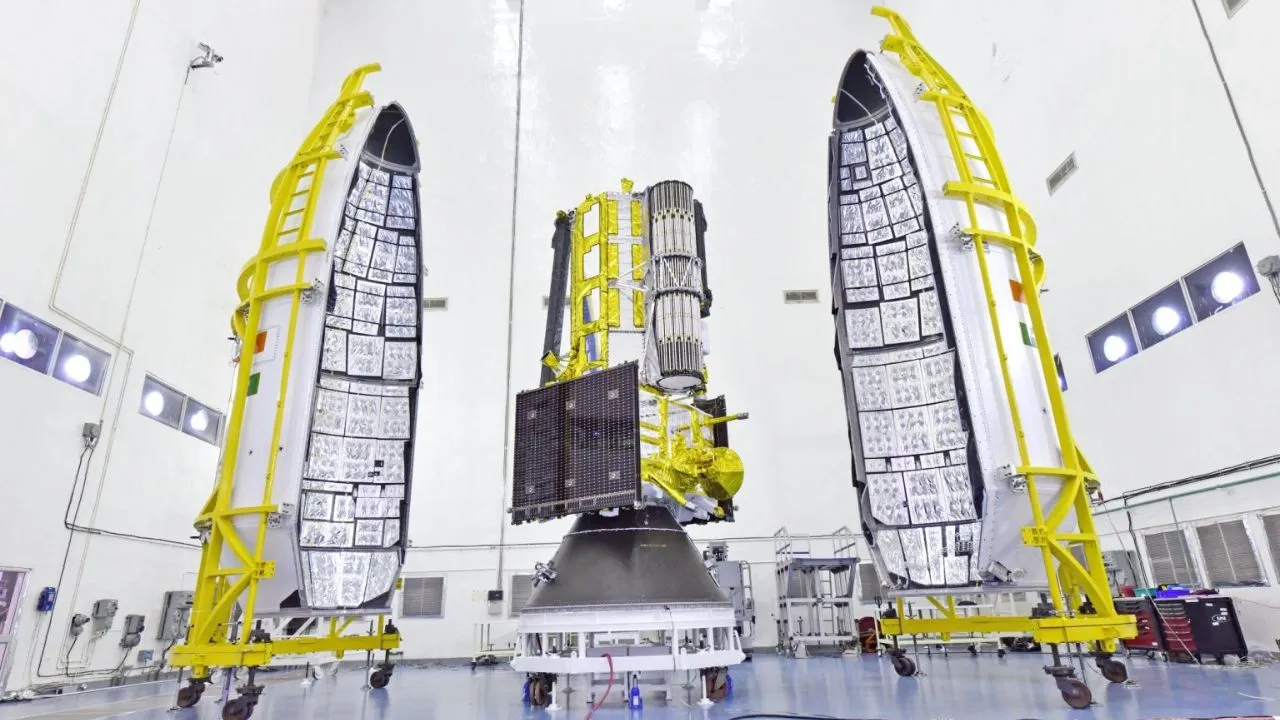
    The NISAR satellite being loaded atop ISRO's GSLV rocket.
    NISAR satellite being loaded atop ISRO’s GSLV rocket for launch. Image credit: X/ISRO

    NISAR is the first satellite developed jointly by ISRO and NASA. The idea began in 2007, when NASA proposed a mission to study how Earthโ€™s surface is changing. ISRO officially joined the project in 2012, contributing its own research goals. NASA supplied the L-band radar, GPS systems, and the 12-meter antenna, spending around $1.16 billion. ISRO provided the S-band radar, the GSLV-F16 rocket, and launch support, contributing about $90 million.

    The mission builds on earlier collaborations between the two space agencies, such as NASAโ€™s instrument on ISROโ€™s Chandrayaan-1 lunar mission. Today, NISAR reflects growing cooperation between India and the US in space research. Both agencies will manage and share satellite data from their ground stations.

    Applications and benefits

    NISAR will provide centimeter-level accuracy in observing changes across Earthโ€™s surface. Its data will be useful for:

    • Mapping land shifts caused by earthquakes, landslides, or volcanic activity
    • Tracking ice sheet movements in Antarctica and Greenland
    • Measuring forest biomass and deforestation in the Amazon and other regions
    • Monitoring crop development and estimating yields in Indian agriculture
    • Supporting disaster response efforts with timely satellite imagery

    All collected data will be freely available to researchers and institutions around the world.

    The GSLV-F16 Rocket
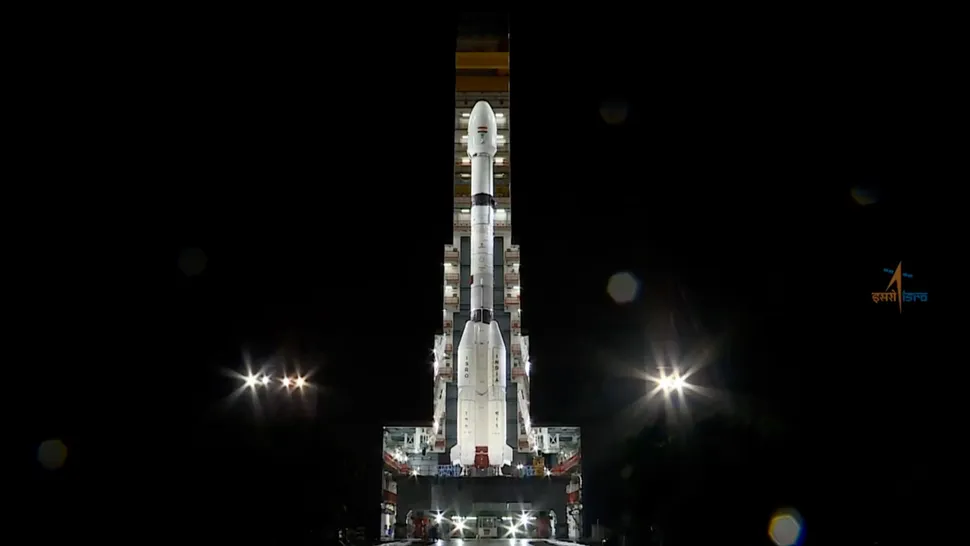
    ISRO's GSLV rocket on the launchpad at night.
    ISRO’s GSLV rocket carrying the NISAR satellite standing on the launchpad. Image credit: ISRO

    The GSLV-F16 is a 51-meter-tall rocket that weighs about 420 tons. Itโ€™s designed to carry large satellites like NISAR. The rocket has three stages: a solid-fuel core, four liquid-fuel boosters, and an upper stage powered by cryogenic fuel. Indiaโ€™s cryogenic engine technology, once imported, is now developed locally and has shown strong performance with over 80% success in recent launches.

    At liftoff, the solid stage and boosters fire first, followed by the cryogenic stage, which places NISAR into a 747-km orbit. Once in space, the satelliteโ€™s antennas will unfold and begin operating.

    Development and Cost

    NISAR took more than 15 years to develop. The project faced several delays, especially during the COVID-19 pandemic. One of the biggest technical challenges was combining two different radar systems without causing signal problems. The mission cost about $1.5 billion, with the bulk of the funding from NASA. Despite the cost, the scale and quality of data NISAR will provide makes it one of the most capable Earth-observing satellites ever launched.

    NISARโ€™s launch marks a turning point for Earth observation and international space cooperation. Itโ€™s expected to become an important tool for researchers, governments, and emergency teams around the world. Whether it’s tracking glacier loss, mapping farmlands, or spotting floods, NISAR will help people understand and respond to changes on our planet.

    ISRO will stream the launch live starting at 5:10 PM IST on July 30. All eyes will be on Sriharikota as NISAR begins its mission to study Earth in new detail.
  • NASAโ€™s SDO captures a stunning Solar Eclipse from Space

    NASAโ€™s SDO captures a stunning Solar Eclipse from Space

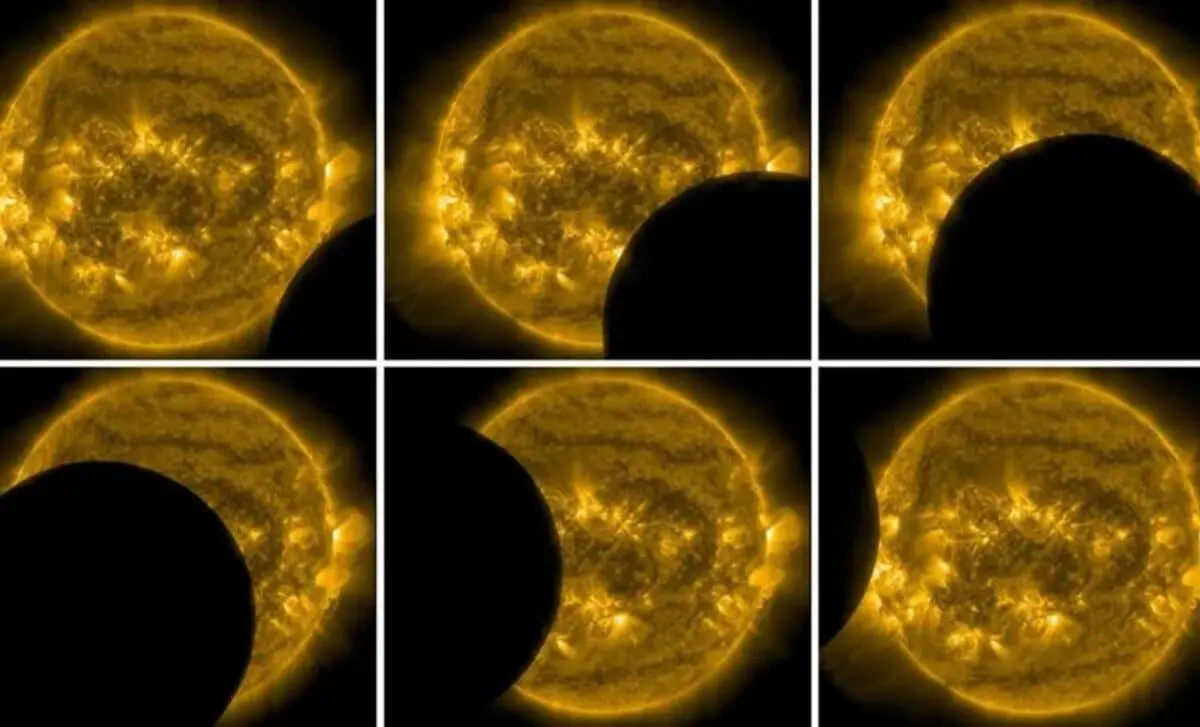
    On July 25, 2025, NASAโ€™s Solar Dynamics Observatory (SDO) captured a rare solar eclipse from orbit, revealing 62% of the sun blocked by the moon for 35 minutes. This event, invisible from Earth because the moonโ€™s shadow missed the planetโ€™s surface, marked the second space-based eclipse of 2025, following the European Space Agencyโ€™s Proba-3 mission that used satellites to block the sun.

    Scientists at NASA aim to study solar activity and its effects on Earthโ€™s technology through these observations. The SDOโ€™s images, taken from its unique vantage point, provide clear data on the sunโ€™s behavior.

    NASA launched the SDO on February 11, 2010, to orbit Earth at 19,000 miles per hour, matching the planetโ€™s rotation. Its three tools, the Atmospheric Imaging Assembly, Helioseismic and Magnetic Imager, and Extreme Ultraviolet Variability Experiment, gather 1.5 terabytes of data daily. These instruments record the sun in multiple wavelengths, avoiding distortion from Earthโ€™s atmosphere.

    The eclipse showed the sunโ€™s outer layer, the corona, normally hidden by the starโ€™s bright light. The sunโ€™s magnetic fields sometimes break and reconnect, causing solar flares and bursts of charged particles. These events can harm satellites, power grids, and radio signals. โ€œWe saw glowing coronal loops and bright flares at the sunโ€™s edge,โ€ said NASA scientist Dr. Emily Mason.

    NASA charged the SDOโ€™s batteries before the eclipse to keep it running during the dimming. The spacecraftโ€™s solar panels lost sunlight briefly, but its design ensured steady operation. This planning allowed the SDO to capture clear images without interruption.

    The SDO sees lunar transits a few times yearly, but this eclipse stood out for its 62% coverage. Its images revealed jagged edges and glowing coronal patterns, offering a rare view of the sunโ€™s atmosphere. Proba-3โ€™s earlier eclipse, created by aligning satellites, supports these findings by mimicking a total eclipse.

    Solar activity affects Earthโ€™s space environment, disrupting technology like GPS and communication systems. The SDOโ€™s data helps NASA and agencies like NOAA predict when flares or particle bursts might occur. This information protects satellites and ground-based systems from damage.

    The public can view a partial solar eclipse on September 21, 2025, in New Zealand, Tasmania, parts of the Indian Ocean, and Antarctica. Up to 80% of the sun will be blocked, but viewers need solar eclipse glasses or filters for safe observation.

    A total solar eclipse on August 12, 2026, will cross Greenland, western Iceland, and northern Spain. For about 2 minutes and 18 seconds in Iceland, the sunโ€™s corona will be visible. This event draws crowds for its rare beauty.

    The SDOโ€™s work helps scientists understand the sunโ€™s impact on Earth. Its July 25 images, showing vivid coronal loops and surface flares, will fuel research for months. Proba-3โ€™s data adds to this effort, improving space weather predictions. Eclipse fans on Earth can prepare for the next solar spectacle.

  • NASA tests Americium-241 heat source fuel for future deep space missions

    NASA tests Americium-241 heat source fuel for future deep space missions

    For more than 60 years, NASA has used radioisotope power systems, which are often called nuclear batteries, to turn the heat from radioactive decay into electricity. These batteries have powered missions like Voyager, Cassini, and Mars rovers such as Perseverance. Now, NASA is looking at a new fuel: Americium-241.

    In January 2025, NASAโ€™s Glenn Research Center teamed up with the University of Leicester in the UK to test a Stirling generator powered by americium-241 simulators. Stirling engines donโ€™t burn fuel like traditional engines. Instead, they use sealed pistons to convert heat into motion and electricity. Because thereโ€™s no contact between the moving parts, the system can run for decades with little wear. That makes it ideal for long missions, like sending a probe to the outer planets or exploring the dark, frozen craters on the Moon.

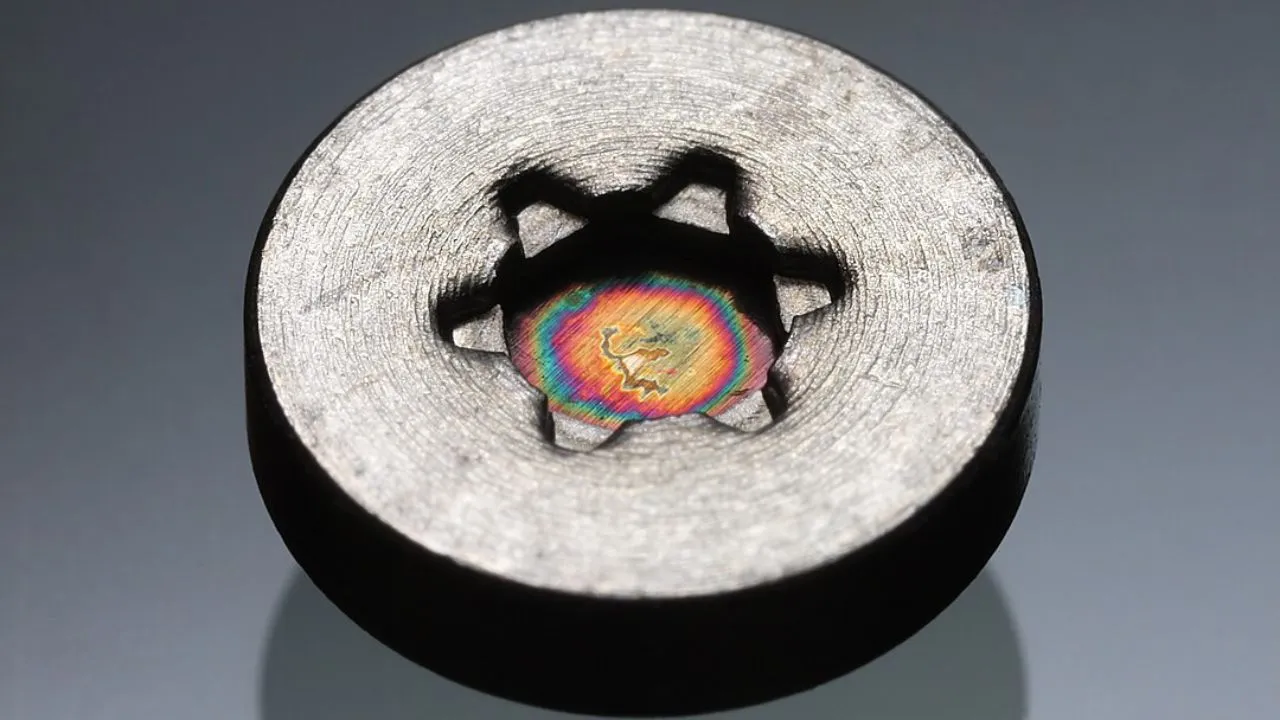
    Americium-241 dioxide (241AmOโ‚‚).
    A small button from an ionization-type smoke detector contains approximately 1 microcurie, which equals about 141 nanograms, of americium-241 dioxide (ยฒโดยนAmOโ‚‚), enclosed in an aluminum casing. Image credit: Andrew Magill/Wikipedia

    So why americium? NASA has long used plutonium-238, which produces a lot of heat for its weight. But plutonium is scarce and expensive to produce. Americium-241 is more available. It can be recovered from nuclear waste and has a much longer half-life (432 years) as compared to plutonium’s half-life (88 years). It doesnโ€™t generate as much power per gram, but it lasts longer and is easier to source.

    During the test, electric heaters mimicked americiumโ€™s heat to drive the Stirling generator. The generator kept running even when one converter failed. That kind of redundancy is important for missions where repairs aren’t possible.

    Hannah Sargeant, a researcher at Leicester, pointed out how valuable this kind of reliability could be for missions that canโ€™t afford to lose power. โ€œOne of the standout features of this design is its ability to maintain electrical power even if a Stirling converter fails,โ€ said Hannah.

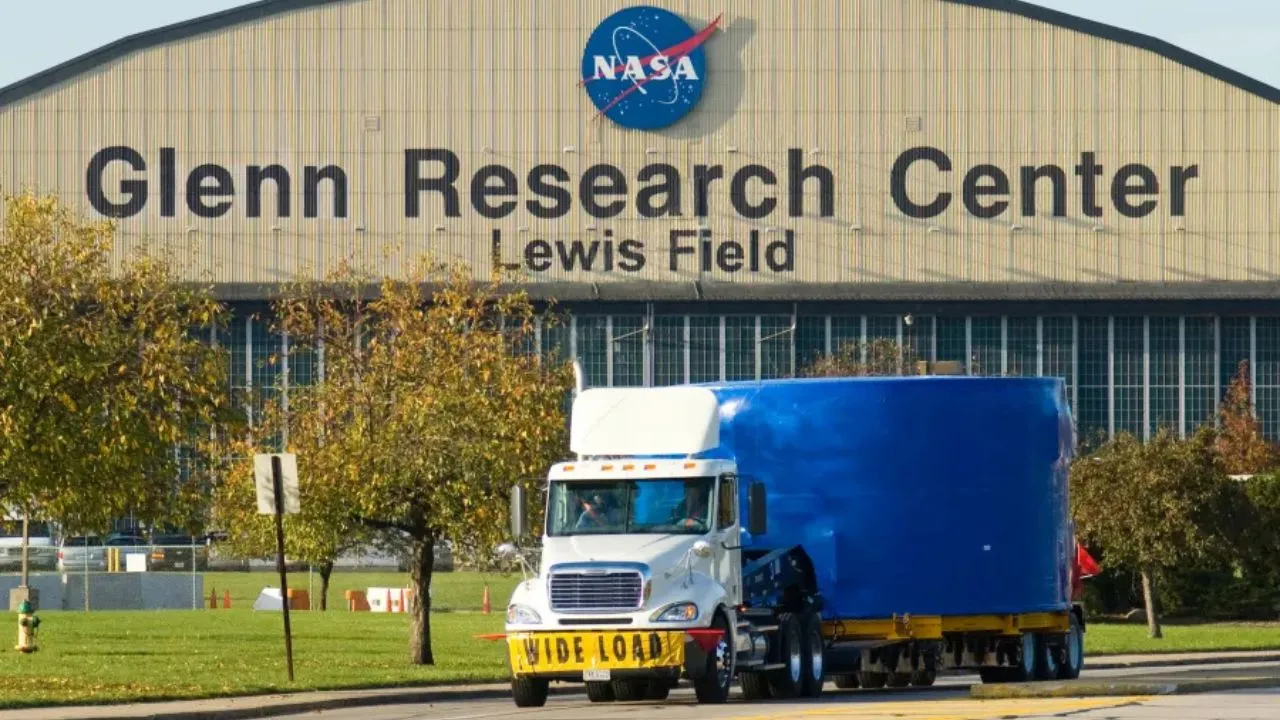
    A transport truck with NASA's Glenn Research Center in the background.
    NASA’s Glenn Research Center as photographed in 2009. Image credit: NASA

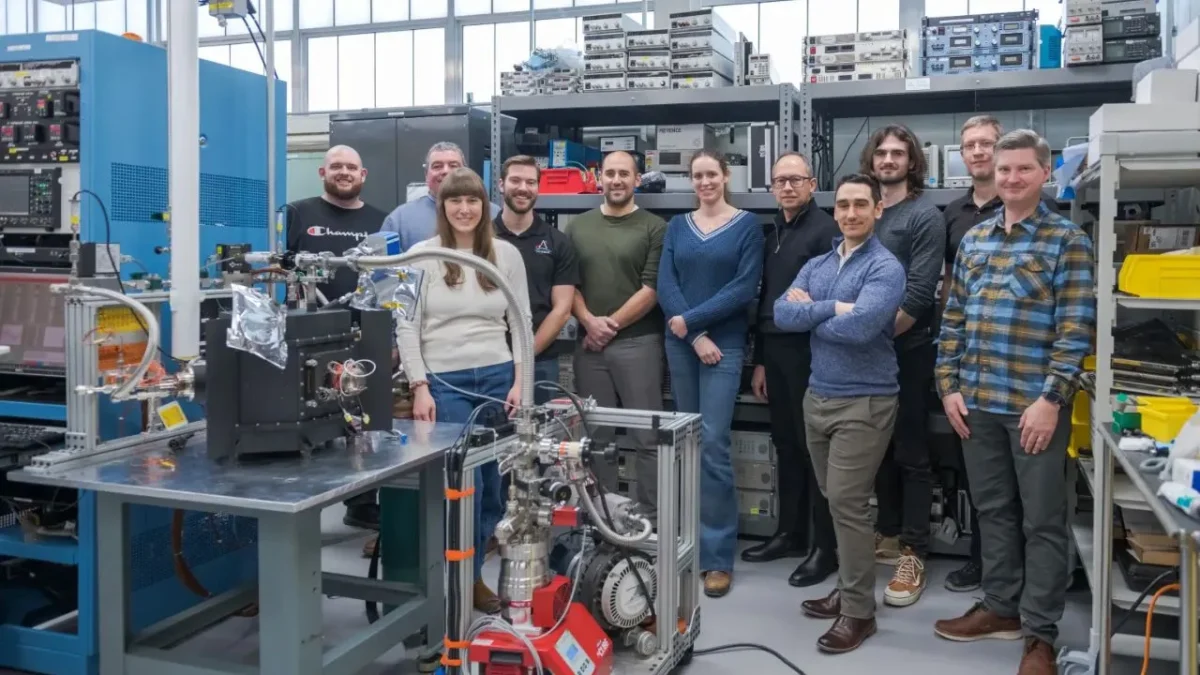
    The collaboration rapidly moved from concept to a near-flight-ready prototype, thanks to strong coordination between teams. NASA supplied the Stirling hardware, while the University of Leicester provided the test setup and heaters. The test achieved all targeted performance and efficiency benchmarks.

    Americium-241 might also help make deep space missions more practical. The UKโ€™s National Nuclear Laboratory has already started producing small amounts, with plans to scale up by 2027. Since around 80% of deep space missions rely on nuclear power, having a steady fuel supply could be a game changer.

    NASA is now working on a more advanced testbed that can survive the stresses of launch and space. If it works, this new power source could help future missions reach farther and last longer

  • New Study gives fresh insights on how Microgravity affects an Astronauts’ Eyesight

    New Study gives fresh insights on how Microgravity affects an Astronauts’ Eyesight

    Imagine you are aboard the International Space Station, floating in microgravity, gazing down at Earth and up at the stars, only to notice that your vision is starting to blur. Yes, it’s real! As astronauts spend longer durations in microgravity, many begin to notice changes in their eyesight.

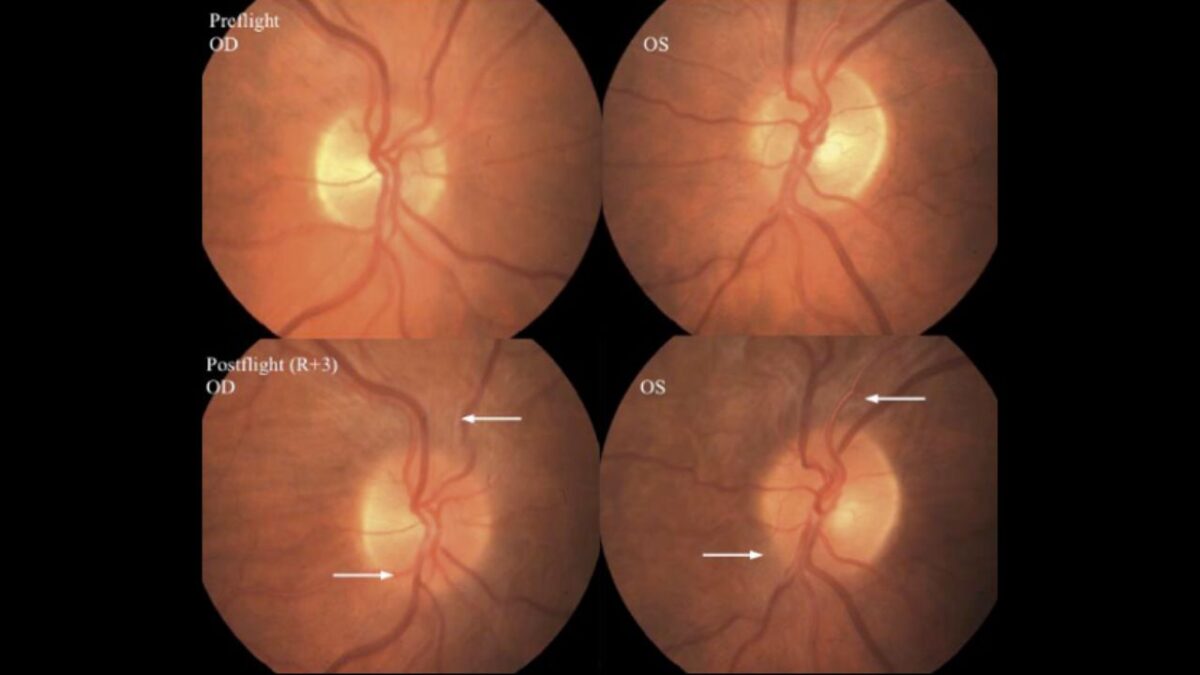
    Some astronauts even need stronger reading glasses as their mission progresses. This condition, known as Space-Associated Neuro-Ocular Syndrome (SANS), is marked by swelling of the optic nerve and a flattened eyeball. This new research was published by NASA on July 18, 2025, in an article titled ‘Vision Changes on Space Station.’

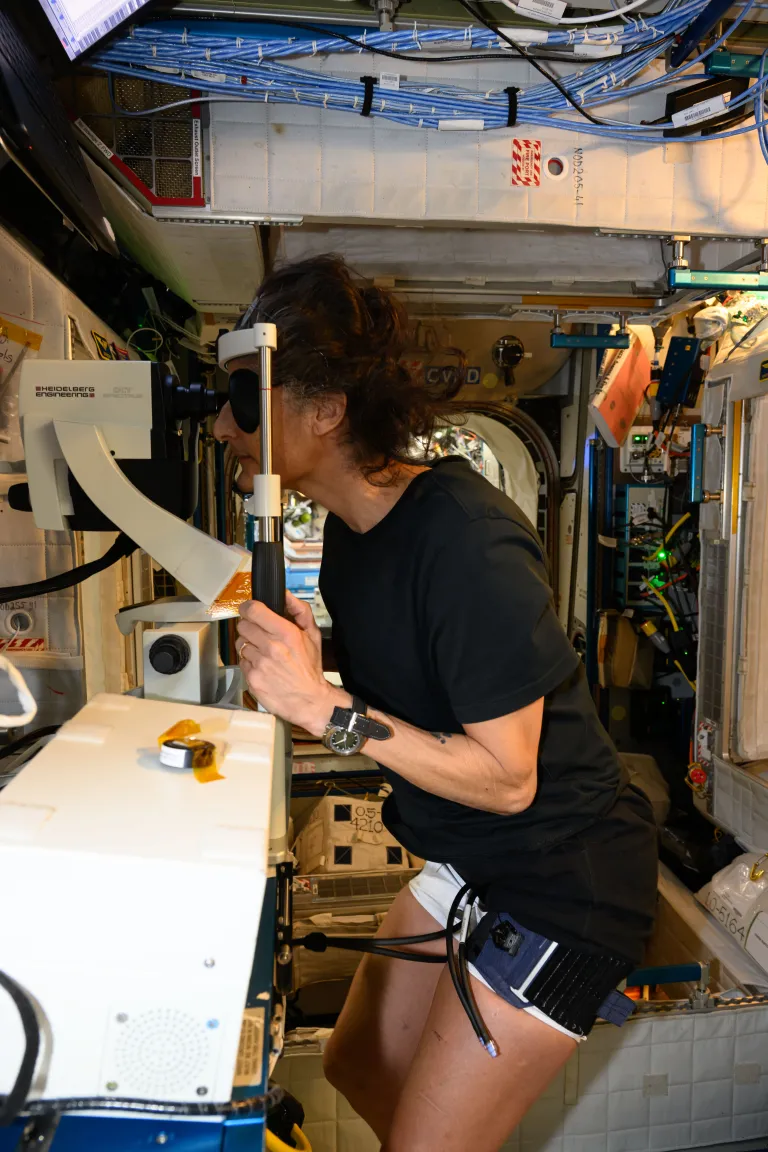
    Astronaut Sunita Williams taking an eye test aboard the ISS wearing a tight thigh cuff.
    As part of the Thigh Cuff investigation, NASA astronaut Sunita Williams performs an eye examination while wearing a cuff on her left leg. Image credit: NASA

    Microgravity causes blood and cerebrospinal fluid to shift toward an astronautโ€™s head, pressing on their eyes and brain. The Thigh Cuff study tests whether tight leg cuffs can redirect these fluids to reduce pressure. If effective, the cuffs could safeguard vision on missions to Mars and help patients on Earth with fluid buildup from prolonged bed rest. About 10% of astronauts experience significant vision issues, making this a growing concern.

    The Fluid Shifts study, conducted from 2015 to 2020, used MRIs and optical coherence tomography to examine blood flow from the brain. Higher fluid pressure in the skull likely contributes to SANS, with one astronautโ€™s severe symptoms easing after B vitamin supplements and lower cabin COโ‚‚ levels. The human eye processes roughly 10 million bits of visual data per second, so even slight pressure changes can disrupt vision. These findings suggest spacecraft air quality plays a role in eye health.

    A Canadian Space Agency study, SANSORI, found that spaceflight reduces eye tissue stiffness, similar to changes in aging or glaucoma, which affects over 60 million people worldwide. Less rigid eye tissue may cause the eyeball to flatten in space. This discovery could guide treatments for eye diseases on Earth, where tissue stiffness often impacts vision. Understanding these changes helps connect space and terrestrial medicine.

    Japanโ€™s MHU-8 study examined mice in space, revealing genetic changes in their optic nerves and retinas after flight. Artificial gravity reduced these changes, suggesting that future spacecraft could use rotation to mimic gravity and protect vision. These genetic findings may lead to new treatments for vision loss on Earth. Space research often uncovers solutions with wide-reaching benefits.

    As we plan for longer space missions, protecting astronauts’ vision is important. Studying SANS (Space-Associated Neuro-Ocular Syndrome) tells us how eyes handle pressure and environmental changes, offering vital lessons for eye care everywhereโ€”in space and on Earth.

  • NASA’s Webb spots ‘Sleeping Beauty’ galaxies in the early Universe

    NASA’s Webb spots ‘Sleeping Beauty’ galaxies in the early Universe

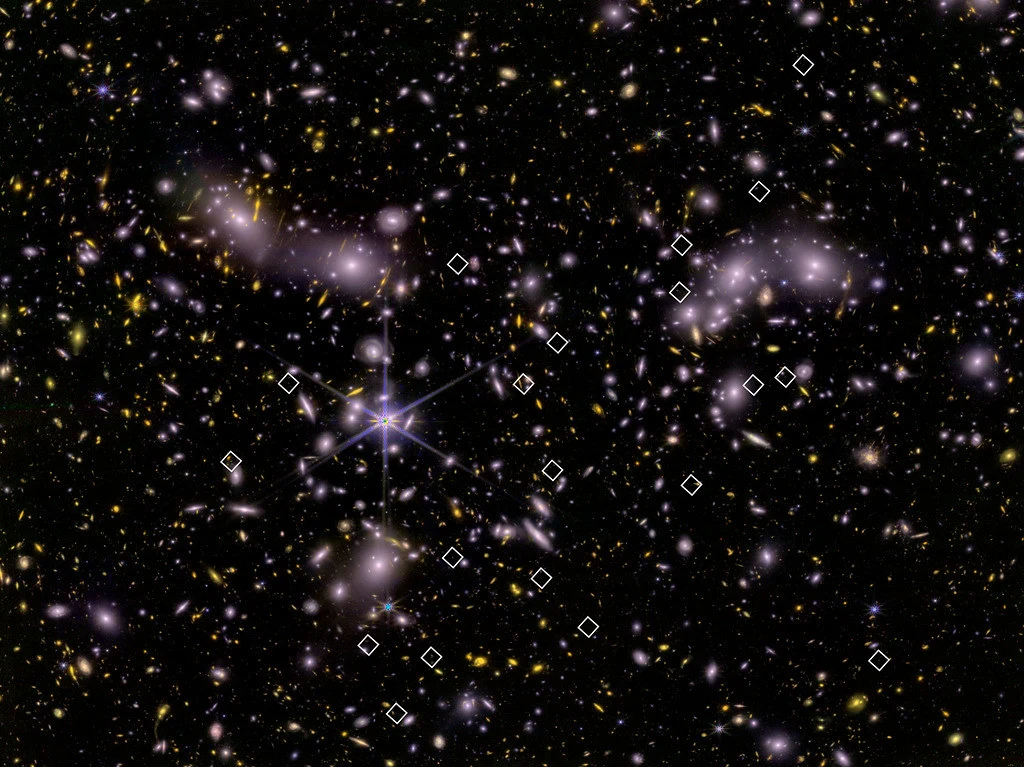
    Using the James Webb Space Telescope (JWST), astronomers have uncovered a surprising group of 14 galaxies that paused their star-forming activity within the first billion years after the Big Bang. These “dormant” galaxies, found in a range of sizes, offer fresh clues about how galaxies grow and evolve in the universeโ€™s infancy.

    Galaxies form stars from cold gas clouds, but sometimes this process stalls. One cause is the intense radiation from supermassive black holes at a galaxyโ€™s core, which can heat or deplete the gas needed for stars. Nearby larger galaxies can also strip away this gas or warm it, halting star formation.

    Another factor is stellar feedback. When stars, through explosions like supernovas or powerful winds, push out or heat the gas, leaving the galaxy in a temporary quiet phase. โ€œThis pause usually lasts around 10 to 25 million years,โ€ said Alba Covelo-Paz, a doctoral student at the University of Geneva and lead author of the study, in an email. Over time, the gas can cool and fall back, allowing star formation to restart.

    Until recently, astronomers had only identified four dormant galaxies from this early period, with masses either below a billion times the Sunโ€™s or above 10 billion. This small sample left gaps in understanding how common these pauses were across different galaxy sizes.

    But JWSTโ€™s powerful Near-Infrared Spectrograph (NIRSpec) changed that. By analyzing light from about 1,600 galaxies in the DAWN JWST Archive, Covelo-Pazโ€™s team found 14 dormant galaxies with masses ranging from 40 million to 30 billion solar masses. The findings, posted on the preprint server arXiv on June 27, 2025, are awaiting peer review.

    These galaxies werenโ€™t expected to be dormant so early in the universeโ€™s history. Young galaxies are typically thought to form stars rapidly. A 2024 study had already surprised researchers by spotting one such galaxy, previously observed by the Hubble Space Telescope but only confirmed as dormant with JWSTโ€™s advanced capabilities. Unlike Hubble, JWST can detect the redshifted light from these distant galaxies and analyze its spectrum to reveal details about their stars.

    The team focused on galaxies showing signs of older or middle-aged stars but no new star formation. They used a tool called Bagpipes to model the galaxiesโ€™ star-forming histories, finding that these 14 galaxies had paused star formation 10 to 25 million years ago.

    This suggests a โ€œburstyโ€ pattern, where galaxies alternate between active star-forming periods and quiet phases, likely driven by stellar feedback. โ€œWe see these galaxies taking a breather,โ€ Covelo-Paz said. โ€œTheyโ€™ve likely paused due to processes like supernovas pushing gas out, but they could restart star formation later.โ€

    Still, questions remain. If these galaxies stay dormant for 50 million years or more, it might point to a permanent shutdown, possibly caused by black holes or other factors. For now, their properties support the idea of a temporary pause.

    To learn more, astronomers are planning a JWST program called โ€œSleeping Beautiesโ€ to hunt for more dormant galaxies and study how long these quiet phases last.

  • Astronomers capture earliest stages of Planet formation around a baby star HOPS-315

    Astronomers capture earliest stages of Planet formation around a baby star HOPS-315

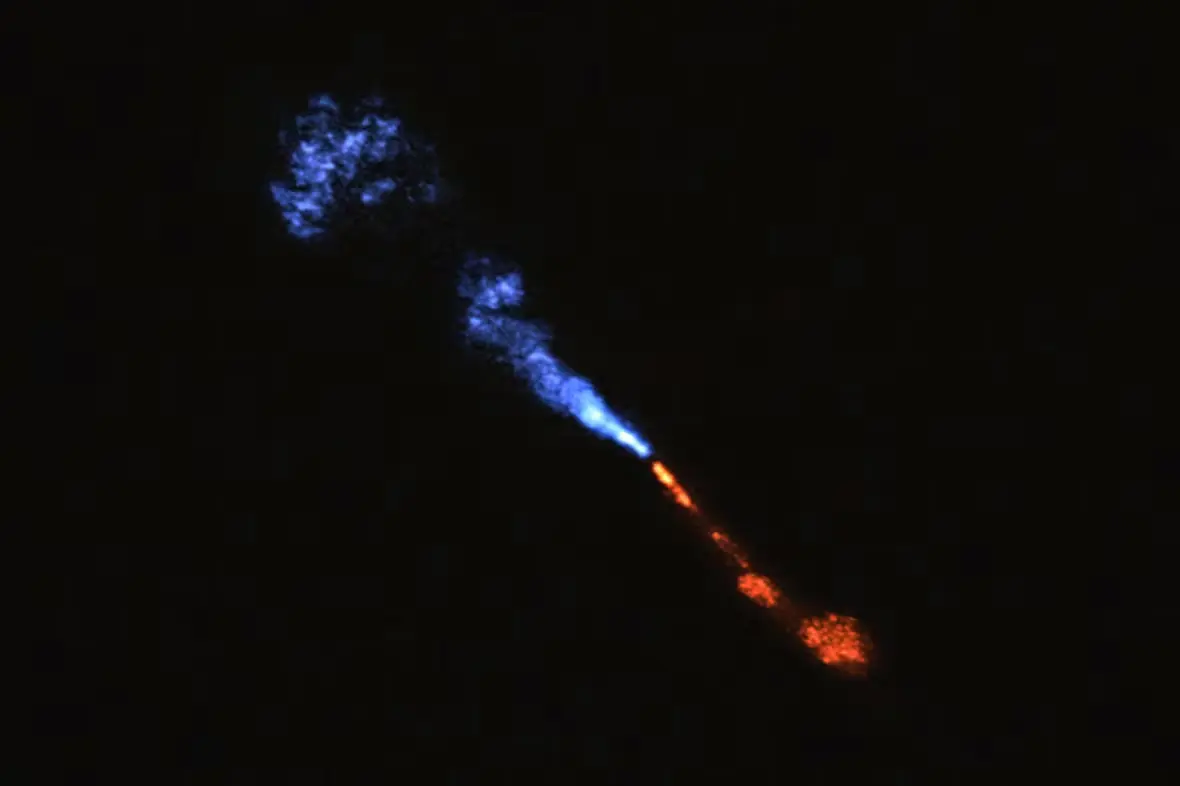
    Astronomers have detected the earliest stages of planet formation around a young star named HOPS-315, located 1,370 light-years away. Using NASAโ€™s James Webb Space Telescope (JWST) and the European Southern Observatoryโ€™s ALMA telescopes in Chile, scientists observed solid particles forming in the gas disk surrounding this star, which is only 100,000 to 200,000 years old. The findings were published in Nature on July 16, 2025.

    โ€œWeโ€™ve captured the moment when rocky planets like Earth start to take shape,โ€ said Melissa McClure, who led the research team from Leiden Observatory in the Netherlands. The team identified silicon monoxide gas and crystalline silicate minerals (materials that were key to forming our own solar system over 4.5 billion years ago) in a region similar to the asteroid belt between Mars and Jupiter.

    A gap in the starโ€™s gas disk, combined with its tilt toward Earth, allowed astronomers to study this process closely. Images from ALMA show the system glowing brightly against the dark backdrop of space. โ€œThis is a major step in understanding how planets form,โ€ said Fred Ciesla, a University of Chicago scientist not involved in the study. โ€œWeโ€™re seeing evidence of processes weโ€™ve long theorized about.โ€

    The gas disk around HOPS-315 is massive, suggesting it could eventually form multiple planets, possibly as many as eight, over the next million years. McClure noted that this discovery indicates planet formation may be a common process around young stars. โ€œWe didnโ€™t know if this was unique to our solar system or something that happens often,โ€ she said.

    Researchers, including Purdue Universityโ€™s Merel van โ€™t Hoff, plan to study more young stars to compare their findings. โ€œWe want to learn if this process is typical and what it means for the chances of finding Earth-like planets elsewhere,โ€ van โ€™t Hoff said. This discovery offers a new perspective on the origins of planets and our place in the universe.

  • NASAโ€™s Parker Solar Probe Captures Closest-Ever Images to Sun

    NASAโ€™s Parker Solar Probe Captures Closest-Ever Images to Sun

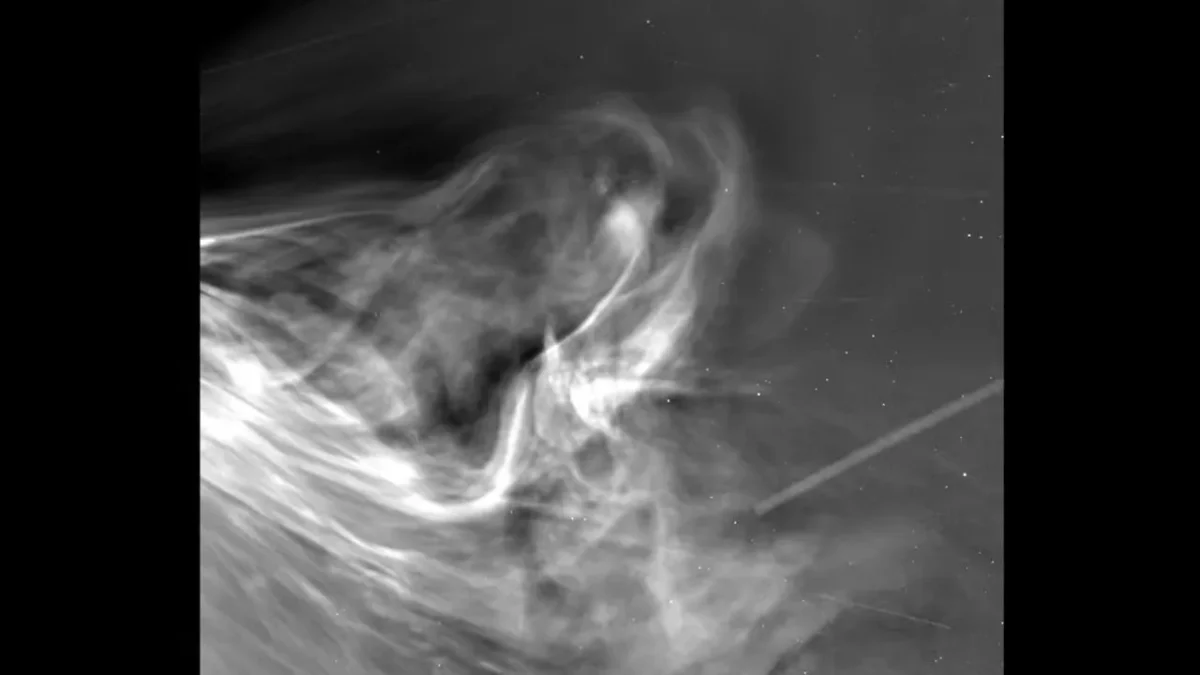
    NASA’s Parker Solar Probe has achieved a historical milestone! It has sent back the closest images ever taken of the sun, offering a detailed look into its outer atmosphere. The images were captured during a record-setting approach on December 24, 2024, when the spacecraft flew just 3.8 million miles from the solar surface.

    These high-resolution images are the closest humans have ever come to directly observing the environment where space weather begins.

    โ€œParker Solar Probe has once again transported us into the dynamic atmosphere of our closest star,โ€ Nicky Fox, associate administrator, Science Mission Directorate at NASA Headquarters in Washington, told NASA (source).

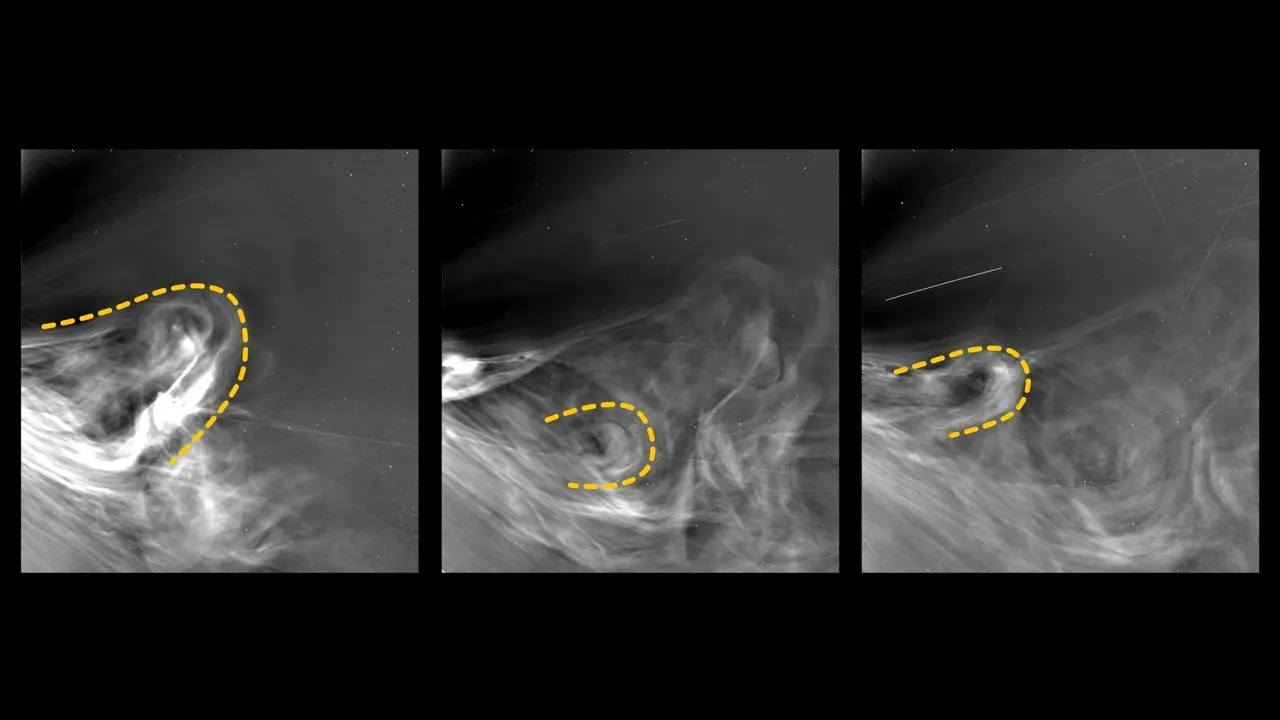
    The probe used It’s the Wide-field Imager for Solar Probe (WISPR), revealing never-before-seen details of the solar corona and solar winds.

    breakdown of coronal mass ejection captured by nasas parker solar probe during its closest approach to the sun
    A sequential breakdown of a coronal mass ejection (CME) captured by NASA’s Parker Solar Probe during its closest-ever approach in December 2024, revealing it was not a single eruption but a powerful combination of three large outbursts. (ScreenGrab)

    One of the most remarkable discoveries is the first-ever recorded sequence of multiple coronal mass ejections (CMEs) colliding in space.

    The solar wind is a stream of charged particles released from the Sun’s surface. These particles travel along the space and often reach Earth, colliding with Earth’s atmosphere, causing auroras and radio blackouts occasionally.

    Launched in 2018, the Parker Solar Probe was named in honor of heliophysicist Eugene Parker. Since its launch in 2018, the probe has made some significant discoveries.

    It has revealed magnetic โ€œswitchbacksโ€ and confirmed the existence of two types of slow solar wind: Alfvรฉnic, tied to coronal holes, and non-Alfvรฉnic, possibly from helmet streamers. These findings are key to predicting solar storms that could affect astronauts, satellites, and all the living organisms on Earth.

    One of the key goals of the mission is to understand the origins of the slow solar wind, which travels at about 220 miles per second. Unlike the fast wind, this slower version is denser and more variable. Parkerโ€™s latest observations confirmed there are two distinct types of slow solar wind, possibly arising from different solar regions, like coronal holes and helmet streamers.

    With its next close approach on September 15, 2025, the probe will continue gathering critical data to refine our understanding of the Sun and space weather.

  • NASA’s JWST captures the first direct images of an Exoplanet

    NASA’s JWST captures the first direct images of an Exoplanet

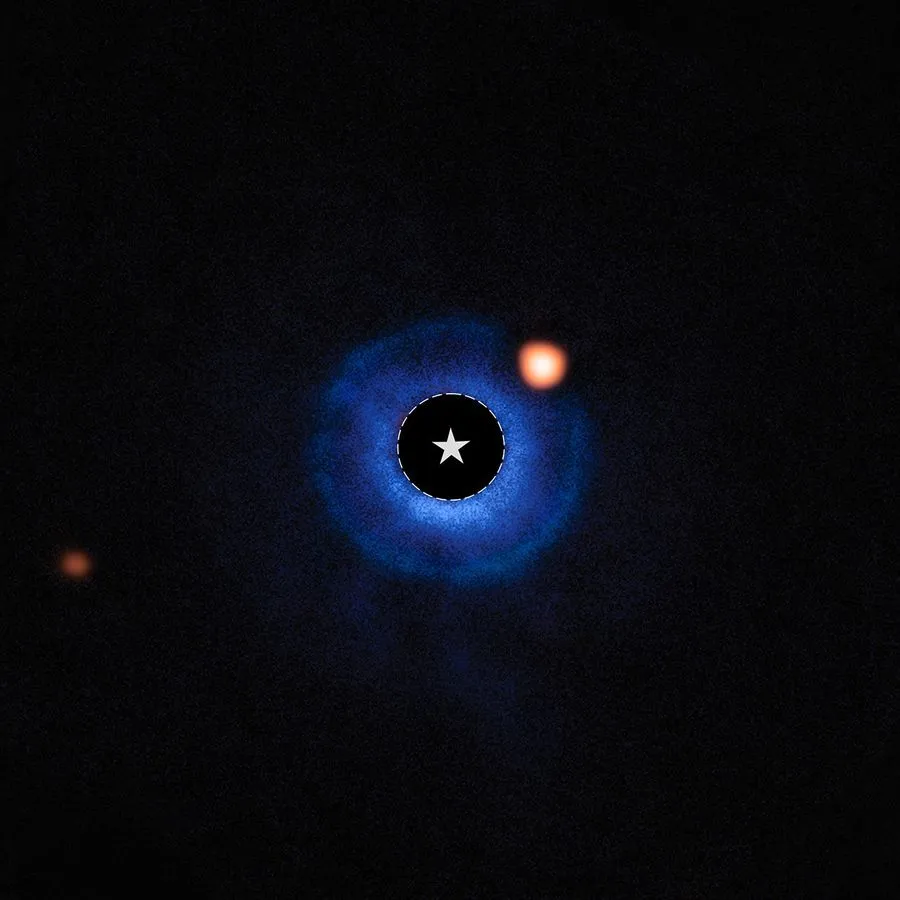
    An international team of astronomers has captured the first-ever direct image of an exoplanet with a mass similar to Saturn, using NASA’s James Webb Space Telescope. The newly discovered planet, designated TWA 7 b, is orbiting a young red dwarf star called TWA 7, located about 34 light-years away in the TW Hydrae association.

    The team spotted a faint heat source inside the dusty disk that surrounds TWA 7. They used Webbโ€™s Mid-Infrared Instrument (MIRI) data to block the starโ€™s bright light and reveal hidden objects nearby. The source lies about 50 times farther from its star than Earth is from the Sun.

    The first-ever image of an Exoplanet captured by JWST MIRI instrument
    A composite image combining data from ESOโ€™s SPHERE (blue) and JWSTโ€™s MIRI (orange) reveals the candidate exoplanet TWA 7 b as a bright orange spot near the top. The central star TWA 7, marked with a dotted circle and a star symbol, has been masked to highlight nearby features. Credit: Anne-Marie Lagrange (CNRS, UGA), Mahdi Zamani (ESA/Webb) / NASA, ESA, CSA

    TWA 7 b fits theoretical models for a young, cool planet with a mass similar to Saturn and a temperature around 47 degrees Celsius. Its position lines up with a gap in one of the three rings within the surrounding disk, suggesting it may be shaping the disk’s structure through gravitational influence.

    โ€œOur observations reveal a strong candidate for a planet shaping the structure of the TWA 7 debris disk, and its position is exactly where we expected to find a planet of this mass,โ€ lead author Anne-Marie Lagrange from CNRS and Universitรฉ Grenoble Alpes in France told NASA.

    Astronomers have long been studying such rings and gaps in dusty disks as signs of hidden planets, but they have never imaged such a planet directly.

    These observations were part of JWST’s program 3662, which focuses on early-stage planetary systems. Using a coronagraph on JWST’s MIRI instrument, the team blocked the glare from the star, removed leftover starlight through image processing, and revealed a small heat source near the inner part of the disk.

    While there is a small chance the source is a distant galaxy, the objectโ€™s size and distance from its star match what scientists expect from a young Saturn-mass planet. Its place in the disk also raises the chance it may hold a โ€œtrojan diskโ€ (a rare dust structure in the same orbit as the planet).

    Follow-up work will now focus on confirming that the object is a planet and studying its air and motion to better understand how planets grow in young star systems.

    The research was published on June 25 in the journal Nature.

  • Japanese Moon lander Resilience crash lands on Moon with a $16 million payload

    Japanese Moon lander Resilience crash lands on Moon with a $16 million payload

    Japan’s private moon lander hard-landed on the moon on June 5, 2025. The Japanese private aerospace company ispace launched the moon lander ‘Resilience’ to the moon’s Mare Frigoris region on January 15, 2025.

    The lander arrived in lunar orbit on May 7 and was scheduled to touch down on Thursday (June 5) at 3:24 p.m. EDT. However, the lander lost communication while landing, resulting in a presumed crash. According to Reuters, the lander was carrying a $16 million payload.

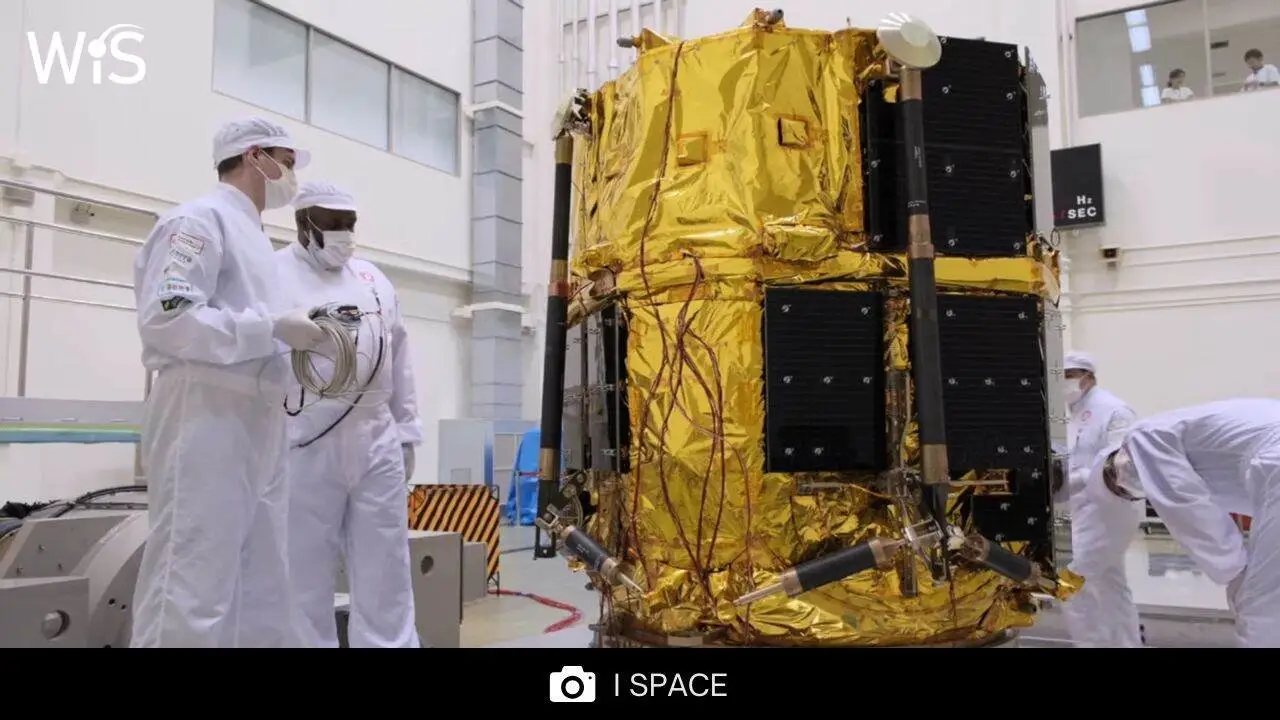
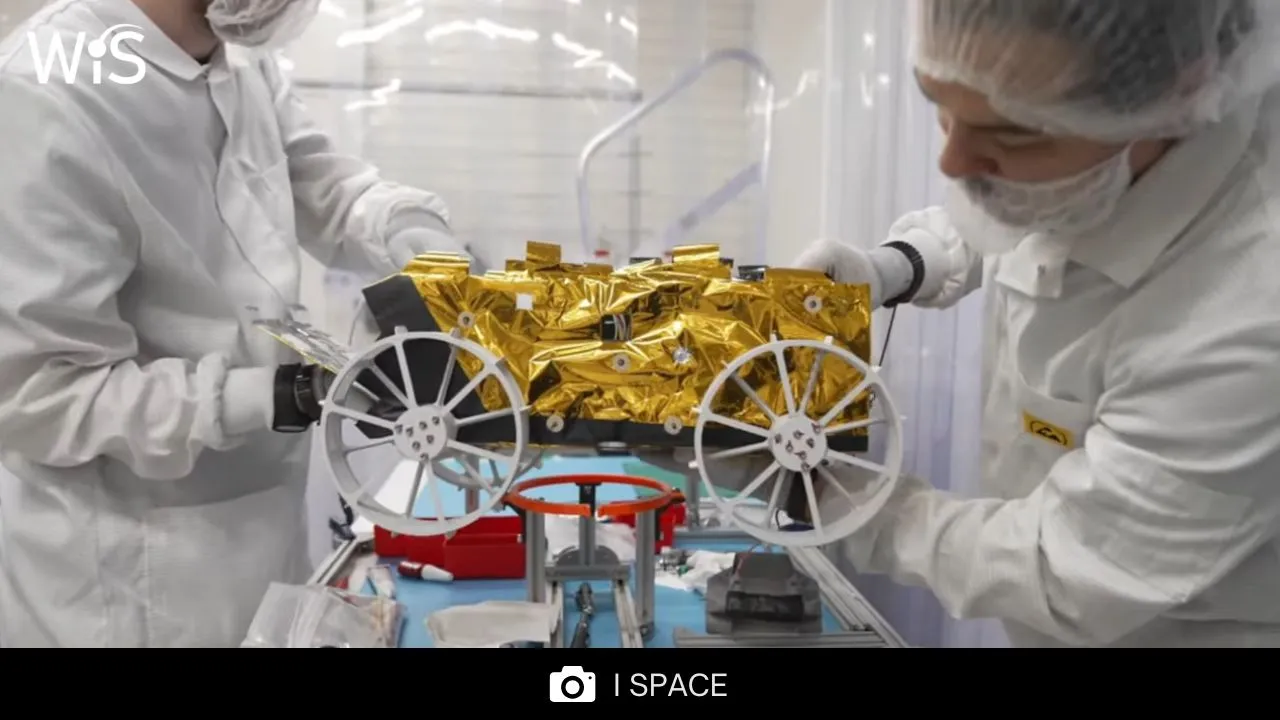
    Resilience, a moon lander that is a part of ispace’s Hakuto-R Mission 2, was launched on January 15, 2025, aboard SpaceX’s Falcon 9 rocket. The mission aimed to deploy several payloads, including Tenacious (a European-built mini rover designed to collect lunar soil samples for NASA and the European Space Agency (ESA)) and Moonhouse (a symbolic art installation; a miniature red house created by Swedish artist Mikael Genberg).

    Engineers assembling the European Moon rover Tenacious
    Engineers assembling the European Moon rover Tenacious. Image credit: Screengrab/ispace/via Youtube

    Preliminary tests are indicating that a malfunction in the laser altimeter system caused the lander to misjudge its altitude, leading to a descent that was too rapid for a safe landing.

    This incident highlights the challenges faced by private companies in lunar exploration, a domain where successful landings have predominantly been achieved by government space agencies. Nonetheless, the pursuit of lunar missions by private entities like ispace signifies a growing interest and investment in space exploration beyond traditional state-led initiatives.

  • Breakthrough! James Webb Space Telescope confirms presence of crystalline water ice in a nearby Star System

    Breakthrough! James Webb Space Telescope confirms presence of crystalline water ice in a nearby Star System

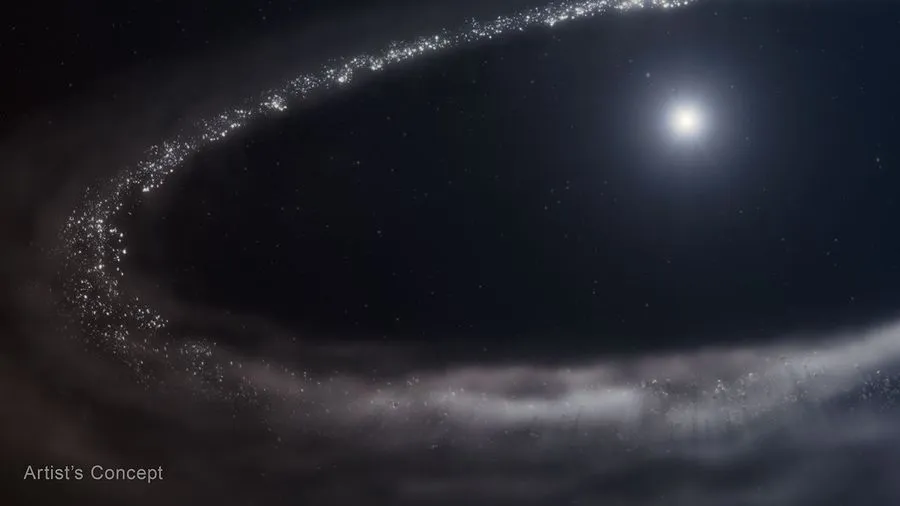
    Researchers have confirmed the presence of crystalline water in space for the first time in human history! The James Webb Space Telescope (JWST) has discovered crystalline water ice in a dusty debris disk orbiting the Sun-like star HD 181327, located 155 light-years away. Researchers used NIRSpec (Near-Infrared Spectrograph) (a super-sensitive instrument designed to detect faint dust particles from space) for this discovery.

    NASA’s retired Spitzer Space Telescope hinted at the possibility of frozen water in the same system back in 2008; however, it lacked the sensitivity to confirm the discovery. Now, Webb has not only confirmed the presence of water ice but also revealed that it is mixed with fine dust particles throughout the debris disk, forming what scientists describe as tiny โ€œdirty snowballs.โ€

    The Webb Telescope revealed that water ice is most abundant in the cold outer regions of the disk, where over 20% of the material is ice. Webb detected about 8% water ice in the middle region of the disk. Almost no water ice was found in the inner region of the disk, likely due to ultraviolet radiation from the star vaporizing the ice or its entrapment within planetesimals.

    The star HD 181327 is relatively young at 23 million years old and is slightly more massive and hotter than our Sun, resulting in a larger surrounding system. The discovery of crystalline water ice around this young star can help scientists better understand how planets form and how water might be delivered to rocky worlds.

    Crystalline water ice has also been found in Saturnโ€™s rings and the Kuiper Belt in our solar system and is considered a key ingredient in the formation of giant planets. Thus, the large gaps between the star HD 181327 and its debris disk suggest that the system may be shaped by an emerging planet or is still in the early stages of its evolution.

    These findings were originally published in a recent article by NASA.